


The event was organized by Latvia and the European Union with the assistance of Sviatlana Tsikhanouskaya's Office.

On September 21, in New York, during the High-Level Week of the 81st session of the UN General Assembly, a ministerial side-event was held, dedicated to the situation in Belarus and its consequences for regional and international security. The event was organized by Latvia and the European Union with the assistance of Sviatlana Tsikhanouskaya's Office, according to OST.
Ukraine, Lithuania, Estonia, Ireland, Sweden, and the Czech Republic also participated in the organization. The official program focused on the connection between repression in Belarus, hybrid threats, and support for Russia's war against Ukraine.
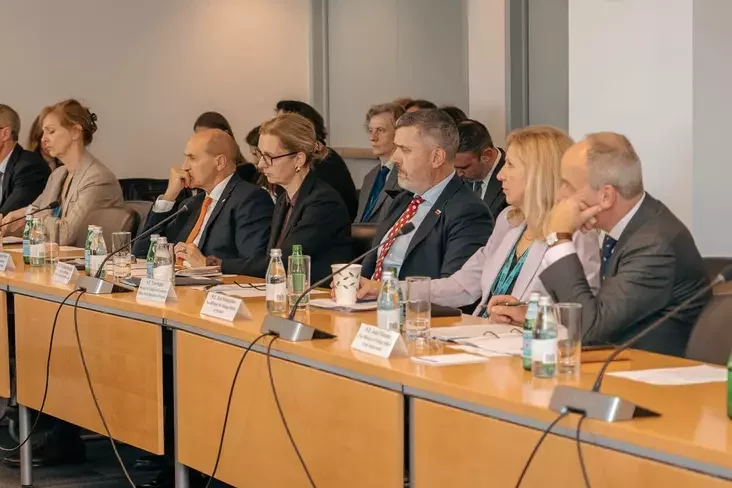
Speaking at the event were: Deputy Secretary-General of the European External Action Service Kaisa Ollongren, Minister of Foreign Affairs of Latvia Baiba Braže, Secretary General of the Council of Europe Alain Berset, Deputy Minister of Foreign Affairs of Ukraine Andrii Sibiga, Minister of Foreign Affairs of Lithuania Kęstutis Budrys, Minister of Foreign Affairs of the Czech Republic Petr Matinka, Minister of State for Ireland Niall Richmond, Deputy Minister of Foreign Affairs of Estonia Martin Roger, Representative of the Swedish MFA Gunnar Aldén, Head of Freedom House Jamie Fly, and leader of Belarusian democratic forces Sviatlana Tsikhanouskaya.
During the meeting, several issues were discussed, such as repression and political prisoners.
Sviatlana Tsikhanouskaya emphasized that individual releases do not signify systemic changes as long as new detentions and politically motivated cases continue. She called for the release and rehabilitation of all political prisoners.
Also discussed were transnational repression, the regime's participation in the war against Ukraine, Belarus on the UN agenda, as well as sanctions and international accountability.
The democratic leader called for maintaining pressure for systemic changes, supporting accountability mechanisms, and simultaneously isolating the regime, not Belarusians – by preserving visas, scholarships, mobility programs, and support for civil society.
"Our goal is to make Belarus an independent, democratic, European country that will be not a constant threat, but a good, predictable partner and neighbor. What happens in Belarus does not stay only in Belarus. A regime that destroys the rule of law within the country eventually becomes a threat beyond its borders," Sviatlana Tsikhanouskaya emphasized.


Comments