


Officer arrests occurred at Machulishchy airbase — accused of ties with the opposition
The KGB detained at least ten people.

The arrest of retired Lieutenant Colonel Dzmitry Zara, whom security forces considered Valery Sakhashchyk's analyst, led to the KGB sweeping through the officer corps of the Machulishchy airbase like a steamroller.
Read: Lieutenant Colonel Zara, whom security forces consider Sakhashchyk's analyst, was found in the KGB pre-trial detention center. How he ended up in Belarus is unknown
It is known that at least a dozen people have been arrested, who are suspected of communicating with Zara — which is interpreted as cooperation with the United Transitional Cabinet and its former "Minister of Defense", paratrooper commander Valery Sakhashchyk.
The detainees are Zara's former colleagues, known to him personally. They are mostly pilots with long service records, including colonels. The KGB pre-trial detention center is now filled with these people.
The arrested deny intentional transmission of information; the accusations came as a shock to them.
Presumably, the special services knew about Zara's presence in Sakhashchyk's team from the very beginning, through some source in his entourage. Military personnel were warned that the retired lieutenant colonel was a "traitor" and that they should speak to him cautiously, or better yet, not at all. However, some still spoke with Zara on general topics due to old acquaintanceship — out of old friendship.
"Nasha Niva" does not yet have precise information on what charges have been brought against the officers, but according to the logic of current processes, it could be either "abetting extremist activity" or "treason".
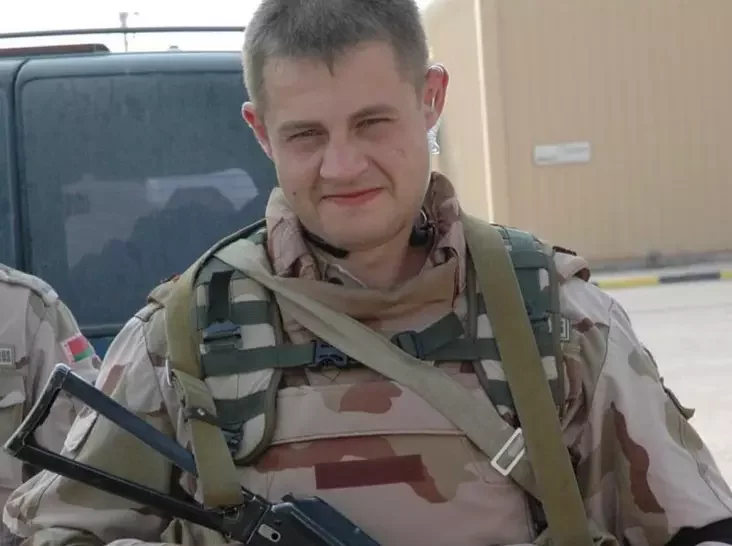
Security forces believe that Dzmitry Zara was involved in information gathering and analytical work in Valery Sakhashchyk's team, who in 2022-2024 was a member of Sviatlana Tsikhanouskaya's United Transitional Cabinet for defense and national security issues.
How Dzmitry Zara ended up in Belarus is unclear. In recent years, he published many disjointed messages daily on his Instagram, used ciphers and non-existent words, quoted the Bible, was guided by "energies of a higher order", and so on. He appointed himself a general and issued decrees on the "use of divine powers," which he conveyed to his family members who remained in Belarus.
On February 3, 2026, Dzmitry Zara published a confused post about the self-sacrifice of Jesus Christ. This became his last message on Instagram. Most likely, immediately after this, Zara returned to Belarus.

"Nasha Niva" contacted Valery Sakhashchyk; he declined to comment on the situation.
* * *
Valery Sakhashchyk, former commander of Brest paratroopers, became "Minister of Defense" in the United Transitional Cabinet in 2022. Prior to that, he sharply condemned Russia's attack on Ukraine. Sakhashchyk tried to create a Belarusian unit in Ukraine but did not become a unifying figure for Belarusian Kalinouski volunteers or security forces-emigrants.
* * *
Mass political repressions in the country began after 2020. Then Alyaksandr Lukashenka lost to Sviatlana Tsikhanouskaya but did not cede power to her, instead forcing her to leave the country. Mass popular protests against the dictatorship and election fraud ensued. The authorities responded with repressions.
According to calculations by the "Belpol" security forces association and human rights defenders, the names of at least 10,050 people who faced politically motivated criminal cases are known. In total, one form or another of political repression (criminal cases, administrative detentions, dismissals, searches, forced emigration) affected hundreds of thousands of Belarusians.
The Belarusian authorities consider "extremism" the demand for free elections with transparent vote counting, as well as virtually any criticism of the authorities, pro-Russian historical narratives, expressions of solidarity with Ukraine, and anti-war protests.
«Nasha Niva» — the bastion of Belarus
SUPPORT USNow reading


Deputy Klishchevich became a Candidate of Historical Sciences with a dissertation on the disintegration of the Belarusian Komsomol during "Perestroika"


Comments