


Meeting between Ryzhenkov and Sikorski requested by Minsk. What Tsikhanouskaya's team discussed with the Poles before and after it
Sviatlana Tsikhanouskaya's team considers this contact a political advance for Lukashenka and explains what actions they now expect from the Belarusian authorities.
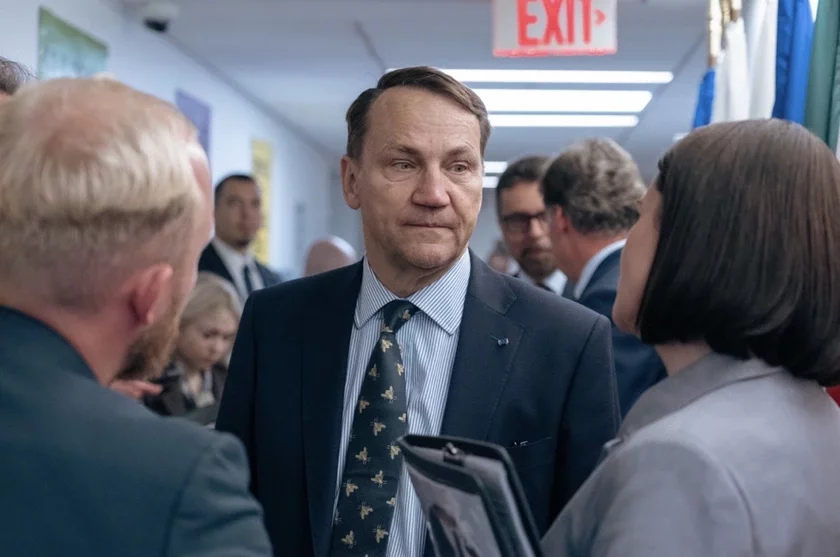
The meeting between the Ministers of Foreign Affairs of Belarus and Poland, Maxim Ryzhenkov and Radosław Sikorski, in New York took place at the initiative of the Belarusian side. Dzianis Kuchynski, Sviatlana Tsikhanouskaya's advisor on diplomacy, told Nasha Niva about this.
Before the conversation between the two ministers, Sviatlana Tsikhanouskaya met with Radosław Sikorski. Immediately after the negotiations, representatives of her team also discussed them with the head of Polish diplomacy.
First meeting of ministers since 2020
Ryzhenkov and Sikorski met on September 22 on the sidelines of the UN General Assembly in New York. This was the first such contact since the events of 2020 and the sharp deterioration of Belarusian-Polish relations.
The Belarusian Foreign Ministry reported that the ministers discussed the state of relations between the two countries, possibilities for their development, and the situation in the region.
Radosław Sikorski himself was more specific. He said that the discussion concerned the situation at the border and regional security. To the question of whether he urged Minsk not to allow Russia to use Belarusian territory for missile and drone overflights, the Polish minister replied: "Among other things".
He called the meeting "the first, introductory one". Sikorski also reported that contacts are taking place between other departments and at other levels, and that Poland is preparing to open a new building for its embassy in Minsk.
The Polish minister compared a possible normalization of relations to a snowdrop, which "can bloom when the weather is favorable."
"A credit issued in advance"
According to Dzianis Kuchynski, Sviatlana Tsikhanouskaya's team was aware of the context of the two ministers' negotiations and maintained contact with the Polish side before and after the meeting.
"Sviatlana Tsikhanouskaya spoke with Minister Sikorski on Monday, before his meeting with Ryzhenkov. Almost immediately after Sikorski's meeting with Ryzhenkov, Franak Viačorka and I had a substantial conversation with Minister Sikorski. Therefore, we have a clear understanding of the context of this meeting and its essence," the advisor said.
He emphasized that Minsk had requested the negotiations.
"The initiative for the meeting came from the Belarusian regime," noted Dzianis Kuchynski.

Before Sikorski's conversation with Ryzhenkov, Sviatlana Tsikhanouskaya discussed political prisoners, Russia's war against Ukraine, and the militarization of Belarus with the head of Polish diplomacy. Lukashenka's dependence on the Kremlin was a separate topic.
Tsikhanouskaya's team assesses the very fact of the meeting as a political advance for Minsk. Dzianis Kuchynski noted that the negotiations took place on the sidelines of the UN General Assembly, where similar contacts occur regularly. However, for the Belarusian authorities, who are seeking to emerge from international isolation, even such a conversation is significant.
"The very fact of such contact is already an advance for the regime. Now the question is whether it will use this for real steps," the advisor believes.
According to him, this situation will also be a test of Minsk's ability to act independently:
"In fact, this is a test of whether Lukashenka's regime has any subjectivity and independence, about which we have serious doubts. If this credit is squandered again, it will be yet another testament to the regime's inability to act independently."
As concrete steps that Poland and other European countries expect from Minsk, Dzianis Kuchynski named the cessation of repression, the release of political prisoners, the halt of persecution of Belarusians both within the country and abroad, and the renunciation of complicity in Russian aggression against Ukraine and hybrid attacks on neighboring states.
According to the advisor, the meeting in New York does not yet indicate a change in Warsaw's policy. Polish authorities understand that repressions in Belarus continue, Minsk supports Russia in the war against Ukraine, and neighboring EU countries face migration and other hybrid pressure.
The Belarusian authorities, in turn, know what steps are necessary to improve relations with Poland. However, Minsk has previously tried to use international contacts for propaganda purposes, presenting the very fact of a conversation as a weakening of isolation. Now, the further development of relations will depend on whether the Belarusian authorities confirm their statements with real actions.
"To prevent a return to business as usual"
During her trip to New York, Sviatlana Tsikhanouskaya also met with Polish President Karol Nawrocki. The main topic of discussion was Poland's future policy towards official Minsk:
"We spoke about the importance of Poland maintaining a strong, principled, value-based policy towards the Belarusian regime. To prevent a return to business as usual and for any further steps to depend on the regime's real actions."
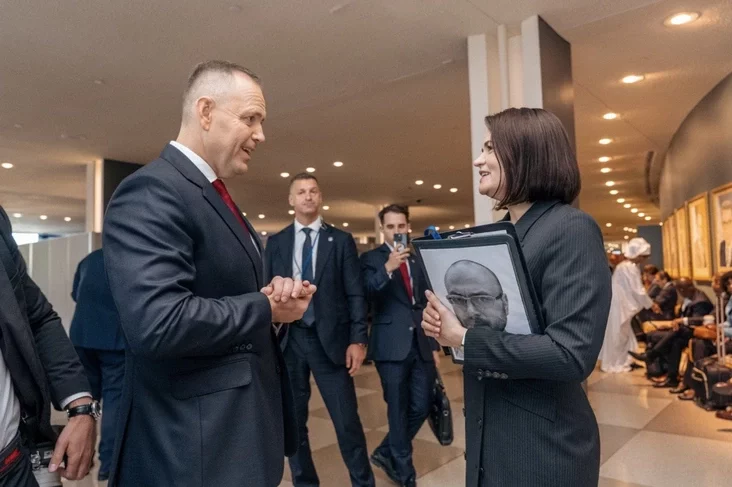
Thus, it appears that Warsaw leaves open the possibility for further contacts with Minsk, but their continuation will depend on whether the Belarusian authorities take steps regarding political prisoners, repressions, border security, and Russia's war against Ukraine.


The bassist of "Pyatlya", his 18-year-old son and the star of "Razbitaha Serca Patsana" — we tell you about the Belarusian-speaking band Prypiać, which presented its original "Kalykhanka"


Comments