


Belarusian Woman Designed Minsk Metro, Now Responsible for New York Stations
If you have ever traveled on the Zialialuzhskaja line of the capital's subway, you are almost indirectly familiar with the heroine of this text — she was part of the team that designed the new stations. Now Vera lives in New York and has been working in the local subway system as an architectural lead for two years.

The Belarusian woman told "Zerkalo" about her work, her Manhattan office, whether there are many rats in the subway stations, and why her colleagues are delighted with the Minsk metro.
"Few companies in New York can do what we did in Minsk"
Vera's story as an architect began when, at 17, she enrolled in architecture at BNTU and moved to Minsk. The 29-year-old Belarusian woman recalls her career choice with a smile: as a teenager, she originally wanted to become a great choreographer.
— But my mother stopped me and said: "Vera, I don't want to sponsor your whole life, so choose a more serious specialty," she recounts. — And my mom is a very creative person, a women's clothing designer. So from childhood, I loved working with patterns; my mother taught me this. Because of this, the creative and technical sides started working together in my head — and that's how I chose architecture, because it also combines both art and technicality.
She enjoyed studying at BNTU, but wanted more — in her third year, the Belarusian woman tried to get a job at "Minskmetroproekt." At that time, her skills were more theoretical, so the student was looking for practical experience.
— They told me then: "Child, you are so young, go study more, we have never hired students." And I went — I worked in an architectural workshop at Kramarenka's (Viktar Kramarenka — Belarusian architect, author of the National Library project, "Moskva" cinema in Minsk, "Traktorny Zavod" metro station and more), — recalls the interviewee. — In my final year, when I had to think about job placement, I came back to "Minskmetroproekt": "Do you remember me?" And they took me for an internship, and then for placement — that's how my journey in the field of metro and transport architecture began.
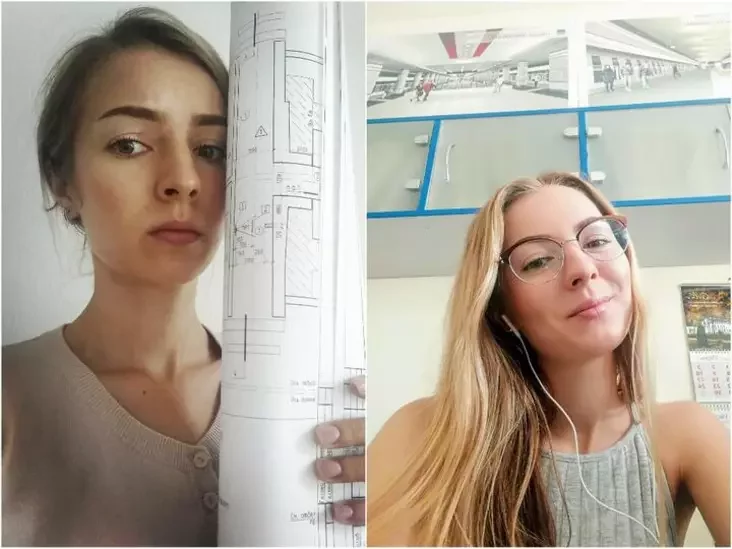
Thus, at 21, Vera began working in a rather narrow and niche architectural field, which she greatly enjoyed: in tunnels and the subway, she saw something mysterious. Delving into the field was interesting, and the design of new stations, which "Metroproekt" was then working on, was inspiring.
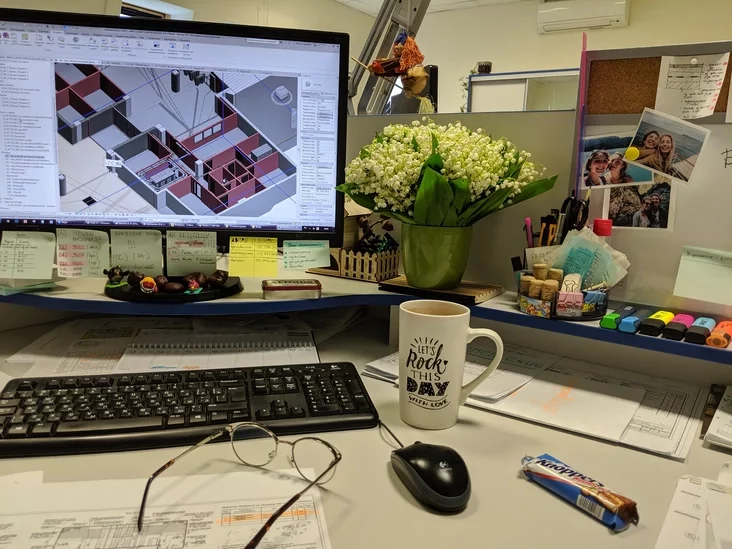
— We were developing a new line: I was part of the team that worked on the stations "Kavalskaya Slabada," "Vakzalnaya," "Yubileynaya Ploshchad," "Bahushevicha," "Aerodromnaya," — the Belarusian woman recounts. — Most of all, I worked on "Aerodromnaya." There, we created a cool BIM project, where the entire station was made as an information model in 3D, with all systems and communications interwoven. This is a very high level of design. At the time, I didn't understand it, didn't appreciate how cool the things we were doing there were. Fast forward: in New York, I saw that few local companies can do what we did in Minsk ten years ago. Although the level here is very high.
During six years of work at "Minskmetroproekt," Vera rose to the position of a second-category architect — and in 2021, she received an invitation from the Moscow company "Mosproekt."
— It was like a promotion: both in terms of salary and in terms of more interesting projects, — she recounts. — There was a large transport hub, a junction of several stations, and we started working on it. But I only stayed there until 2022.

"That's how at six in the evening, I walked out onto the street already jobless"
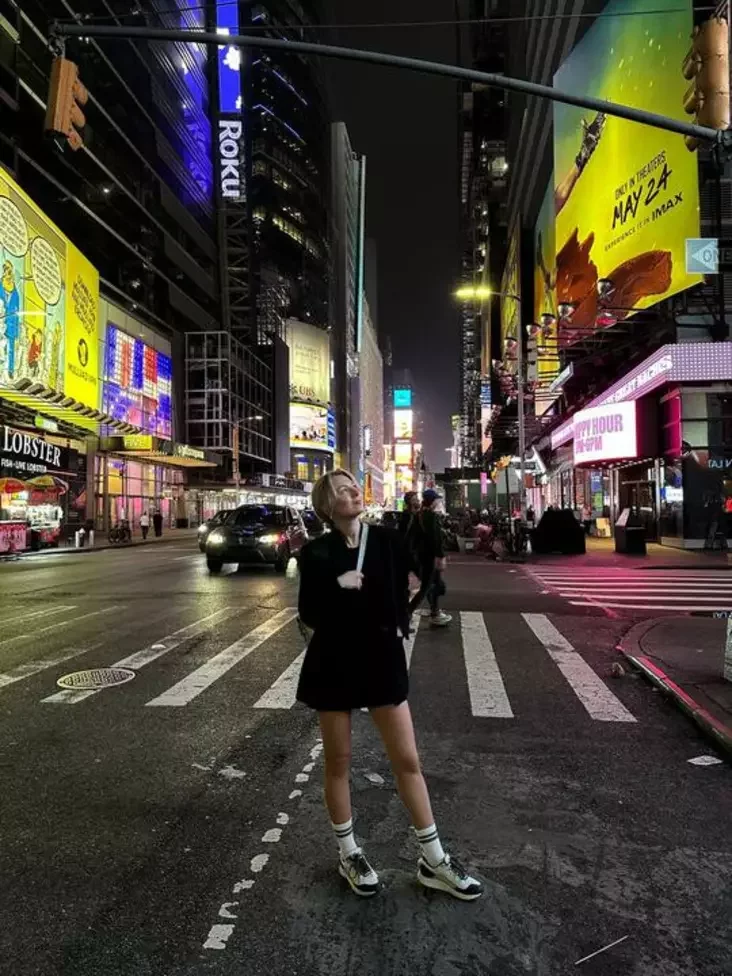
In 2022, Vera thought about moving — and her relatives lived in the USA, so the choice fell on this country. Thus, the Belarusian woman moved to New York — and began a new stage of her life.
— At first, it wasn't easy. I was learning the language because I wasn't very prepared when I arrived, I didn't speak English fluently. For the first six months, I had three English schools a day: like full-time. In parallel, I was doing documents, paperwork — and after six months, I found a job as an interior and furniture designer, — the interviewee recalls.
But the subway was still a distant prospect then: she lacked professional vocabulary and was not accustomed to the local measurement system (in the USA, the metric system familiar to us is not used).
— That was the most difficult part, because I work with measurement systems. And so my first job helped me a lot with this. We worked with Italian furniture, which is designed and made in centimeters, meters, millimeters, and I used it to create interiors for the American market. So I had to convert these European kitchens, small offices, cabinets, drawers — all into inches (one inch is 2.54 cm), — she recounts. — In a year there, I learned how drawings are made in the States, how they differ. Since I already had a large body of knowledge, I had to retrain myself, adapt everything to new rules, a new language, a new measurement system.

A year into her first job, something unexpected happened. It was like in a movie, Vera recalls. On a normal workday, employees were invited to the conference room an hour before the end of the workday — and nothing more was explained.
— And then the company owners say: "We are bankrupt, from tomorrow you are unemployed, and the entire building and everything in it belongs to the bank," she recalls. — I stand there and don't understand what kind of joke this is. More than 100 people in the company! Not only us designers, there was production, IT sector, salespeople. Some hysterically started laughing, others started crying, because people had house loans, children. And just like that, at six in the evening, I walked out onto the street already jobless.
Then the Belarusian woman applied for unemployment benefits, which she received for six months, as Vera lost her job through no fault of her own. The amount didn't cover all expenses, especially for New York, but it was good support, the Belarusian woman adds. It also finally allowed her to start looking for work closer to architecture and the subway — so the interviewee began sending resumes and portfolios to various architectural companies.
— It was interesting, maybe I would design skyscrapers, after all, in New York everything is glass, concrete, — Vera recounts. — And in parallel, I studied at a private New York college that trains architects and engineers. They have a free program for immigrants with relevant diplomas from other countries. You choose your classes, network, and they help you prepare for interviews. There were even classes on how to deal with imposter syndrome, because that's the biggest problem for everyone who has established themselves as a specialist in their home country and moved to a new one, — the Belarusian woman says.
True, her first interview experience wasn't very positive, Vera says. The thing is, in the USA, to work as an architect, you need a license — without it, a person can be an architect's assistant, a designer, or an architectural lead, but with the caveat that they are unlicensed. The interviewee does not yet have such a certificate, partly due to bureaucratic difficulties: to confirm her education, she needs BNTU to send direct confirmation to the New York State Education Department. But the Belarusian university cannot do this due to its own rules.
Although Vera can get a license in another state with different protocols, she still needs to work for at least two years under a licensed architect and pass several exams. All of this delays obtaining the coveted document.
Without it, a strange situation arises: the Belarusian woman's experience is rich and interesting, but she can only apply for positions for which she is overqualified. That's why there were many rejections at first: they wrote to the Belarusian woman that she was "too overqualified."
"They Sat and Looked at My Portfolio with Open Mouths"
Despite this, Vera continued her search — and saw vacancies at the MTA (Metropolitan Transportation Authority, a public transportation agency that operates subways, buses, and commuter trains in and around New York). They were recruiting a group of architects, from assistants to licensed specialists of various levels. She sent her resume to all vacancies at once and even forgot about it — and two months later, she received an email.
— I read: "Sorry, you were not selected for such-and-such a position at the MTA." I thought: "Thanks, at least they replied," because many companies ignore you. The next day, a second letter arrived — they sent an official offer to come for an interview! So, for one position, they rejected me, for another — they invited me, — the Belarusian woman explains. — I quickly started preparing with my tutor. I had one day and night to try and impress such a large company in a language that wasn't my own.
At that moment, Vera recalls, she didn't even know exactly what she would be doing. She applied because she saw the words "architect" and "metro." And she thought: "Let's give it a try."
— I arrive at the building in the center of Manhattan, on Wall Street. My first impression was like the Ministry of Magic in "Harry Potter," where everyone rushes in with briefcases. Everyone serious, in ties, shirts. And I, such an imposter, came, — she shares her thoughts at that moment. — They let me through, photographed me, processed me. I come to the interview, show my resume and portfolio. They see that this is a full-fledged specialist who has designed so much, stations in Minsk, Moscow — people with subway experience had never come to them before. Plus, I was proficient in the newest programs, like Revit (a professional program for building information modeling. — Ed. note). They were very surprised when I showed them the Minsk metro, the drawings; they sat and looked at my portfolio with open mouths. And I was bursting with pride for the Minsk design team at "Minskmetroproekt"! They said it was great, "we want this new breath, new perspective, new ideas to make New York stations better."
When Vera added that she was also undergoing a retraining program at a local college, there were no doubts left about her. During the interview, they immediately made it clear to her that everything was fine and that they would contact her, although the Belarusian woman herself didn't fully believe it.
— I left there and immediately went to a bar, because the stress was so intense, everything was shaking. I needed to celebrate the fact that I had managed, that I had successfully completed the interview. I didn't even know if I would be chosen, but I had gone through it with dignity. Two days later, HR called me and said: "Congratulations, you've been selected," — she shares. — I just jumped and screamed! I really wanted to work with the subway, because the subway is my love and passion. It was genuine happiness. And then fear washed over me: this is a mistake, I don't know why they chose me, now they'll call and say they're actually not taking me. It was an emotional rollercoaster.
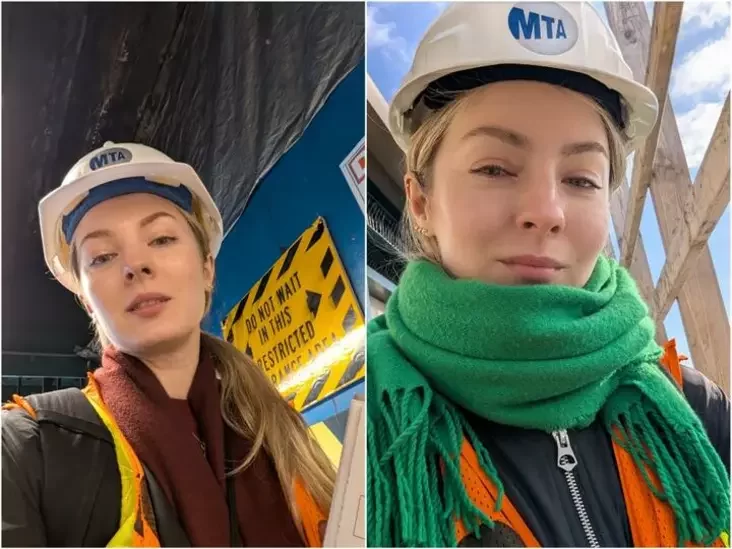
At the time of employment (this was two years ago), the issue of the license arose again: without it, Vera was only offered an assistant architect position. The Belarusian woman agreed without hesitation and was ready to start even tomorrow. In practice, it didn't happen so quickly — first there were internal checks.
— It felt like I was applying to the FBI, not the MTA. They asked a lot of things, all documents had to be prepared: who you are, what you are, what your background is, where you designed. They collected a lot of information about my professional activities. They checked my diploma. By the way, my bachelor's degree from BNTU was evaluated here as a master's degree in architecture according to American criteria, because we studied for six years back then, — she recounts.
"Rats are part of New York's calling card"
At the MTA, Vera's position formally sounded like "assistant architect," but in fact, she was hired as an architectural lead — meaning a project manager from the station's perspective. The main difference from her work in Minsk is that while there she created plans for new metro stations, now her task is to support the metro's operations.
— It's over 100 years old here, it's really old. And there's no hiding it, there are plenty of problems. The New York subway is a very good shelter for the homeless during winter, for example, — she says. — Rats are part of New York's calling card. The subway is often dirty, smelly. Not all areas are equally safe. This also influences it: depending on which neighborhood a station is located in, that's the environment there. By the way, the more attractive it is, the more quickly it becomes a tourist spot. Although, as people born here say, "it's clean, ideal subway compared to what it was 20 years ago."
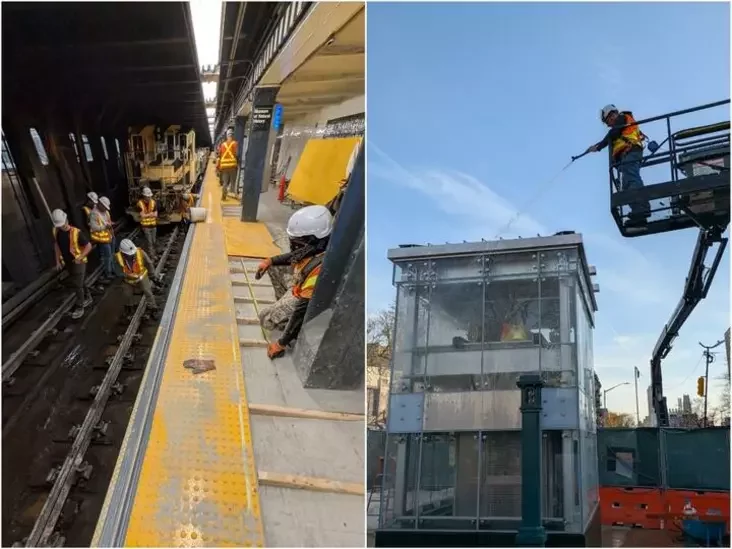
Vera herself pays more attention to the subway as a structure, to how old it is, and how its operations are organized. The fact that it's dirty is of least concern to the Belarusian woman.
— I walk around with my mouth open, wondering how well it was designed: a million intertwining lines (in reality, there are 36 lines and 500 stations, "million" is figurative here), trains run precisely, — she notes. — Also, because the city consists of islands, there are groundwater issues around, and underground and surface tunnels intertwine. The subway here is also shallow. In Minsk, we are used to deep stations because there were more opportunities to dig a trench, build a station, and bury it. Here, you can't just tear up half of Broadway and do something. Because of this, the stations get very hot in summer and freeze in winter. As a result, it's impossible to breathe, ventilation is insufficient, because the stations are old, and when they were built 100 years ago, so many other branches and such heavy traffic were not foreseen.
"They Advise Me to Get Used to It, Because This Isn't Minsk"
Due to this peculiarity of the local subway, the main task of MTA employees is to maintain the stations in working order and update them to meet modern standards.
— For example, I did reviews (inspections. — Ed. note), checked, wrote comments, found errors in the drawings that were sent to us. I checked passenger flows, circulation, how it affects things if we close one set of stairs, whether we can open another, — the woman describes her work. — The New York subway operates 24/7, it's a living organism. It cannot stop, we cannot close a station to repair it. And you're essentially performing open-heart surgery. For instance, on many stations now, we are trying to implement elevators, escalators, or new stairs so that they comply with new standards and accommodate people with additional needs.
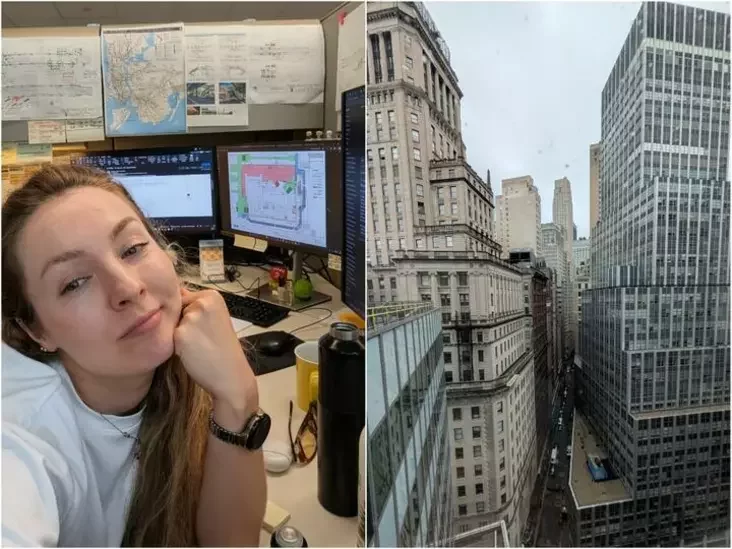
A different approach has been adopted in the new place. For example, at first, the Belarusian woman was indignant, wondering why stairs couldn't be replaced entirely instead of just repairing flights, or if it was really that difficult to address peeling paint.
— Then they advise me to get used to it, because this isn't Minsk (laughs). A colleague tells me: "Vera, it's old, but it's still functional." This answer explains the entire approach in the New York subway, — she says. — So here, I also started looking at functionality, at what can be preserved. But aesthetics are still important to me. In the team, I'm a fighter for beauty, paying attention to details to make everything look appealing and clean. I often suggest adding decorative solutions, choosing colors to make the space more cozy. I try to convey this approach.
Currently, Vera is working on 60 different projects. They vary in themes and scales: from small stairs that need to be completely redone, or an elevator that needs to be added to an old station, to working with external partners. Among these, there is no design of new subway sections (currently, three new stations are being built in New York, but Vera was not assigned to this project), but the interviewee was only sad at first. Then she received an external project — and it turned out to be no less interesting.
— This type of task is related to external development. For example, there are many skyscrapers in Manhattan. If a new one is built and intrudes into the space of our stations, we must cooperate with them. They integrate exits with our stations or install their foundations and take over our premises. We begin to discuss and negotiate. Then they create a new air conditioning system or give us new premises, and in return, we allow them to use our space, — the specialist gives an example. — In such projects, I get acquainted with modern skyscraper architecture, represent the subway, protect the station, passengers, and staff. It's an interesting mix where you learn a lot. You see how people negotiate, how technically proficient they are. This is very interesting to me, and I ask the management to give me such projects involving external buildings. Because, although I miss designing very much, I have started moving in the direction of project management and plan to develop there.
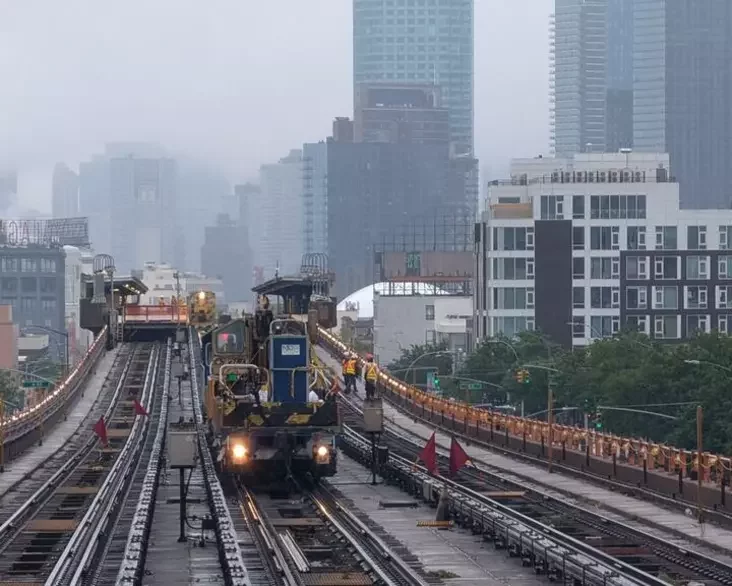
"I Look Serious, Walk with Blueprints, Photograph Everything, Take Notes, Mostly Keep Quiet and Listen"
The Belarusian woman spends most of her time in her Manhattan office, working from eight in the morning until four in the afternoon. But trips to the stations are indispensable: to work with the subway, you need to see what's happening in it.
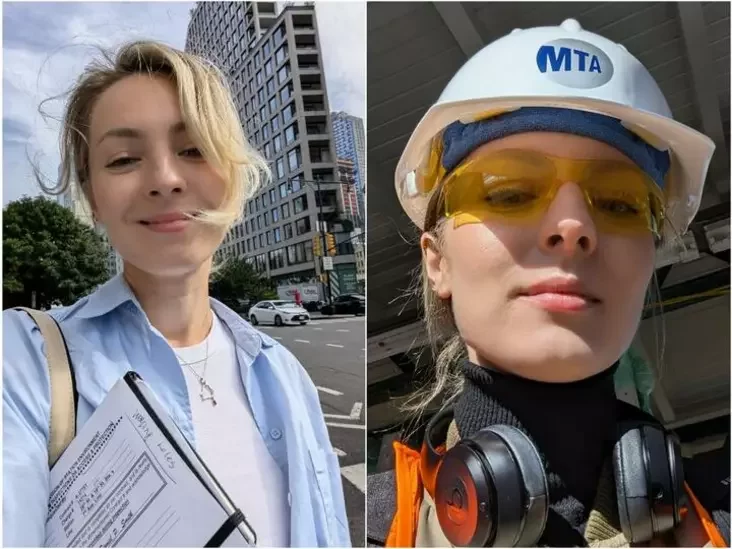
— I love working on-site visits because you get a better sense of the scale. In Minsk, I sometimes made mistakes in drawings, and then at the construction site, I would see a kilometer-long beam and think: "How could I have designed it like that?" — she recalls humorously. — When I go on site visits in New York, I wear a white hard hat, a vest, and special boots. Not many women work on construction sites or in the subway, so they remember me right away. I look serious, walk with blueprints, photograph everything, take notes, mostly keep quiet and listen. They even called me Lady Boss at first (laughs). In reality, as an immigrant with imposter syndrome, I listen because I don't always understand everything due to different accents and fast conversations. Before saying anything, I think everything through in my head. They think I'm important and businesslike, but I'm just trying to understand everything.
Despite this, Vera hasn't noticed sexism towards herself, although two years ago she was the first female architect among 15 men in the team. Later, a year after, three more women joined.
— We all have different views, different religions and nationalities, and yet we are one team. This is very helpful and inspiring. Colleagues supported me: they covered my workspace with stickers with advice and new words, — the interviewee shares.
There were no issues at the construction site either, she continues. Not once did the specialist feel any condescension, as if she, as a woman, wasn't capable of handling her task.

— The Belarusian school of labor has raised responsible and hardworking employees, and this is highly valued here. Colleagues say that I do even more than necessary, — Vera recounts. — But in Belarus, at construction sites, I noticed sexist attention. When I started working in my early 20s and came to a construction site to point out mistakes, I wasn't always perceived as a serious specialist. Ordinary workers might make remarks or whistle after me.
Sometimes she has to work at night, the interviewee continues. Since the subway operates around the clock, interference with its operations is only possible when there are the fewest passengers.
— For example, to check a new elevator for water resistance, we conduct a spray test: we spray water. We cannot do this when passengers are walking, so we plan it for night. Then, when we close part of the station with cones, there aren't many people and there are no problems, — Vera says, clarifying that all overtime and night shifts are paid separately. — Or to check the edge of the platform, we have to go down onto the tracks. Stopping trains for ten minutes during the day here is a drama, so it's also better to do it at night.
True, taking such night shifts isn't mandatory — but American ambition greatly encourages them, the Belarusian woman adds. Moreover, life in New York is expensive, but one wants to improve their standard of living, to travel. That's why you take on extra work, the specialist explains.
— New York is probably the most expensive city in the world, especially rent, — Vera states. — My salary falls into the middle category: since I had no experience in the New York subway, they offered me the lower end of the salary range, and that's fair. After two years, I can increase it. When I get my license and my signature is worth money, my salary will increase even more. But for now, I fall into the most disadvantaged category: I don't have benefits, taxes are high, and my salary isn't that large. Those who earn over 200 thousand a year also don't have benefits, but their money allows them to live comfortably. The most vulnerable group is people with an average income of 70 to 100 thousand.

"Maybe I'll still be able to work for the Belarusian metro?"
Working in the New York subway is very inspiring and interesting, Vera shares. Having designed metros in Minsk, Moscow, and now in the USA, she has seen how diverse it can be.
— I'm very inspired when systems are complex. It's inspiring when many specialists work together, and especially when you are involved in it. There are many challenges here: you need to combine all systems, think about the space, the interior, all communications, how it all intertwines in one place and creates such a living organism, a transport hub, — she says. — I'm also very inspired that I can apply my Belarusian background and influence some small things. Even straightening the grates on one wall and making it aesthetically pleasing — I think that's already a kind of victory.
As for plans, Vera isn't looking too far ahead. For now, the main thing is that same license. What comes next is unknown. On the one hand, she understands that the longer she lives in the USA, the harder it will be to move later: you put down roots anywhere over time. On the other hand, the longing for the Minsk metro hasn't disappeared:
— Sometimes I catch myself thinking: maybe I really will be able to work for the Belarusian metro again? I had a dream of becoming the author of a station in the Minsk metro. I didn't manage to realize it because I finished working earlier. And this dream is still an open gestalt. Maybe someday I will return, as an adult woman, or even at retirement age, I will be able to practice architecture and do it. Therefore, I don't want to make strict plans for the future. Life is very interesting; you never know where it will take you.


Comments
Веры не трэба выкладаць ў сеціва фотаздымкі з будоўлі, асабліва без "appropriate Personal Protective Equipment". У прыватнасці ахоўныя акуляры павінны быць на носе заўсёды. Пра гэта кажуць на інструктажах.
Тое, што MTA патрабуе ад кантрактараў, павінны выконваць і самі.
Фоткі з беларускай будоўлі гэта канешне жах. Як узгадаю што там робіцца...
На захадзе лічаць грошы, таму метро будуюць "мінімальна неабходнае".
Гэта ў саветах, і ў дыктатурах людзі не маюць права голасу на тое куды падаткі ідуць.