


A Belarusian woman translated for the President of Ecuador, worked as a flight attendant, and now opened her own language school "Russian with a Russian Woman" in Mexico
When Anastasia Marozava, a student at Minsk State Linguistic University, went to work in a children's camp in the USA for the summer, she could hardly have imagined that this trip would eventually lead her to Mexico. Now the Belarusian woman lives in Puebla, has her own language school there, and is preparing to obtain Mexican citizenship.
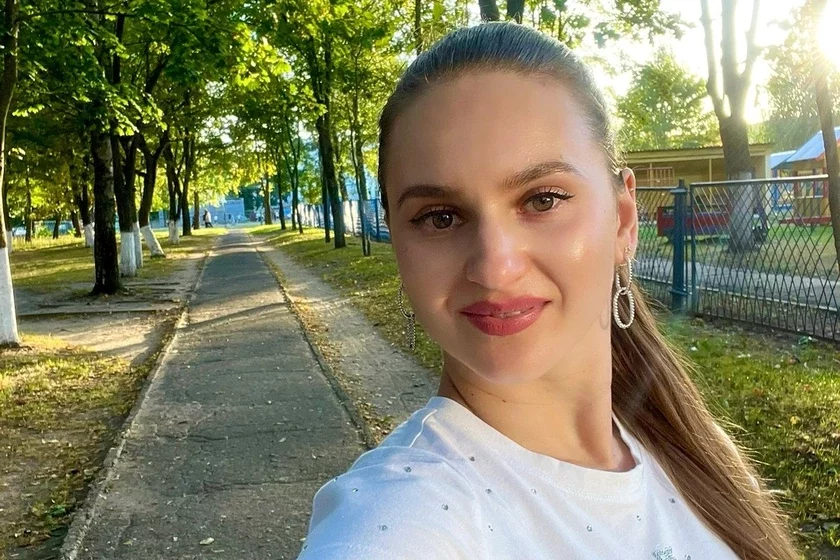
Anastasia Marozava grew up in Zhlobin, and after school, she went to Minsk to study at the Linguistic University. The girl speaks English and Spanish.
As Anastasia recalls in a conversation with a journalist from the Mexican newspaper El Sol de Puebla, in her final year, she decided to participate in the Work and Travel student program and went to the USA for the summer. While working at a children's camp in North Carolina, the 21-year-old met Francisco Rodríguez. He was her age, also worked at the camp, and came from the Mexican city of Puebla, one of Mexico's largest cities, located about 100 kilometers from the country's capital, where he studied law.
After the summer ended, each returned to their own country, but the relationship continued, and the young couple visited each other.
They spent about two years like this, at a distance. Then Francisco went to study in Madrid, and it became easier to meet. And then he got an internship at the Mexican Embassy in Moscow, where the couple lived together for five months.
When the internship ended and he had to return home, Anastasia seriously began to think about moving to Mexico.
"Why not get to know another culture, literally another world and another country? And also to better know myself. Because it's not just a trip for a man, it's opening new horizons," the girl shares her thoughts from that time.

From diplomacy and aviation to a language school
In June 2019, 24-year-old Anastasia moved to Puebla. By that time, she already had a solid professional background. She had worked as a translator for diplomatic missions of Ecuador and Venezuela and even translated during the visit of the delegation of the then-President of Ecuador, Rafael Correa. Later, the girl worked as a flight attendant for Aeroflot.
However, there was no work in the new place. She also had to get used to the local way of life. Anastasia says that since childhood, she was accustomed to taking punctuality, duties, and agreements seriously. In Mexico, she encountered a more relaxed attitude towards plans changing or things not going as expected.
"It was very difficult for me. But with time, I understood the local principle: if something doesn't go according to your plan – it's okay. No one dies. You just learn from your mistakes and move on," the girl says.
In the new country, Anastasia decided to try earning money by doing what she was good at and started teaching Russian. Initially, she registered on the SuperProf tutoring platform, where she gave private lessons. Soon, teaching Russian for Spanish speakers was complemented by Spanish for Russian-speaking migrants who had just moved to Mexico.
In 2020, this initiative grew into a full-fledged business – the online school Ruso con Rusa – "Russian with a Russian Woman."
Today, the project has been operating for five and a half years. Anastasia's team has five female teachers. The girl continues to teach classes and also creates materials and methods used by the school. During this time, more than 330 people from Mexico, Chile, Ecuador, Argentina, Venezuela, and Spain have become her students.
Now Anastasia is preparing for the exam to obtain Mexican citizenship. In seven years, according to the girl, Puebla has become her home: here she lives with her husband, develops her school, and connects her future with this city.
"My children will be born here," the Belarusian woman assures.
Now reading


The soloist of a Russian band at a concert in Minsk, it seems, was resuscitated by an ambulance — afterwards he sang in semi-darkness to a backing track

The soloist of a Russian band at a concert in Minsk, it seems, was resuscitated by an ambulance — afterwards he sang in semi-darkness to a backing track

An Ugly Monument to a Woman Was Erected in Bykhau. Together with the sculpture in Kastsiukovichy, it could become a symbol of cultural degradation in Belarus under Lukashenka


Comments