


A blockade survivor, a professor at the Stieglitz Academy in St. Petersburg, she came from a Catholic family from the Vitebsk region, the niece of the martyred priest Yuzef Baradzyula.
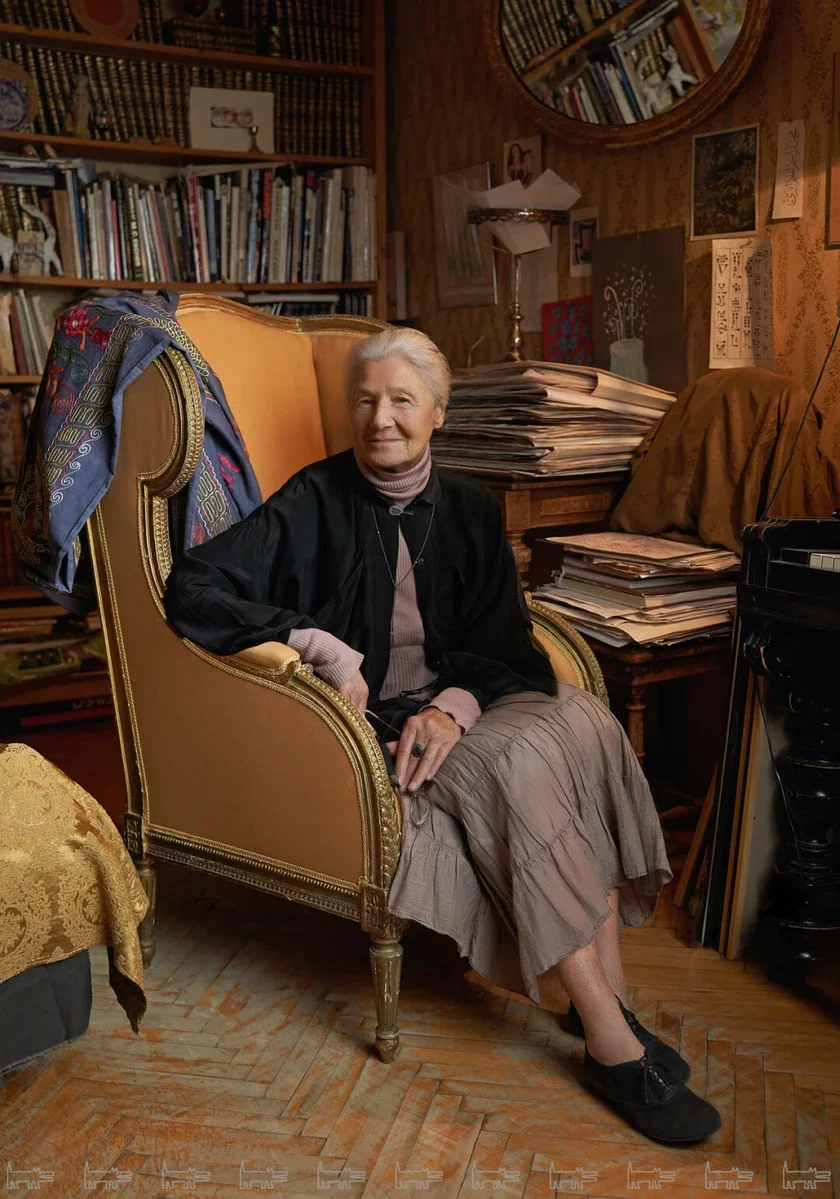
On September 17, Irena Adamawna Baradzyula (1933—2026) passed away – an artist and lecturer. People who knew her describe her as: "A fantastic person."
She came from a large Catholic family from the Polatsk region. Her father was a doctor, and her mother was a teacher. Her paternal uncle, Yuzef Baradzyula, was a priest who spent 25 years in Soviet camps and exiles. The ruins of the church where he served are still preserved in the Lepel district.
Irena Baradzyula was an honorary professor of the painting departments at the Saint Petersburg Stieglitz State Academy of Art and Design. She dedicated over 60 years to working at the academy, teaching almost until her death. She developed a scientific and practical course on color theory.
In her childhood, Irena Baradzyula survived the entire blockade in her hometown, without being evacuated. It was then, despite the cold and hunger, that she began to make her first drawings with frozen paints.
Her memories of the blockade are terrifying.
"Our cat was the first to get dystrophy and disappeared," she recounted. "The next day, they gave us bones and told us it was a rabbit, but of course, we knew it was our Marsik. We ate our cat, Marsik."
"Those people who went through that brutal war are completely different people," Irena Baradzyula said. "Children during the blockade were no longer children; they were wiser than adults. Everything can be taken from you, but the only thing that will never be taken from you is the formation of space within yourself. You admire this world, this sun, and this sunset; you are a part of it, and this part is not just there for nothing; it must leave something in this world. And what can be left? What you have done, what you have given to people, and what remains after you."
Now reading


"More than 10 people have left for Europe — and that's just from my department." A resuscitator from a district center frankly described the daily life of Belarusian medicine


Comments