


"More than 10 people have left for Europe — and that's just from my department." A resuscitator from a district center frankly described the daily life of Belarusian medicine
Mikalai (name changed) is an anesthesiologist-resuscitator. For several years, he worked in a hospital in a Belarusian district center, and then was forced to leave the country. In a frank confession, the doctor recounts what he observed in the district hospital — in many ways, it's a mirror of the entire society.
"Sometimes we wrote a drug on paper, but in fact, we didn't give it to the patient because it simply wasn't available."
When you work in intensive care in such a place, you have to be ready for anything. I have colleagues who work as anesthesiologists in specialized intensive care units in Minsk or regional cities. They usually work with a limited number of diseases — for example, it's cardiac intensive care.
But in a district hospital, you're a universal machine. Accidents, fires, elderly people with chronic illnesses or something urgent like heart attacks or strokes, children with poisonings, burns, or falls — everyone is brought in. I had no experience managing children, that's a separate specialty altogether, but you have to adapt.
When you go through this school, you become strong both professionally and morally. Especially since districts are not given much attention, so there's always a shortage of something: equipment, reagents, tests. You constantly have to come up with something to help people in conditions where you lack half of what you need.
I started working during the COVID years. A lot shocked me then — the hidden statistics, how many people were dying. When you see six corpses every day in a small district center, and you're still a very young specialist, it hits your psyche, self-esteem, everything, really hard. But once you've seen the very worst, it gets easier later, because little can top that experience.

Probably the most striking thing I saw was when a guy shot himself in the head with his service weapon at work; they brought him straight to the operating room. Did they save him? Of course not, it was a direct shot to the head.
What did I work with? Strokes, heart attacks, alcoholics, post-operative patients, and just some pathologies requiring surgery. Our department usually had twice as many patients as it was designed for, and 80% of them were grandfathers and grandmothers with strokes.
We didn't have a staff shortage, but we had a shortage of academic rigor. All the middle-aged staff quit, many left the country, almost all the old staff retired. Only the very old remained, meaning there was no one to teach the youth.
In our intensive care unit, a deep pensioner still works, and it seems strange to us. This work involves great mobility: you have to constantly move, you can be called to other hospital buildings, and you need to get there quickly. Sometimes you have to use physical force, and just for half an hour, to pump a person — it's physical exertion. And older people don't want to do this.
When I started working, my salary, including various allowances, was about 800 dollars; my last salary there was about 1000 dollars.
Taking the average across the hospital, anesthesiologists-resuscitators have the highest salaries per full-time position. But I am a young man; I should be forming a cell of society in the country, and it's simply unrealistic to exist on this money. I can't imagine how I could support a family, buy an apartment or a car.
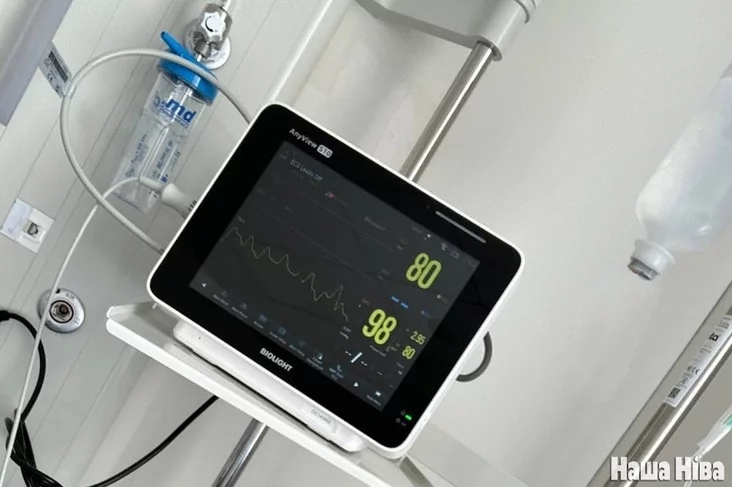
Our hospital had enough necessary equipment, at least from the anesthesiology side. There were anesthesia machines, ultrasound machines, ventilators, some monitors, even new Chinese anesthesia machines in the operating rooms. The problem was more that in departments other than ours, there often weren't specialists who could work with that equipment.
And another huge problem is the lack of reagents in laboratories; you simply cannot prescribe regular tests for a patient. In intensive care, we must take tests daily, but, for example, there are no reagents, and the next batch will arrive in a few days.

Or we have an ultrasound machine, but the ultrasound specialists have run out. There's one specialist who combines work at the hospital with another place. Intensive care performs ultrasound first, and it might happen that we need to do many ultrasounds, but he has already fulfilled his norm for today. And then that's it, treatment is suspended without proper diagnostics.
We have devices, but no consumables for them, or they run out very quickly, and we barely manage to replenish them. There are such breathing circuits — a tube that leads from the ventilator to the patient. It's clear that each patient must have their own tube, and once, we ran out of those tubes. What to do then? We had to improvise; one needs to breathe somehow.
The same goes for medications. There are state treatment protocols, and you start treating according to them, but this is missing, and that is missing, and that. And it turns out that out of the entire protocol, there's only one drug. You prescribe it, and then an inspection comes and asks why you didn't prescribe this and that. They don't care that there's nothing here.
Sometimes we wrote a drug on paper, but in fact, we didn't give it to the patient because it simply wasn't available.
"Beds are occupied by alcoholics, and when it's the turn of normal patients, there's simply no room for them."
One of the main categories that ended up in intensive care were alcoholics. The "monkey houses" (drunk tanks) simply closed, and if the police didn't like something, they immediately took the person to the hospital.
Therefore, all non-standard cases — people with inadequate behavior, very aggressive — immediately went to intensive care. We just had to wait for the person to sober up. And if they had been on a binge for many days, then it would take a long time for them to recover from that state.
I am sure it is like that throughout the country. Beds are occupied by alcoholics, and when it's the turn of normal patients, there's simply no room for them. You are forced to look for something, to choose.
In some hospitals, intensive care units might not admit such patients, but it wasn't like that for us, so we had to take absolutely everyone. As a result, there were twice as many patients as beds. You just take beds from other departments, put these people in the corridor and tie them up, and there's no equipment or monitors for them.
When they come with severe alcohol intoxication, it's not scary; we even sometimes took risks and didn't admit such people to the department. Such people just got drunk, they'll sober up quickly, and everything will be fine.
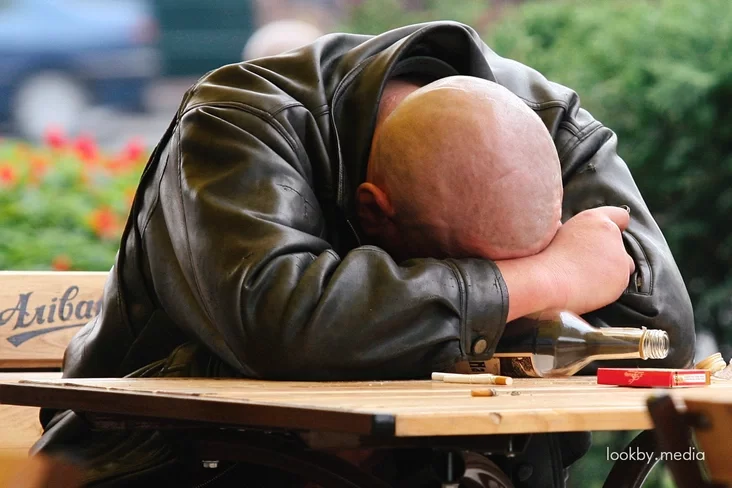
But when it's about a binge, alcohol can affect other body systems, and the person might have a chronic illness. And when people abuse alcohol, they very often don't notice that they've sustained some injuries. According to protocols, they needed to have a CT scan, because they often have head injuries from falls. And if a person has such an injury, it's 100% at least three days in intensive care. And that's it, the bed is occupied.
We also had mentally ill patients: schizophrenia, psychotic disorders, affective disorders, disorders of perception and behavior. Where from? A person comes to a psycho-neurological dispensary, they get a referral, they end up in the emergency department, and they are admitted to us. They cannot be placed anywhere else except intensive care, because only we had a closed department with constant observation.
Sometimes there are alcoholics who have hallucinations from prolonged use. If there are hallucinations, it's always initially hospitalization in intensive care, and then transfer to a psychiatric hospital — of course, after examination by a psychiatrist. But the psychiatrist is sometimes there, sometimes not, and as a result, we decided to conduct such examinations ourselves, although we didn't have the right. Later, a psychiatrist did appear, but it's still a big problem.
There were often people with suicide attempts. But the problem is that perhaps half of such cases are rather demonstrative or such that don't have any major diagnoses behind them. And such a patient cannot be anywhere except intensive care, and you cannot release them from the department without a psychiatrist's examination.
I remember a stupid case. A sixteen-seventeen-year-old boy had an argument with his girlfriend and lay in the bath, pretending to cut his veins, and wrote her about it. Someone called an ambulance, they came and recorded it as a suicide attempt. He was forcibly admitted to intensive care, and you come to talk to him, and he says — "don't think, I didn't mean it." And everyone understands, but there's nothing you can do: there will be a psychiatrist's examination and records of a suicide attempt in the person's papers.
"In recent years, more than 10 people have left for Europe to work as doctors, and that's just from my department."
It happened that doctors in our hospital risked contracting HIV from a patient. Because of awareness work, most people with HIV take pills. So, their viral load decreases, so even if their blood gets on you, it's very difficult to get infected. But sometimes there are patients who don't take pills, and they still need to be treated.
Surgeons and traumatologists are most at risk, because they are in direct contact with biological fluids. Once, a medic accidentally pricked himself twice with a needle during an operation on an HIV-positive patient, and that patient wasn't taking pills, and had a high viral load. That medic freaked out, took off his gloves, and simply went to the infectious disease office during the operation for a prophylactic dose of HIV medication.
Sometimes in the middle of the night, people arrive at the hospital who could have come at any other time. Some grandmothers come at 12 AM with high blood pressure, high sugar, or kidney problems. They start telling you what they've been ill with since the 1980s, and even bring bags so they can be admitted to the hospital, but there are no grounds for hospitalization.
Very often, elderly people were brought in who no one cared for. Sometimes you treat someone who has no relatives. And then some children or grandchildren from Minsk arrive and say — "we'll sue you for this and that." Some circus begins, even though this person was found on the street in a homeless state.
When I worked at the hospital, half of the specialists there quit. As a result, the doctors who remained had twice as much work. The administration won't always be able to fill the gaps with young specialists, because people simply no longer want to go into medicine. Sooner or later, the hospital will collapse. Something will be done, perhaps approaches will be changed or workload distributed, but in any case, it will be bad.
But I was very lucky to work in that department. There were good teachers, wonderful people, it was great to work with all colleagues.
At the same time, in recent years alone, more than 10 people have moved to Europe to work as doctors, and that's just from my department. I know several others who are actively learning a foreign language — presumably, people aren't doing this for no reason.
«Nasha Niva» — the bastion of Belarus
SUPPORT US-
"It's important for Europe to remain consistent." Tsikhanouskaya and Borrell discussed Belarusian resistance at an international forum in Spain
-
Czech citizen came to Belarus to visit his sick mother, and he was arrested
-
Former teacher disgracefully expelled from a concert in Minsk Gymnasium No. 4. It was dedicated to Teacher's Day


Comments