


How Communists Completely Destroyed the 700-Year-Old City of Most for Coal. Historic Districts Were Sold to Hollywood for Filming Real Explosions
In the second half of the 20th century, the government of Czechoslovakia made an unprecedented decision: to completely demolish the 700-year-old royal city of Most to access brown coal deposits beneath it. Instead of a historic center with Gothic and Renaissance monuments, the authorities erected an exemplary panel-block city, which was supposed to become a symbol of socialist modernization, but ultimately transformed into a zone of ecological and social disaster.
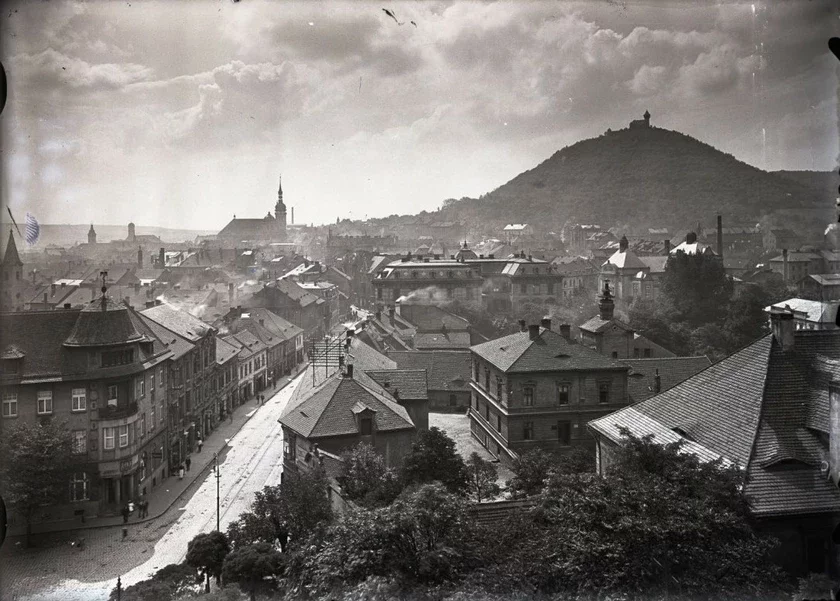
A Royal City on "Black Gold"
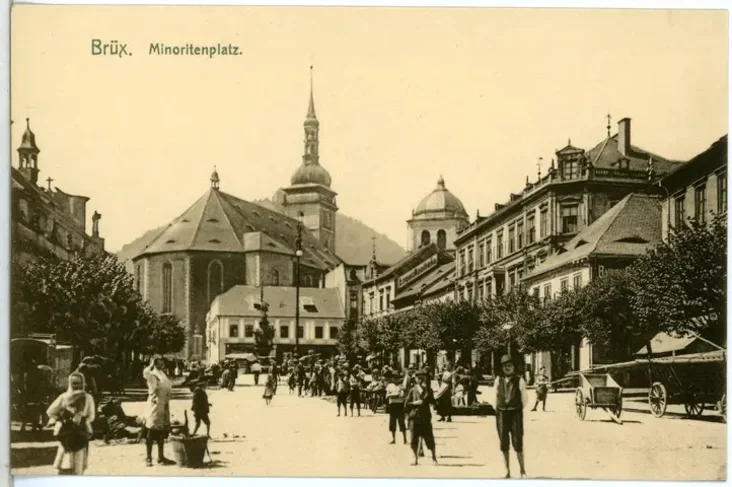
The first historical mentions of a settlement at the site of Most appear in the Latin chronicle of Cosmas of Prague from the 11th century. An important trade route from Prague to Saxony passed through the marshy terrain, built on wooden bridges, which gave the city its name (Most means "bridge" in Czech). In the 13th century, it received the status of a royal city and extensive privileges from Czech monarchs, including the right to imprison debtors, solidified by Přemysl Otakar II in 1273.
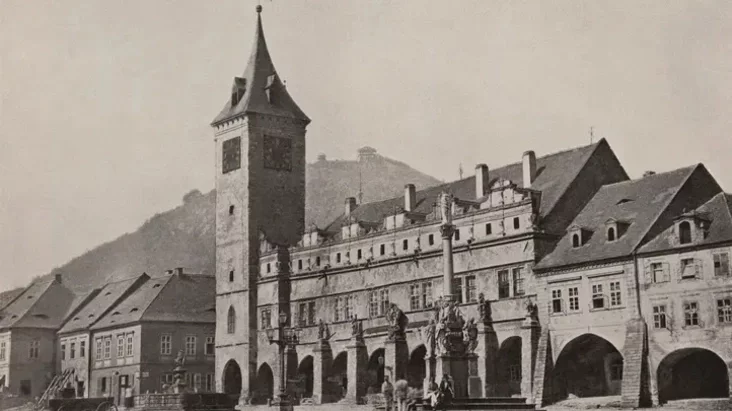
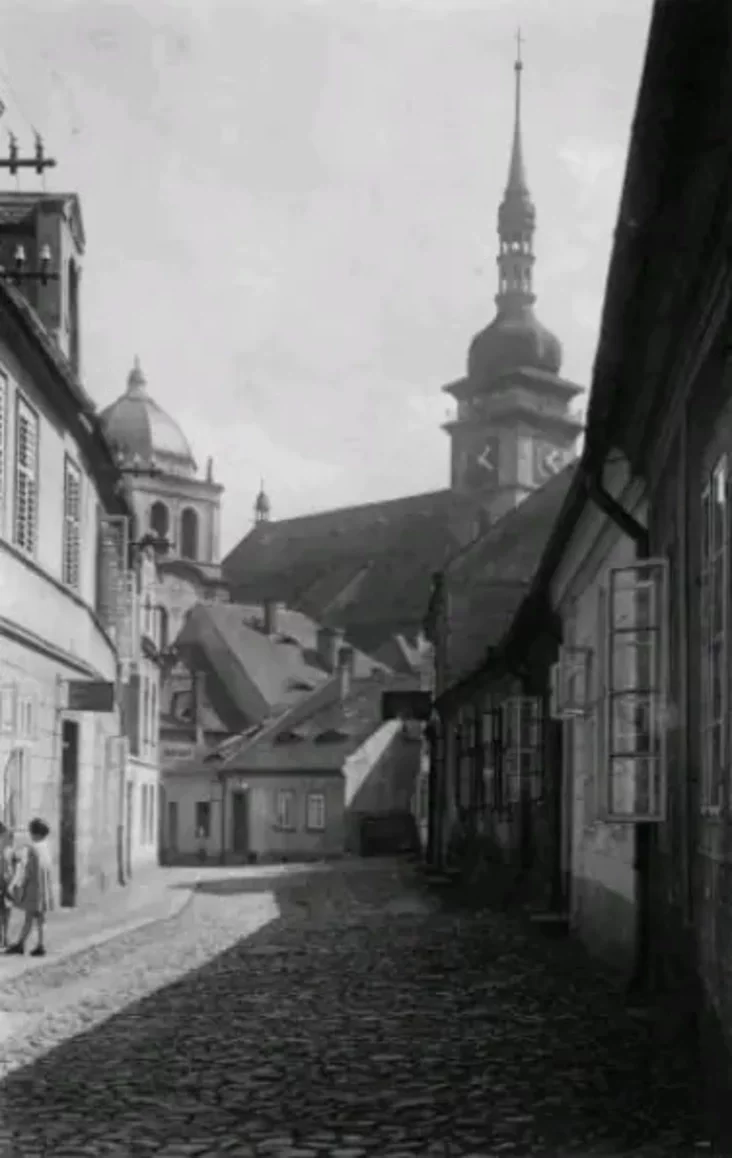
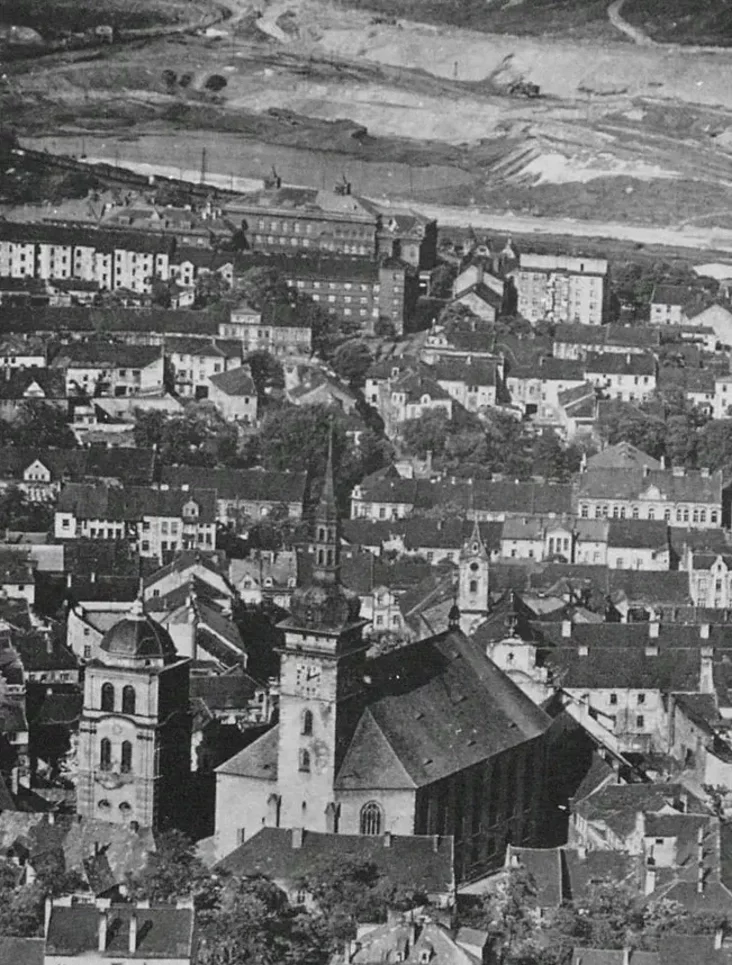
By the mid-20th century, Most was a rich historical center, whose architectural density placed it on par with Český Krumlov and Kutná Hora. Narrow medieval streets organically intertwined with wide 19th-century boulevards, lined with neo-Renaissance houses of the so-called "coal bourgeoisie."

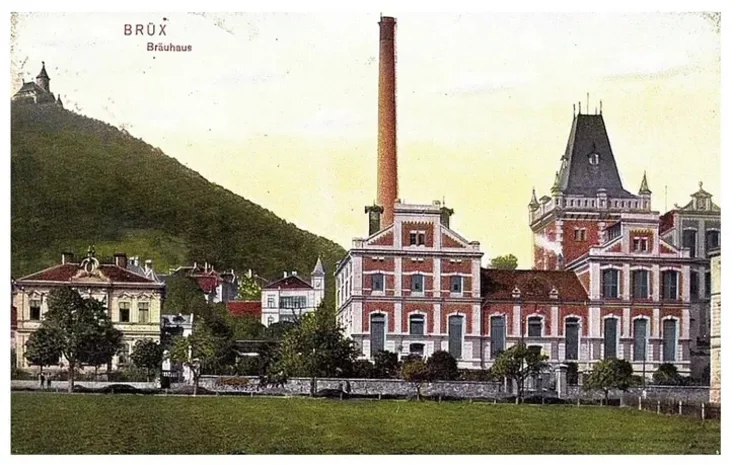
The city preserved dozens of monumental buildings: a Baroque Minorite monastery, the churches of St. Anne and St. Wenceslas, and the unique Gothic Deanery Church of the Assumption of the Virgin Mary. The historical buildings were complemented by an Art Nouveau theater, a district court building, and a local brewery founded in 1470. By 1930, Most had a population of about 28,000 people, making it a very prosperous and industrialized center. Above the city, on the eponymous hill, stood Hněvín Castle, or rather, its romantic replica from the turn of the 19th-20th centuries.

The huge deposits of brown coal, on which it literally stood, became a symbol of the city's prosperity and, at the same time, its curse.
From the mid-19th century, rapid industrialization began: in 1870, a railway was laid to the city, and soon sugar and porcelain factories, as well as a steel plant, appeared.

Coal mines approached residential areas. The consequences of such proximity became evident in 1895, when several houses, along with their residents, collapsed due to a rupture of quicksand underground. However, even this natural-technological disaster did not slow down economic growth.
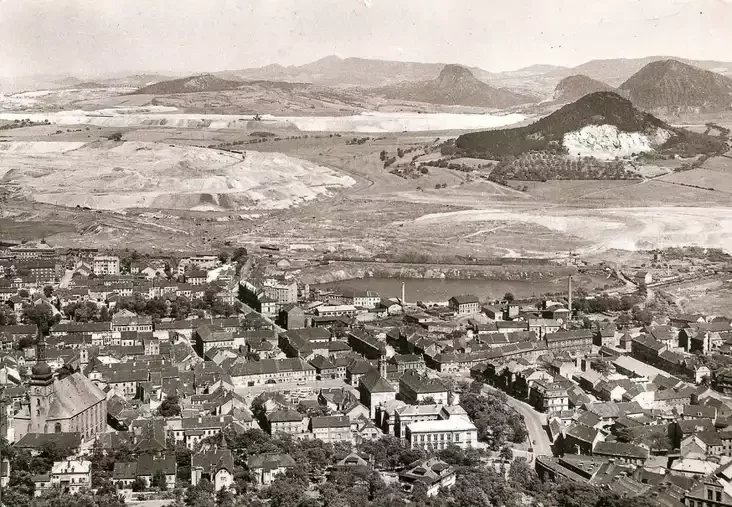
After the signing of the Munich Agreement in 1938 and the annexation of the Sudetenland to Nazi Germany, Most became a critically important hub for the Third Reich's war economy. In conditions of oil scarcity, local coal became a strategic resource. In 1939, Hermann Göring consolidated the disparate mines into the powerful corporation SUBAG (Sudetenländische Bergbau AG) and initiated the construction of a gigantic chemical plant in nearby Záluží. The enterprise, specializing in processing brown coal into synthetic fuel and gas, began operating in 1942.
By 1944, the plant was producing over 40,000 tons of benzene monthly, employing over 30,000 prisoners of war and forced laborers from across Europe. It was this strategic infrastructure that, at the end of the war, became the main target for American bomber aviation, whose imprecise strikes caused serious damage to the historical quarters of the old city as well.
Expulsion of Germans and New Residents
Before World War II, Most (then bearing the German name Brüx) was a predominantly German-speaking city. According to the 1930 census, about 17,500 Germans and only 9,700 Czechs lived there. After the end of the war in 1945, the Czechoslovak government launched a large-scale and brutal campaign of ethnic cleansing in the border territories.

The deportation of Sudeten Germans from the region proceeded in several waves. In May 1945, armed Czech militias forcibly expelled about 10,000 people across the border. In August-September, amidst an acute housing shortage for Czech workers, another 5,000 Germans left the city. From March to October 1946, 28,000 people were systematically moved out.
As a result, out of the pre-war 60,000 Germans in the region, barely 7,000 remained – primarily highly qualified miners whose work was critically necessary for the economy. All their personal property, homes, and industrial enterprises were confiscated and nationalized by the new government.
Tens of thousands of settlers poured in to replace the deported: Czechs, Slovaks, and also Roma (Gypsies), who massively left rural areas of Slovakia in search of work in the mines and free abandoned housing. Northern Bohemia turned into a demographic melting pot with extremely high labor turnover. Many came solely for property and quick earnings, leaving the region after a few months.
This total replacement of the population became a key factor that determined the city's further fate. The new residents had no historical or emotional ties to Most's medieval architecture. For them, it was purely a working landscape.
As Canadian historian Eagle Glassheim notes in his study, a new, "materialistic" identity focused on production began to form in the region. Communist propaganda actively cultivated this worldview, calling local coal "the blood that flows in the arteries of industry."

It was precisely the absence of historical roots and pragmatism that helps explain why no serious resistance to the destruction of the 700-year-old city arose in society.
The state deliberately did not invest money in repairing old buildings, allowing them to fall into disrepair. In a 1966 sociological survey, over 80% of residents stated that the economic importance of the mines completely outweighed ecological problems and the loss of architecture. And 57% of respondents emphasized that under no circumstances would they want to continue living in old Most.
The neglected historic center, without central heating, with communal toilets in the corridors and stoves, seemed to them a grim relic of the past, while the promised new panel-block buildings embodied comfort and socialist progress.
How the Decision to Demolish an Entire City Was Made
In the 1950s, with the advent of accelerated industrialization, the needs of the Czechoslovak economy for energy resources sharply increased. Brown coal extraction in the North Bohemian Basin more than doubled: from 1950 to 1964, volumes reached 50 million tons annually. Extraction technologies shifted from underground to open-pit mining.

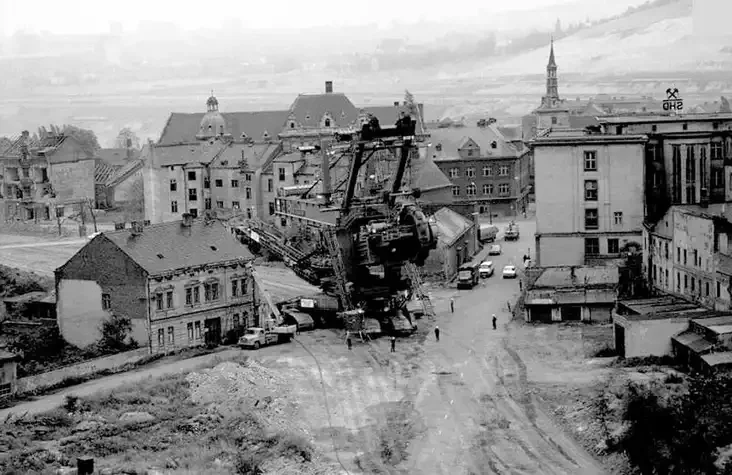
By 1965, open-pit mines were already supplying 78% of all coal in the region (for comparison, in 1910 this figure was only 15%). Huge excavators began literally carving up the landscape, and soon the open pits closely approached the borders of historical Most.
Researchers from North Bohemian Brown Coal Mines (SHD) established that a powerful, high-calorific coal seam lay beneath the center of the old city. The volume of reserves was estimated at over 86 million tons (according to some documents — up to 100 million tons), located very close to the surface. Furthermore, the demolition of the city allowed space to be cleared for dumping overburden from the nearby "Ležáky" mine, which would save the enterprise gigantic transport costs for moving soil.
On March 26, 1964, the government of Czechoslovakia adopted secret resolution No. 180 on the liquidation of the old part of the city and the construction of a new one. The economic calculations of SHD engineers were convincing: even considering the gigantic costs of demolishing thousands of buildings, relocating infrastructure, and erecting entirely new residential areas, the net profit from the sale of excavated coal was estimated to be between 2.6 and 3 billion Czechoslovak crowns.
To justify the destruction of heritage to the public, the authorities used not only economic but also social arguments. The old city was systematically brought to ruin and officially called a "capitalist relic."
According to city chronicles of that time, 88.5% of buildings were built before 1900. About 60% of all apartments consisted of only one room or a kitchen and a room, with 84% of them lacking their own bathrooms. Officials argued that modernization and the installation of sewerage in historical quarters would be significantly more expensive than building an entirely new panel-block city with modern conveniences.
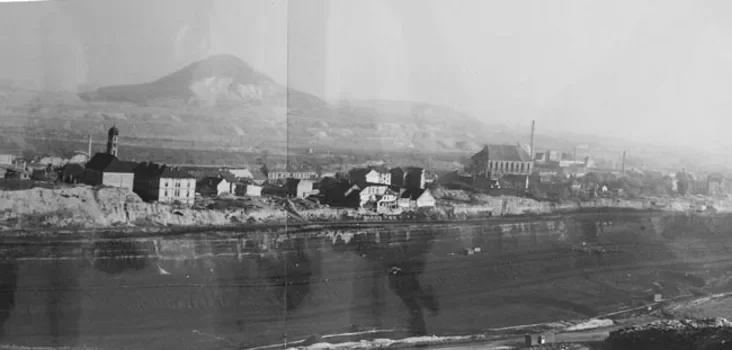
An additional factor that simplified the government's task was that after the post-war confiscations of German property, 75% of the 1,237 buildings in old Most were state-owned. This minimized compensation costs for private individuals.
The physical liquidation of the 700-year-old city began in 1965 and continued for over two decades. Demolition was carried out in stages using heavy machinery and controlled explosions. Of the 27,000 residents of Most, over 18,000 people were gradually resettled in new panel-block high-rises. By 1977, the last residents had left the old city.
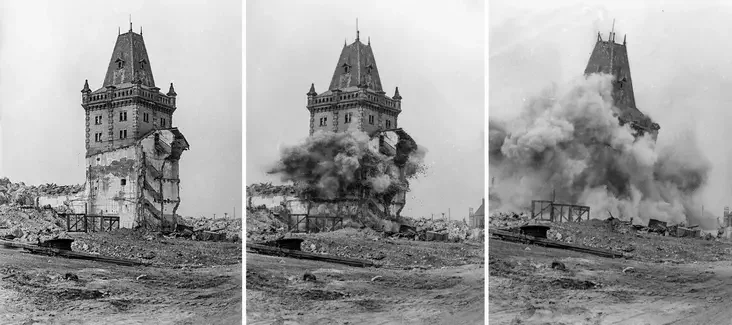

Officially, the process of demolishing historical buildings was completed on April 1, 1987, leaving only a gigantic open-pit mine in place of the monuments of European Gothic and Renaissance.
How Filmmakers Profited from the Demolition
The prolonged and systematic destruction of historical Most attracted the attention not only of industrialists but also of foreign film studios. The city, gradually erased from the face of the earth, turned into an ideal, cheap, and maximally authentic backdrop for war films. Directors did not need to build expensive replicas: Most offered real semi-destroyed streets, ruined houses, and the opportunity to legally conduct controlled explosions.

The most famous episode of this period was the filming of the Hollywood movie "The Bridge at Remagen" by the American company Metro Goldwyn Mayer. In June 1968, the film crew arrived in Most, using real planned demolitions of buildings to simulate bombings. However, the process was abruptly interrupted by the invasion of Warsaw Pact troops on August 21, 1968, which forced the film to be finished in West German Hamburg.

These shootings unexpectedly became a tool of Soviet propaganda: photographs of prop American tanks and weapons from the set in Most were actively circulated in the Soviet press as proof of the presence of real US troops in Czechoslovakia, which served as a justification for the entry of Soviet contingents "to protect the country."
In the 1970s and 1980s, the city's ruins continued to be in demand. In the early 1970s, the American film "Slaughterhouse-Five" based on Kurt Vonnegut's novel was filmed here. In 1979, the city became the backdrop for the television adaptation of Erich Maria Remarque's novel "All Quiet on the Western Front" (a US and UK co-production). To create trenches and large-scale battle scenes, film studios massively attracted local residents, coal mine workers, and professional pyrotechnicians. The ruins were also used by Soviet cinematography in the large-scale epic "Battle for Moscow" (1985).

The reason why the closed communist regime allowed Western film crews to work freely in the strategic coal mining territory lay solely in finances. Czechoslovakia was in dire need of hard currency (devisen). In return, the state offered Hollywood cheap skilled labor, technical facilities, and unique locations, virtually without interfering with scripts. At the same time, strict censorship was in effect for distribution: if a finished film did not correspond to socialist ideology, as was the case with "Slaughterhouse-Five," it was simply banned from being shown in Czechoslovak cinemas.
Socialist Utopia and the Roma Question
Parallel to the destruction of old Most, an entirely new city was being built a few kilometers away. Its design was based on modernist principles of efficiency and strict functional zoning, reminiscent of Le Corbusier's "Radiant City" concept. New Most was clearly divided into residential, transport, administrative, entertainment, sports, and industrial zones. Instead of dense historical buildings, wide avenues and typical panel-block high-rises appeared, equipped with central heating and plumbing, surrounded by large green areas.
For the communist leadership, the city was to become a showcase of socialist modernization, replacing the "capitalist relic."

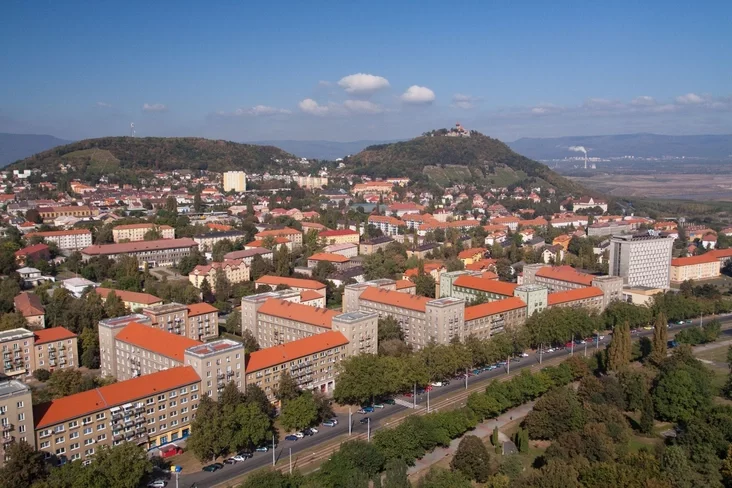
The massive relocation gave the authorities an opportunity to try and solve another ideological problem — the so-called Roma question. In the first post-war decade, thousands of Roma (Gypsies) moved from rural areas of Slovakia to North Bohemia in search of work in the mines and cheap housing. Many of them settled in old Most. By the mid-1970s, when most of the Czech population had already moved into new apartments, the historical center, awaiting demolition, had virtually turned into a Roma ghetto. Of the 1,552 Roma remaining there in 1971, over 83% were categorized by authorities as the most problematic — unemployed and poorly adapted to social norms.

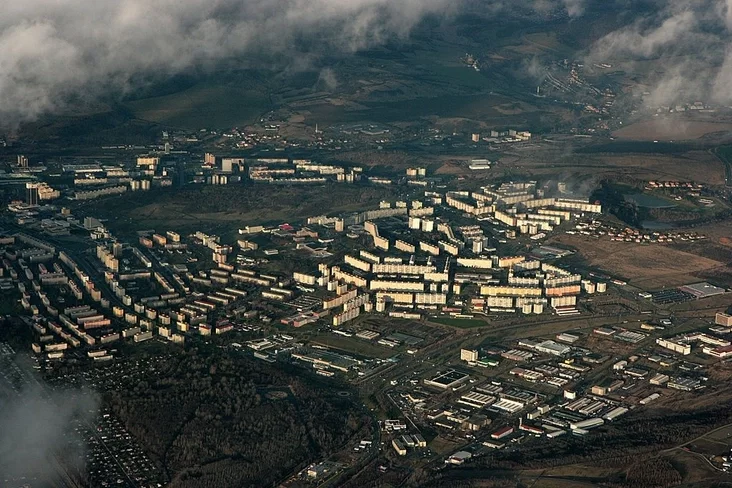
Communist officials viewed the Roma lifestyle as a legacy of capitalist backwardness, linking it to poor hygiene, illiteracy, and lack of work discipline. Initially, the government tried to apply a policy of "dispersion," hoping to assimilate Roma families by isolating them among the Czech population in New Most. However, the experiment failed: by 1971, only 12 families had been integrated, which caused resistance from both the Roma themselves and their new neighbors.

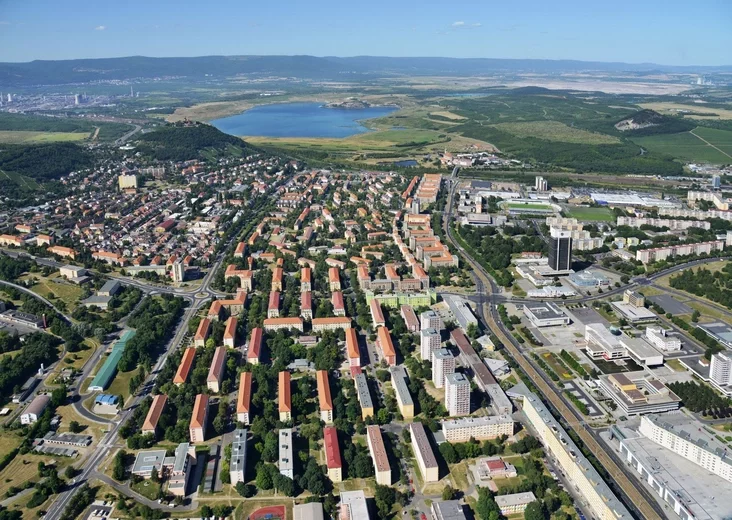
Faced with the failure of integration and the necessity of the final demolition of the old city, the authorities changed their strategy. It was decided to build a separate Hanov micro-district on the outskirts, specifically for Roma settlers from old Most. Built in 1976-1979, the complex consisted of modern panel houses.
Ideologues believed that the mere relocation to modern housing would automatically change the residents' value system and definitively eliminate the Roma problem.


However, social engineering suffered a complete failure. The modern panel buildings of Hanov quickly fell into disrepair and required major renovations already in the next decade. The district itself transformed into a marginalized ghetto enclave with high unemployment and social problems, which continues to exist to this day.
Saving the Church
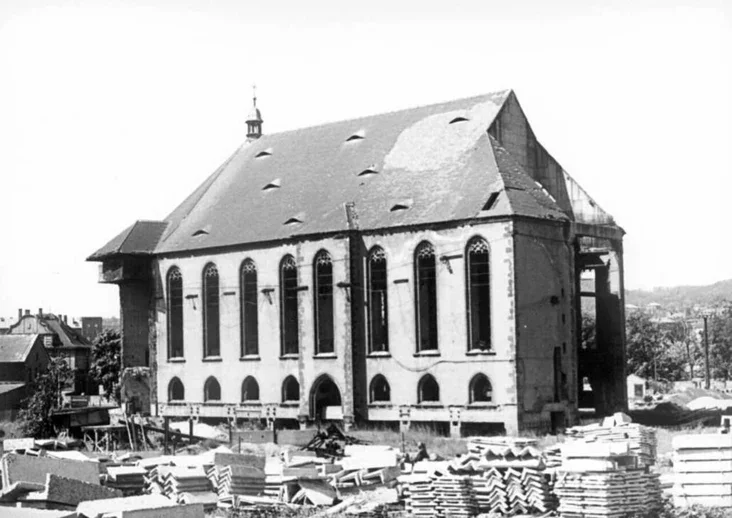
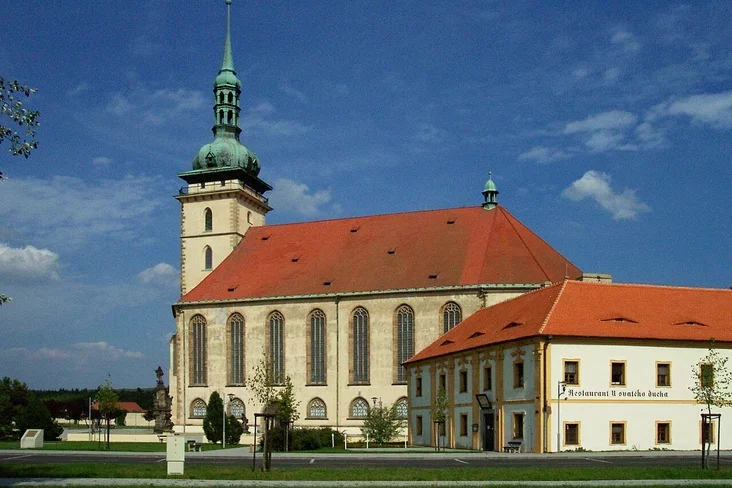
The only significant historical building that the authorities decided to preserve was the late Gothic Church of the Assumption of the Virgin Mary, built in 1517-1550.
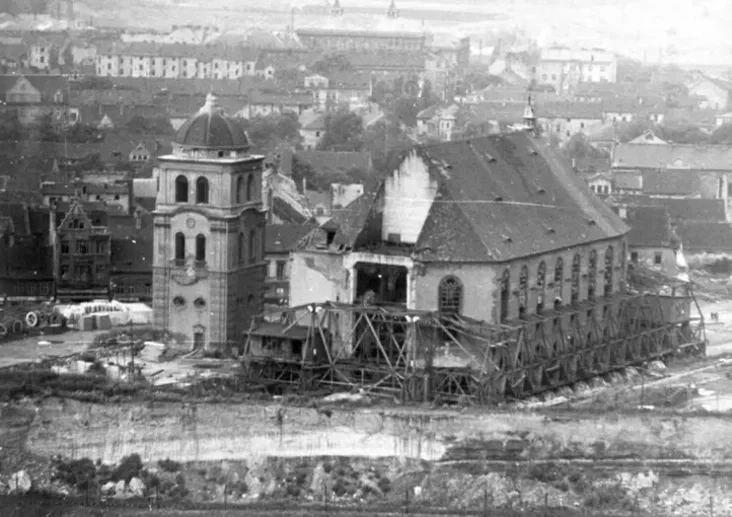
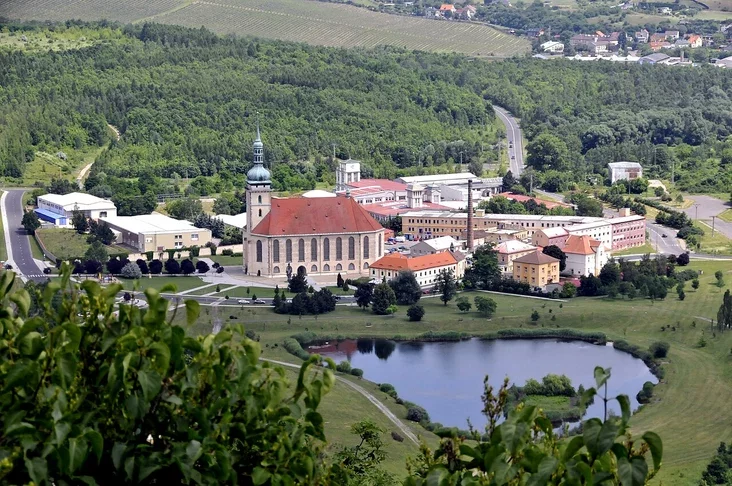
The operation to save it went down in the history of world engineering: from September 30 to October 27, 1975, the monumental 10,000-ton building was carefully moved on specially constructed rails for 841 meters away from the coal quarry.

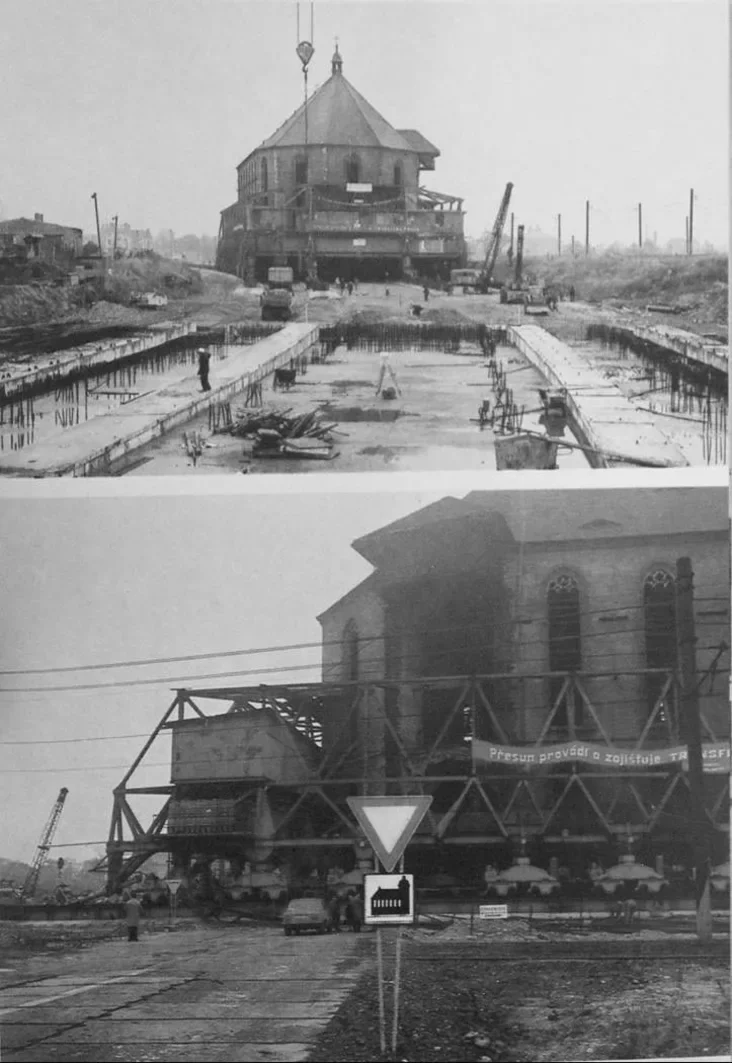
And even this rescue of a medieval temple was used by the communist regime as a propaganda tool, demonstrating to the world the technological superiority of socialist engineering. Today, the church stands alone next to New Most as a surreal monument to the destroyed city.
Ecological Collapse
Ruthless industrialization and the expansion of open-pit mines had catastrophic environmental consequences. The North Bohemian Basin turned into one of the most polluted zones in Europe. Emissions of sulfur dioxide and ash from thermal power plants and chemical factories caused acid rain, which massively destroyed forests in the neighboring Ore Mountains.

In the 1980s, the region was regularly covered by toxic smog. During a particularly strong inversion in 1982, visibility dropped almost to zero, hospitals were overflowing with patients suffering from respiratory diseases, and children had to be hastily evacuated to the mountains for clean air.
The authorities of Czechoslovakia were aware of the scale of the ecological disaster, but continued to sacrifice the health of citizens for the sake of fulfilling energy production plans. As a result, life expectancy in the region fell by 3-5 years compared to national averages.
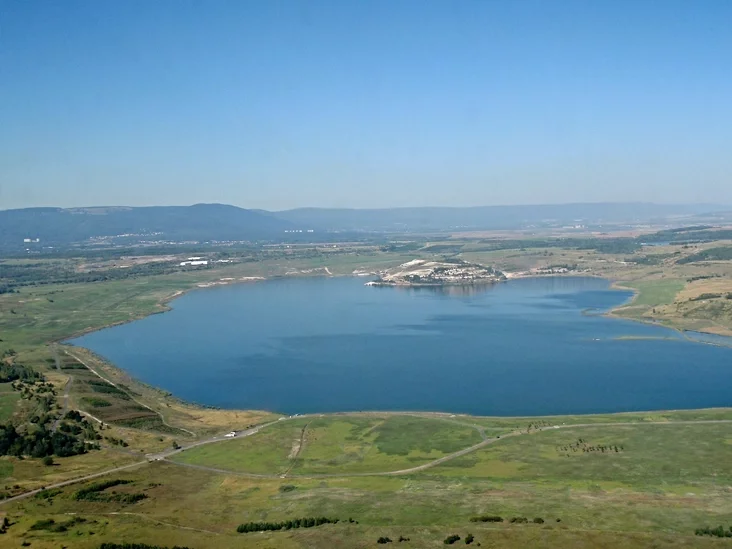
The demolition of historical buildings officially ended on April 1, 1987. From the territory of the old city, the state extracted over 89 million tons of brown coal (about 89% of the explored reserves), after which, at the turn of the 1990s, mining in this sector was stopped. A gigantic industrial open-pit mine remained on the site of the royal city.
In the early 21st century, large-scale reclamation of the territory began. By 2014, the former mine was completely flooded, creating Most Lake with an area of 311 hectares — the second-largest artificial lake in the Czech Republic. Now this area is used for recreation, water sports, and cultural events, and above it, as centuries ago, Hněvín Castle rises.
«Nasha Niva» — the bastion of Belarus
SUPPORT USNow reading


"Why should we somehow restrict ourselves?". RTBD director explained why she staged a play based on Pushkin in one of the last theaters in the country that worked in Belarusian


Comments