


What happened to the Belarusian archives in American South River?
The materials documenting the life of the Belarusian diaspora in the USA are no longer there. Where did they go?
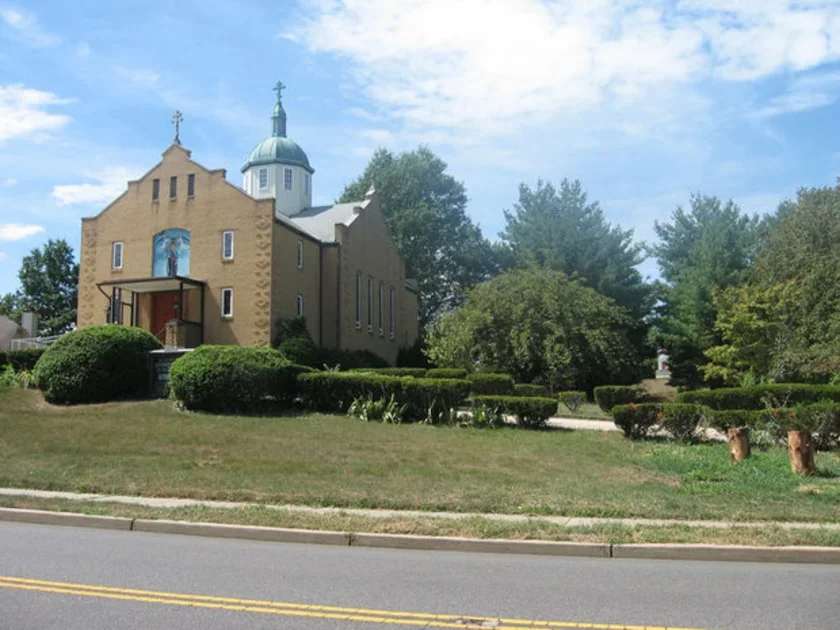
«Probably many researchers of 20th-century Belarusian history have heard about the archives stored in the Belarusian Church of St. Euphrosyne of Polotsk in South River (New Jersey, USA), where a strong Belarusian diaspora formed in the late 1940s. Accessing them was extremely difficult. The Belarusian community in this center consisted of supporters of the Belarusian Central Council (BCC) and its president Radasłaŭ Astroŭski, who actively fought in emigration against the supporters of the BNR Rada (Council of the Belarusian Democratic Republic)», — wrote researcher of the Belarusian diaspora Natallia Hardzienka on her Facebook page.
«It was the BCC supporters who, by their own efforts and funds, built the Belarusian church in South River in 1972, and later, next to it, the public Belarusian-American Center, where various national events took place and Belarusian art exhibitions were held for more than a quarter of a century.
One of the community members, writer Yurka Vitbič, initiated the creation of a Belarusian library in one of the church premises in the 1970s and even donated part of his book collection there. Later, it was decided that archives should also be collected and stored there. Thus, documents of Belarusian figures, who were actively passing away in the 1970s, began to accumulate in a special room in the church.
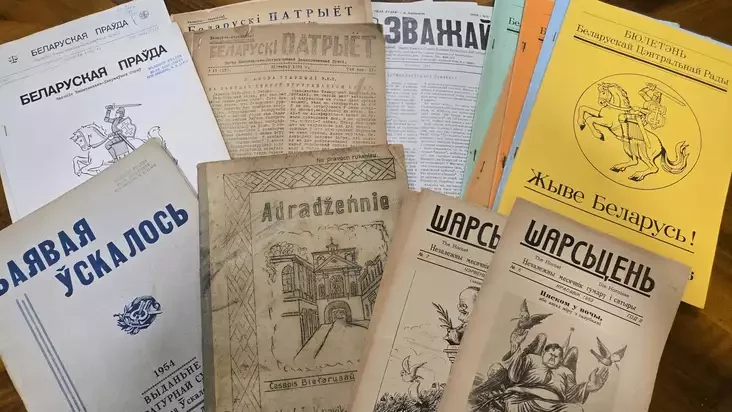
In due time, the archival collections of BCC president Radasłaŭ Astroŭski himself and his successor Nikandar Miadziejka, as well as other BCC members Aliaksandr Rusak, Jury Sabaleŭski, Anatol Pleskačeŭski, Uładzimir Pieliasa, Jury Popka, and others, made their way here. Undistributed copies of books and periodicals published in South River, as well as those sent there, also began to accumulate here.
Given that the South River center was practically the only significant BCC center in the USA, its members did not particularly allow «outsiders» access to their archival treasures. As a result, a certain aura of mystery was created around the documents stored there.
However, the problem was that there were no specialists within the center itself who could properly process, systematize, or even simply provide adequate conditions for preserving the documents. The room where they were stored was quite damp, which negatively affected the paper. Over time, some collections of BCC figures, for preservation, began to be transferred to nearby Rutgers University, for example, the archives of Ivan Kasiak, Anton Danilovič (Yanka Zolaka), and others.
In the 21st century, fewer and fewer post-war Belarusian emigrants remained in South River, especially those who understood the value of the archives kept in the church. From time to time, individual researchers began to access the archive room.
A general description of the archive was made in 2007 by researcher Aleh Hardzienka, but even then, the documents were unorganized and their preservation conditions were far from favorable.
Historian Janka Zaprudnik actively cared for the fate of the archives during his lifetime, directing some of them either to Rutgers University or to Belarus. With his passing in 2022, the responsibility for the remaining documents fell on the shoulders of his now 90-year-old wife Nadzieja Zaprudnik and the several-years-younger public figure and publisher Žorž Naumčyk.
Other members of the current South River church community, as a rule, had little idea of the uniqueness of the documents preserved in the building, the condition of which, meanwhile, was continuously deteriorating.»
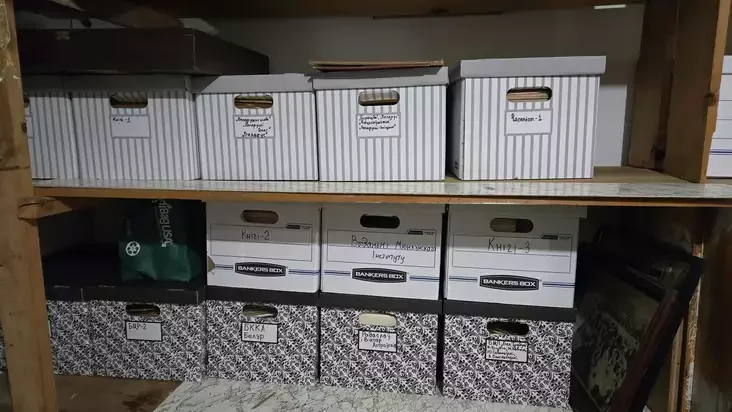
«In the spring of 2026, I asked to come to South River to see what was stored there at that moment and, if possible, to photograph the most valuable documents (I availed myself of the hospitality of Father Kanstantsin), — writes Natallia Hardzienka. — However, during my work, I was offered to take these archives and ensure their preservation, as they could no longer remain in the church for long.
As a result of negotiations with Belarusian structures in New York, it was decided that the archival part of the collections of the Church of St. Euphrosyne of Polotsk in South River would be transported for preservation to the Krečeŭski Belarusian Foundation, and the books and periodicals would end up in the library of the Cathedral of St. Cyril of Turaŭ in Brooklyn.
This was eventually done with the help of South River Belarusians, as well as Ms. Valiantsina Tryhubovič, to whom I am sincerely grateful.
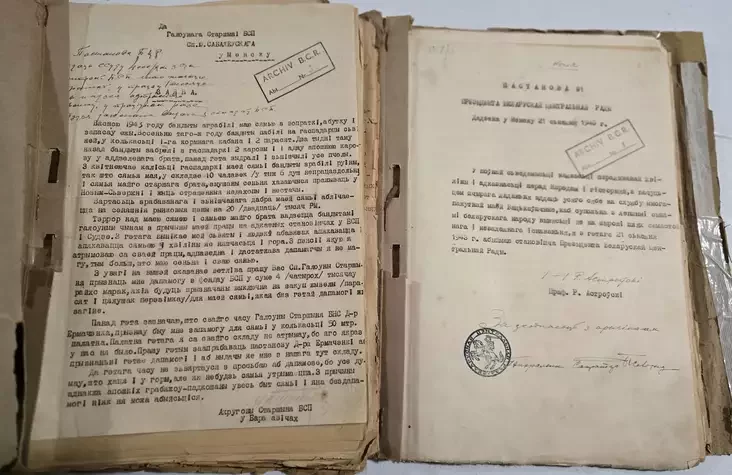
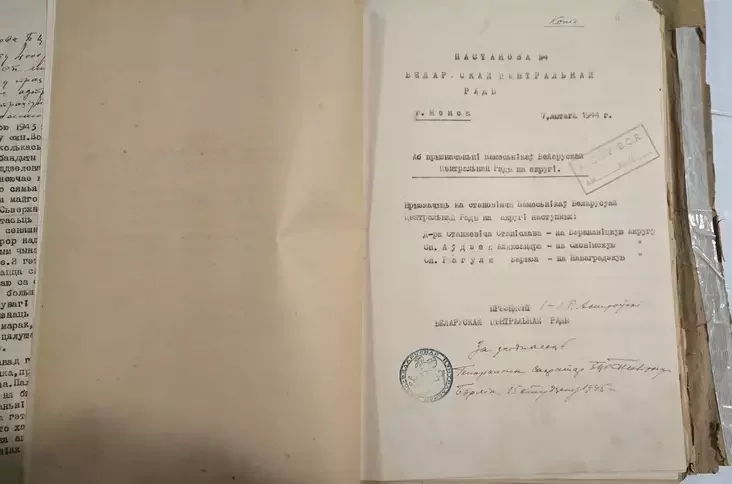
Paradoxically, the documents of ideological antagonists — Radasłaŭ Astroŭski, Aliaksandr Rusak, the BCC itself, including original documents from the German occupation (1943—1944), the Belarusian Congress Committee of America, and others — eventually ended up in the Krečeŭski Belarusian Foundation, established by the BNR Rada.
All of this awaits processing and systematization and will then be accessible to researchers, as will the BCC books and periodicals in the library of the Cathedral of St. Cyril of Turaŭ in Brooklyn. The South River archives will continue their life in the collections of political opponents», — notes the researcher.
Now reading


Lieutenant Colonel from the Military Intelligence Faculty is being tried for «treason against the state» in what appears to be a political case. What is known about him?

Lieutenant Colonel from the Military Intelligence Faculty is being tried for «treason against the state» in what appears to be a political case. What is known about him?


Young teacher resigned from school and moved to Batumi. But the head of studies still filed a complaint against her with the police for her TikTok livestreams


Comments