


Potash went to the States and gave Lukashenka trump cards. What's in it for Trump? And what will change for "Belaruskali"?
Belarusian potash fertilizers were sent to the USA for the first time after a multi-year break. The volume is symbolic, but this step can change a lot.

A drop in the ocean or an important step?
Already in October, 30 thousand tons of potassium chloride from Belarus are expected to arrive in the port of New Orleans. This will be the first shipment of Belarusian potash fertilizers in four years.
The volume is still symbolic, as before the introduction of sanctions in 2021, Belarus supplied more than 700 thousand tons of potash fertilizers to the USA annually. But this symbolism is important here. Not only for Belarus, but also for the United States.
In total, earlier supplies from Belarus covered about 10% of the US needs for potash fertilizers. Canada traditionally was the main supplier for the States. It accounted for almost 80% of potash fertilizer supplies to the USA.
Globally, Belarus is indeed an important player with almost 20% of the world market, second only to Canada and slightly to Russia.
Nevertheless, the lifting of sanctions and return to the US market are unlikely to significantly affect both production volumes and supply geography, as the US previously accounted for only about 10% of "Belaruskali" exports.
As for production volumes, they have physical limitations regardless of returning to some markets or the emergence of new ones.
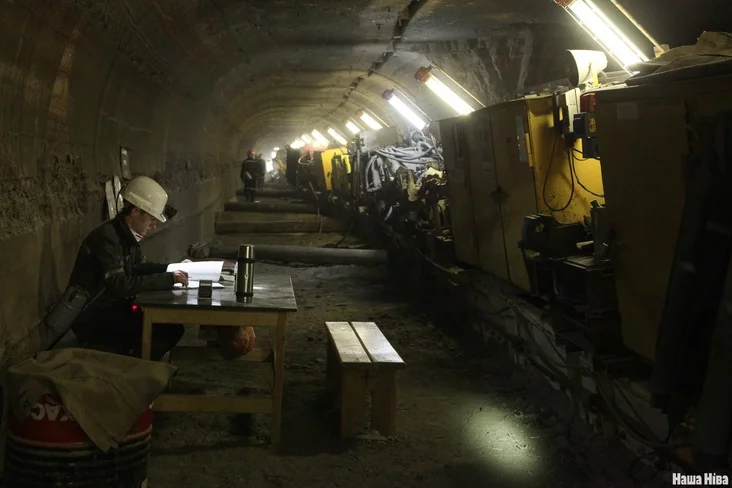
Record production volumes even under sanctions
According to official information, "Belaruskali" has already returned to pre-sanction volumes this year and even surpassed them.
BEROC expert Zmitser Kruk points out that production is now taking place not only at "Belaruskali" facilities in Salihorsk, but also at the Niežyn Mining and Processing Plant.
"The Niežyn Mining and Processing Plant provides about 1 million tons of potassium chloride, so by this means they are increasing volumes and setting a historical maximum in production volumes," explains the expert.
Kruk notes that the production volumes themselves are not the only factor reflecting the success of the enterprise.
Much more important are the prices at which these products are sold, and the costs of realization.
Indirect advantages
Therefore, the expert says that Belarus now has two tasks: to increase the actual price in other markets and to reduce the costs of realization.
"This is very important, as 'Belaruskali', due to sanctions and logistics restrictions, was forced to dump prices and agree to a low (non-market) price in other markets, primarily the Chinese one.
According to data for 2023, 'Belaruskali' actually received only about 50% of the market value. Such a large discount is evidence of a lack of negotiating power, as they were forced to agree to the buyers' terms," explains the economist.
And the appearance of such discounts was precisely indirectly influenced by American sanctions, as they closed access to other markets.
"But if the enterprise can say that I have other markets, I have Americans – that in itself is the first significant contribution."
Schemes no longer needed?
The second important factor, the economist says, is that after being excluded from the American sanctions list, it will be easier for the enterprise to trade with other countries.
"Supplies to other countries, except China, are quite opaque. If you look at mirror statistics for where the increased volumes of potash are heading, only insignificant volumes are visible for other countries. Therefore, there is a high probability that supplies are happening through the use of intermediary companies, so that the primary source is not visible. That is, again, we are talking about additional costs when supplying products," explains the expert.
At the same time, if a company openly conducts business with Americans, then the "toxicity" that causes negative consequences at least partially disappears. This way, costs for gray schemes can be reduced.
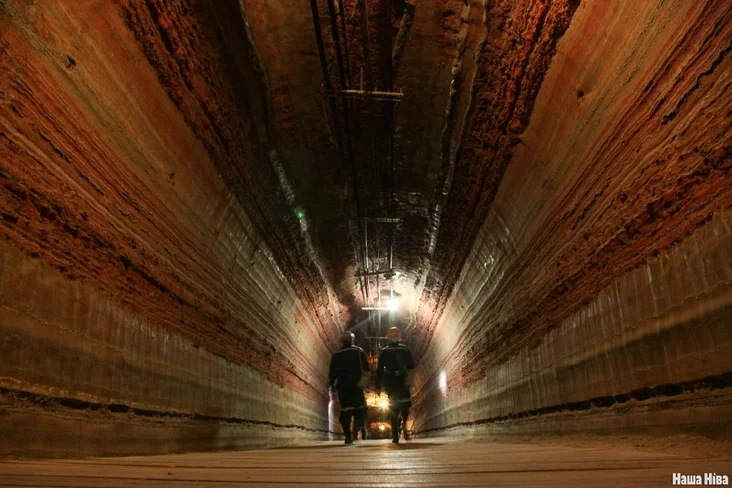
Cooperation with Americans improves reputation
"According to data for 2023-2024, it was evident that 'Belaruskali' significantly increased its realization costs: transport, freight, insurance, bank settlements, and so on. These were again consequences of the toxicity due to the company being under sanctions.
Therefore, resuming cooperation with Americans improves reputation and provides opportunities to use more transparent schemes and, accordingly, not incur additional costs," says Kruk.
Therefore, the economist once again points out that production and realization volumes are not the most significant indicator. And he does not rule out that Belarus may even sell fertilizers to the States at a reduced price to make their purchase look more profitable compared to Canada.

"Given the external, very significant and large positive effects, Belarus may not plan to profit from supplies to the USA. They may even be willing to incur significant losses on such supplies. Especially considering Trump's statements that Belarusian fertilizers will cost America much less than Canadian ones.
Hypothetically, one could incur losses of $50-100 million on supplies to the States, but gain profits of $500 million from supplies to other countries and the return of the Brazilian and Indian markets," explains Kruk.
What volumes will ultimately be supplied to the States is unknown. Theoretically, "Belaruskali's" capacities would be enough to fully satisfy US needs for potash fertilizers. But in reality, this is hardly imaginable, as in that case Belarus would almost completely have to stop supplies, including to such an important market as China.
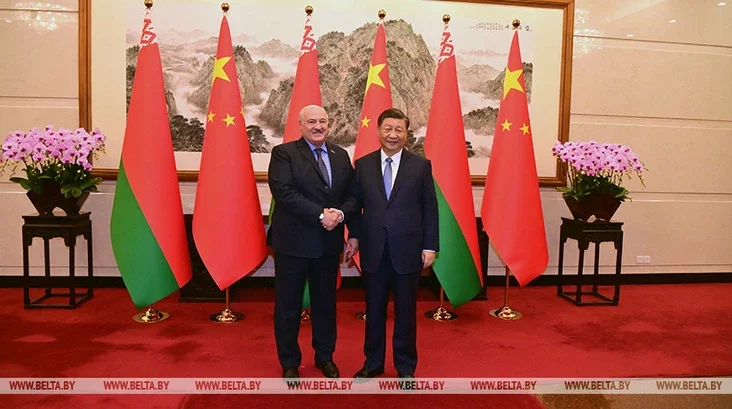
Nevertheless, the fact that Belarus theoretically can cover 100% of US fertilizer needs is in a certain sense a trump card for Trump, who is waging trade wars with Canada.
EU sanctions remain painful
Meanwhile, for "Belaruskali," EU sanctions remain an important factor, due to which Belarusian fertilizers are not only not supplied to EU countries, but also cannot be transited through the port of Klaipėda, as was the case in pre-sanction times.
Naturally, delivery through Lithuania is the most profitable and fastest compared to delivery through Russian ports. Using the Russian port in Ust-Luga in the Leningrad region lengthens the route and makes delivery more expensive. In addition, it increases Belarus's level of dependence on Russia.
It would be beneficial for the States if Belarusian potash went through Klaipėda, because due to lower logistics costs, the product would be cheaper for Americans.
"Belaruskali", in turn, if it regained the possibility to supply fertilizers through Klaipėda, could also start earning more, for example, on supplies to other markets, primarily Brazil, because the Klaipėda port was the enterprise's gateway to the sea.
How likely it is that the European Union, and in particular Lithuania or Latvia, will agree in the future to allow transit of Belarusian fertilizers through their territory is also unknown.
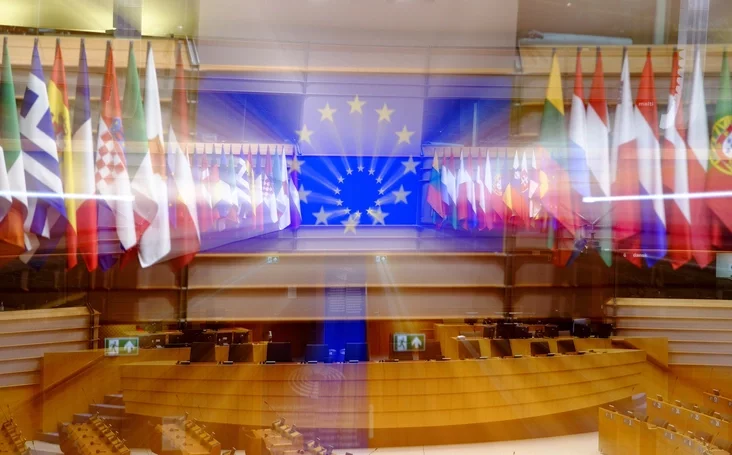
At least until spring 2027, it is unlikely to expect any changes in this direction, as EU sanctions are in effect until February 28, 2027, and may be extended.
How the situation with the extension of sanctions will develop, whether the exclusion of "Belaruskali" from the sanctions list will be discussed, is impossible to predict. However, theoretically it is possible that supplies of Belarusian fertilizers to the EU will continue to remain under EU sanctions, while, for example, transit to other countries may be permitted.
However, at least for now, Lithuania's position regarding Belarusian potash and Lukashenka's regime remains unchanged.


"Didn't like the products on the shelf — and they write an SMS there." The Ministry of Internal Affairs called Threads a security threat and announced arrests


Comments