


Canada doubts Belarusian potash will be more profitable for Americans than theirs
US President Donald Trump's statement about his intention to purchase Belarusian potash fertilizers to reduce dependence on Canada has caused a cautious reaction in the Canadian mining industry. Canadian media note that market participants doubt the economic and logistical feasibility of such supplies but at the same time see a risk to their own revenues, writes Office Life.
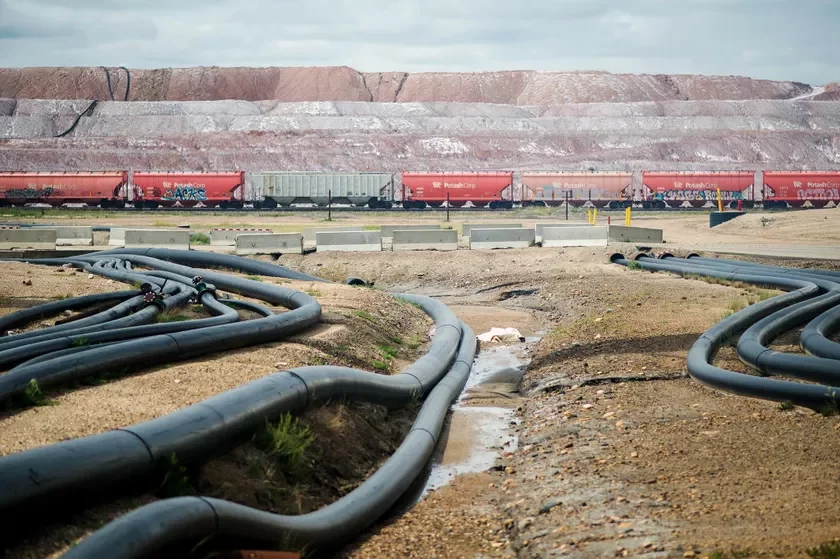
About 80% of potash fertilizers imported by the USA come from Canada. Almost half of Canada's potash exports are directed to the American market, bringing the country about $4.2 billion annually. Currently, these fertilizers are exempt from American duties.
In Canada, there are 10 potash mines owned by Nutrien, The Mosaic Company, Compass Minerals, and K+S Potash Canada. All of them are located in Saskatchewan province and together provide almost a third of the world's potash production.
Pam Schwann, President of the Saskatchewan Mining Association, doubts that Belarusian potash will be able to completely displace Canadian potash. According to her, Canadian producers operate under world prices formed by the market and negotiations, and Belarusian suppliers will have to act under the same conditions.
The industry organization Fertilizer Canada, in turn, drew attention to the advantages of the geographical proximity of Canadian supplies. It considers the ability to quickly supply American farmers with fertilizers during critical periods of the sowing campaign particularly important. According to the organization's estimates, an integrated North American supply system helps maintain agricultural productivity, fertilizer availability, and food security in both countries.
Canadian experts also point out logistical problems. Economist Erin Weir stated that Canada has a significant advantage due to direct rail shipments to agricultural states in the USA. For Belarusian potash, products would need to be delivered by ship to American ports and then transshipped onto trains, which significantly increases costs. In addition, the expert doubts that Belarus has enough free reserve volumes for such supplies.
At the same time, Canada considers Trump's initiative a real threat to pricing. Jason Childs, Professor of Economics at the University of Regina, noted that Canadian producers have long benefited from the absence of Belarus and Russia in the North American market. If Belarusian potash returns to this market in significant volumes, Canadian companies will have to compete with it, which may affect their revenues and product selling prices.
Before the introduction of sanctions in 2021, Belarus supplied slightly more than 700,000 tons of potash fertilizers to the USA annually. American sanctions against Belarusian potash were lifted only at the end of 2025.
On September 11, Alexander Lukashenka announced that Belarus had already started supplying potash fertilizers to the USA. At the same time, he noted that Belarus cannot immediately send large volumes there this year, as the main part of the products is already under contract.
-
Flydubai Plane Saved by Indian Pilot and Three Passengers, One a Dentist. Second Pilot Tied with Headphone Wires and Zippers
-
600,000 People Came to See a Shark Stranded in a Canal in South Korea
-
In American Tennessee, a woman was to be executed for the first time in 200 years. But the execution was suspended an hour before the appointed time


Comments
Для лукі гэта таксама пытанне, наколькі гэты калій павінен быць дармовы, каб мог канкураваць з больш якасным і танным Канадскім каліям. Акрамя таго, рабочыя белкалія - рыхтуйцеся, каб зрабіць цэнтр прыбытку -эканоміць будуць на вас і вашай бяспецы.