


Sudalenka: I was called a devil's advocate, and an advocate for 'freeloaders'. I went through all of it, I don't regret anything
On September 23, independent trade union activist and human rights defender Leanid Sudalenka celebrates his 60th birthday. He told "Salidarnasts" about his mother's support, felt-tip pens for Honduras, and his desire to 'see this movie through'.
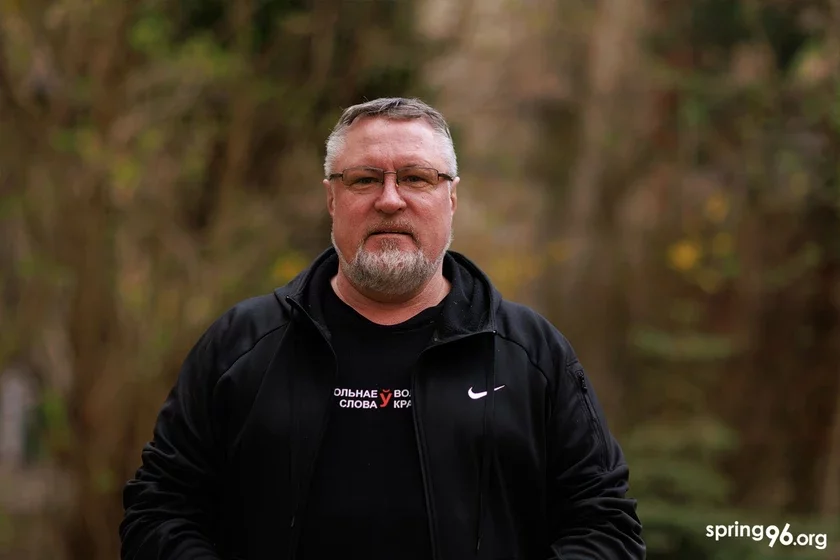
Leanid defended the rights of Belarusians in courts for many decades. He spent three years behind bars, told us about the abuses by regime employees and how he got acquainted with a spider in the punishment cell. It was in the pre-trial detention center in September 2021 that Leanid celebrated his 55th birthday.
— September 23, 2021, was an unusual date for me. At 7 in the morning, I was already sitting in a "stakan" (a box-like small cell, where you can't turn left or right, or spread your elbows). You're essentially put in a coffin, only in a vertical position.
That's how I waited for transfer, remembering my mother, who always called in the morning on September 23. She would say: "Son, you were born at 7 in the morning."
She congratulated me at that time all her life. I understood that on September 23, 2021, my mother didn't know where I was. And that's why she was calling.
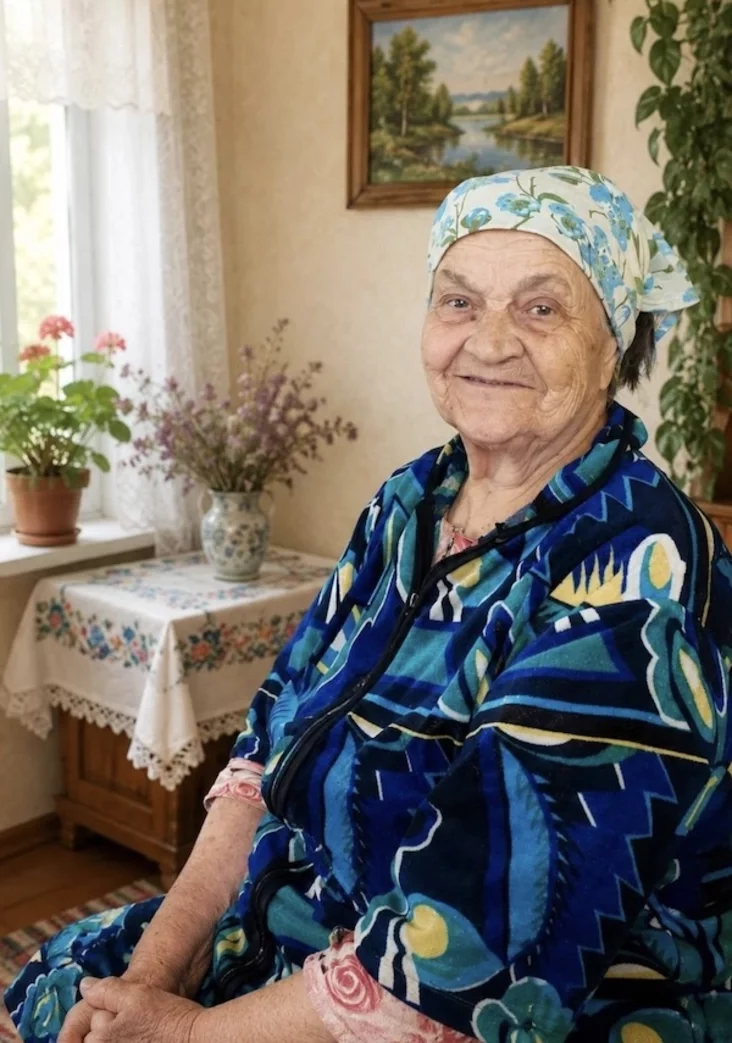
Of course, my phone wasn't answering; the investigators had taken it. In my head, I thought: what is my mother thinking? Maybe I'm sick, or I've gone somewhere.
The only thing that worried me was that on this day I couldn't thank my 83-year-old mother for her congratulations and for life. My older sister and I agreed not to tell her the truth about me to protect her health. And my sister said that Lyonya had gone abroad to work. That's why he wasn't answering the phone. I was released from prison, and my mother never knew where her son had been all those years.
I spent my 55th birthday in court. They led me in handcuffs, face down, half-bent. Like an especially dangerous criminal. One of the convoy guards even chained me to his arm.
Although the article I was accused of was classified as less severe and carried a penalty of up to three years of imprisonment. But the pre-trial detention center administration wanted to portray me as a very dangerous criminal.
The thought often crossed my mind: why am I, a law-abiding citizen, sitting in a cage in the Central District Court of Gomel, where I worked my whole life as a professional lawyer? I know all its corridors, all the secretaries; I knew the judges who greeted me with handshakes, talked about private matters in the corridors. They expressed their attitude to what was happening.
Forgive me, but in this Central Court of Gomel, I felt at home. Because I went there for work for 20 years, brought entire labor collectives there, defended and restored their rights. Starting from a store where 34 employees were fired, including salesclerks and the store manager, and ending with the Gomel Distillery and Winery.
And here I am, sitting in a cage, chained in handcuffs, and on this day I turn 55. The day before, I asked the judge for a day off. Because the trial, which started on September 3, had a total of 24 sessions, and until the 23rd, every day except weekends, I was driven to court as if to work.
At 7 in the morning, into the 'stakan' (holding cell), then the convoy, the paddy wagon; at noon, they take me back to the pre-trial detention center for an hour, and then back to court. And each time, this involves going through airlocks and procedures of undressing, squatting, removing socks, underwear, socks. And so it went from morning till evening.
Siarhei Salouski, who was about 35 years old, judged me. He started in Vietka, then was promoted to Gomel, and now he is already in the regional court. I knew Salouski well; we had many cases with him, but our relations were strained. Because he was young and eager to please.
And this man in a judge's robe tried to enjoy my trial. Because when he announced the case materials and reached the moment of our security seminar for human rights defenders, you should have heard how he savored the names of our dishes from the menu that we ordered for lunch. I saw how Salouski wanted to humiliate me. To humiliate and derive pleasure from it.
As for the anniversary, my cellmates brewed strong tea after my trial, which they passed around. They took "hrakhatulki" (that's what hard candies were called in the pre-trial detention center). Because the tea is bitter and strong; if you take a few sips, your head spins, as if you drank 150 grams of vodka. But it quickly wears off.
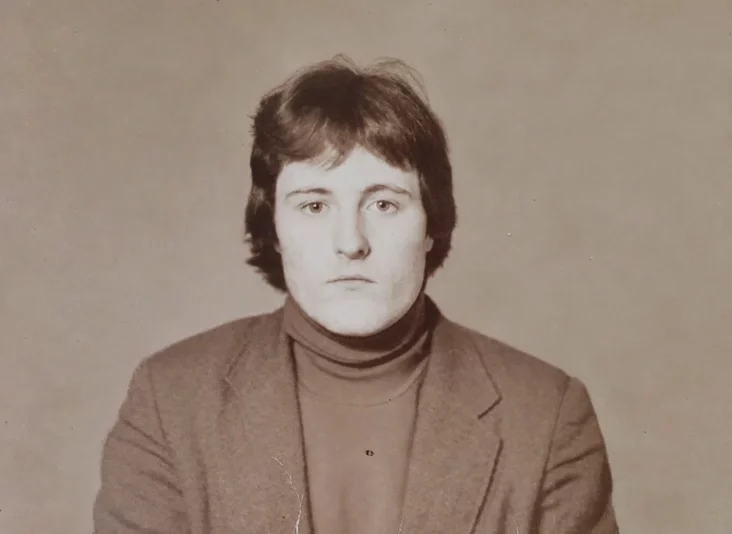
Leanid recounts that in his past life in Belarus, traditionally, the family always gathered at the cemetery on Radunitsa. He would put his mother in the car, and they would drive together to his father's grave:
—The first time I didn't come to the cemetery was in April 2021, then I didn't pick up the phone in September, and then came 2022, when I was already in the camp. My mother called then too. Then it was 2023, and I didn't come for Radunitsa again. And again, my mother asked: "So, what about Lyonya?" She's an old woman now, 88 years old. "Maybe he died, and you're not telling me, hiding it?"
I was released in July 2023; my birthday was two months later. I immediately went to my mother. But I could only stay in Gomel for 11 days, and then I left, truly hiding from new criminal charges.
After the last criminal case, in the spring of 2025, security forces came to my mother's with a search warrant. They demanded she sign a protocol stating that I was absent from my place of birth. Although I had left my mother's house back in 1984, even before Gorbachev came to power.
Then the security forces told my mother that I was a criminal, a delinquent, had served my sentence, and was again on the wanted list. And that they would arrest me as soon as they found me.
Of course, my mother's heart couldn't take it; she was taken to intensive care, where she was on IVs for 14 days. Thank God, she recovered. But even so, she now knows the 'dirt' about me from the words of the security forces.
Leanid says that his mother was born and lived under occupation during World War II in Babry. In this same village, from which artist Ales Pushkin also hails, Leanid's maternal grandmother is buried in the cemetery. Both of his grandfathers died in the war. And then Leanid's father brought his young bride to his village, Kharkavichy, in the Brahin district.
Leanid is the fourth child in the family; later, a younger sister was also born. His mother worked as a milkmaid, and Lyonya helped.
— For that, she bought me a bicycle. We had pigs, chickens, ducks, a cow. We harvested firewood. Mother would give a ruble, and the five of us would buy food at the school cafeteria. I still remember the taste of school kissel and that bun.
Mother looked after 25 cows, milking each one by hand, as there was no machine milking back then. I helped, and then ran home to light the stove, bring firewood. To draw 10-15 buckets of water from the well to water the animals, to feed the chickens.
At that time, even colored pencils were a marvel. One day, my mother gave me felt-tip pens for my birthday. Oh, my! I didn't sleep all night; I kept them under my pillow. But a war started in Honduras at that time, and the school announced a collection: 'Whoever can, help the children of Honduras!' Some brought notebooks, some drawing albums, and I just took and gave away my felt-tip pens.
Later, in prison, I laughed remembering this. Like, where is Honduras, and where are we? Those felt-tip pens probably never reached anywhere. But we believed that children in America were starving, that the children of Honduras needed help. Because there was a war around, and thank you, Leonid Brezhnev, for our happy childhood! - he says.
In the 80s, Leanid was drafted into the army, and his mother cried again:
— Because Afghanistan was already happening; in our village, several families received zinc coffins with their sons. Sending people to the army then was like sending them to war. But I was lucky enough to end up in Germany; our military unit was stationed in Magdeburg. I served under good conditions.
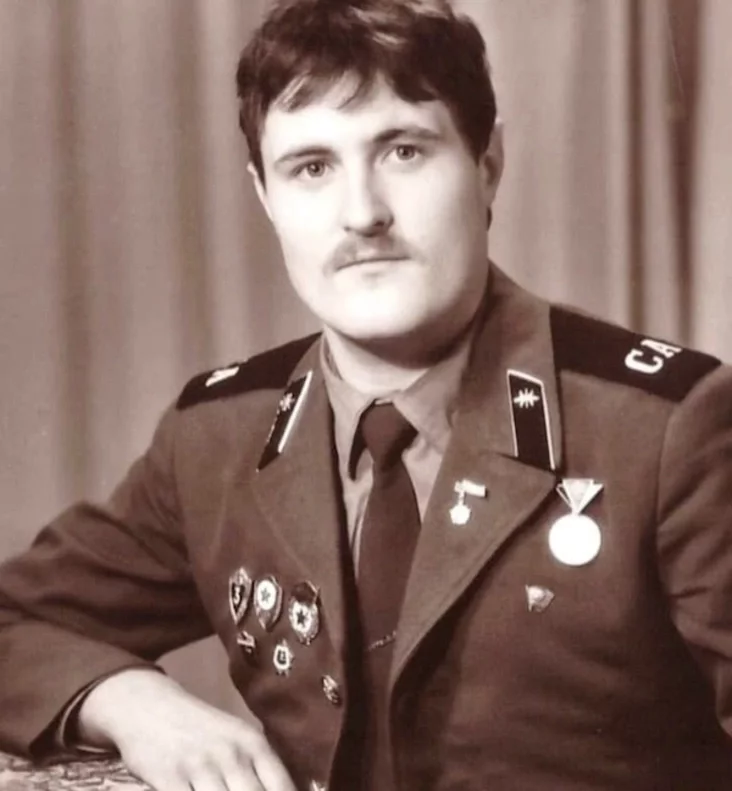
Leanid graduated from Gomel University as a lawyer, worked at enterprises, and then in independent trade unions, where he defended people's rights for over 15 years:
— When a conscript soldier died by suicide in Pechy, my heart told me to organize the action 'Minister of Defense — Resign!', and so I did. I gathered signatures online for this demand. And during the 'freeloader' actions, I defended those who received the so-called 'letter of happiness'.
When my heart told me to defend the right to life and be against the death penalty, I did it. Although I was called a devil's advocate, and an advocate for 'freeloaders'. I went through all of it calmly; I don't regret anything.
— My happiness and strength are in my family. And that's not just my wife and children, but also my father, who lies in the cemetery in the Brahin district, my mother, who lives in the village. My brothers and sisters. My relatives waited for me from prison and supported me greatly at that time, writing 'save yourself for us, we beg you...'
A few days ago, Leanid wrote a Facebook post saying that his son played for the Belarusian Association of Journalists team, which took third place at the European Journalists’ Football Championship 2026. Meanwhile, his dad supported them from the stands.
«I cheered as if I myself were running on the field, and afterward, my son hung a medal around my neck. That means I also did my part of the work!
But there was another important meaning in this victory. For the award ceremony, the team came out with a banner 'Mikita Mielkazioŭraŭ. With us forever'."
Mikita was also with us these days, in our memory, in our team, and in this bronze medal».
— As soon as I was released, Mikita found my phone and invited me to the 'Zhyzzyo-Malina' (Life-Raspberry) program. I had just gotten out then, still toothless, because I had lost my teeth in prison. Now I have a good Hollywood smile. Mikita and I kept in touch afterward; he sometimes contacted me for comments.
To Mikita's question, 'Is life a raspberry?' I answered briefly then: 'Life is a test.' I still think so today. When I changed my image, he joked, saying: 'Leanidavich, what a magnificent gray beard you have!'
It is a great honor for me that my son played for the Belarusian Association of Journalists and won a medal, also for Mikita Mielkazioŭraŭ, captain of the BAJ football team.
I take a sober view of our current reality in emigration, and of people passing away too, on both sides of the border. I understand that a moment may come when I receive a message from Belarus that my mother has died. Just as in prison, I saw a telegram that my father had died.
This is life; it continues, and we too will die someday. We must approach this with understanding.
But it's regrettable that we cannot say goodbye to our loved ones who remained in Belarus.
When I was just released, I set myself the goal that no matter what, I would go to my mother's funeral. Even if they imprisoned me. This was irrational, and looking at it from a rational perspective, I understand that I would reach at most Kamienny Loh. Because I am on the wanted list, and I have already been given 5 years in absentia in a penal colony for repeat offenders. And I still wouldn't be able to say goodbye to my mother. And whom would I make better off then?..
Unfortunately, there are processes we cannot influence. That's the horror. And what if we get stuck in this emigration for another 5 years? I didn't imagine the best half of my life like this. I imagined sitting in my estate in my Homeland, with my land, my garden.
In reality, I have a village 11 kilometers from Gomel, with a house and 36 ares of land. 28 apple, pear, and cherry trees. I planted everything myself. Even from prison, I asked my wife: take photos, send me the trees, all of them, each one individually.
And in spring, when they blossomed, my wife would photograph and send me my trees. All my life I imagined that I would host my children and grandchildren there, invite guests, welcome them. That I would work on the land; I have a greenhouse there. That I would grow cucumbers and radishes.
I didn't think I would be celebrating my 60th birthday in emigration, without my family, as it's scattered across three countries. This is, in fact, another form of repression.
My youngest was 11 when he was left without me, with a living father.
Prison, emigration, my sons there, I here. And no one knows how much longer I will live. So I try to look at everything more pragmatically, including death, because that is beyond our control. Now, what's important is our memory and honoring those who have passed: we talk about them and we remember them.
I have a great desire to see this 'movie' through to the end. The movie isn't over yet. So I ask God for health and strength to see it through. For me, this is about the times when we can return to Belarus and start building a democratic society.
I understand that democracy is not built in one year, nor in five. It is a process that requires a change of generations. Those who envision an independent Belarus without external influence must come. And, of course, this is what I dream of.
My 'movie' is about this: that we could return, because my strength and power are truly in Belarus. I never wanted to live in emigration, and as soon as the opportunity arises, I will return immediately. I understand that this might not happen.
But faith and hope are what helped me survive in prison. It's what no operative can take away from a political prisoner. It kept me warm even in conditions when I was thrown into a punishment cell without bedding, my underwear was taken away, and I was thrown into a cold solitary cell, resembling an elevator, lined with fiberglass.
I shivered from the cold, couldn't sleep at night, slept on the wooden floor because the bunks were metal. Faith and hope, meeting my family and meeting my mother - only this helped me survive. And it still helps now.
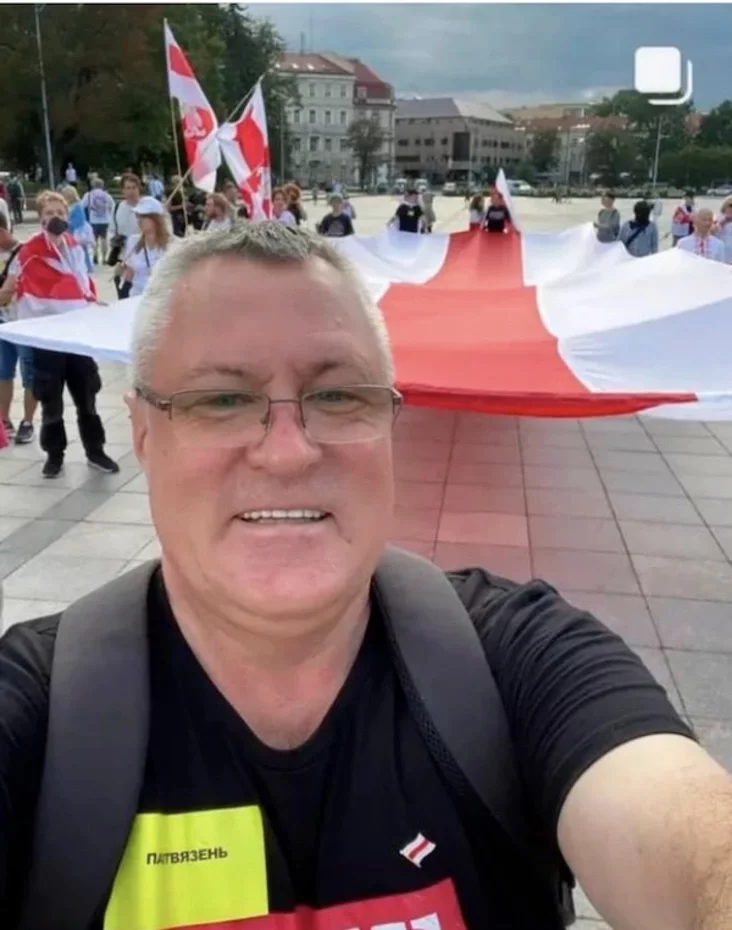
I am an optimist in life and I believe that you and I will be able to see this 'movie' through.


Half were denied, a third were granted refugee status. August results of reviews of Belarusians' applications for international protection in Poland have become known


Comments
Поспехаў годнаму чалавеку.