


Public access has opened in Belarus to "The Great Tree Beekeeping Library" — a digital research corpus dedicated to the history and culture of tree beekeeping. The project will be useful both for those interested in beekeeping and traditional methods of keeping bees, as well as for researchers of Belarusian history, writes the "Smartpress" publication.
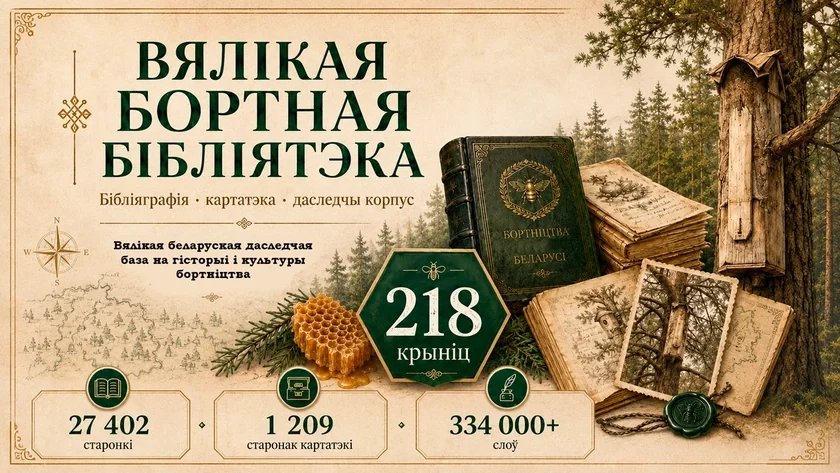
The library brings together historical, ethnographic, legal, natural science, and other sources that were previously scattered across books, archives, and various publications.
At the time of its launch, it had processed 218 sources totaling about 27.4 thousand pages. The project's analytical card index contains about 1200 pages and more than 334 thousand words. More than a thousand other found sources are awaiting processing. The materials are presented in Belarusian, Russian, Polish, Ukrainian, and English.
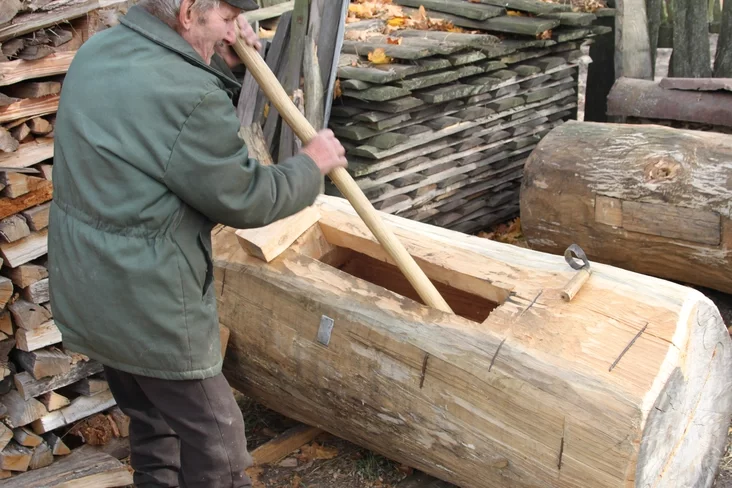
The content of the library is much broader than information about honey and hives. The corpus includes court documents, ethnographic descriptions, dictionaries, folklore materials, local history publications, publications on traditional technologies, and modern field research.
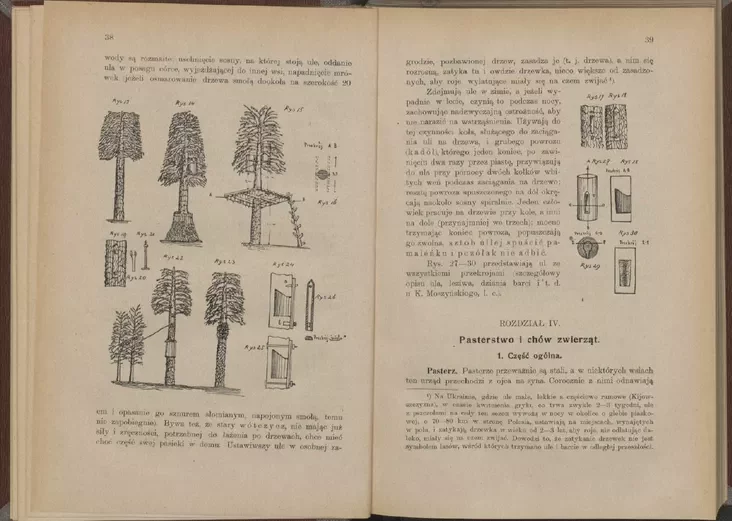
From these materials, it follows that tree beekeeping (bortnictva) in Belarus was not only a way of extracting honey. Borti (bee trees) could be property and become the subject of legal disputes, and bortna (bee) trees were part of the forest management system. The tradition also formed its own vocabulary, tools, rules, rituals, and beliefs.
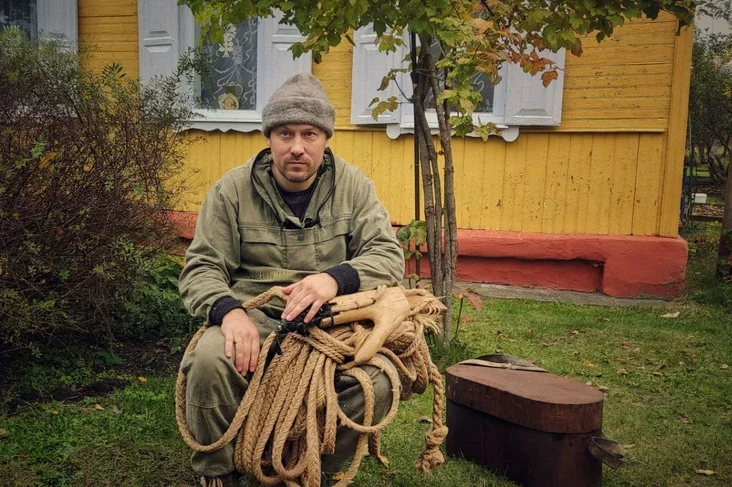
The author of the project is tree beekeeper and researcher Ivan Osipau. He began systematically collecting materials back in 2006. According to him, the library's goal is to make the heritage of the past accessible today and pass it on to future generations using modern digital methods, so that knowledge does not remain hidden in old publications and archives.
In recent months, the project has significantly expanded. As of July 1, 2026, 59 sources totaling 7217 pages were processed; as of August 1, 105 sources and 13,726 pages. By the public launch, the number had grown to 218 sources and approximately 27.4 thousand pages.
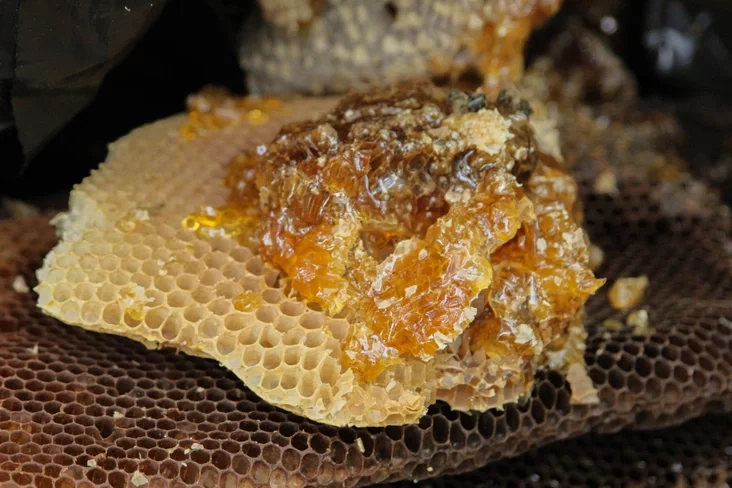
Tree beekeeping remains a living tradition, especially in Polesia. In autumn, they say "to look at bees": tree beekeepers go into the forest, check bee colonies, and collect honey.
In 2020, the culture of tree beekeeping in Belarus and Poland was included in the UNESCO Representative List of the Intangible Cultural Heritage of Humanity. Ivan Osipau participated in the preparation of the cross-border nomination.
Now, one can get acquainted with this tradition not only directly in the forest but also through documents, books, and archival testimonies collected in a single digital resource.
Now reading


The bassist of "Pyatlya", his 18-year-old son and the star of "Razbitaha Serca Patsana" — we tell you about the Belarusian-speaking band Prypiać, which presented its original "Kalykhanka"

The bassist of "Pyatlya", his 18-year-old son and the star of "Razbitaha Serca Patsana" — we tell you about the Belarusian-speaking band Prypiać, which presented its original "Kalykhanka"


RIA Novosti published a column stating that Russia is facing another 'SMO' — with Lithuania. It was later deleted with the note 'Does not comply with state policy'

RIA Novosti published a column stating that Russia is facing another 'SMO' — with Lithuania. It was later deleted with the note 'Does not comply with state policy'

Unfortunate Man from Lyakhavichy Disappeared "in the SMO" on the Third Day, While Sister, Cohabitant, and Wife — with Four Children, but Not His Own — Clashed over Funeral Payments

Unfortunate Man from Lyakhavichy Disappeared "in the SMO" on the Third Day, While Sister, Cohabitant, and Wife — with Four Children, but Not His Own — Clashed over Funeral Payments

A Belarusian woman translated for the President of Ecuador, worked as a flight attendant, and now opened her own language school "Russian with a Russian Woman" in Mexico


Comments
Але не зразумеў, як прачытаць канкрэтныя крыніцы. Таму гэта хутчэй картатэка, а не бібліятэка, так?