


Not long ago, hundreds of thousands of Kyrgyz citizens went abroad for work, primarily to Russia. Now, Kyrgyzstan itself is accepting migrant workers. Last year, its economy grew by 11%, and the country experienced a construction boom.
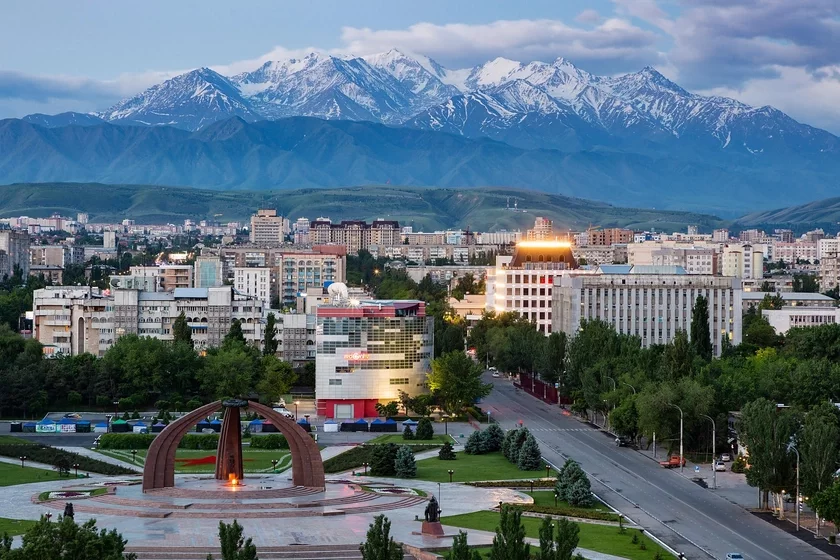
Kyrgyzstan is a mountainous country in Central Asia with a population of about seven million people. The former Soviet republic is landlocked and maintains close economic ties with Russia. Hundreds of thousands of Kyrgyz citizens work there, and the country itself depends on Russian supplies of fuel and a number of other goods.
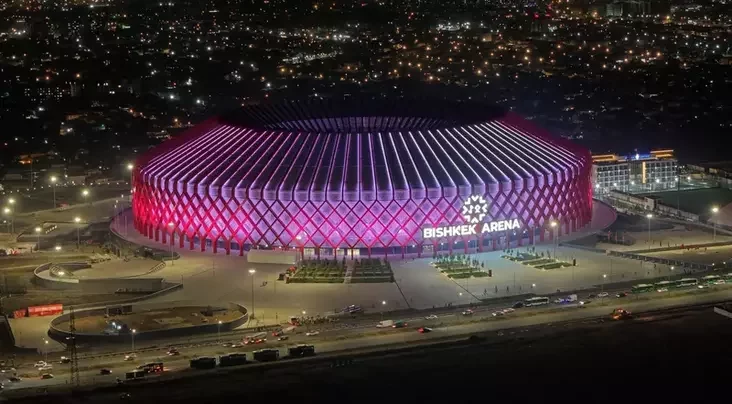
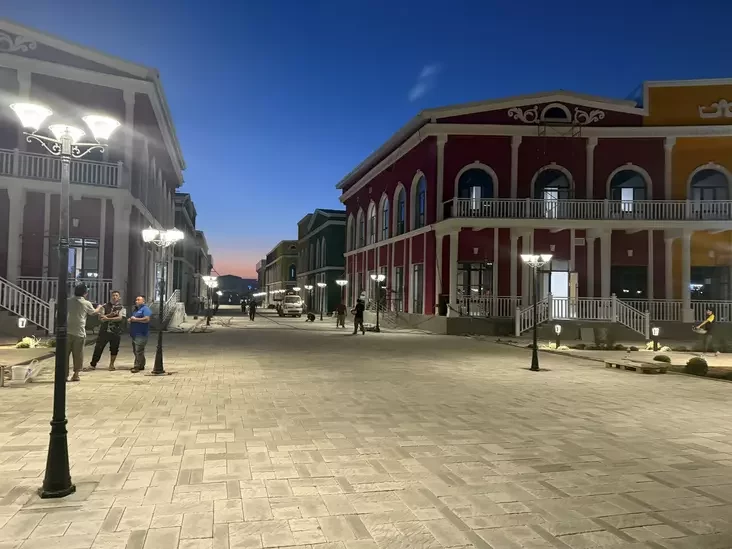
Over the past few years, however, Kyrgyzstan has begun to change rapidly. The changes are particularly noticeable in Bishkek. The urban landscape is filled with construction cranes, and multi-story residential complexes are growing next to ordinary houses. At the same time, stadiums, government buildings, and an entire new administrative quarter are being erected.
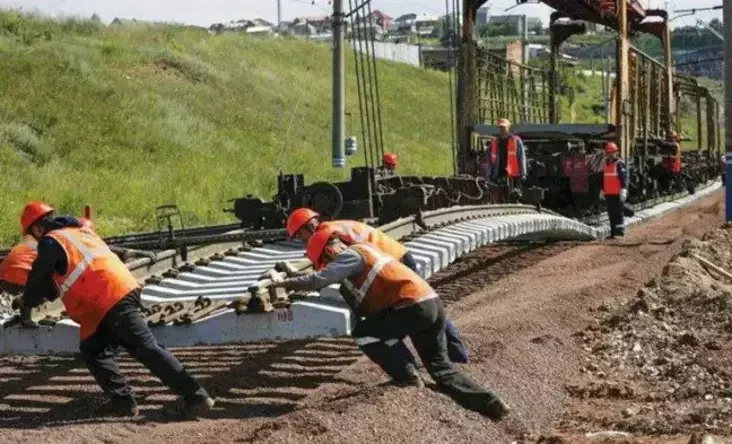
Large-scale construction is also underway outside the capital. In one year, about 1450 kilometers of roads were laid and renovated in Kyrgyzstan, and 11 airports, schools, and kindergartens were reconstructed. Another major project is a railway that is supposed to connect China with Uzbekistan through Kyrgyz territory.
Where the money came from, The New York Times investigated.
Even the labor market has changed. For decades, Kyrgyzstan was a country from which people massively went abroad for work, primarily to Russia. Now, workers from South Asia can be found on local construction sites.
These changes became possible due to very rapid economic growth, with rates of 9% per year in 2022-2024. And last year, the gross domestic product increased by 11% at once.
Where the money came from
An important role in the economic upswing was played by the fact that after 2022, Kyrgyzstan became one of the key trade hubs for Russia. Goods from China and Western countries, whose supplies to Russia became complicated after the imposition of sanctions and the withdrawal of international companies, began to pass through the country. This is also facilitated by the membership of both countries in the Eurasian Economic Union, thanks to which goods from Kyrgyzstan can enter Russia without usual customs duties.
As a result, Kyrgyzstan's import of cars, electronics, household appliances, and other equipment sharply increased. A significant portion of this import is not intended for the local market, but for re-export to Russia.
How much trade flows have changed is clearly visible from the example of the European Union. In 2025, the EU exported goods worth approximately $2.5 billion to Kyrgyzstan. This is eight times more than in 2021, the last year before the full-scale Russian invasion.
According to an estimate by the Asian Development Bank, cited by The New York Times, re-exports account for 30 to 40% of Kyrgyzstan's economic growth over the past four years.
But new trade flows explain only part of the current surge.
As experts note, Kyrgyzstan also benefited from the rise in gold prices, which remains its main export commodity. The financial and cryptocurrency sectors are developing. At the same time, the state began to invest significantly more funds in the economy.
Economic boom strengthened the government
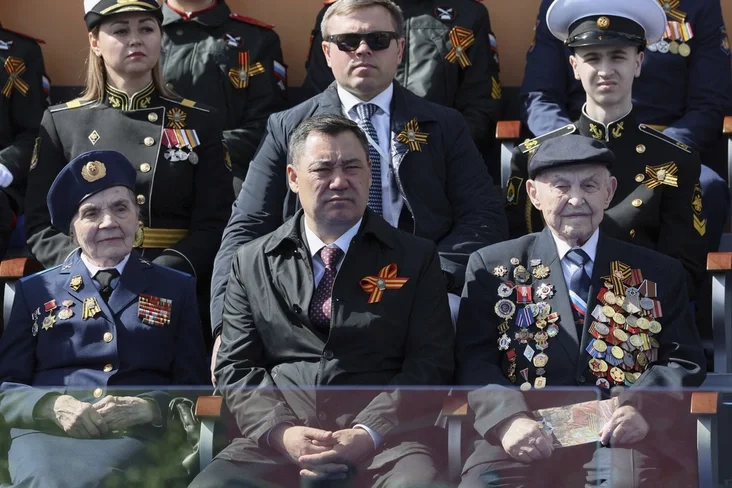
The economic upswing, as The New York Times notes, also increased the popularity of President Sadyr Japarov. After coming to power in 2020, he significantly strengthened his control over the country. The authorities launched repressions against independent media and opposition politicians, restricted demonstrations, and intensified pressure on civil society.
This effectively put an end to earlier hopes that Kyrgyzstan could become a "beacon of democracy" in predominantly authoritarian Central Asia.
At the same time, changes were made under Japarov in the collection of taxes and customs payments, which allowed the state to receive more revenue from the economic upswing. Since 2020, tax revenues, according to the publication, have quadrupled, and customs duties have increased sixfold. State capital investments have increased 16 times since 2021.
But not everyone became richer
The economic boom did not benefit everyone equally. Trade, logistics, finance, and construction benefited most from the new situation.
Experts point out that a significant part of the new income is concentrated in a relatively narrow circle of people connected with these industries and the state. According to them, a new class of wealthy people has formed in Kyrgyzstan.
Meanwhile, growing demand is pushing up prices. Inflation is about 11%, and food and housing rents are becoming more expensive. Therefore, for people with low incomes, the country's economic successes do not necessarily mean an improvement in their own financial situation.
It is also unknown how long the current pace will last. Western countries are trying to block the path of goods that enter Russia through third countries, and have already imposed sanctions against a number of Kyrgyz companies. Moscow, in turn, seeks to limit the gray import of cars, through which the Russian budget loses out on taxes.
Some trade flows are already shrinking. The aforementioned $2.5 billion of EU exports to Kyrgyzstan in 2025 is far from a record. The peak was in 2023, when this figure reached $3.1 billion.
At the same time, economic ties with Russia remain extremely strong. More than half a million Kyrgyz citizens work there, and oil, gas, iron, timber, fuel, and lubricants come from there.
Now reading


Half were denied, a third were granted refugee status. August results of reviews of Belarusians' applications for international protection in Poland have become known


Comments
Пысы. Кыргызстану трэба яшчэ гадкоў 50 чужой вайны, каб трохі адмыцца, прывесці у парадак хаця б тэрыторыю ля аўтавакзала ў Бішкеку. Такога заваленага смеццем гадзючніка нідзе больш не бачыў