


Grain Transit from Belarus Sharply Increased in Latvia. In Nine Months, 913 Times More Than in the Entire Last Year
In September, grain transit from Russia and Belarus through Latvia significantly increased. This is evidenced by data summarized by the Latvian State Revenue Service (VID), writes Delfi.lv.
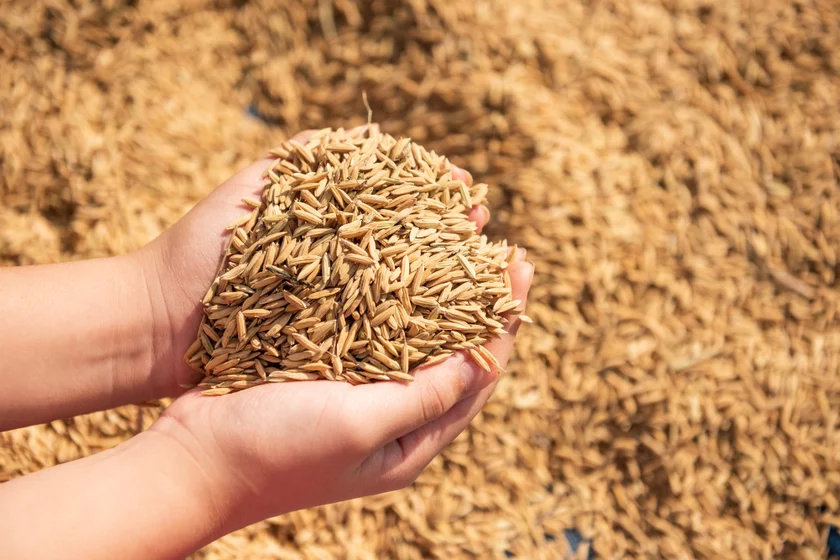
From September 1 to 24, 253,623 tons of grain from Russia were transported in transit through Latvia — almost twice as much as in the entire September of last year. From Belarus, 40,101 tons of grain passed in transit during the same period. However, in September 2025, no Belarusian grain was transported in transit through Latvia at all.
In total, from the beginning of the year until September 24, 593,663 tons of Russian grain were transported in transit through Latvia. This is 8.9% less than for the entire year 2025. Belarusian transit during this period amounted to 116,847 tons — 913 times more than last year.
Significant growth was also observed in August. Then, 158,983 tons of grain from Russia were transported in transit through Latvia — 55.9% more than in August 2025. From Belarus, 26,726 tons passed during the month, whereas a year earlier there was no Belarusian grain transit through Latvia.
VID notes that European Union legislation prohibits the import into the EU of goods originating from territories not controlled by Ukraine. This refers to Crimea, as well as parts of the Donetsk, Kherson, Luhansk, and Zaporizhzhia regions annexed by Russia. These restrictions also apply to transit.
To ensure the origin of the grain, Latvian customs officers conduct selective checks. Entrepreneurs may be required to provide precise information about the place of wheat cultivation, its variety, and confirmation that it does not originate from territories not controlled by Ukraine. The delivery route to the EU border, waybills, contracts, transport documents, transportation invoices, and other materials are also checked.
According to VID, as a result of the checks, the customs service did not receive evidence that would confirm suspicions that the inspected wheat might have originated from territories not controlled by Ukraine.
VID also emphasizes that not only customs is responsible for enforcing sanctions. All companies involved in grain transit must independently check shipments before entering into contracts for their transportation, transshipment, storage, and further delivery.
During the first eight months of 2026, as a result of control measures by Latvian customs, sanctions violations were prevented in 842 cases. In 467 cases, companies were denied the application of the declared customs procedure for their cargo.
VID reports that the most frequent sanctions violations are related to incorrect designation of the product code according to the EU Combined Nomenclature, providing false information about the country of origin or destination, document forgery, and non-compliance with the transitional period conditions stipulated by sanctions regulations.

"About 70% of Russian visitors turned out to be vatniks." An ex-guide from the WWII museum, detained by his own tour group, is now popular in Warsaw — we spoke with him

"About 70% of Russian visitors turned out to be vatniks." An ex-guide from the WWII museum, detained by his own tour group, is now popular in Warsaw — we spoke with him


Tsikhanouski ironizes about his wife: Lukashenka helps and cares for her, even when there was a threat to children, all information was passed to Poland


Comments
Гэта Украінскае збожжа, цікава, гэта навошта Delfi.lv. піша пра гэта ?