


A plaque to Governor Dembovetsky was unveiled in Mogilev. His death date was written years earlier than his attempt to escape from Soviet Russia
The regional center honored the memory of a leader who developed the Mogilev region in the 19th century and left a famous local history description of it. However, the text on the memorial sign contradicts facts long known to science, but inconvenient for the authorities' anti-Western narratives.
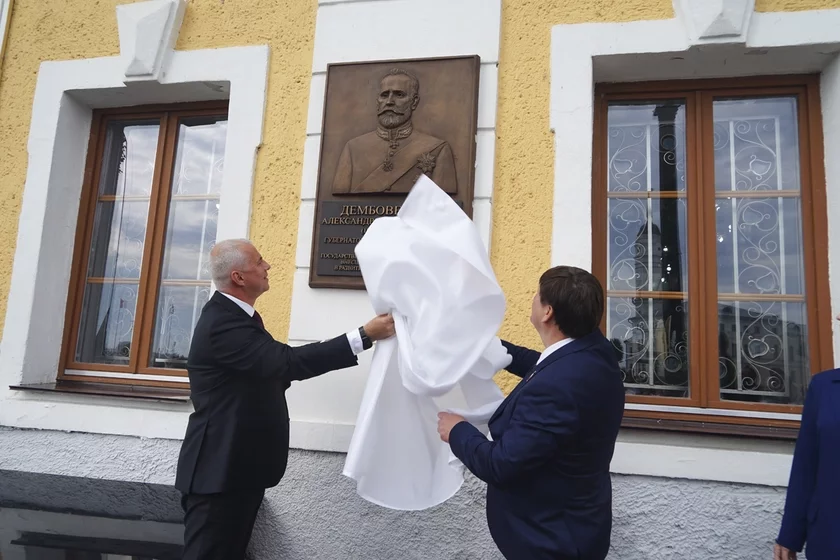
On September 1, a ceremony for the unveiling of a plaque to Alexander Dembovetsky took place on the facade of the Mogilev Regional Museum of Local Lore named after E. R. Ramanau. This was reported by the website of the Mogilev City Executive Committee.
Chairman of the City Executive Committee Sergei Chartkov explained the choice of the installation date:
«The unveiling of the memorial plaque on September 1 has a symbolic character: as a brilliant leader, Alexander Dembovetsky contributed to the establishment of a women's gymnasium, real and diocesan schools, and a paramedic school. It is important for Mogilev residents and tourists to see who made efforts to create the image of our city.»
Chairman of the Belarusian Union of Artists, sculptor Andrei Vasileuski noted that his organization is always happy to contribute to the perpetuation of the memory of such people.
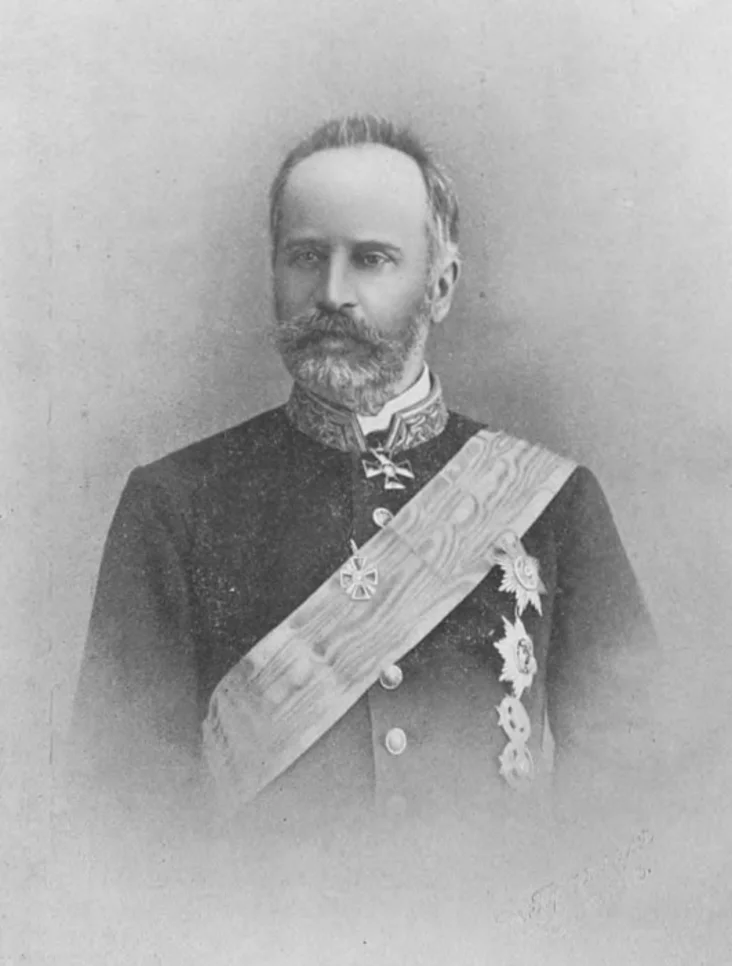
Official documents lack precise information about Dembovetsky's parents. Belarusian literary critic Adam Maldzis believed that he was the illegitimate son of Russian Emperor Alexander II.
The dignitary was appointed to Mogilev in 1872. During his 21 years of rule, he initiated the construction of a drama theater, a water supply system, a number of educational institutions, as well as the publication of the three-volume «Experience of Describing Mogilev Governorate».
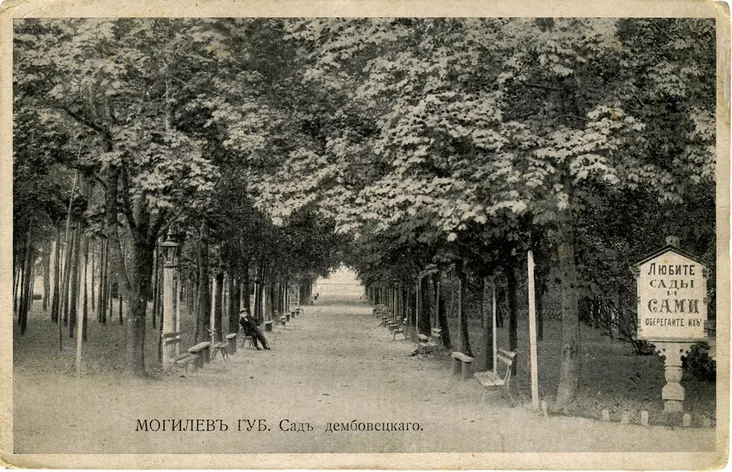
One of his initiatives was the creation of a large garden on the city castle grounds in 1872. However, as we wrote earlier, Mogilev authorities previously intended to demolish Dembovetsky's historical garden along with the castle's cultural layer, to build a museum of Russian Tsar Nicholas II on this site.
Discrepancies with the Death Date
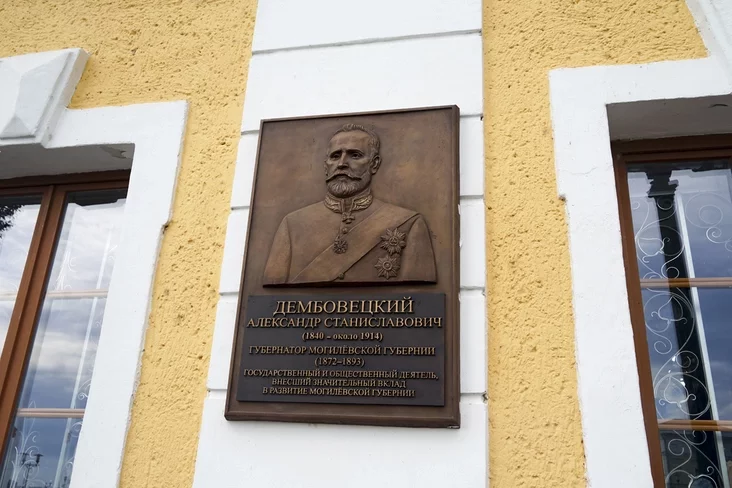
The text on the installed plaque is in Russian, and the governor's years of life are indicated as «1840 — circa 1914». This death date sometimes appears in outdated biographies of Dembovetsky, as if with the beginning of World War I and the ensuing turmoil, his trace, like that of many contemporaries, was lost. However, in the address books of Petrograd for 1915-1917, he is regularly mentioned as an active privy councilor and even changes his place of residence within the city.
As early as July 2016, "Mogilev Pravda" published an article with precise archival data indicating that after his transfer to Saint Petersburg in 1893 to the position of senator, Dembovetsky continued to live there even after the beginning of World War I.
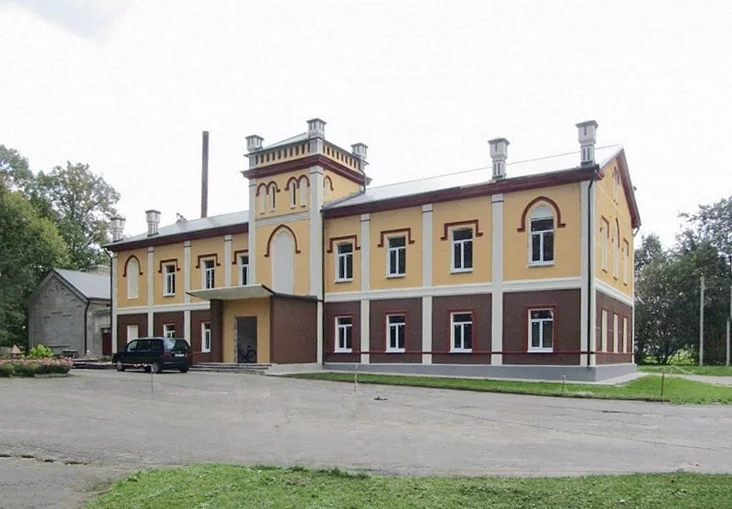
In 1918, 78-year-old Dembovetsky attempted to leave Soviet Russia for his estate Berdaŭka in Lida County, acquired back in 1868. Since the territory was under the control of German troops, he sought help from German diplomats. On August 24, 1918, the German General Consulate in Petrograd issued him a protective certificate:
«This certifies that Lithuanian Citizen, landowner, Alexander Stanislavovich Dembovetsky... is included in the list of persons under the patronage of the Imperial German General Consulate... both he personally and his property are under the protection of the German imperial authority.»
On October 23, 1918, the former governor sent an application to the Commissariat of Internal Affairs of the Union of Communes of the Northern Region with a request to release him from RSFSR citizenship. He explained his decision by stating that he was «a native of Lithuania, which had separated from Russia according to the peace treaty.»
The fact that Dembovetsky was still alive in autumn 1918 and that he officially renounced Russian citizenship has been known for at least a decade, but for some reason, a different option was chosen for the memorial plaque. Perhaps it seemed more ideologically correct to the officials? If Dembovetsky died "around 1914", then he could not have betrayed his "socialist Motherland" by choosing the protection of hostile Germany and the citizenship of hostile Lithuania, as it had not yet been declared at that moment.
«Nasha Niva» — the bastion of Belarus
SUPPORT US-
For the Week of Belarusian Culture, the Lutskievich Museum will transform into the Popka Museum
-
The Grabnitsky Estate near Ushachy has been bought twice already — and now it's back on auction for one base value
-
They didn't want to take her to music school, but at 14 she played at Carnegie Hall in New York. Belarusian violinist — about life in London, earnings, and how a Stradivarius violin worth 14 million euros differs from an ordinary one


Comments