


Tens of thousands of people are expected at the funeral.
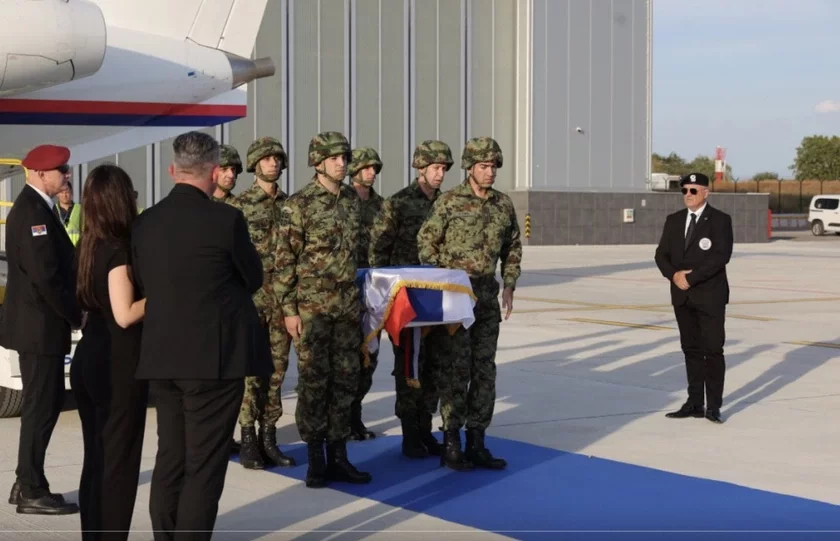
The body of former Bosnian Serb army commander Ratko Mladić, sentenced to life imprisonment for genocide and other war crimes, has been delivered from The Hague to Belgrade.
Despite the international tribunal's verdict, many Serbs still consider him a national hero.
Mladić died last week in a UN detention center in The Hague at the age of 84. He was serving a life sentence for crimes committed during the war in Bosnia between 1992 and 1995.
The coffin, draped in the Serbian flag, arrived in Belgrade on a government plane. Mladić's son and granddaughter, as well as Serbian Justice Minister Nenad Vujić, arrived with the body, Reuters reports.
At the airport, the coffin was carried by Serbian servicemen. It was transported to a military hospital, where an autopsy is scheduled to take place over the weekend.
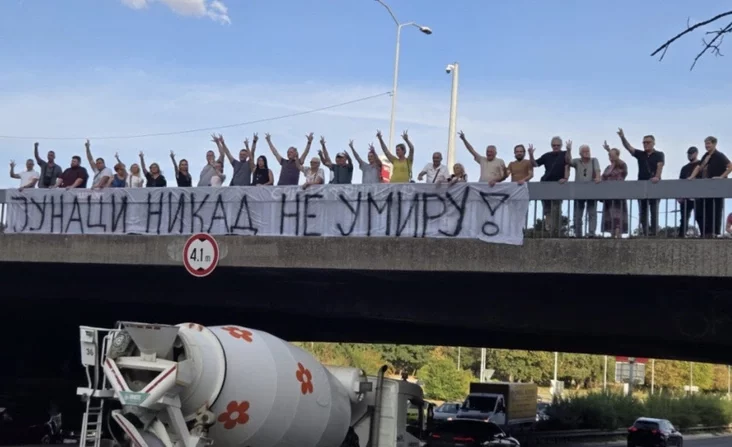
A farewell ceremony for Mladić is planned for Saturday in the Serbian army building in central Belgrade. On Monday, a funeral service will be held in a church in the capital's suburb, after which he will be buried next to his daughter.
Serbian President Aleksandar Vučić stated that tens of thousands of people might attend the funeral. According to him, ensuring security during the ceremony will be difficult.
One of the Serbian ministers had previously announced a state funeral. However, following a strong reaction from European politicians, the Serbian government did not confirm this.
European Commissioner for Enlargement Marta Kos stated that "the glorification of Ratko Mladić as a war criminal contradicts fundamental European values." Croatian Prime Minister Andrej Plenković warned that a state funeral for Mladić "would close the door to the European Union for Serbia."
The International UN Tribunal found Mladić guilty of genocide for his role in the Srebrenica massacre in 1995. After capturing the UN-protected enclave, Bosnian Serb forces killed about eight thousand Bosnian Muslim men and boys.
Mladić was also convicted for the 43-month siege of Sarajevo, during which about 10,000 people died.
Despite this, he remains a popular figure among some of the population in Serbia and the Republika Srpska within Bosnia and Herzegovina.


Comments