


In "The Swan Song of Fyodor Ozerov," cinema spoke the language of real Belarusians, not literary ones
I went to "The Swan Song" with great hope, writes Mikalai Buhai. The hope that I would see on screen the generation that will play "Sotnikov" of our time (or perhaps "Pratasevich"?). And what did I see?

I was on my way to the screening of "The Swan Song of Fyodor Ozerov" and was thinking not only about this film, but far ahead: what would be the first film Andrei Kudineno would make in exile? The wild pressure and terrible heat of danger experienced by people cannot but produce diamonds of reflection, just as immense pressure and temperatures gave birth to diamonds in the depths of the earth. But who is capable of cutting those rough diamonds, turning them into brilliant ones?
I was thinking about the classics. Larisa Shepitko once made "The Ascent." I would like to see "Sotnikov" of this generation — "Sotnikov," whose action takes place in Akrestsina, in Amerikanka (KGB prison). Or maybe not "Sotnikov," but "Rybak," "Pratasevich." I would like to live to see the day when I hear from the screen: "The dead feel no pain. The living do."
I want to see a new wave of Belarusian cinema. That's why I went to the film "The Swan Song of Fyodor Ozerov" with trepidation in my soul — here is its trailer:
This film initially seems like a peculiar comedy, but turns out to be a tragedy. It is ambiguous to the highest degree. Everyone will see something different in it. Volski's song came to mind.
For a Pan-Slavist, the country is one.
For a Satanist, the country is a coffin.
For a guitarist, the country is a string…
For me, this film is about the heavy burden of hopelessness. How apathy paves the way to hell. Filipinos, Lithuanians, or Minsk ten-graders, I think, will see something completely different there. What does this mean? And what does that mean? — you ask yourself after the film.
Three points I want to discuss.
Firstly, the scriptwriter and director are not afraid to speak from the screen in the language that real Belarusians speak. Some — in Belarusian, others — in Russian, a third group — "go to hell" (and actress Violeta Rohachova says this particularly naturally), a fourth, upon hearing the news that Putin plans to declare war on America in his New Year's address: "Well, he's f***ing insane, a d***head." I can't say this is the first time: I haven't seen much modern cinema, I haven't watched a lot. But I heard something like this in a Belarusian film for the first time. An important barrier of realism has been overcome.
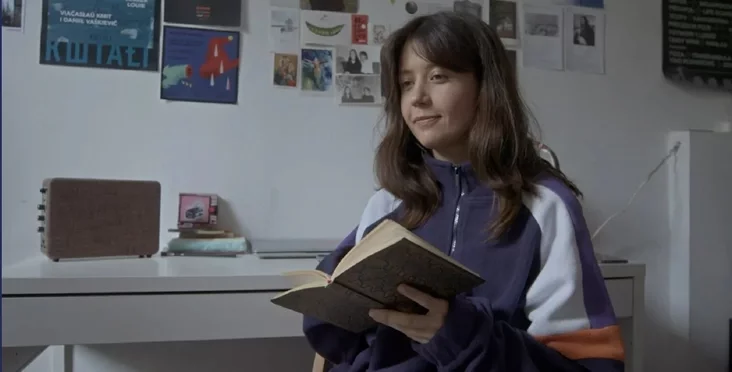
Secondly, this film is brave because it is not afraid to speak about today's reality, which we ourselves do not yet fully understand, which emerged in 2020-2022. War is happening nearby, its smoke reaches us, coffins are brought, gasoline is spilled, and the fire can instantly spread to our homes.
And thirdly, we saw people of the 2010s on screen. In my opinion, these are not yet the 2020s, not us today; these are us yesterday, seen in today's nightmare, but these are no longer characters from the distant past; these are heroes of our time.
Whether these guys and girls can play Sotnikov, Rybak, Pavlinka of our time depends on whether our people will give rise to our Jafar Panahis. This film is a step in the right direction.
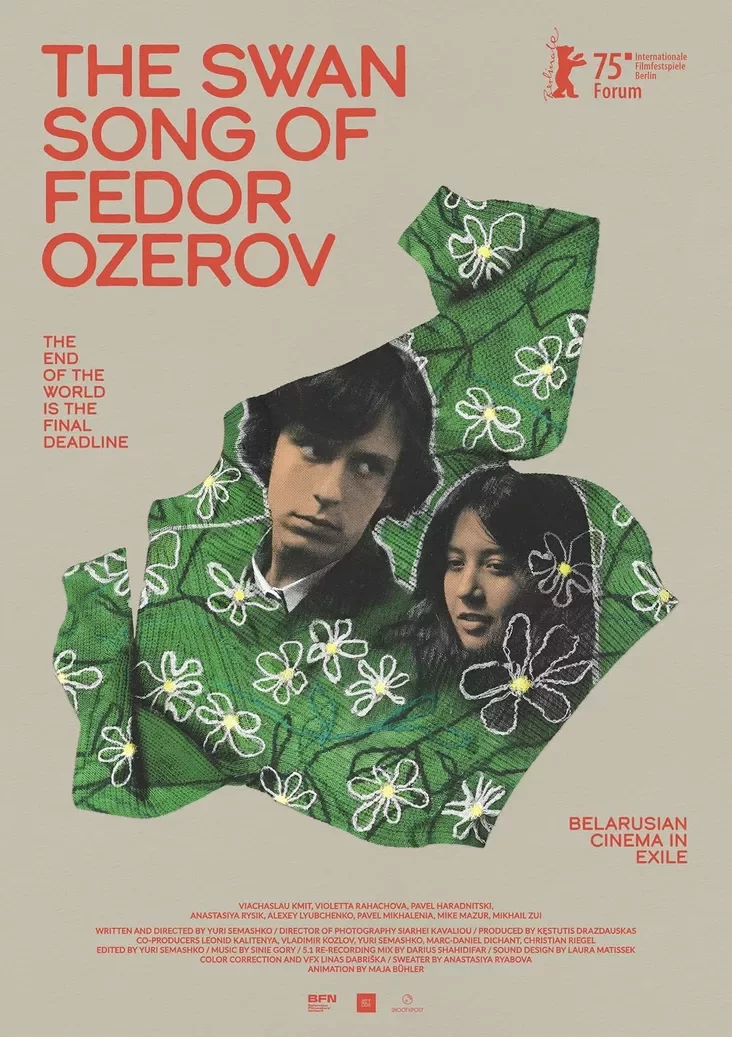
Lavon Volski, in that profound song for the film "Long Live Belarus" (a commercial failure, but the attempt counts), sorrowfully sang: "But for the majority, there is no country." Our difference is that after the drama of 2020-2022 — and thanks to it — now for the majority, there is a country. In "The Swan Song…" this is felt. This is a Belarusian film, although it was shot in Warsaw. It's interesting: Warsaw becomes a convention, a backdrop, while Belarusianness remains the essence.
What I found unequivocally unsuccessful in the film was the depiction of drugs. This evil should not be shown ambiguously.
A colonial relic — writing Fedor Ozerov. It should unequivocally be Fiodar Ozierau.
Watch this film — it is shown here and there in Europe. Your impression will be controversial, but an impression there will be.
Now reading


A Young Belarusian Didn't Want to Serve Time in Russia for Drugs, So He Figured Out How to Quickly Get Out of the Colony — And Ended Up on Ukrainian Positions Near Pokrovsk


Comments
А з якога часу зьявілася расейская мова?) Ідэалагічна такі тэрмін існуе, але ж гэты артыкул напісаны нібыта журналістам, у якога ёсць нейкія стандарты? Больш за то, тут гаворка ідзе пра рэальных беларусаў і калі ў іх спытаць, на якой мове яны размаўляюць, пачуем альбо па беларуску, альбо па руску, ніхто не скажа па - расейску.
Рускім матам.
"Яны добра ведалі расейскую мову, але зусім не ведалі беларускае" (Кузьма Чорны)
"Сэмінарыя дала мне ўсё: кавалак хлеба (значыцца, прафэсію), маю цяперашнюю расейскую мову (за якую мяне амаль ня ўсюдых лічылі чыстым русаком), урэшце яна дала мне і мой цяперашні сьветагляд." (Максім Гарэцкі)
"Увесь час адчуваючы розніцу паміж расейскім і «расейскамоўным»" (Янка Брыль)
"Але дрэнна ён вывучыў расейскую мову, каверкаў словы, і толькі асобныя з іх я разбіраў." (Іван Шамякін)
"Сярод гэтых людзей Толькін прыяцель, расеец, саромеўся сваёй кніжнай расейскай мовы, а я саромеўся сваёй гарадской беларускай." (Уладзімір Караткевіч)
"Расейскі" ёсць у слоўніках Байкова-Некрашэвіча 1925 г., Саўкі 2005 г., "расейскамоўны" - Піскунова 2012 г.
То-бок, у класічным правапісе слова ёсць, у сучасным (наркомаўцы) таксама выкарыстоўвалася. І ў літаратурнай мове, а не толькі "ідэалагічным" кантэксце, ў якім Вы яго недзе заўважылі.
Я асабіста выкарыстоўваю то "расейскі", то "рускі", бо ў кожным варыянце бачу і плюсы, і мінусы.