


Price of Russian oil jumps to $110 per barrel amid Middle East escalation
Amid a new escalation of the situation in the Middle East and Yemeni Houthi attacks on Saudi Arabian oil facilities, the price of Russian oil has sharply increased. The price of Urals, the main export grade of Russian oil, in Western ports rose above $110 per barrel, writes The Moscow Times.
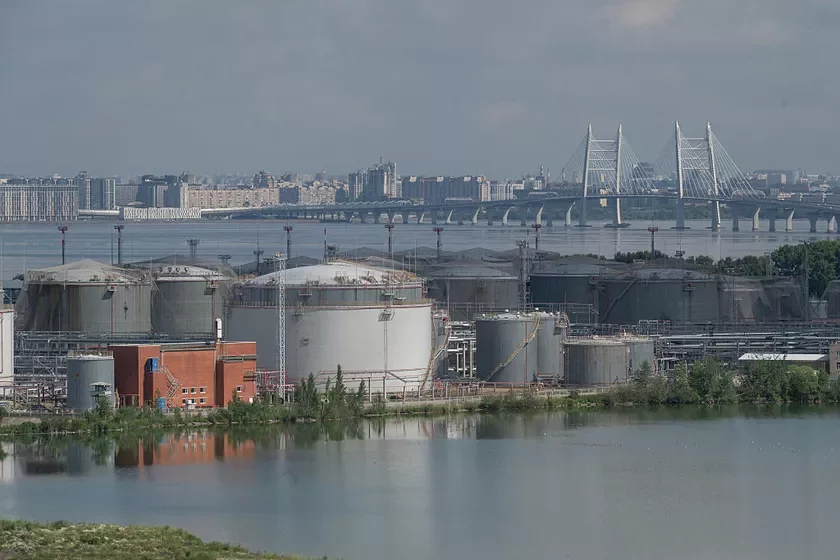
According to Reuters, citing traders, Russian oil has risen in price by 175% compared to early July. Its price reached its highest level since April, when oil supplies through the Strait of Hormuz were blocked during the US-Iran war.
Now, problems have also arisen with Saudi oil supplies via the Red Sea. A Houthi attack damaged an oil pipeline that pumped about 3 million barrels of oil per day across the desert. Its operation has been halted indefinitely.
Saudi Arabia has already warned customers about the cancellation of some September deliveries. Amid a shortage of Middle Eastern oil in India, Russian Urals is being sold for the first time in a long time not at a discount, but, on the contrary, at a premium. According to Reuters sources, its price there is approximately $8 per barrel higher than Brent. In China, the premium for Urals has reached $20 per barrel, according to Argus data.
Such price dynamics could significantly improve the situation with Russia's oil and gas budget revenues. Earlier, from January to August, the Russian federal budget received about 5.02 trillion rubles (about $54 billion) from oil and gas. This is 17% less than in the same period last year, and about a third less than in January-August 2024.
At the same time, the current price of Urals is almost double the level set in the Russian budget for 2026 — $59 per barrel. The average price of Russian oil since the beginning of September is $81 per barrel.
However, high crude oil prices do not necessarily fully correct the situation of the Russian budget. One of the problems has been attacks on oil refineries. Due to fuel shortages, Russian authorities have imposed a ban on gasoline and diesel fuel exports.
As a result, Russia continues to export crude oil in roughly the same volumes as before, but the total export of oil and petroleum products has decreased to its lowest level since the pandemic — approximately 28 million tons per month, estimate Raiffeisenbank analysts. According to them, the expected increase in oil prices by the end of September is unlikely to fully compensate for the fall in exports. In addition, Russia's non-oil and gas exports are also shrinking.
When preparing the budget for 2026, the Russian Ministry of Finance expected to reduce last year's deficit from 5.7 trillion to 3.6 trillion rubles (from $67.10 billion to $42.38 billion). However, by the end of the first quarter, the annual deficit plan had already been exceeded.
By the beginning of September, the Russian budget deficit had grown to 5.8 trillion rubles. This increase was partly influenced by record military spending, which exceeded 10 trillion rubles in the first half of the year.
Gazprombank estimates that by the end of 2026, the Russian budget deficit could increase to 6.5-7.5 trillion rubles ($76.52-$88.29 billion).


Comments
[Зрэдагавана]