


The number of bears in Belarus has increased 10 times in the last 14 years
This is both natural biological growth and migration from Russia.
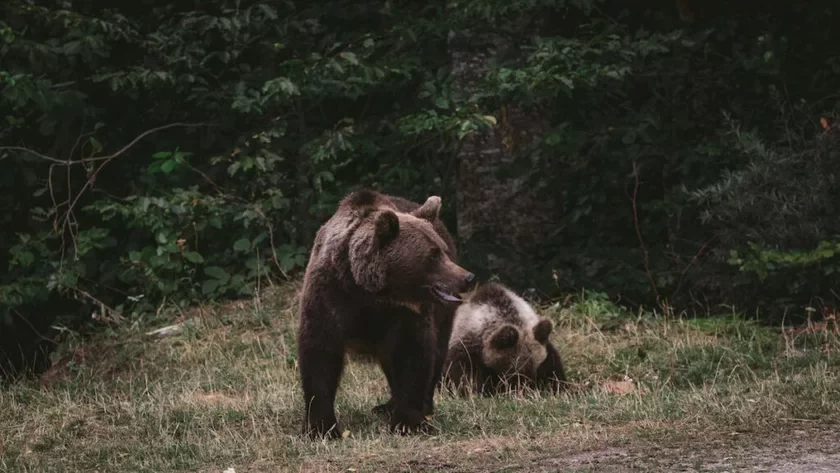
Alexander Kazarez, head of the hunting department of the Ministry of Forestry, told "Minskaya Prauda" why there are more bears, how to avoid conflicts with club-footed animals, and why in most cases people themselves provoke the beast.
In the Minsk region, the main "bear country" traditionally includes the northern districts — primarily Logoysk and Borisov.
If in 2011 there were only about 120 bears in the country, then according to data for 2025, their number reached 1289 individuals. According to statistics, we see an increase of more than 10 times, the specialist says.
There are several reasons for such a sharp jump. Firstly, it is, of course, natural biological growth due to strict protection within the framework of the Red Book.
Secondly, there is a migration of animals to the northeastern part of Belarus from adjacent regions of Russia, for example, Pskov, Smolensk regions. Thirdly, a more accurate accounting of animals: modern technology allows for more precise recording of numbers.
— With population growth, the number of contacts inevitably increases. If in 2021 we had only two calls regarding bears, then in 2025 their number increased to 22, — notes Alexander Kazarez.
The psychological effect of "the presence of bears everywhere" is largely fueled by modern technology. If earlier a chance encounter in the forest remained a fable for loved ones, today any eyewitness takes out a smartphone, shoots a video, and within minutes the viral video spreads across social networks, creating a feeling of a massive "invasion."
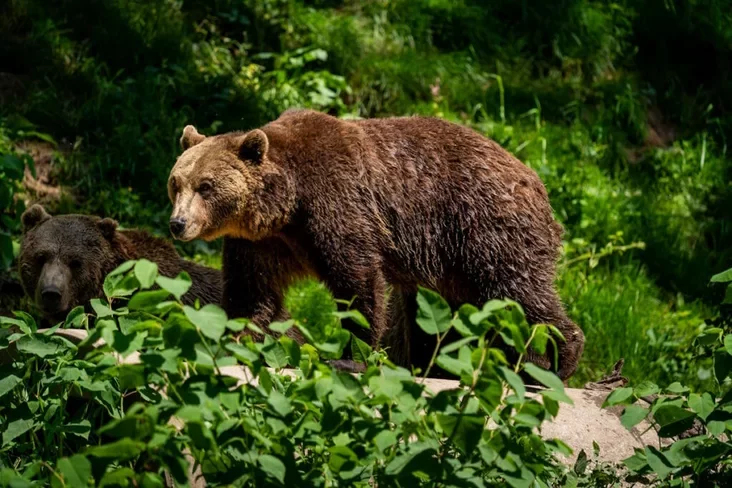
However, there are also objective reasons why predators have become bolder in approaching human settlements. One of the common factors is the presence of sparsely populated villages.
The extinction of remote farmsteads and small villages reduces the factor of natural deterrence of the animal by humans.
At the same time, Alexander Kazarez notes a positive factor: there are practically no large open food dumps near settlements in Belarus. It is clean forests and the absence of accessible garbage food that keep predators from conflict situations.
Analysis of conflict situations shows: in most cases, people themselves, albeit unconsciously, provoke the appearance of a bear near their homes.
— A common example is unfenced and unmown apiaries near the edge of the forest, — explains the representative of the Ministry of Forestry.
— For a bear, honeycomb with honey and larvae is a real gift. But even a basic initial fence, installing a net, or clearing the area can stop the predator. If the animal shows persistence, special repellents and an "electric fence" system help. Basic precautions allow minimizing all conflict situations.
Not every encounter is real
The Ministry of Forestry draws attention: with the increasing number of bear reports, it is important not only to react to them but also to carefully analyze each case. Sometimes, an inspection shows that the danger was exaggerated or the encounter with the animal turned out to be completely fabricated.
Alexander Kazarez gives a curious example from one of the districts of the Brest region, where bears were almost never seen. A man called the emergency service and reported that a bear was trying to break into his house to retrieve a cub, which the caller allegedly took from the animal two days ago. However, a simple check showed: there was neither a cub nor a bear in this story.
If a collision could not be avoided, the main thing is to remain calm and not provoke the animal. Do not approach the bear, shout, or make sudden movements.
If the animal shows aggression, you can try to visually increase your size — raise your hands or backpack — and loudly announce your presence.
To reduce the likelihood of an unexpected encounter, it is recommended to talk and move quite loudly while walking through the forest, picking mushrooms, or berries.
Hearing a person in advance, the bear, as a rule, tries to leave and avoid contact itself.


A Young Belarusian Didn't Want to Serve Time in Russia for Drugs, So He Figured Out How to Quickly Get Out of the Colony — And Ended Up on Ukrainian Positions Near Pokrovsk


Comments
як сімвалічна