


Yaraslau Pisarenka: One day I woke up, looked at myself in the mirror, and realized I couldn't live like this anymore
Sports journalist and blogger Yaraslau Pisarenka told Salidarnasts how he overcame depressive times, about humanity behind bars, and what to do while waiting to return home.
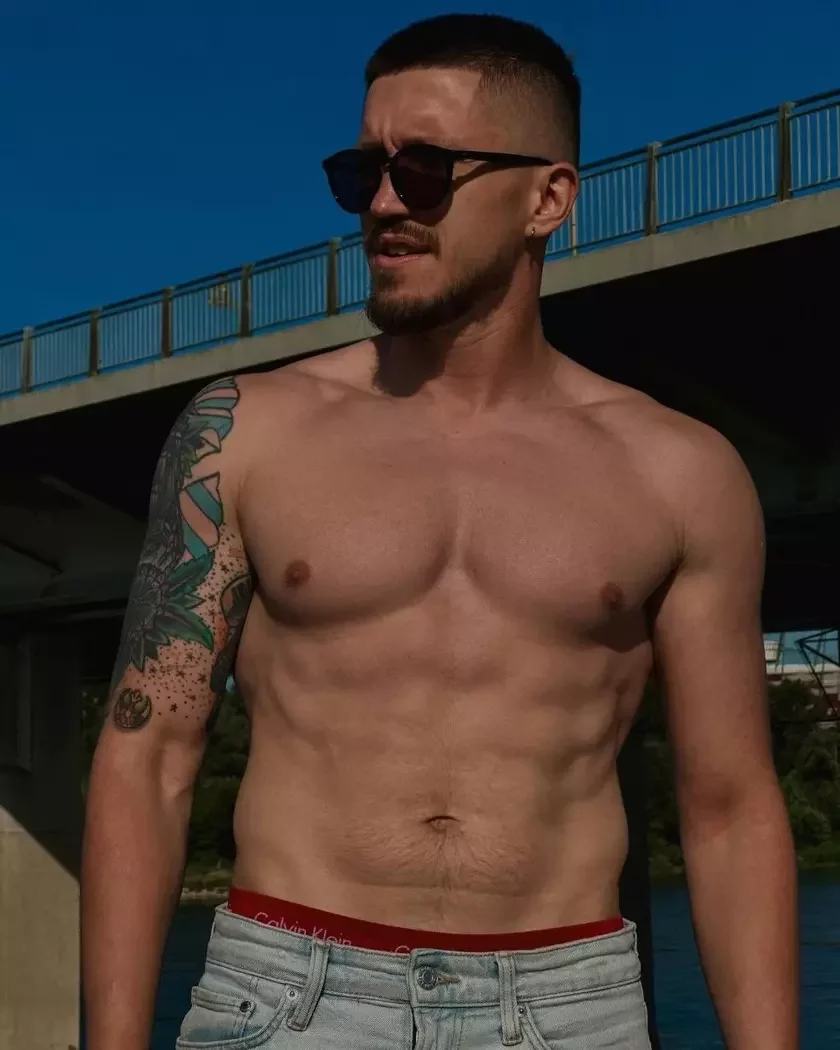
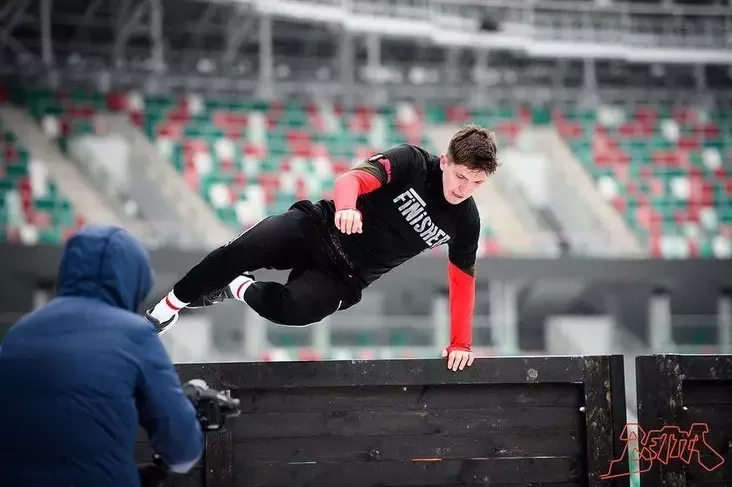
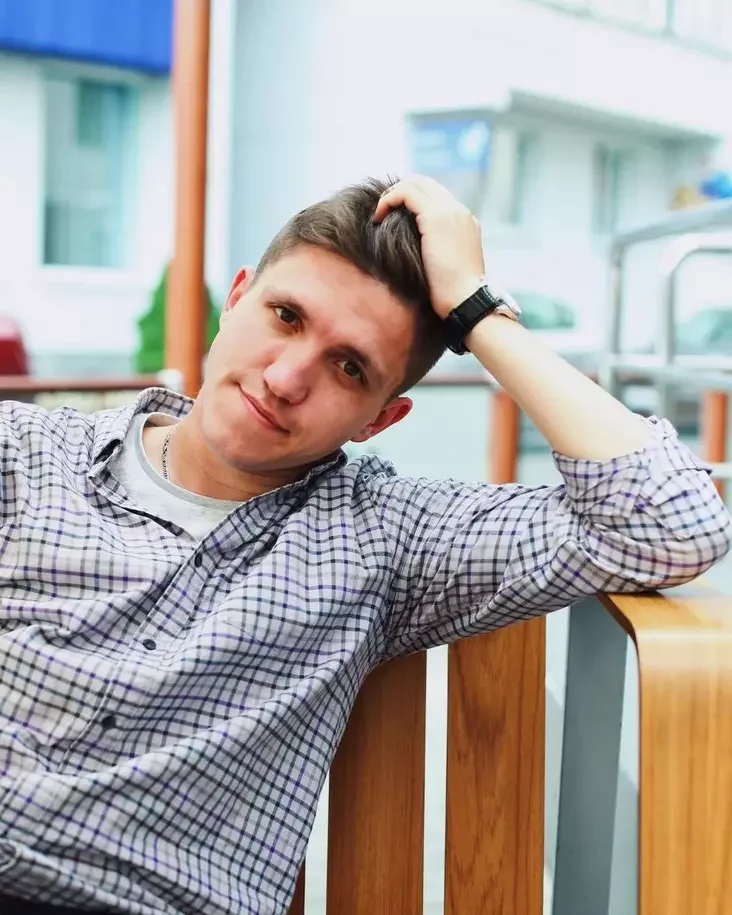
In the music video by Dzima Nikanovich and Nikita Naidyonov "Latsits znou" (Flies Again), Yaraslau looks like a Hollywood star. In recent years, he has lost over 10 kilograms, built up his biceps, and quit smoking. Is it easy for a political refugee in forced emigration to look like Statham?
The hardest thing, says Yaraslau, was moving from place to place. He left Belarus in the summer of 2021, with a backpack and a bag. In 2022, he moved from Ukraine to Poland. And each time he started anew.
— As for being a Hollywood star, in 2023 I went through depressive times. I started to slightly abuse alcohol, falling deeper into parties, bars, and so on.
One day I woke up, looked at myself in the mirror, and realized I couldn't live like this anymore. Because I was going where I actually didn't want to. I added sports, proper nutrition, and minimized alcohol.
I never smoked my whole life until I was 25, but in 2020 I started. I realized I was smoking more than a pack a day; it was a certain psychological barrier. And now it's been four months since I quit. I used to think I would quit smoking when I returned to Belarus. But then I realized I needed to think about myself here and now.
I started taking better care of myself, thinking not about what I can't change and how unfair the world is (these thoughts lead nowhere good), but about how I can make my surroundings, myself, my girlfriend, and my friends happier. And how to do more good for the viewers of our channel.
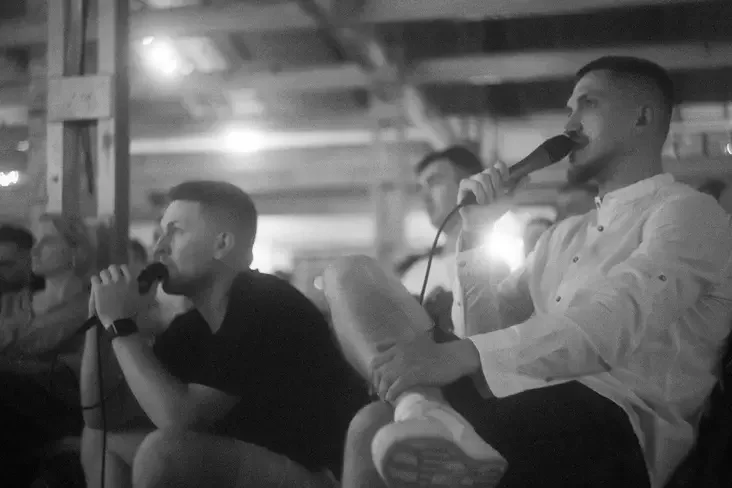
— You and Aliaksandr Ivulin were detained 5 years ago. What do you remember about that time today?
— So many different events are happening in the world and in life right now that I somehow caught myself thinking that I don't even have time to process these moments. Because there's a high density of various phenomena.
Five years ago... It wasn't just in a past life, but several lives ago. Of course, I remember those moments well, and I think about how incredibly brave I was (smiles). Like many others back then. Because now you look back at the country retrospectively, and how everything is being burned out with napalm there, but at that moment it seemed that nothing terrible would happen to us. Although the plane with Pratasevich had already been landed, it was clear that strong purges would begin.
But in my head it was: no, no way, we live on, everything is normal. There was a certain bravery, even when I was detained.
Now I realize: I was very lucky not to have gone through this entire terrible system completely, for years or months. Just 15 days, as we understand now, is nothing.
— It seems the scariest thing there is the thought that you might not get out. Maybe you have some advice on how to behave there, because Belarusians continue to end up behind bars today.
— As they said in the movie "Schindler's List", the scariest thing is that there are no rules. There's no guarantee that if you behave in a certain way, everything will be okay with you. Unfortunately, you might be lucky, or you might not.
I saw different people there, those who were in despair, crying, panicking. Saying, how can this be, why am I here, I didn't even do anything!
And there were people who just sat, discussing cars or football. For many, consciousness begins to build a conditional wall, simply to protect themselves, not to think about a possible sentence. And this is a very good thing when you cannot influence the situation you find yourself in.
Yaraslau recalls that in 2021, people within the prison system were diverse.
— There was a guy everyone called Balaclava because he always wore one. He could bring us soap or toilet paper. But if you told another that we had one small sliver of soap for 20 adult men, you'd hear: "It's nothing! You'll manage anyway."
There were those who mocked, and some simply lived in another universe. I remember when I was in the District Internal Affairs Department (RUUS), an investigator asked: "Will you go for days [in detention] or pay a fine?" And then his colleague ran in and advised: "Oh no, the fine is big, you'll still have to pay money! Better to go for days..."
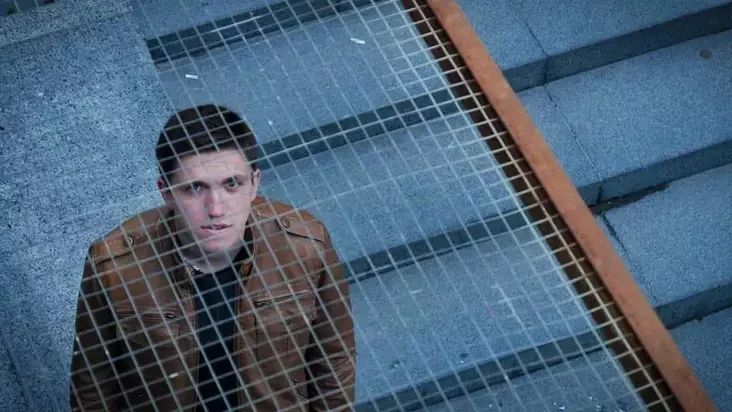
— Why did you go to work for STB, and did the black mark "BT journalist" often get in the way?
— I entered the faculty of journalism in 2012, and started working for STB in 2014. At the time of Ploshcha-2010 (Square-2010 protests), I was 15 years old. It so happened that I had a very non-political environment. I didn't ask myself too many questions.
Already at the faculty of journalism, I started to understand more. I ended up at STB by chance, because they were looking for someone, and I knew about sports. It seemed like a good stepping stone, and afterwards I would be able to pick up speed and do my own project.
It seems I never did anything I would be ashamed of. There were cringe-worthy things like hockey tournaments, but I didn't deceive people. I did my job as best I could.
I was never treated as a "BT-shnik" or "STB-shnik." I had many friends who worked for TUT.BY and other independent media. I could easily go to the "Ў" gallery for a meeting with Sasha Filipenka.
But there were jokes. I have a friend who, when I worked on TV, liked to tease me by naming my contact in his phone "propaganda cog."
— You say "did my job, didn't deceive anyone," and I think many people at BT today think the same way. Especially since you are a sports journalist, you could have quietly continued working in 2020. What was the last straw?
— Violence. This is a red line, something I absolutely cannot accept. When the strong raise a hand against the weak. I simply start to tremble when I see moments of such obvious injustice.
I can watch boxing or box myself, that's okay when two people go out for sparring. But when a woman or a young person is walking, and some guy with a bat flies up to them and starts hitting, that's beyond human.
You know, even those election results, the falsifications, even if I, as a citizen of Belarus, was deceived, for me it wouldn't likely have been a reason to go out [and protest]. But when I saw such violence, that was immediately the first and last straw.
— Is this about learned helplessness? About the fact that over decades we have supposedly gotten used to such a state of affairs and falsifications? But there was violence in 2010 too, Niakliayeu ended up in the hospital with terrible injuries.
— I have lived my entire life, from birth, under Lukashenka. I didn't travel much. And about learned helplessness — that's 100 percent true.
I remember my first elections in 2015. I simply ignored them, didn't go anywhere, because I understood it was a waste of time.
As for 2010 and Niakliayeu's terrible injuries, then it seemed like there was a feeling that he was going against the authorities, so he should have understood the possible consequences. It sounds bad, but at 15 years old, it seemed logical to me.
In 2020, it was a different story, because people who didn't choose such a path got caught in the crossfire.
I went out for the first time when Babaryka was arrested; that also outraged me. It's a very subtle point, because in 2020 it affected [people] like never before.
Actually, in 2020, and now, we are still learning. Nobody knows how to do it right.
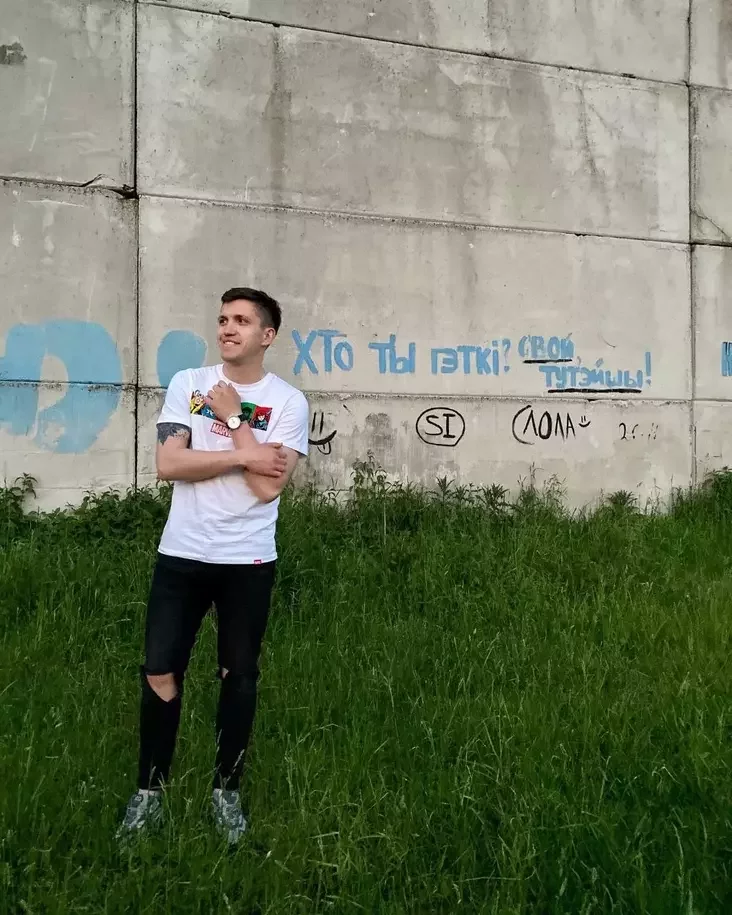
We are supposedly such a young country, and supposedly this independence came so easily to us. But independence never comes easily. There are always those who go out and lose something. And those who will say: "Oh, you guys! Better sit quietly, you have a salary, an apartment, and a Chinese car. What more do you need?"
This story gives me hope that there are many great people inside Belarus. And the fact that they actually work at state enterprises does not automatically make them bad.
Therefore, I see my mission (perhaps this word is too strong) in simply creating interesting content in Belarusian, which is watched by tens of thousands of people, specifically inside Belarus. And that's cool, because, it seems to me, these people share my values. It's very difficult in these times to believe in people, but I try to do it.
Yaraslau says that there were indeed compromises in his work at BT, definitely in the Christmas hockey tournament. But at the same time, he could edit Sasha Ivulin's episodes when he was just starting out. Because he also had his reports from Minsk-Arena.
— It seemed normal to me, like a balance, because I had the freedom to edit such a video that people would watch on YouTube. It was as if there was an agreement that once a year they could pull you for this, but the rest of the time I would do what I wanted.
I think growing beyond oneself is completely normal. Because a person is not a monument.
The main thing is self-belief, not believing that someone will come and change something. And something will definitely happen. Because I remember how we sat in Akrestsina, where the lights are always on. But one evening they went out. It felt like it was all over Akrestsina. It was summer 2021, and there was some meeting between Biden and Putin then.
We were sitting in the cell then, speculating that if they decided to put Lukashenka in his place, then everything was definitely okay for us (laughs). Akrestsina is blacked out, and we're going free now. That is, there was a feeling that someone should come and rescue, help.
Now there's a feeling that nobody needs us, and nobody but ourselves will fight for us. But there's also a feeling that we can actually do something. We ourselves can achieve our own happiness.
Last year, I was very pleased to observe the presidential campaign in Poland. I watched those debates like Netflix. You observe how real freedom happens. That views can be marginal, but nevertheless, the authorities must reckon with everyone. For my Belarusian understanding, it was quite difficult to comprehend at first, but it's great. People go to rallies, meetings, and that's normal; people aren't arrested, they aren't threatened.
Yaraslau says he was very outraged when Mikalai Ivanavich Kazeka died and people from various state institutions were forbidden to come and say goodbye to the man.
— What would a simple guy from Orsha, who dreamed of a football career but became a sports journalist, have thought if he had known what would happen to him in the last six years?
— I think he wouldn't have understood at all what was happening, due to his age. But, I think he would still have respected it. Because it's such a thing, it seems to me understandable at any age, when you don't accept violence and injustice and you do something about it. Regardless of how your fate turned out, and what everyone eventually lost.
But there's still a lot of positive now. For the World Cup final, we gathered over 400 people who came to see me and Sasha. To watch football with us, to talk. For me, that's worth a lot. These weren't just people who came because they were told, like for a Christmas tournament: you must come. But because they wanted to and bought tickets.
Yaraslau knows Ukrainian well, because he used to go to his grandmother in Ukraine since childhood. So even after leaving Belarus, and even after the war started, he wanted to stay in Ukraine. But it didn't work out.
And reflecting on the results of 2020, he says that Belarusians have undoubtedly been reserved in recent years: they cannot express what they think directly.
— Because if they express it, they will go to prison. Therefore, they are forced, relatively speaking, to put dung under doors and set it on fire. This partisan warfare, as always with Belarusians in difficult times (smiles).
Do what you can, with what you have, as best as you know how. Do the unexpected, that's how you'll win. That is, one must try to be a good person.
Even if it happens that we never return to Belarus, you simply won't have a reason to think that you lived a bad or an unfulfilled life. And if we do return, it will be a celebration, of course, it will be a celebration and it will be great!


Comments