


Polish farmers rented 26 thousand hectares near Slonim. In five years, cows started giving 6 times more milk
The team of the Polish media project Agro Profil, dedicated to agriculture, published an hour-long video about a trip to Belarus. The channel's authors visited the "Rodan Agro" farm in the Slonim district, which is managed by Polish citizens, writes "Radio Svaboda".
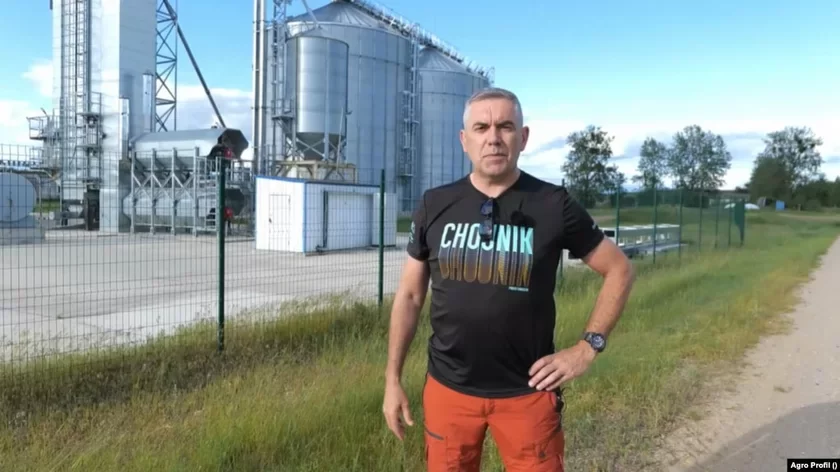
Bartłomiej Ardanik is a third-generation farmer. He ran a successful farm in Poland, but after his land lease was not extended, he decided to look for business opportunities beyond the eastern border. Initially, it was Kazakhstan, but during the pandemic, traveling there became more difficult. In addition, according to Ardanik, he was offered not entirely transparent schemes there. A lawyer advised the farmer to inquire about Belarus. Ardanik did so and concluded that there were the same opportunities there as in Poland in the 2000s.
"I love clear rules of the game. And that's exactly what I saw in Belarus. Everything can be solidly written down in a contract. The system here is like it once was in Poland. Land and farms belong to the state. And the state simply privatizes these farms. About 25% of Belarusian farms are unprofitable and are given a second chance through privatization," says Ardanik.
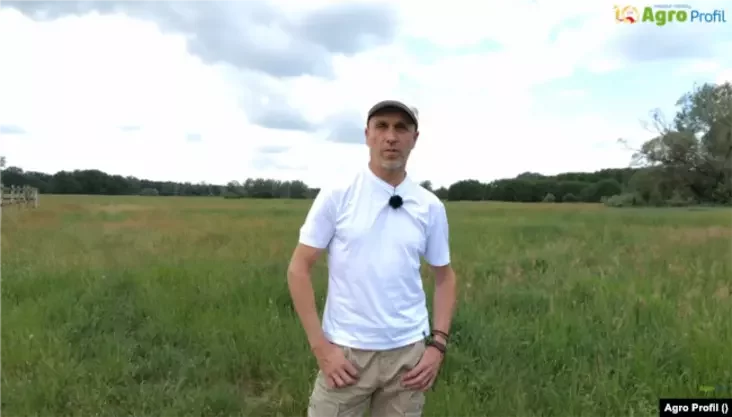
In Belarus, out of 1400 farms, about 300 are unprofitable, the authors of the video explain. And the state is looking for investors for them. Ardanik and his partners managed to acquire four farms in this way and lease land for 99 years. Their total area is more than 26 thousand hectares. Along with the land, the Poles inherited 3300 cows from the collective farm. The farm specialized in milk production. Today, 460 workers are employed at the "Radon Agro" farm.
"The most difficult thing was to motivate people to work for themselves, not for someone else. Previously, they worked on bankrupt farms. Therefore, it was difficult to explain that one should not steal or drink. But we promised that for good work, we would pay decently," says Bartłomiej Ardanik.
Workers are still being sought for the farm today. Tractor drivers' salaries start from 2500 rubles, zootechnicians from 3000, electric welders from 2200, mechanics from 2000. Polish specialists arrived in the Slonim region to engage in transformation and efficiency improvement.
"In Belarus, no one cares about the investor's skin color. Work must be done, people must earn well, and cows must be fed. There must be a result," says the Pole.
According to Ardanik, Poles perceive Belarus as a wild country. When people ask him about resolving matters through bribes, he replies that he has not encountered anything of the sort in Belarus. On the contrary, locals advise never to do such a thing. In Belarus, everything is official. If you exceed the speed limit on the road, don't even think about offering a bribe to a policeman; it could end badly, says the Polish-Belarusian farmer.
To the question of where one can earn more, he replies:
"In Belarus, everything is cheaper, and the cost of agricultural production is most affordable. Fuel costs less than 3 zlotys, fertilizers can be bought half as cheap as in Poland. And when we talk about the selling price of products, it is already 70% of the Polish price."
Among the problems, he lists EU sanctions, complicated logistics due to this, and poor access to spare parts.
"But everyone works excellently. We taught people that you can work day and night. If it's dark, you can turn on a light bulb. There's plenty of work. Our bosses also work. If necessary, they'll get into a tractor and milk a cow. We showed the workers that a manager doesn't wear a white shirt but knows what needs to be done, that he can put on rubber boots and go to work," says the farmer.
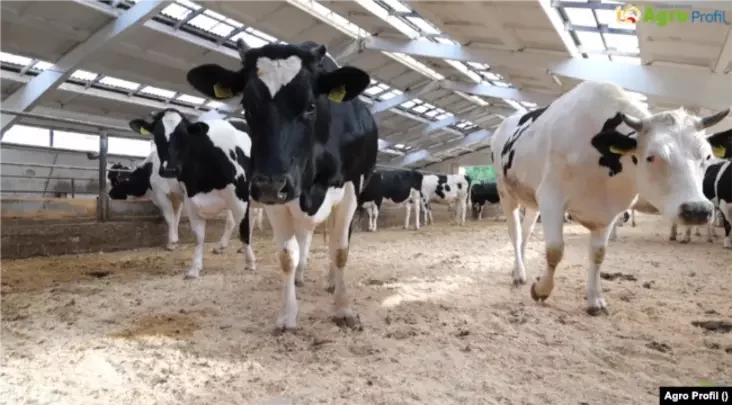
When Ardanik started farming five years ago, one cow gave 4-5 liters of milk per day. Today, cows on his farm give 30 liters. Why were the results so modest before the Poles arrived? The authors of the video name several reasons: weak genetics, serious problems with herd reproduction, and, finally, insufficient attention to feed quality.
In the first year of farming, 450 hectares of rapeseed yielded less than 10 centners per hectare. Today, they harvest 35 centners from 4000 hectares. Why? Previously, there were many weeds in the fields. The Poles began an intensive fight against them.
The main specialization of the Polish farm is milk and meat. Exporting grain from Belarus, according to Polish farmers, is difficult because ports in neighboring Latvia and Lithuania are closed due to sanctions. African swine fever does not favor pig farming. They also grow flax, but these are rather symbolic areas. The Poles call Belarus a dairy country; 9 million tons of milk are produced in the country annually.
"The number of cows and dairy farms in Belarus is constantly increasing. For us, it's a profitable sector. As a private farm, we have better conditions than state-owned firms because we sell products wherever we want," says Ardanik's partner, Maciej Pietrzak.
"I didn't study at an agricultural school. My dad once explained to me that agriculture is very simple. To succeed, you just need to do things on time, do them well, and do them cheaply. I strive to implement this rule," says Bartłomiej Ardanik.


Comments
Калі будзе патрэба ваш бізнэс забяруць ці абкладаюуць вялізарнымі штрафамі ў адзін дзень.
Па-першае, у лукашэнкаўскай Беларусі паспяховы сярэдні і буйны бізнэс плаціць лукашэнкаўцам пэўныя сродкі каб не чапалі (але гэта не 100% абарона ад страты бізнэсу), па-другое, мне цікава, што вы будзеце рабіць калі лукашэнка нападзе на Польшчу?