


In Sweden, left-wing parties gained a majority in the elections, prime minister resigned
Sweden's Prime Minister and leader of the liberal-conservative Moderate Party, Ulf Kristersson, has resigned following his centre-right bloc's defeat in the parliamentary elections. According to preliminary results, four left-wing and centre-left parties led by Magdalena Andersson's Social Democratic Party are gaining a majority in the Riksdag, writes the BBC.
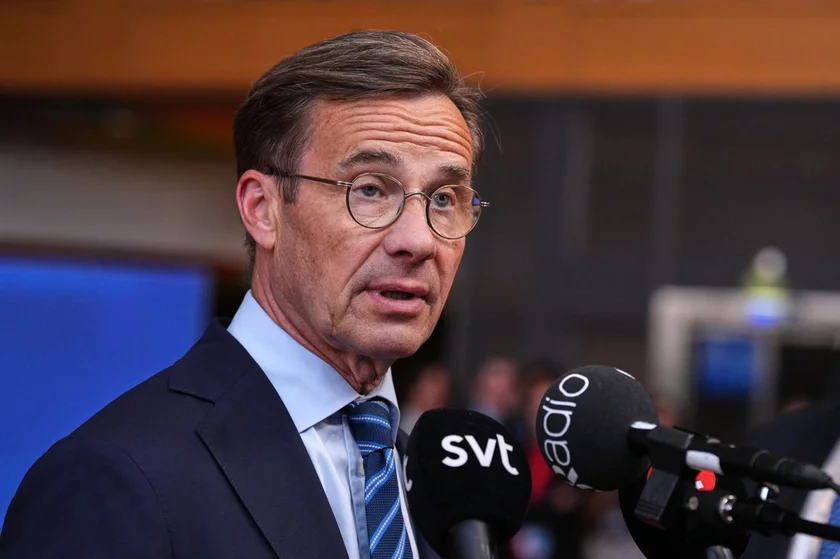
Kristersson announced his resignation on the morning of September 17 after the preliminary results of Sunday's vote were published. The left-wing bloc won by a very narrow margin — about 50,000 votes.
According to preliminary counts, left-wing and centre-left parties will receive 176 out of 349 seats in parliament, which is one mandate more than the number required for a majority. Centre-right parties together receive 173 seats.
The vote count is not yet complete. On Wednesday, early voting ballots that arrived late, as well as ballots from overseas polling stations, began to be counted. Final results are expected over the weekend.
At the same time, according to Swedish political scientists, a change of government will not significantly affect the country's policy towards Russia and Ukraine. There is a broad consensus in Swedish society that Russia poses a serious threat to Sweden, and that Ukraine needs assistance. This position is shared even by the far-right "Sweden Democrats".
In Swedish politics, a system of two main blocs has formed — left and right, each with four parties. Therefore, coalition governments and minority governments are a common occurrence.
After the Prime Minister's resignation, the Speaker of the Riksdag must hold talks with all parliamentary parties and nominate a candidate for the position of head of government. After this, parliament will vote on his candidacy.
Magdalena Andersson has already begun negotiations to form a coalition with three other parties to the left of the centre — the Left Party, the Centre Party, and the Green Party. However, negotiations could be complex and prolonged, as these parties hold different positions on some important issues, including taxes.
After the 2022 elections, it took 37 days to form a government, and after the 2018 elections, this process took about four and a half months.
In his resignation announcement, Ulf Kristersson noted that the main role in forming a new government now belongs to the Speaker, and asked to be relieved of his post so that this process could begin immediately.
Andersson stated after the elections that the Swedish people had voted for a new direction for the country. The Social Democrats were Sweden's main political force for most of the 20th century and remain one of the leading parties. If Andersson again heads the government, she will return to power after a four-year break.
Apart from Kristersson's Moderate Party, the centre-right bloc includes the far-right anti-immigrant party "Sweden Democrats", the Christian Democrats, and the Liberal Party.
The "Sweden Democrats" were founded in the 1980s by people with pro-Nazi views, which is why mainstream Swedish parties long refused to cooperate with them. In the mid-2000s, the party changed its image, became more moderate, and gained popularity.
In the 2022 elections, the "Sweden Democrats" took second place, campaigning on an anti-immigration and anti-crime platform, among other issues. They did not join Kristersson's government, which was formed by three other centre-right parties, but supported it with their votes in parliament. Before the current elections, Kristersson had promised to give ministerial positions to representatives of the "Sweden Democrats" if his bloc won.
However, in these elections, the "Sweden Democrats" performed weaker than four years ago, receiving approximately three percentage points fewer votes.
Now reading


A Young Belarusian Didn't Want to Serve Time in Russia for Drugs, So He Figured Out How to Quickly Get Out of the Colony — And Ended Up on Ukrainian Positions Near Pokrovsk


Comments