


In August, the American publishing house Jewishgen.Inc released the publication "Vitebsk in the Past: History, Memoirs, Destruction." Across 402 pages, the authors present a multifaceted picture of the city's Jewish community from its early history to its destruction in 1941, according to the Belarusian Institute of Public History.
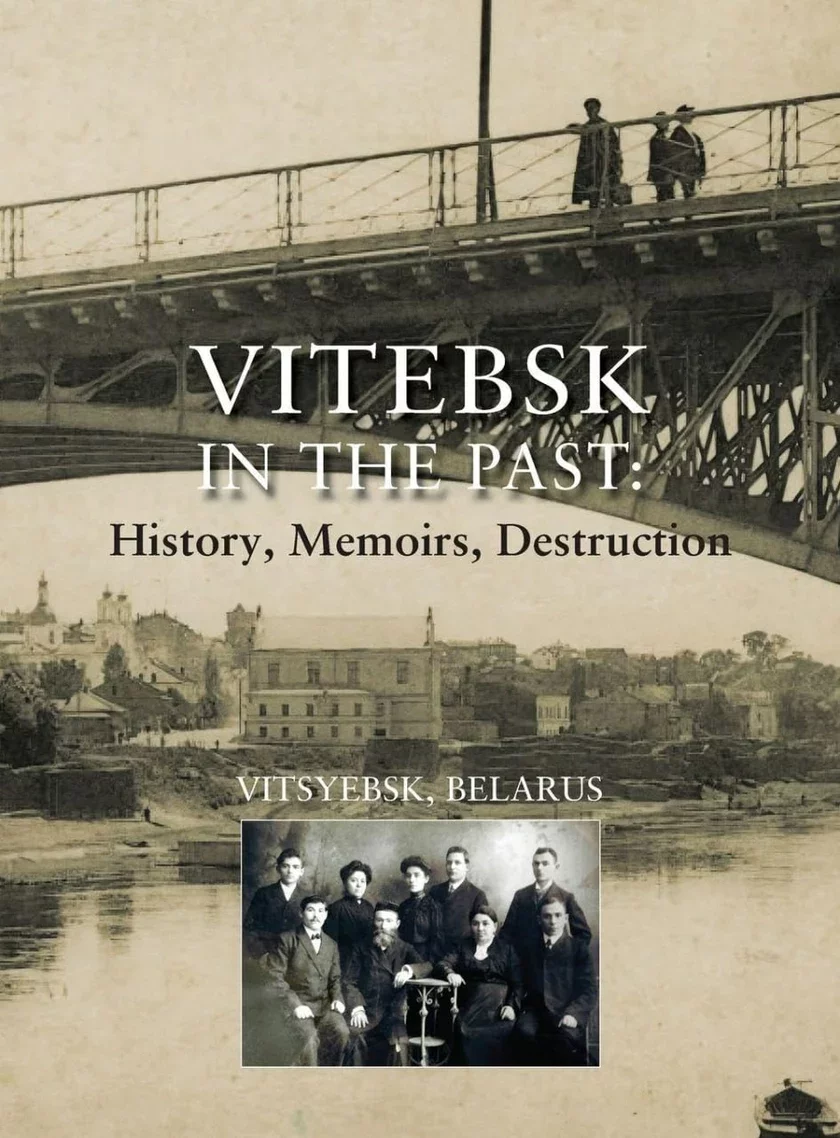
Jewish merchants first arrived in Vitebsk in the mid-1500s, when the region was part of the Polish-Lithuanian Commonwealth. In the 18th century, the city became a major center of Jewish education and spirituality, both Hasidic and traditional. By 1897, out of 65,871 residents of Vitebsk, 34,440 were Jewish. Dozens of synagogues, a Talmud Torah, a Jewish hospital, and several schools operated in the city.
Among other things, the book tells about the consequences of the 1905 and 1917 revolutions. There are also chapters dedicated to some prominent representatives of the city's community, including Marc Chagall.
The original book was published in Yiddish back in 1956, and now the 402-page edition has become available in English for the first time.
-
This is what Maksim Bahdanovich could have looked like on a 50-ruble banknote PHOTO FACT
-
Architect Shabuneuski was repressed for "criminal bridge construction" across thezh. There are still problems with the crossing there
-
Passions around the "Cross of Queen Sophia" do not subside. Sergei Ablameika defended it, and Krytsuk analyzed the primary sources
Now reading


Natalia Kalegova spoke about helping Belarusian refugees, her family, her attitude towards Tsikhanouskaya. And explained who "beavers" and "hares" are

Natalia Kalegova spoke about helping Belarusian refugees, her family, her attitude towards Tsikhanouskaya. And explained who "beavers" and "hares" are


Back to pen and paper and smartphone ban: universities are forced to change the format of classes and tests, otherwise AI prevents both teaching and assessment


Comments