


Statkevich: All attempts to force me out of Belarus were futile. I will not leave the country
"My wife and I have a rule: when we are at home, we don't discuss what we plan to do," the politician told the German newspaper Zeit about his current life.
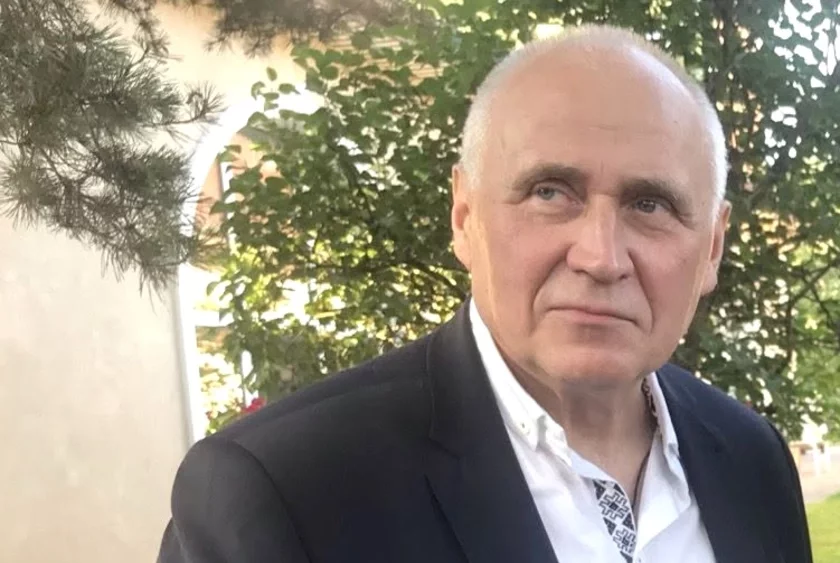
DIE ZEIT: Mr. Statkevich, we cannot meet in person because you live in Belarus — a country that Western journalists can hardly enter. Therefore, we are conducting this conversation via video call. How freely can you speak at all?
Mikola Statkevich: I can speak freely. I say what I think and what I consider necessary. Besides, I'm lucky.
ZEIT: In what sense?
Statkevich: My wife is a lawyer. She worries a lot about me. Before publication, she will review the entire interview with me and say: "You'd better be careful with this statement, because it currently carries twelve years in prison, and this one — ten." (laughs)
ZEIT: A few months ago, you were released after many years of imprisonment, but unlike other prominent former political prisoners in Belarus, you remained in the country. You are the last well-known opposition figure still living in the country. How free do you feel?
Statkevich: Completely free. But I know that this can change at any moment. The authorities are silent about my status. Was I pardoned? Or was I only temporarily released to recover my health — and when I get better, must I serve the rest of my sentence?
ZEIT: You were detained in May 2020 while organizing peaceful protests for free presidential elections, in which Alexander Lukashenka was challenged, and later sentenced to 14 years in prison.
Statkevich: I do not know my legal status, and no one has responded to my official inquiries. After my release, Lukashenka's press secretary stated on state television that I had been pardoned, although I never asked for it. But I have no idea.
ZEIT: In January this year, you suffered a stroke in the penal colony, and a month later, you were released.
Statkevich: I think the regime did not want to bear responsibility if I died in detention. Although this stroke was artificially induced — I was denied life-saving medication. When I left the prison hospital, it was very difficult for me to speak, but my condition is improving.
ZEIT: Many prisoners have died from inhumane conditions of detention.
Statkevich: Now, representatives of the regime apparently hope that the constant fear of being behind bars again will complete its deadly work. Or that I will finally leave Belarus to seek treatment abroad. There have been plenty of offers — by the way, also from Germany, where my daughters and grandchildren live. Thank you very much for that! The regime here constantly makes my life difficult so that I finally disappear from the country.
ZEIT: In what way?
Statkevich: When I was released, I didn't even have a passport, and I needed it to get medical help. Later, when I got better, officials returned my passport. Besides, our house is being demolished. We live in the so-called scientists' town in Minsk, which is planned for redevelopment — the process has been going on for a long time, and after my release, it was even accelerated, which is definitely not a coincidence. But all attempts to force me out of Belarus were futile. I will not leave the country.
ZEIT: Are you being watched, are you being persecuted?
Statkevich: The main task of the Belarusian special service, the KGB, is to combat political opponents. It would be naive to think that the last opposition figure who still speaks publicly here is not under special surveillance. My wife and I have a rule: when we are at home, we do not discuss what we plan to do.


Comments
А так разумнее было бы поехать к детям и внукам
[Зрэдагавана]