


«We need to shout that we exist, we were, and we continue to exist.» Theater critic Nastassia Pankratava — about her book and Belarusian theater before and after 2020
What does Belarusian theater represent today? What transformation has it undergone since 2015? Is the theatrical field in Belarus truly purged and empty? How has Belarusian theater in emigration changed over 5 years? Budzma.org spoke about this with journalist and theater critic Nastassia Pankratava, and also discussed her book «(Not) Erased: Belarusian Theater 2015—2025. Selected Pages,» which was published in spring 2026. How the book came to be and why it can be called, in a certain sense, a «collection of hopes.»
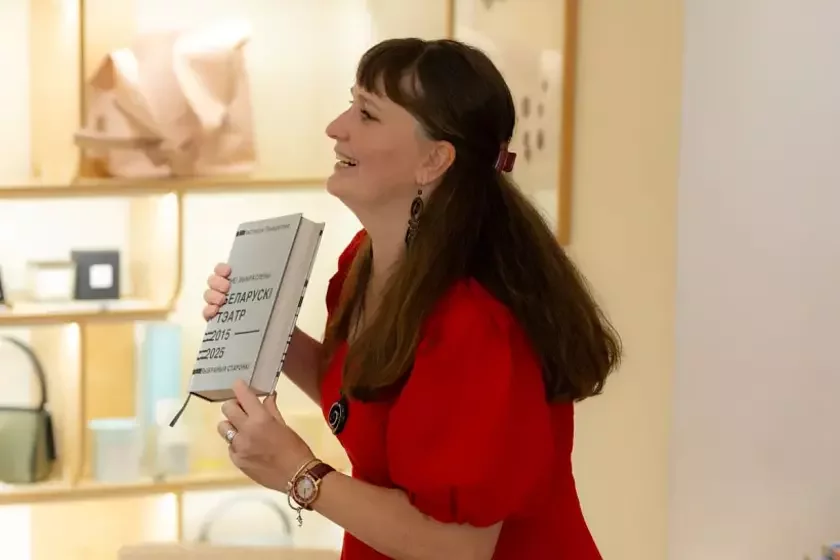
— Nasta, as a theater critic and journalist, you always work with words. Why did you need to take on the burden of writing a book about Belarusian theater, which requires a lot of time, effort, and nerves? What was your motivation?
— Working on the book was indeed very difficult. From conception to the moment I first held it in my hands, a year of constant intense work passed. But I took it on because I realized: almost all texts — I think about 95 percent of what I had written earlier — simply disappeared from the information space.
Because in Belarus, websites are shut down due to censorship. And not just independent ones. State publications have also started to play it safe: they move to new domains, and the old ones, with a wealth of materials, are not migrated, so that the names of "unreliable" journalists and creators don't remain anywhere.
For example, the newspaper «Kultura,» where I worked for 11 years, at one point moved to a new website, and the old one became inaccessible. Yes, something can be found in archives, but an ordinary person won't be able to simply Google these texts and won't learn anything about it.

As a result, it's not just my work as a journalist that disappears. The memory of creators who, just a few years ago, defined the level and directions of Belarusian theater disappears. For example, today a new generation of viewers comes to the Minsk Puppet Theater, knows it through Yauhen Karney, but may no longer know where this theater came from and who worked there before him.
Therefore, I realized — we need not just to speak, but to shout that we exist, we were, and we continue to exist. Especially now, when Belarusian theaters and critics are scattered across different countries. What is happening today in emigration must be documented. Otherwise, in a few years, they might say that there was no Belarusian theater during the period of emigration, it did not develop, and we will start everything from scratch again.
I wanted to preserve not only facts but also the atmosphere of that time. That's why the book includes not only analytical texts but also interviews, because interviews are a living record of the hopes and expectations people had at that moment.
Today, some of this might seem naive, but it's important because people truly believed they could change something.

In academic and analytical works, there are many facts, but often the atmosphere itself is lost — these hopes, expectations, the feeling that something is happening. I wanted to preserve that.
The structure of the book itself was not difficult for me to devise. I decided to cover a decade — from the past year 2025 back to the mid-2010s. It was then that the head of Belgazprombank at the time, Viktar Babaryka, publicly announced the creation of the independent platform OK16, where one could experiment and develop theater outside the state system.
For me, this was a kind of starting point for a new wave of Belarusian theater. Independent collectives and venues began to emerge: OK16, Hide Space, «Second Floor,» «Corpus,» and other places where theater teams tried to do something new. Many of those who are today called representatives of the new Belarusian theater started precisely there.
I decided to include analytics and interviews in the book. I still have many reviews, reports, and author columns left — perhaps enough material for two more such books. But it is precisely interviews that allow preserving the living voice of the era.
I practically did not edit the old texts. There was only a technical editing process: for example, if one material simultaneously spoke about theater, cinema, and art, for the book I only kept the theatrical part. It was important for me not to divide people into «good» and «bad,» but to show what system the new generation of creators faced and what barriers they had to overcome.
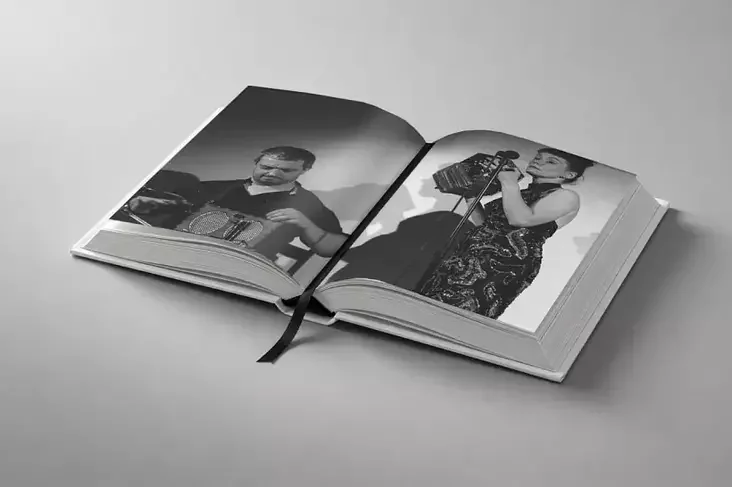
The book turned out large — about 500 pages. But I wanted to make it interesting for a wide audience. It's not necessary to read it from the first to the last page: one can open a specific interview or material about a particular event.
— Your book was published by the Belarusian publishing house Skaryna Press in London, and you found the money for its publication by winning the ArtPower Belarus grant competition. It seems the path to publication was not easy. Is that true?
— Yes, the most difficult part turned out to be not the content, but the path to publication. Theater is already considered a niche topic, and a large book about theater is also expensive to produce. Publishers were afraid of a small print run, large volume, and distribution issues. I sent out proposals, received many rejections, and only Skaryna Press believed in this book.
Grant support from ArtPower also played an important role. Before this, I thought I was trying on the role of a writer for the first time, but it turned out I was simultaneously learning to be a manager: writing applications, talking to people, preparing documents, making reports.
And designer Siarhei Shabokhin helped me a lot. Thanks to his work, the complex structure of the book became easy to read. It has two major periods — before 2020 and after 2020, and internally they are divided into analytics and interviews. Plus, I added special summarizing analytical texts to the chapters.
— The decade 2015—2025 became the most dramatic in modern Belarusian history. The path of liberalization transformed into a repressive reaction unseen since the 1930s. How did this time change the country's theatrical art? And how did the authorities change their attitude towards theater practitioners?
— Before 2020, many new venues and names emerged. Creators gained the opportunity to try something of their own, new, and interesting. And it's important that the state at that time did not prohibit actors from state theaters from working at independent venues.
It seems to me that this was one of the unique features of Belarusian theater. In many countries, a private theatrical venue primarily exists as a business to make money. In Belarus, an independent venue was primarily a place for experimentation and creative expression.
For example, Ivan Kushnyaruk, after the Academy of Arts, joined the Kupala Theater, where he had rather typical roles for himself. When independent venues appeared, he came to OK16. There, Aliaksandr Yanushkevich staged the play «Guards of the Taj Mahal,» and Kushnyaruk distinguished himself greatly in this work. What a tragedy it was to learn that this summer, at the age of just 34, he passed away.
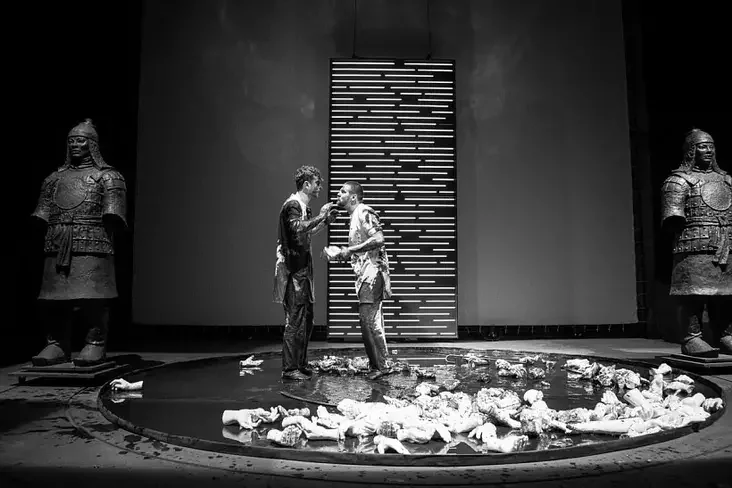
There were many such examples. Sviatlana Tsіmokhіna, an already well-known and respected actress, also went to independent venues to step outside her usual roles. She could work with young creators and help them with her experience. From such interactions, a new generation of Belarusian theater grew.
After 2020, everything changed radically. The state realized it wanted to control everything it could get its hands on, because where there is no control, something dissident might emerge.
They began to purge not only state theaters but also most independent ones. They might not be formally closed, but conditions were created in which they could not work. For example, they did not issue necessary documents, or tour permits for performances. There might not be a written order to «close the theater,» but if a theater cannot stage performances, it effectively cannot exist.
The last major period when independent theaters could still operate was 2021. After the New Year's performances, many of them could no longer return to normal work.
If you cannot perform, a theater cannot exist. Therefore, major changes occurred: previously there were many different directions and venues, but afterwards, mainly those trusted by the state remained.
Today in Belarus, the state is interested in art being a peculiar example for the pride of the state and fitting into the picture it itself creates. The question of artistic quality, it seems to me, does not always interest it.
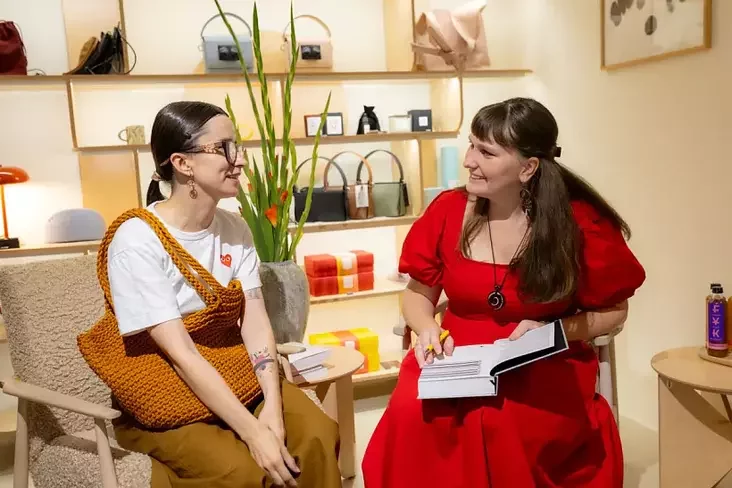
— The independent press writes a lot about the «Russification» of the Belarusian theatrical scene. Russians come not only to perform roles but also to stage productions. And this is just part of the puzzle of changes. So, what, in general terms, does Belarusian theater represent today?
— I am always against the theory that the Belarusian field is purged and there is nothing there. In Belarus, there are still people, creators, who strive to do something. In any difficult periods, some creative flow always existed. In Belarus, there is currently more of a conservation of the level at which theater exists. It is difficult to talk about a new step in art. Therefore, development today largely happens thanks to those who have left the country. They have the opportunity to work with the experience of other countries, to try what is impossible in Belarus due to constant control.
But even emigrant theater has changed significantly over these five years. At first, there was a feeling: we are emigrants, so we can do anything — not learn the text, go on stage with papers, work without scenery or rehearsals. As if we should be loved simply because we are emigrants.
I see that many collectives are starting to overcome this. They are moving beyond the «amateur» approach, interested in professional development and seeking new forms.
The direction of multicultural theater is particularly interesting to me. For example, Andrei Novik's By teatr in Warsaw finds it important not just to exist for Belarusians, but to work together with Polish theaters, seeking points of intersection. And this is already yielding interesting results.
If you just look at September, a lot is happening. In Gdańsk, Zhenya Davydenka is preparing a premiere based on Jan Barshcheuski's «The Nobleman Zavalnya» — for a Polish audience, with a Belarusian interpretation. After the premiere, the play is to go to a festival in Bydgoszcz. Nikita Ilyinchik is working on a play in Krakow, in Białystok a production based on Sasha Filipenko's book «The Red Cross» is being prepared, directed by Aliaksandr Yandzheyeuski. In Poznań, the festival «Second Attempt» is taking place, uniting Polish, Ukrainian, and Belarusian creators.
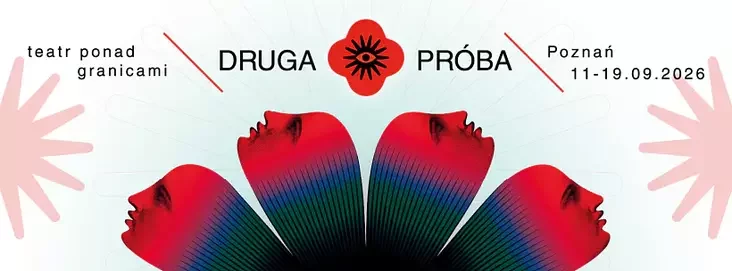
There are also other projects: in Chicago, a reading of Andrei Kureichyk's play «Chicago» took place; in London, a staged reading of a play by Belarusian playwright Volha Prusak is being prepared, directed by Uladzimir Shcherban; Hanna Khitryk with her theater «House of the Black Owl» is going on tour to Cyprus and Dubai.
We love to complain that everything is bad with us and nothing is happening. But a lot is happening. And my book — in a certain sense, is also a collection of such hopes. Through it, one can see that even if some opportunities close, we still have much from which to grow. I really want people not to lose this hope and understand: we have something to strive for and something to create.
Now reading


"Didn't like the products on the shelf — and they write an SMS there." The Ministry of Internal Affairs called Threads a security threat and announced arrests

"Didn't like the products on the shelf — and they write an SMS there." The Ministry of Internal Affairs called Threads a security threat and announced arrests


"More than 10 people have left for Europe — and that's just from my department." A resuscitator from a district center frankly described the daily life of Belarusian medicine


Comments