


A giant wave appeared on the facade of the Vatican Library. What does it mean?
A huge black-and-white installation by French artist JR, titled Diluvium, has appeared on the facade of the Vatican Apostolic Library. It represents a wave about 70 meters long, stretching along the wall facing the Cortile del Belvedere, writes Designboom.
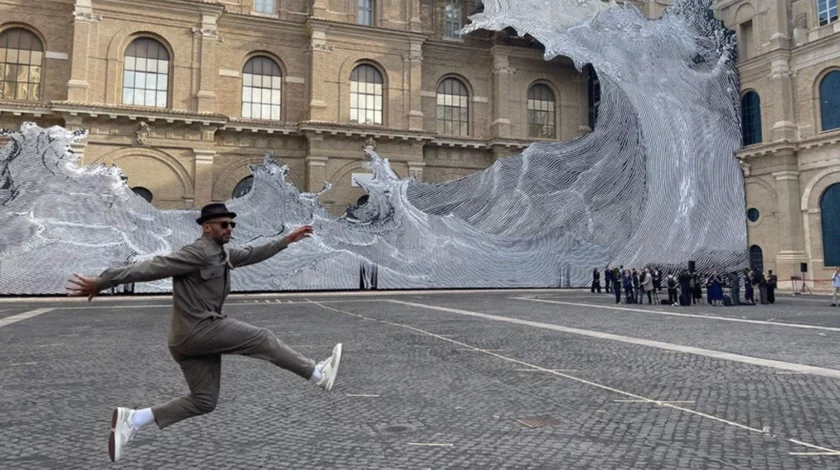
The installation was unveiled on September 14. It became part of the AQVA exhibition — the first exhibition of the five-year cycle "Catastrophe and Miracle," dedicated to various forms of human interaction with natural elements and threats.
To create the wave, JR used as a basis an illustration by French artist Gustave Doré for the biblical story of the flood, published in 1866.
According to JR, the idea for the installation arose after a conversation with library representatives. They told the artist that the greatest threat to its valuable collections is water.
"The Vatican Library reached out to me because for them, water is the greatest fear. Because one day, water could come and take away all the memory, all the traces of civilization they have preserved," the artist explained.
JR connects the image of the wave not only with the danger of flooding. He also sees it as a symbol of global climate change and extreme heat, political polarization, and the "wave of artificial intelligence."
The AQVA exhibition shows the contradictory role of water. On the one hand, it can destroy paper documents and other library materials, and on the other hand, water is necessary for the creation and restoration of books. The exhibition presents materials from the collections of the Vatican Apostolic Library and contemporary art projects.
The exhibition was solemnly opened by Pope Leo XIV during his first visit to the Vatican Apostolic Library as pontiff. AQVA will open to visitors on September 25 and will run until May 14, 2027.
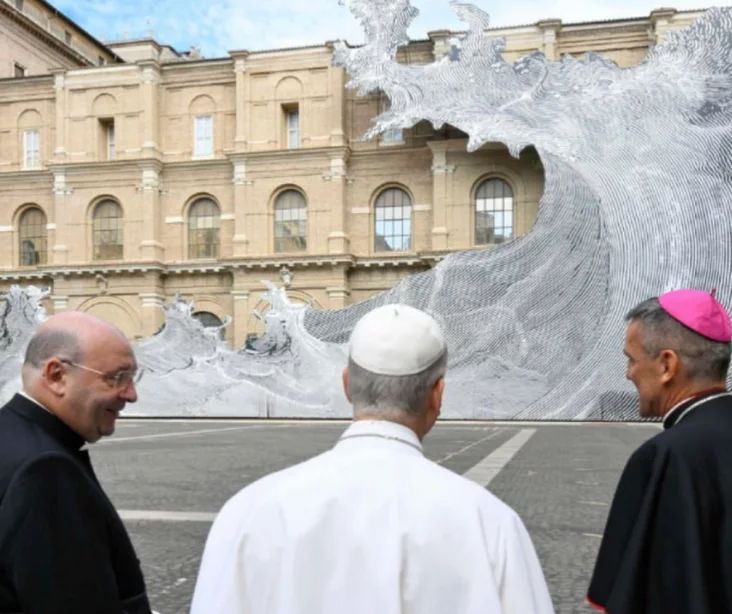
JR's installation will remain on the library facade throughout the exhibition.
Now reading


"Why should we somehow restrict ourselves?". RTBD director explained why she staged a play based on Pushkin in one of the last theaters in the country that worked in Belarusian


Comments