


Aerostats return to the battlefield: how Ukraine uses them and whether they can protect Kyiv's bridges
A tool first used in combat almost 200 years ago is returning to the battlefield. In Ukraine, aerostats, or balloons, are already actively used not only for communication relay but also for transporting kamikaze drones into enemy rear. Meanwhile, Russia has stated its intention to use this means to protect its oil refineries, writes the BBC Ukrainian service.

So far, neither ordinary balloons nor more advanced military aerostats have become widespread in the Russian-Ukrainian war.
For example, in early 2023, the Russian army carried out several operations during which it launched balloons with attached corner reflectors towards Ukraine. The aim was to mislead Ukrainian air defense and force it to spend expensive anti-aircraft missiles on cheap aerial objects.
Ukraine, in turn, uses special aerostats to provide radio communication for its drones attacking Russian logistics in the rear of the occupied territories.
There are also known cases of aerostats being used in the interests of the Armed Forces of Ukraine directly on Russian territory. As is known, Starlink satellite communication does not work there, and the capabilities of Ukrainian strike drones are significantly limited.
As of October 2026, the Ukrainian Defense Forces have only a few dozen such aerial vehicles in service.
This differs significantly from the practice of world wars in the first half of the 20th century, when military aerostats were used by hundreds of thousands.
Historical examples
The first recorded use of aerostats during war occurred almost 230 years ago – in the Battle of Fleurus, near Charleroi, in modern-day Belgium.
In late June 1794, the French army attacked the retreating forces of the Netherlands and their Austrian allies. After fierce battles and a siege, the French managed to capture the fortress of Charleroi and nearby Fleurus.
The use of an aerostat for reconnaissance is believed to have played a significant role in France's success. Operational intelligence on enemy maneuvers allowed the French to turn the tide of the battle in their favor.

Already during the First and Second World Wars, aerostats and special airship units became an integral part of the armed forces of countries involved in conflicts.
They were used not only for reconnaissance but also for adjusting artillery fire, and for protecting cities from missile and air strikes.
The defensive function was that an enemy aircraft could snag on the aerostat's cables and crash. Or the pilot would have to sharply gain altitude to fly over the cables, thus becoming a target for anti-aircraft fire.
Barrage balloons were also used for defense against missiles. Cases of their use to protect Leningrad and London from German air raids and missiles are widely known.
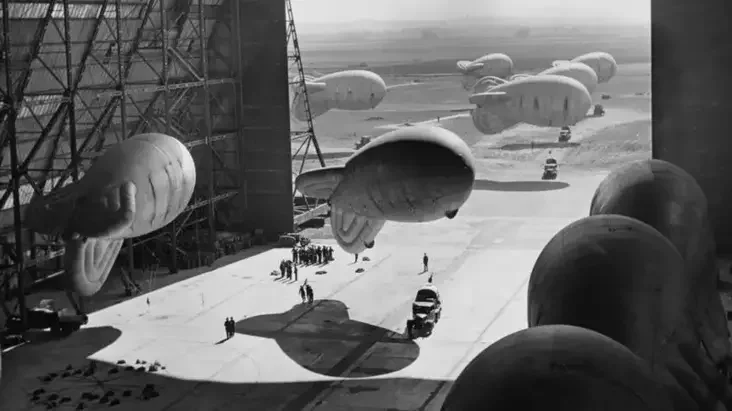
Especially notable was the British operation Outward, whose name can be translated as "Outward". It involved the mass launch of small weather balloons towards Germany, equipped with explosives or cables designed to sever power lines.
In 1942-1944, the British used almost 100,000 such aerostats and managed to inflict significant damage on the enemy.
However, after the Second World War, interest in these means gradually began to decline.
The USSR and the USA continued to use aerostats, but primarily for reconnaissance in specific cases. The rapid development of aviation, and later unmanned technology, effectively pushed aerostats into the background.
Now, it is probably time for their return to the battlefield.
In recent years, Israel, China, and the USA have actively used aerostats for military purposes. Now Ukraine and Russia are joining them.
What tasks do they perform now
On the Ukrainian state platform Brave1.Market, where Ukrainian military personnel can purchase necessary equipment, only one aerostat is presented that has undergone codification, meaning it has been adopted by the Ministry of Defense.
It costs about one million hryvnias, or 22 thousand dollars. The kit includes the AV12TS aerostat itself, a mobile platform for its transportation, gas cylinders, and a ground control station with an electric winch.
According to technical specifications, the aerostat can lift a payload weighing 5.6 kilograms to an altitude of up to 700 meters. The maximum flight duration is 72 hours.
It can be used for relaying digital and analog radio communication, radar, radio reconnaissance, electronic warfare, as well as controlling and moving strike drones in standby mode.
The aerostat was developed by the Kyiv-based company "Aerobavovna", which is the sole manufacturer and one of the main promoters of this technology in Ukraine.
The company's head, Yuriy Vysoven, an amateur parachutist and wingsuit jumper – jumps in a special wing-suit that allows gliding during a fall – says that there are few manufacturers of tethered military aerostats not only in Ukraine but also in Europe.
Demand for such products cannot be called frantic either. Currently, just over 50 units of the Ukrainian Armed Forces use it.

According to Vysoven, the army still lacks a full understanding of why this ancient aerial device can be relevant in the era of modern warfare.
"There is a certain distrust and misunderstanding of what it is and what it is needed for. In fact, Americans, British, and French actively used aerostats in past wars. The problem is that they predominantly used very large aerostats. This was normal during the war on terrorism, which lasted for the last 20 years. But during modern warfare, it turned out that large aerostats are too vulnerable and make no sense," he explains.
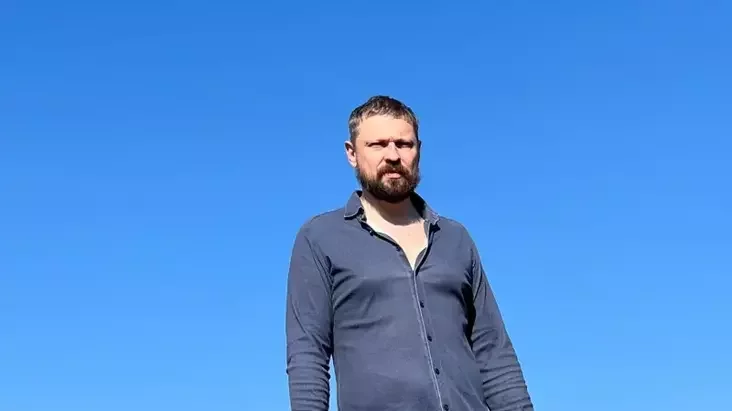
According to the entrepreneur, small, cheap, and compact aerostats are needed in Ukrainian conditions.
"We have practically found a new application for them. We do not lift expensive radars worth 100 million dollars into the sky, but place transponders on aerostats. And it turned out that in this war, transponders are much more important than everything else. They allow Ukrainian drones to fly further, provide communication where there is no ground infrastructure, and allow ground robotic systems to operate where even Starlink does not help," he says.
How it works
The main task of such an aerostat is to overcome the limitations of the radio horizon, which arise due to terrain features, buildings, and the spherical shape of the Earth.
For example, for a conventional FPV drone with radio control, the communication range can be limited to 20 kilometers. To increase it, the army uses special masts with antennas and repeater drones.
A balloon, or aerostat, increases this range four to five times, Vysoven claims.
"From an altitude of 500 meters, the radio horizon exceeds 80 kilometers. Further, everything depends on your repeater: whether it can transmit a signal 80 kilometers or even further," he says.
Such a range of drone control allows not only attacking objects in the enemy's rear but also protecting the aerostat itself from destruction by positioning it tens of kilometers from the line of combat engagement.
"There is no point in lifting aerostats closer than 20 kilometers to the line of combat engagement – they will be destroyed. But if you have a repeater that works for 100 kilometers, it's clear that you can lift the aerostat even further from the front line, in a relatively safe place, and not worry about it while performing the necessary tasks," notes the head of "Aerobavovna".
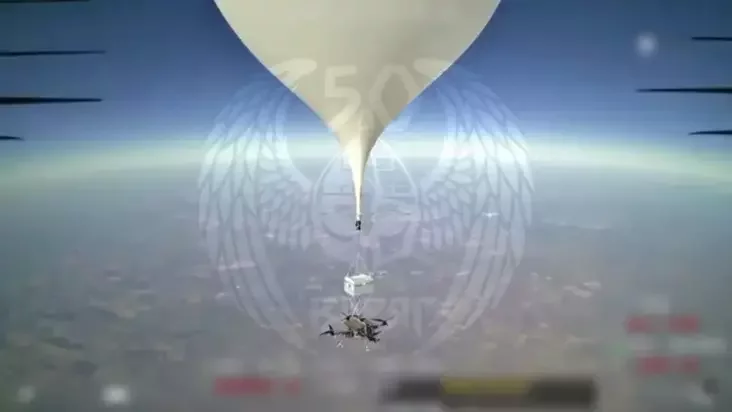
Regarding strike operations, in August 2026, a combined rifle unit of the Ukrainian Air Force reported that it had conducted almost a thousand operations using aerostats over six months. The military also showed how they launch a balloon with an attached drone.
The unit clarified that the combination of an aerostat and a specially designed strike drone for such a mission allowed the drone to be moved over a distance of more than 200 kilometers.
Launching a drone from an aerostat, which has risen to a significant altitude, allows it to cover tens of kilometers in a gliding flight without expending engine or battery resources. Thus, the drone can fly further than its engine's capabilities allow.
In addition, this allows bypassing areas saturated with enemy electronic warfare and electronic intelligence assets.
In early October, the Russian drone operator brigade "Varangian" published a video of the destruction of a Ukrainian balloon at an altitude of 10 kilometers. Ukrainian authorities claim it was at an altitude of 8 kilometers. The aerostat was carrying an FPV drone with a Starlink satellite communication module.
However, the head of "Aerobavovna" assures that the device shown in the video was not manufactured by his company. In his opinion, it was likely a civilian device adapted for military purposes.
"That was not our aerostat. In general, it was a weather balloon from Amazon for 50 dollars, which is not a military product and which any civilian can buy," Vysoven claims.
Dependence on weather and wind
An aerostat is essentially a shell filled with gas lighter than air, such as hydrogen or helium, and tethered to the ground. This means it cannot remain stationary over a certain area and is highly dependent on wind and weather.
However, Vysoven notes that drones are dependent on the same conditions, and in some situations, are even more sensitive to them.
"As for weather dependence, I can say that our aerostats operate even at wind speeds of 15 meters per second, and sometimes even 20 meters per second. For understanding: in such weather, drones no longer fly. Therefore, I would say that wind limitations for aerostats are less than for drones. In everything else, they are roughly the same, because drones also don't fly during heavy rain and snowfall," he says.
Ukraine's geographical location, which is favorable for the use of aerostats, is also important.
Most of the country is influenced by the so-called Western transfer of air masses. This is a phenomenon of atmospheric circulation in which winds predominantly blow from west to east – towards Russia. They are characteristic of latitudes approximately from 35 to 65 degrees in both hemispheres, between the subtropical ridge and the polar front.
Thanks to this, Ukraine more often has the necessary wind direction for launching aerostats than Russia.
Serhiy "Flash" Beskresnov, advisor to the President of Ukraine on technological issues, also drew attention to this.
"To our luck, almost all winds blow from us towards Russia. Otherwise, they would have tormented us with their balloons," he noted.
Overall, Russia significantly lags behind Ukraine in the use of aerostats, the expert believes. However, it is trying to close this gap.
What Russia is doing
As early as July 2024, Serhiy Beskresnov, who was then a public expert in military technology, not a presidential advisor, reported on Russia's attempts to create a radio communication system at the front using aerostats.
He also published a photo of such an apparatus that Russian military personnel were preparing to launch into position.
According to Beskresnov, the Russians were raising aerostats with volumes from 15 to 300 cubic meters to an altitude of 500 to 3000 meters. This happened at a distance of 20-50 kilometers from the front line.
An aerostat with a radio transmitter, raised to an altitude of three kilometers, according to published data, was supposed to provide communication at a distance of up to 140 kilometers.
However, either the technology did not work as fully as planned, or the geographical features of Ukraine's territory mentioned above manifested themselves, but Russian troops did not begin to massively use this communication tool.
Aerostats were again discussed in the Russian information space in the autumn of 2026.
In early October, the state TV channel "Russia-1" showed a report about the development of aerostat barrage systems. According to the report, they could be useful for protecting oil refineries, which regularly suffer from attacks by Ukrainian drones.
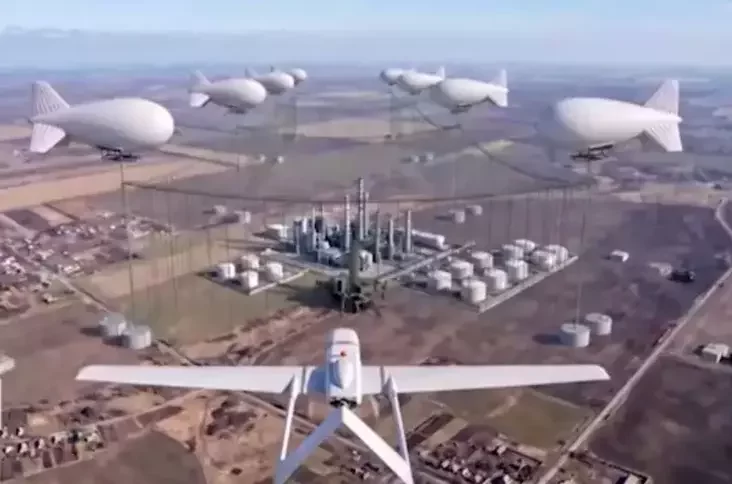
The idea is to place about ten large aerostats around the perimeter of an oil refinery. Long cables with Kevlar cords would be attached to them. It is assumed that drones approaching the Russian plant for attack would get entangled in such nets.
This idea, which Russia is still only proposing to implement, has also interested Ukrainian experts.
In their opinion, aerostat barrages could protect, for example, Kyiv's bridges, which have recently become one of the priority targets of Russian attacks.
However, the head of "Aerobavovna", Yuriy Vysoven, categorically disagrees with such a proposal.
"This is definitely a bad idea," he states, explaining why.
Can a bridge be protected?
The pylon of the South Bridge in Kyiv – a vertical support to which the stays are attached – has a height of 135 meters.
Theoretically, a net 150 meters high and 60 meters wide could be raised in front of it on aerostats. Its weight would be 71 kilograms. To hold such a net, two pairs of AV130 model aerostats would need to be placed on each side of the bridge.
However, the pylon remains open along the bridge and at an angle to it, so enemy drones will be able to attack it from other directions. "Aerobavovna" believes that completely covering the pylon from attacks is unrealistic.
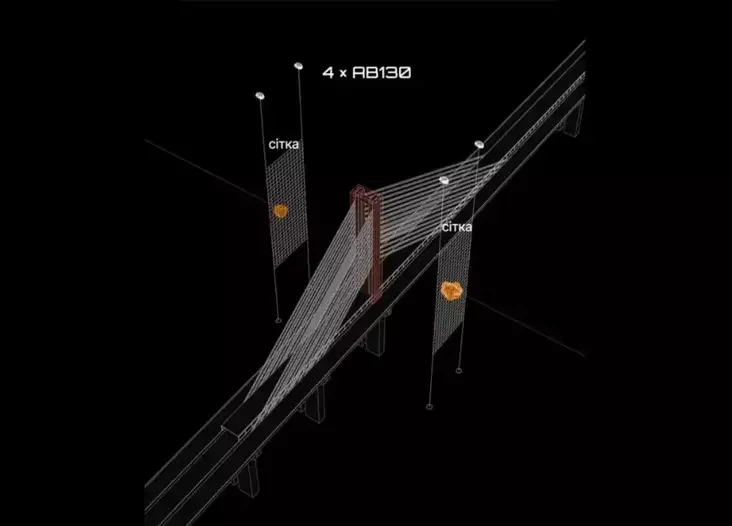
In addition, under the influence of wind, aerostats can deviate from the vertical position by an angle of up to 45 degrees. To prevent this, they can be secured with guy wires, but then the wires would pull the aerostats down, and even greater lift would be required to hold the net.
A jet drone flying into the net pulls the entire structure with a force of up to nine kilonewtons. It is assumed that such a jerk could lead to the tearing of the net and aerostat cables. The next drone would then be able to fly through the formed opening and unhindered attack the bridge structures.
More powerful aerostats capable of withstanding such loads exist, but they are manufactured in the US, and their cost is millions of dollars.
"Aerobavovna" believes that installing and maintaining such systems would require a lot of time and resources. Therefore, the company does not consider them a particularly suitable option for the defense of Ukraine.
Now reading


"Why should we somehow restrict ourselves?". RTBD director explained why she staged a play based on Pushkin in one of the last theaters in the country that worked in Belarusian


Comments