


Near Minsk, a woman transformed her balcony into a botanical garden with tropical plants
For many, a balcony is a place for storing boxes or drying laundry. But Alena Shyrokaya, a resident of Baraulyany near Minsk, found another use for her loggia: she set up a real orangery there, drowning in tropical plants. Most of them exist without soil and absorb moisture through their foliage. The publication pristalica.by visited the flower grower, who has collected 300 unique specimens, and learned how a few square meters became a botanical garden.
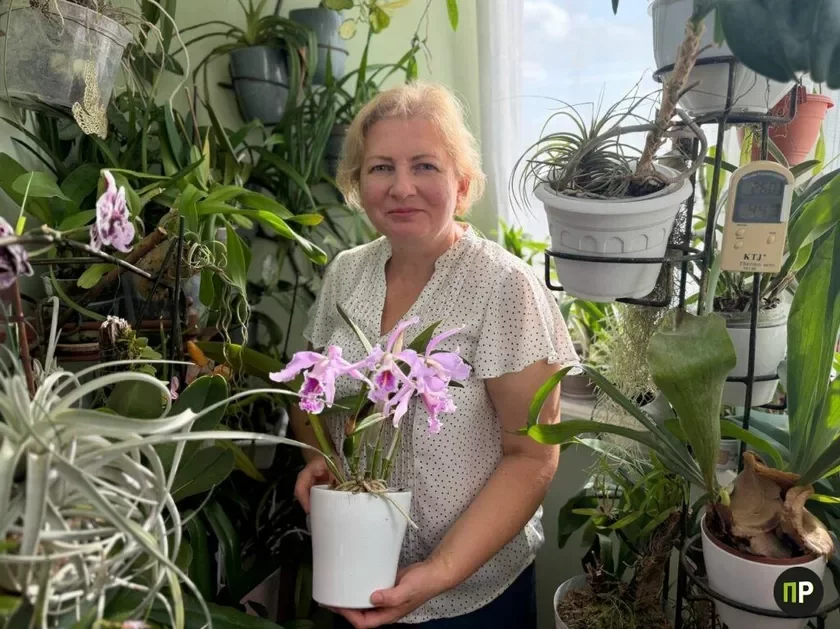
Flower growing captivated Alena Shyrokaya 17 years ago after she received an orchid as a gift. Now she laughs, recalling that first flower.

"I thought one pot would give me trouble, how wrong I was," Alena says, surveying the loggia. "I cared for the orchid following internet advice, treated it with all sorts of remedies. I don't even know how it survived. It's funny to remember! Although the flower is still alive and has given me three offspring. If I could turn back time, I would just leave it alone. Sometimes it's like that: a plant either wants to live or it doesn't."
Gradually, the collection grew to 300 specimens. It's hard to give an exact number. Alena admits she lost count long ago.

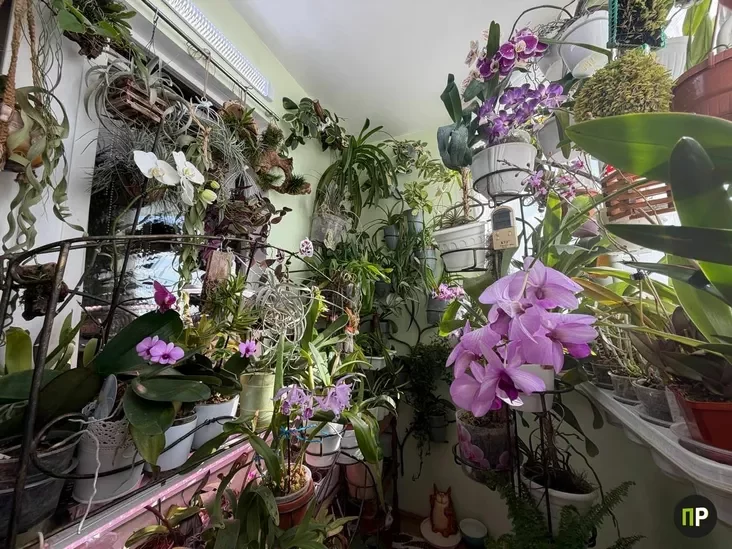
Living panels and tropical favorites
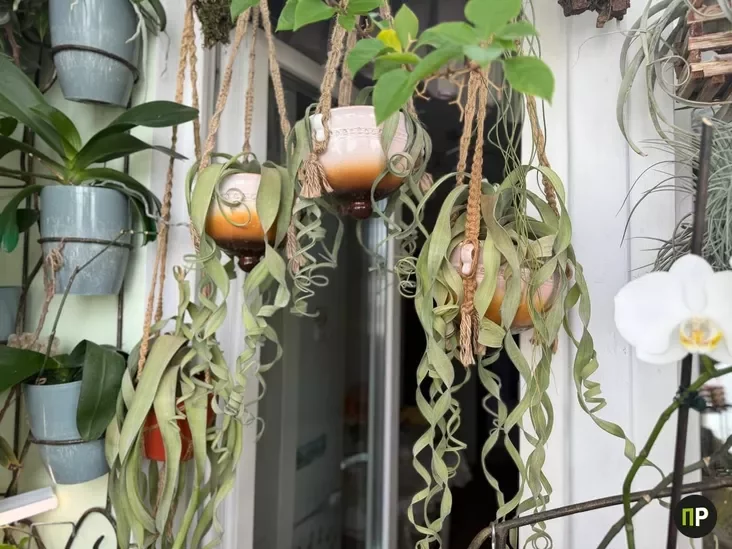
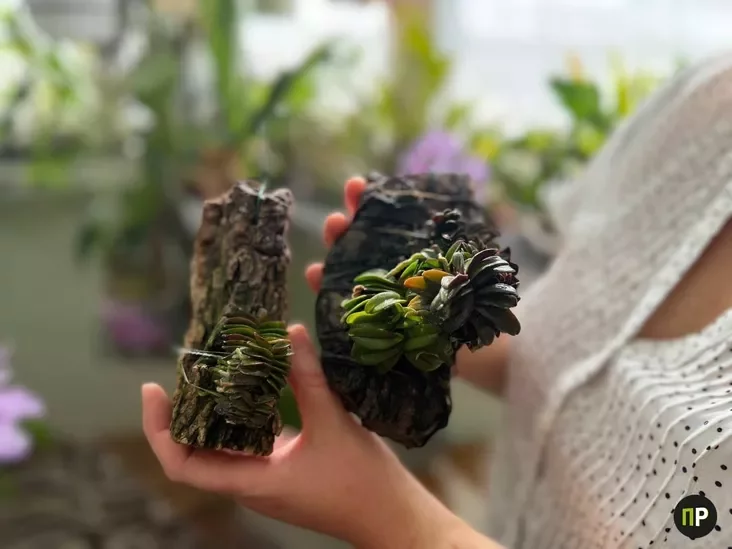
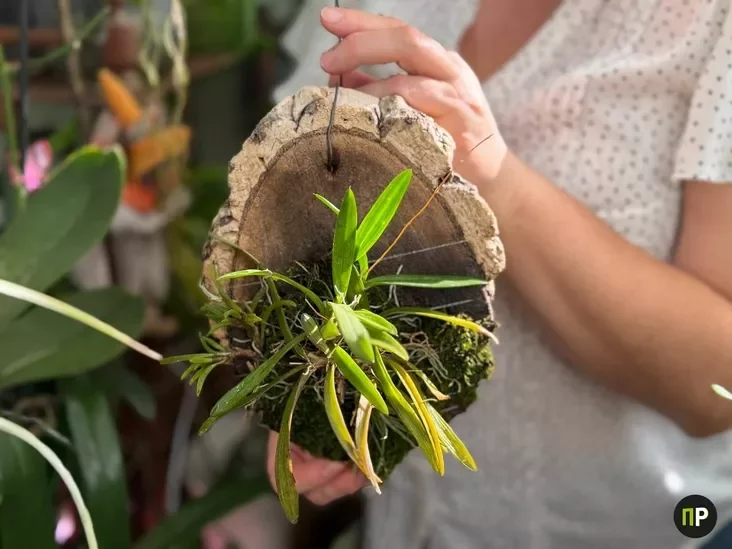
The predominant natural environment for most species is the tropics. Many of them, such as tillandsias, grow without soil and have almost no root system. In nature, they attach themselves to tree bark or rocks, using them as support. Alena fixes the rosettes on tree cuts, pieces of bark, or interestingly shaped frames, creating amazing living panels.
"These are atmospheric bromeliad plants. You don't even have to water them, just spray them. They absorb moisture through their foliage," Alena explains.

Initially, Alena's collection grew mainly from greenery brought from abroad: such plants were impossible to find here. For one specimen, she paid about 25-35 dollars. Now it's easier: something can be bought on Kufar (a Belarusian online marketplace, similar to eBay/Craigslist) or exchanged with other enthusiasts. The growth of the orangery has slowed down.
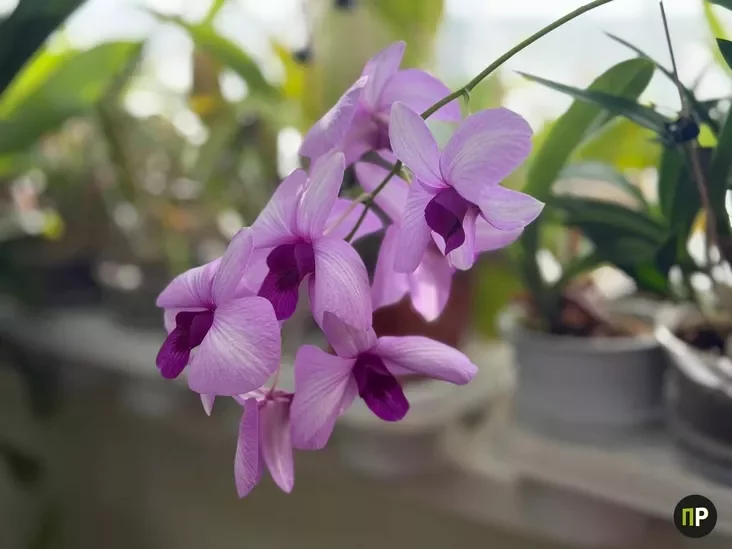
She points to a tillandsia, which she affectionately calls "tylka." Its greenery hangs down like a woman's curls. This plant has its own lifespan: it blooms only once, and then gradually withers. Alena's most beloved plants are orchids. One species, the dendrobium, holds its flower spike for 6-8 months a year. And there's also an orchid that smells sweet, sweet, like vanilla ice cream. The largest and most unusual flowers are on Angraecum sesquipedale, up to 18 cm in diameter.
For such a number of orchids, bark would cost a tidy sum, so Alena often collects it herself from fallen pine trees.
Two days a week for care for continuous blooming
Each year the collection grows, and the flower grower dedicates more and more time to plant care. Today, she spends two days a week watering.
"Even during that time, sometimes I can't cope. I usually take a tray, carry it to the bathroom, water it, and wait for it to drain. And so on, in a cycle. Some plants I soak, some I spray, always differently. In winter, the approach changes," she explains.
Alena's husband equipped the balcony, making special stands and rails to hang pots. And when the hostess moves or leaves, he has to take care of the green army himself.
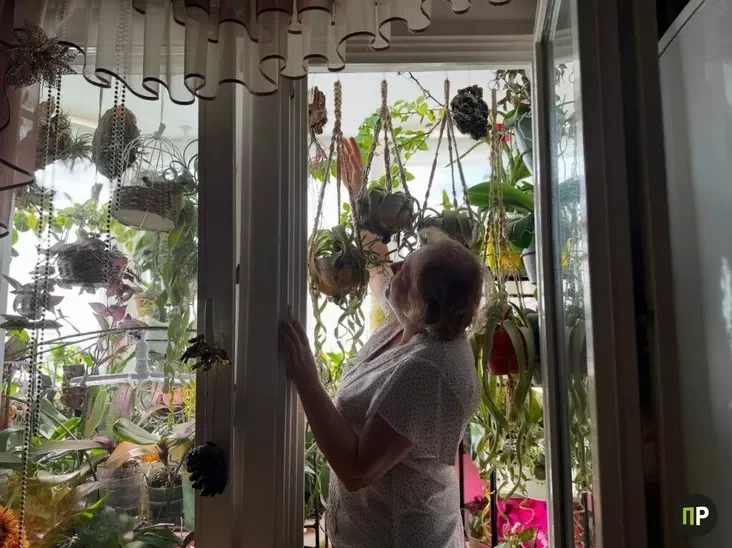
"My husband made trays with special holes where the pots are inserted. Everything for convenience. The loggia itself is small, but even here I can implement my ideas," says the flower grower.
She also has three cats who sometimes impose their own order. One of the fluffy ones, during a meeting with journalists, completely smashed a ceramic pot. The hostess reacted calmly: the pot was expensive, handmade, but she hadn't bought such ones for orchids for a long time. After similar incidents, she prefers plastic ones: they are light, don't break, and cost less.
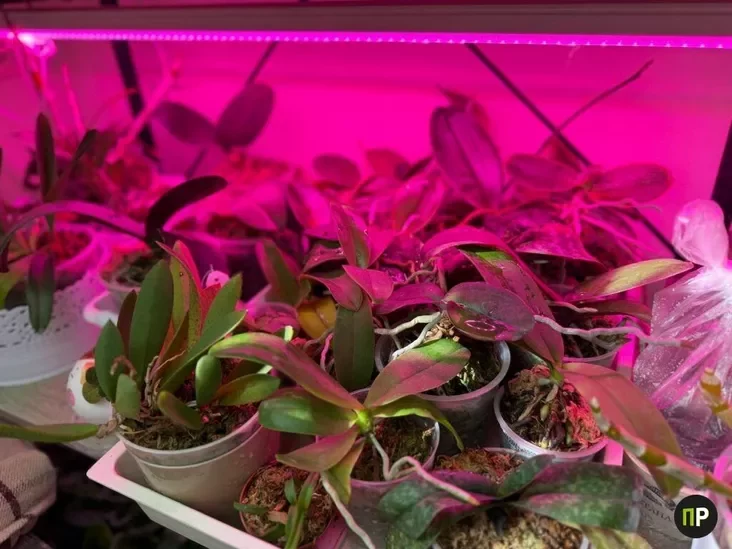
Alena illuminates some of the plants with special lamps and also maintains temperature and humidity to make the guests from the tropics feel comfortable, as if at home. She always has plenty of chores, but she knows for sure: there won't be a single day of the year on the balcony without bright colors and sweet fragrances.
Lieutenant Colonel Zara, whom security forces consider Sakhashchyk's analyst, found in KGB pre-trial detention center. How he ended up in Belarus is unknown

Lieutenant Colonel Zara, whom security forces consider Sakhashchyk's analyst, found in KGB pre-trial detention center. How he ended up in Belarus is unknown


Tsikhanouskaya frankly spoke about her son's illness and the invisible work of women. "Ten years of my life I dedicated to him and his rehabilitation"

Tsikhanouskaya frankly spoke about her son's illness and the invisible work of women. "Ten years of my life I dedicated to him and his rehabilitation"


Police revealed their version of why the guy who admonished a tourist for a cigarette butt in the center of Minsk spent the night in the police station

Police revealed their version of why the guy who admonished a tourist for a cigarette butt in the center of Minsk spent the night in the police station


"Threatened to leave for another." The Ministry of Internal Affairs revealed details of the murder of a 43-year-old pregnant woman by a hockey referee


Comments