


Teacher from Karma collected a collection of 3000 rare tomato varieties
Katsiaryna Maskaliova has been growing rare tomato varieties for ten years now and has no plans to stop. Moreover, she has become passionate about breeding and dreams of developing her own signature variety, writes Times.by.
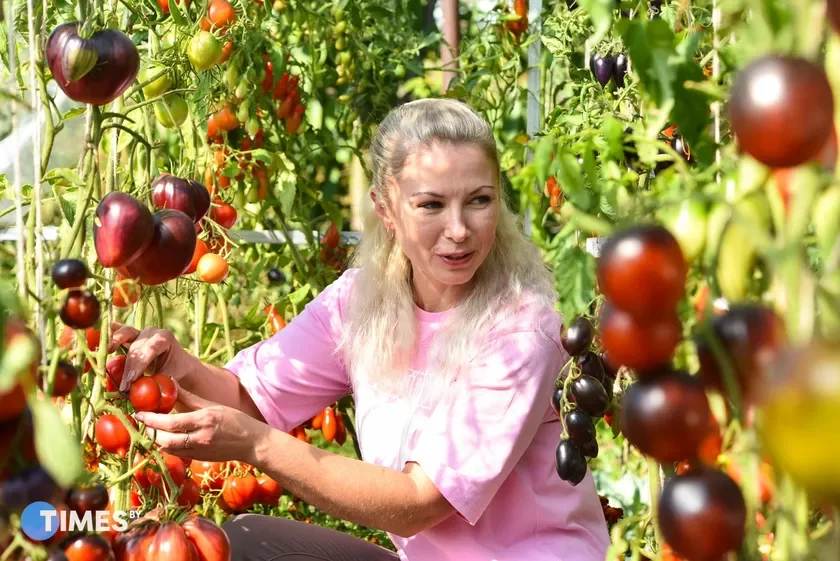
Katsiaryna lives in Karma, Chačersk District. She grows tomatoes the way others collect coins or stamps — with excitement, a system, and a love for rarities. Seed requests come to her from Russia, Estonia, Germany, Austria, Latvia, Poland, Turkey, and even America.
Last year, the woman from Karma decided to temporarily leave her job at school and now fully devotes herself to tomatoes, seedlings, video filming, and consulting subscribers.
Times.by visited the greenhouses, listened to the experienced gardener's advice, and learned about her future plans.
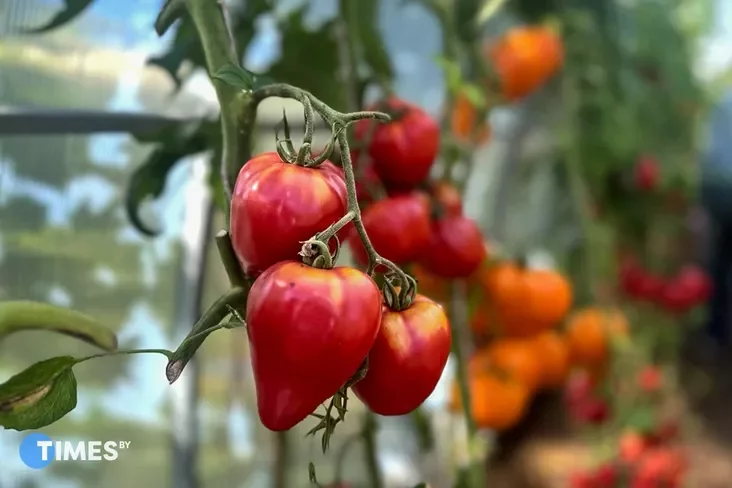
Katsiaryna Maskaliova's Five Greenhouses
It all started in 2016 out of simple curiosity. The biology teacher saw unusually shaped and colored tomatoes on "Odnoklassniki" (a social network). It turned out these were collection varieties, not to be found in stores. She couldn't resist, contacted the post author, bought seeds for 60 varieties at once, grew her first harvest, and got hooked.
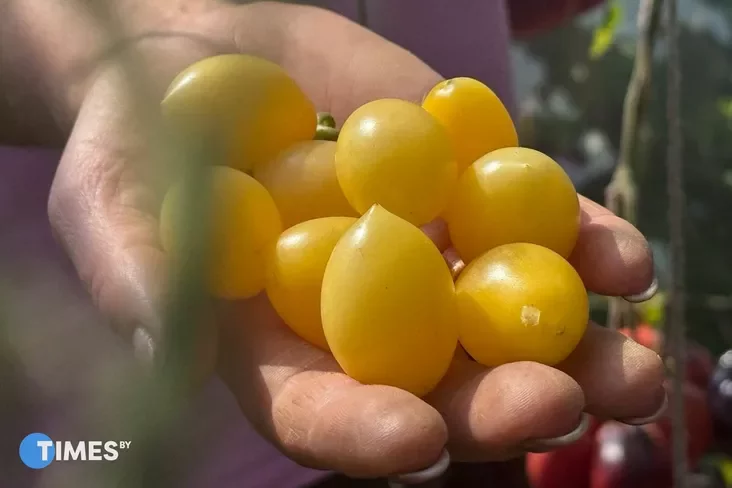
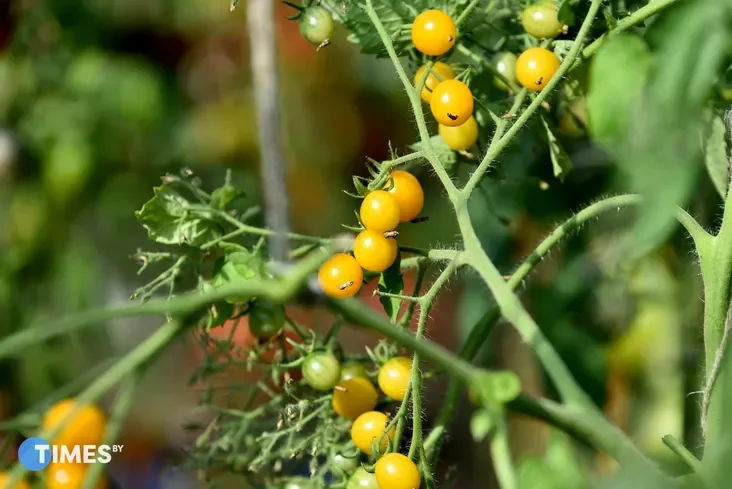
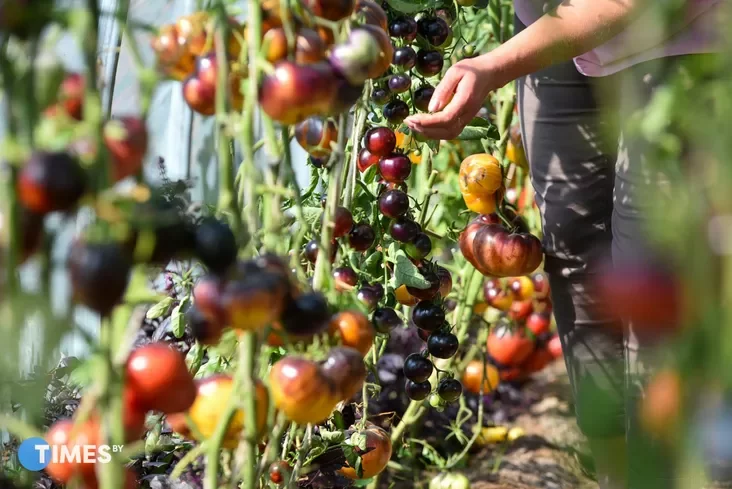
Today, five large greenhouses stand on a small plot, with part of the land left for an open garden. During the season, Katsiaryna plants 300 varieties and tries not to repeat them significantly each year. Fruit sizes range from tiny, like grapes, to huge, weighing up to 1.5 kilograms. Among them are time-tested samples and fresh novelties from renowned breeders Brad Gates, Sofiya Saakova, Jason Haynes, and others.
"You don't necessarily need a lot of land to grow all this beauty. Sometimes I think: it's good that we only have six hundredths (of a hectare), otherwise I wouldn't cope," laughs Katsiaryna.
In each greenhouse, there are at least 100 bushes, two per variety. In the holes and on strings are notes and tags with names, among which are "Sergeant Pepper," "Sophia's Fiery Comet," "Barry's Crazy Cherries," "Brad's Atomic Grape"…
In the first greenhouse, new varieties and her personal experiments are growing. In the second, there are dwarf tomatoes, which, according to the hostess, can even be grown in pots.
"Dwarf tomatoes are unpretentious, productive, and resistant to various conditions. If you don't know how to grow seedlings, choose them. They will never stretch out, no matter where you keep them, even with a lack of sun."
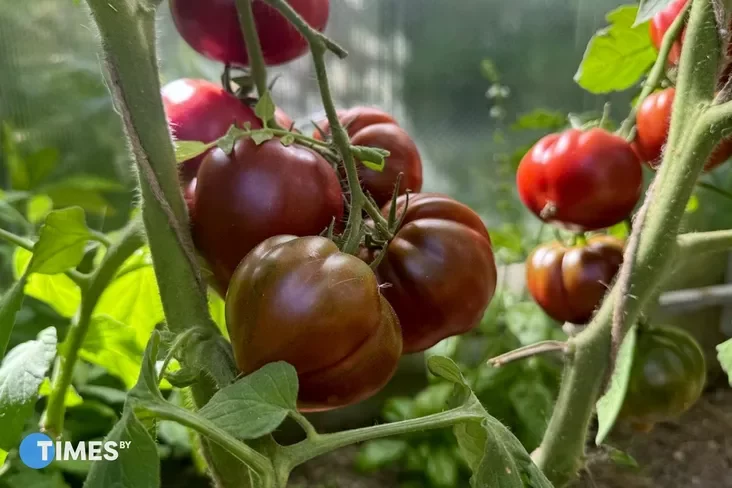
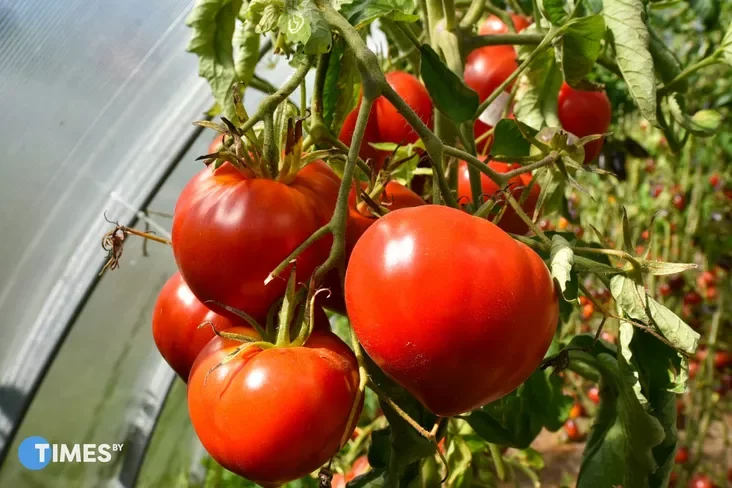
The third greenhouse is dedicated to large-fruited varieties. These are mainly beefsteak tomatoes with meaty, sugary flesh. The name comes from the English word "beef."
"When cut, such tomatoes truly resemble a juicy piece of steak — they have a firm, grainy texture with many small seed chambers," describes the interlocutor.
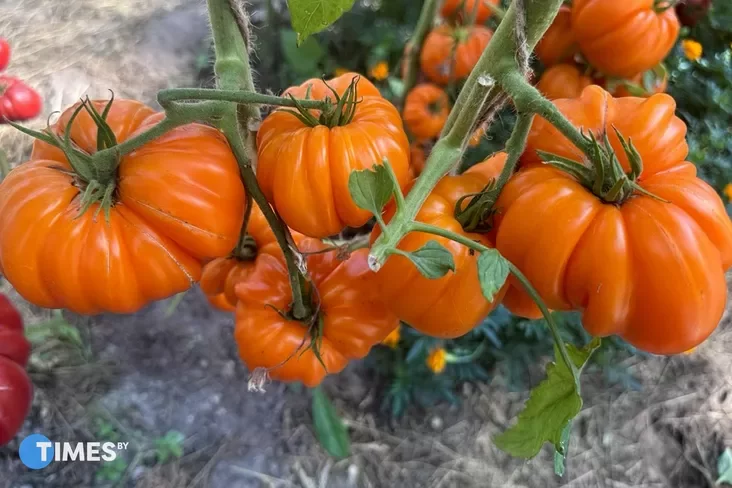
In the fourth greenhouse, exotic varieties are grown, with a focus on the varieties of the Ukrainian amateur breeder Feodosiy Tarasenko.
"He is my idol. He was also a school teacher, lived and created in the village of Voronezh, Sumy region, and passed away in 1996. All varieties he bred are tall, vine-like, with strong aerial parts and equally strong rootstocks. Very productive," Katsiaryna recounts.
In the last greenhouse, one half is also dedicated to giants and hybrids, the other to the "Sergeant Pepper" line.
"The variety was bred in the USA, and the breeder was most likely a fan of 'The Beatles'. The fruits of this tomato are fleshy, juicy, and so beautiful visually that guests, seeing them on the table, are always impressed and ask for seeds," says Katsiaryna.
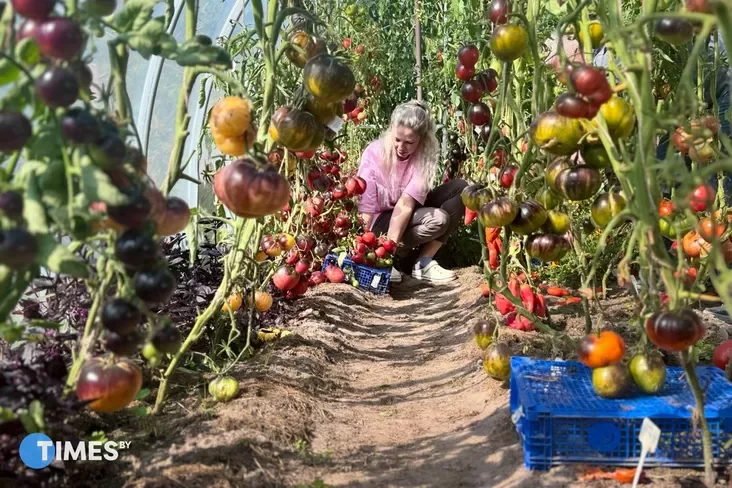
Seedlings, Soil, and Fertilizers
Katsiaryna first plants potted varieties for seedlings in late December – January. She sows large-fruited varieties in February.
Katsiaryna has no special secrets regarding seedlings:
"There's no magic remedy. You need quality seeds, the right soil, and good lighting — spacious windows or grow lights."
She never fertilizes seedlings. The exception is if she sees that buds are starting to form, but it's still too early to plant the seedlings: then she can give azofoska with the classic NPK 16:16:16 formula.
"I choose soil that already contains all the necessary nutrients. In each hole, I add potassium-rich wood ash and bone meal, which is full of phosphorus and calcium. You shouldn't overdo it with ash: the soil's pH should remain neutral."
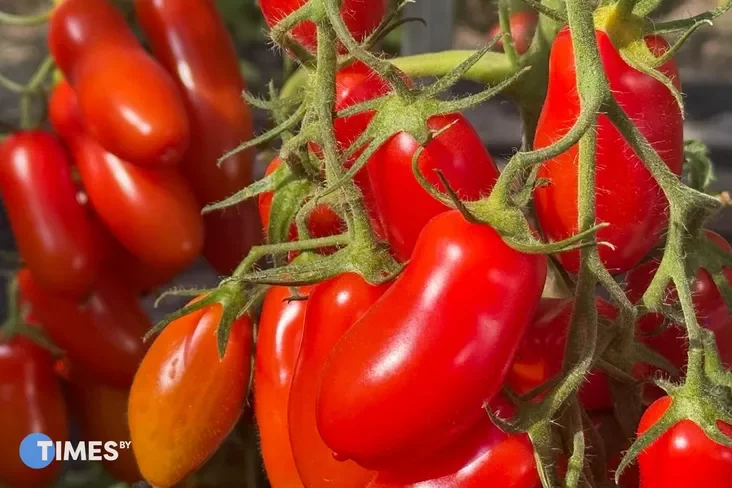
Katsiaryna plants tomatoes in the greenhouse from April 20th, and in open ground (which is about 50 more bushes) in the first days of May. Before planting, she always hardens off the seedlings: the plants need to stand outdoors for at least 3-5 days.
"People often ask me: advise the earliest or sweetest varieties. But honestly, I don't know how to answer that. By and large, everything depends on the growing conditions — soil, temperature, light, humidity," notes Katsiaryna.
One rule, according to her, works precisely — it's best to plant tomatoes in the greenhouse or open ground in the evening or on cloudy days, when the night temperature settles above plus 10 degrees Celsius. Otherwise, the Karma resident advises following the lunar calendar if possible.
There are no special secrets to growing tomatoes either. Pinching off suckers, weeding, watering, minimum fertilizers — that's all the care needed. Katsiaryna is confident: every gardener will manage, even if they make mistakes in the first year.
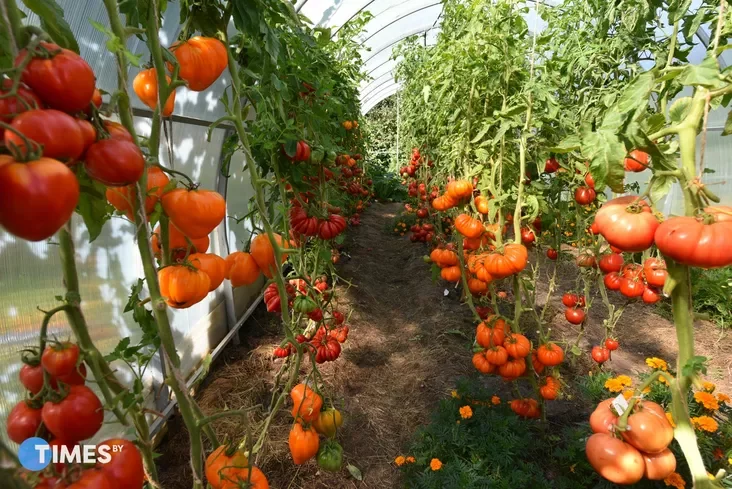
For watering, she uses water from barrels, watering each bush with a watering can. She had experience with drip irrigation but soon abandoned it.
"If I don't see how much water has reached each bush, I start to worry. And the water drips slowly in that system. I'm naturally quick, I need everything to be fast and precise. I removed the 'drip feeders' and returned to watering from the barrel," the hostess shares her experience.
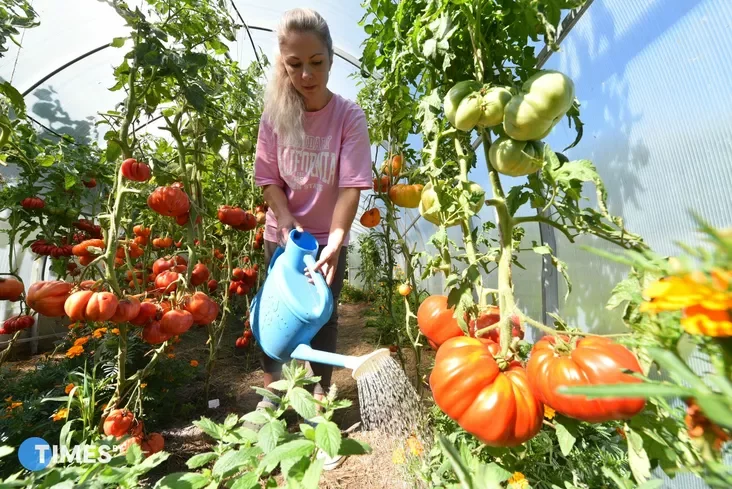
Ideally, tomatoes should be watered in the morning so that the water has time to soak deep into the soil. Watering in the evening carries the risk of developing mold, powdery mildew, and other fungal pathogens. A sign of overwatering the soil is the growth of a brush of aerial roots on the stem.
"We also remember that excess moisture is one of the causes of late blight. My greenhouses are on through-ventilation from spring to autumn, which is the best prevention for the main tomato diseases," says Katsiaryna. "Everything I do is as close to natural conditions as possible."
Tomato Breeding at Home
Katsiaryna's collection now contains 3000 varieties, but she has only managed to test half of them in practice so far. According to her, seed viability is maintained for 5-6 years, so there is still time to grow the remaining varieties.
She follows "tomato fashion" but without fanaticism. In recent years, she has focused on creating her own, original varieties.
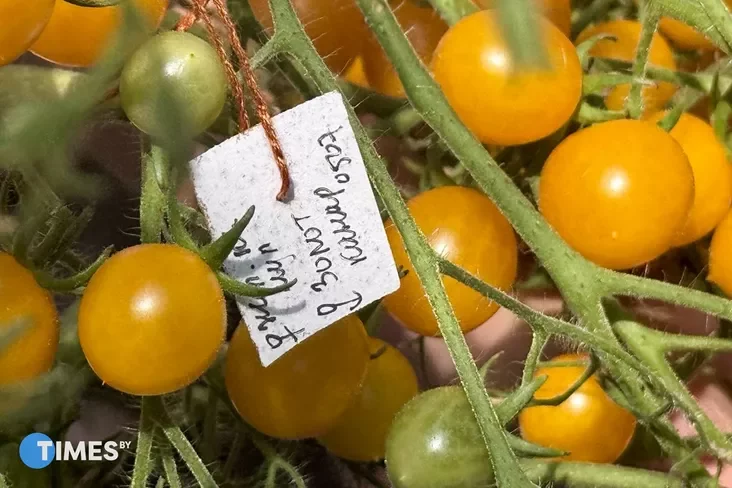
"Five years ago, I started breeding. At first, these were timid attempts to cross varieties; now, everything is going much faster and bolder. Today, I already have about 100 'crosses,' and there are successful F4 and F5 generation hybrids. For now, we can only speak of a stable result, meaning variety stability, for six samples," the interlocutor admits.
The number next to the letter F indicates which generation hybrid we are looking at. Many seed packets bear the designation F1.
"From a first-generation hybrid, tomatoes with approximately identical characteristics usually grow, but in the second generation, a splitting of traits occurs — and often the result is not at all what gardeners expect," Katsiaryna explains. "To develop a stable variety, a breeder needs a minimum of seven years. During this time, the hybrid must repeat its main qualities year after year. It's painstaking work, but the result is worth it."
When deciding which varieties to cross, Katsiaryna considers the color, size, and taste of the tomatoes, as well as the medicinal properties of the fruits.
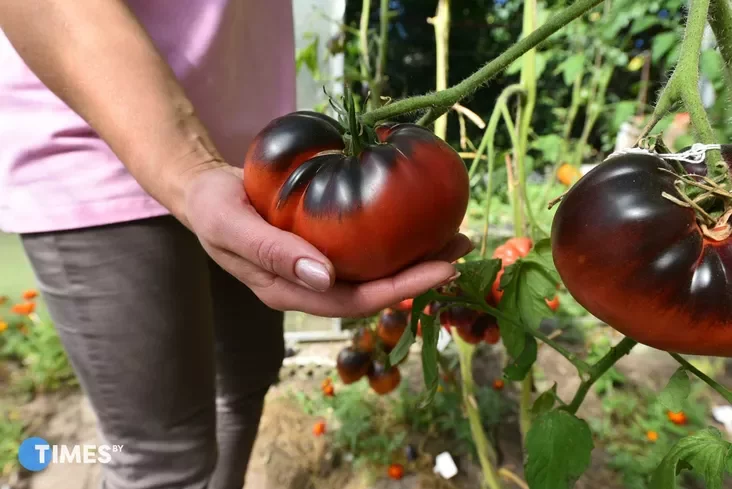
"I love experimenting with anthocyanins for their unusual purple and almost black hues. In addition, they possess many beneficial properties — strengthening blood vessels and slowing down cell aging."
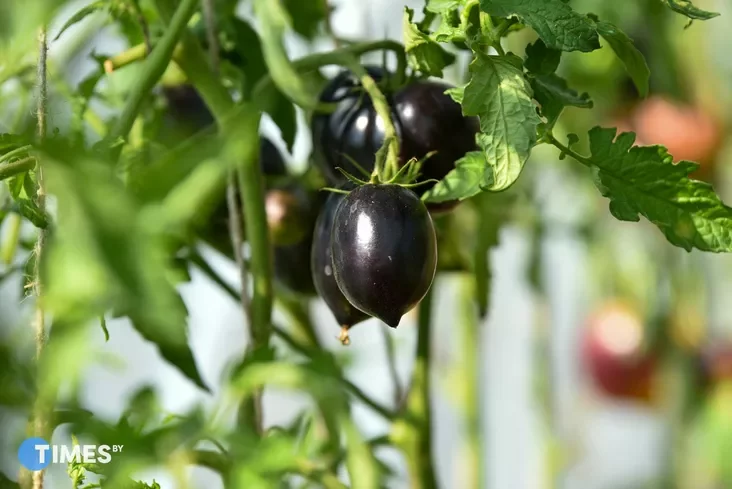
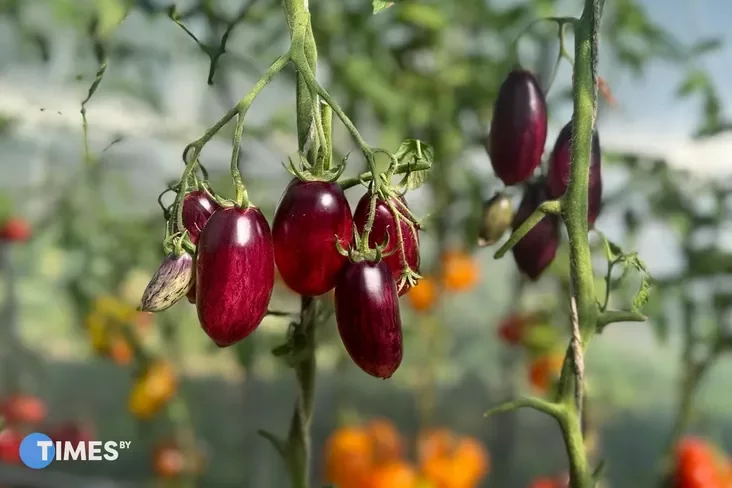
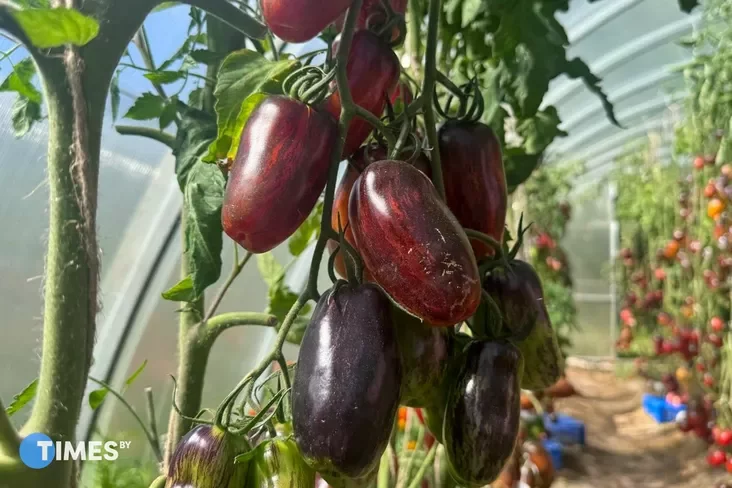
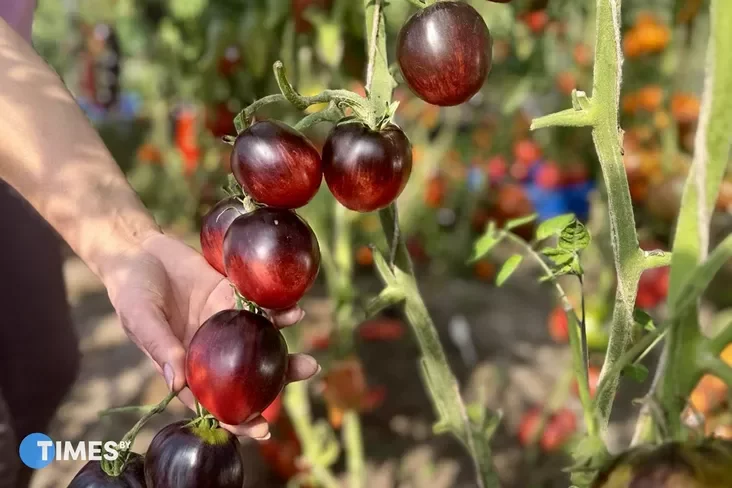
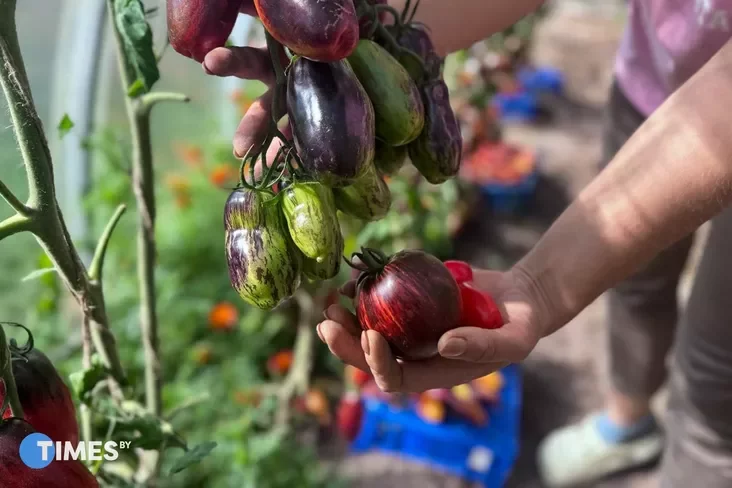
According to the novice breeder, pollen cannot be taken from all flowers. Much depends on the weather and time of day; it is difficult to remove pollen from a flower that is not fully open. Katsiaryna does not use special brushes — she does everything with bare hands to feel the pollen on her fingers. She says the main thing in this process is patience and neatness.
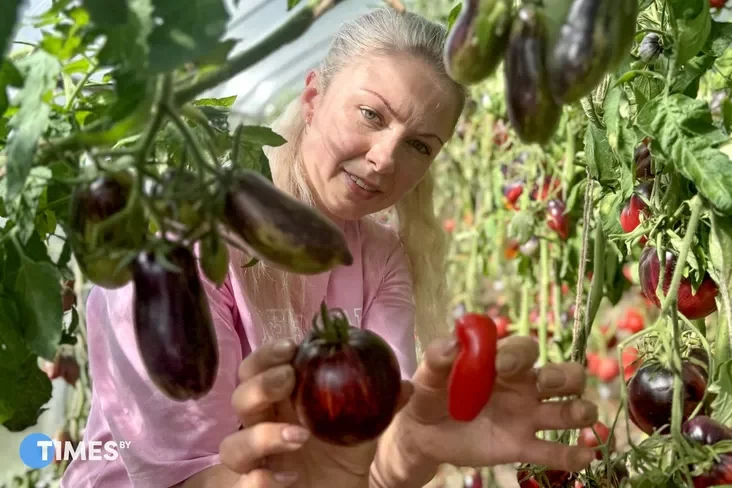
The amateur breeder already has something to be proud of — Katsiaryna picks several F5 hybrids from the bush and shows their parents.
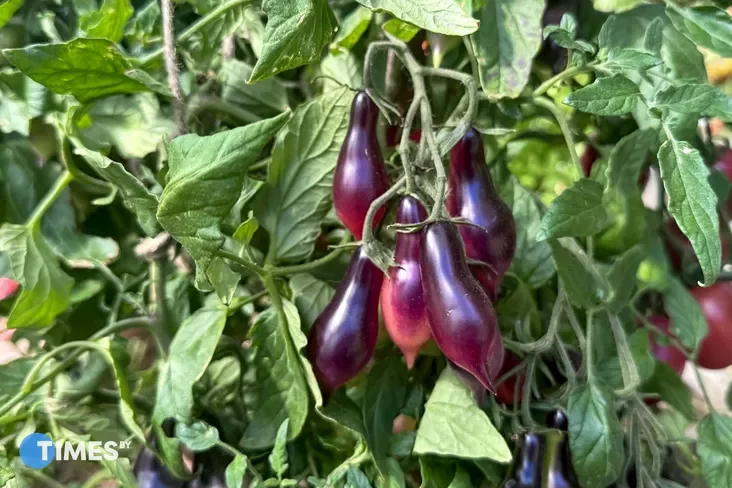
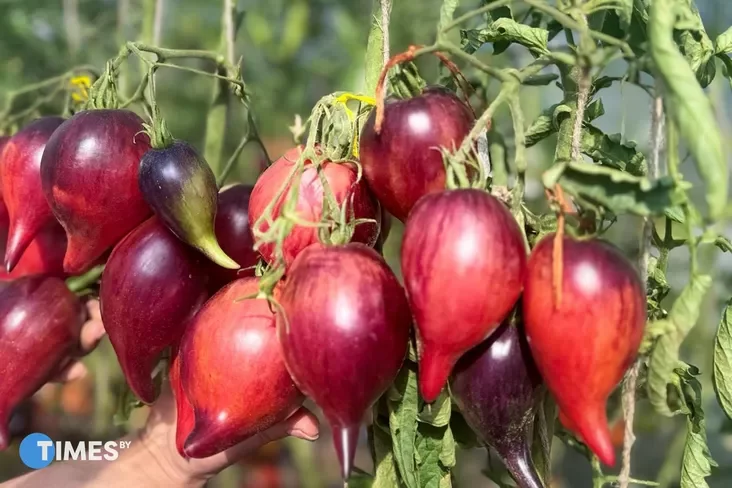
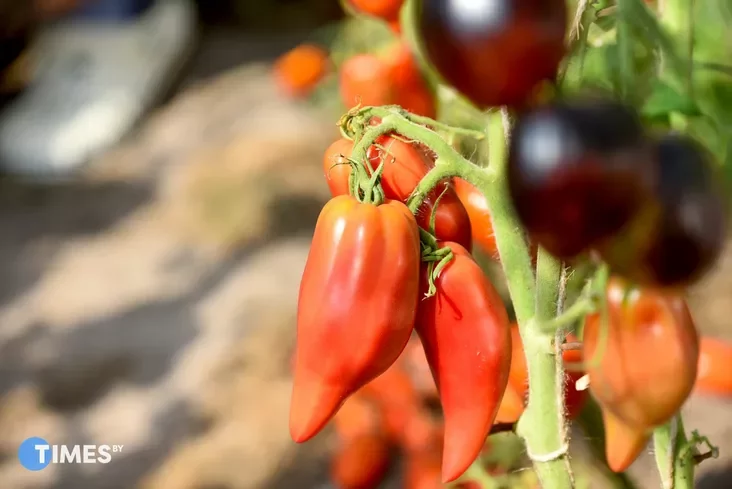
"This little beauty is an indeterminate variety, meaning it doesn't stop growing throughout the season, yielding 7-15 pepper-shaped fruits on each cluster. Note that many have split tips. Their flesh is firm, low in seeds, and tastes sweet and sour. The skin is firm and doesn't crack either on the plant or in jars — an ideal option for pickling, canning, and drying," the hostess says, pleased with the result.
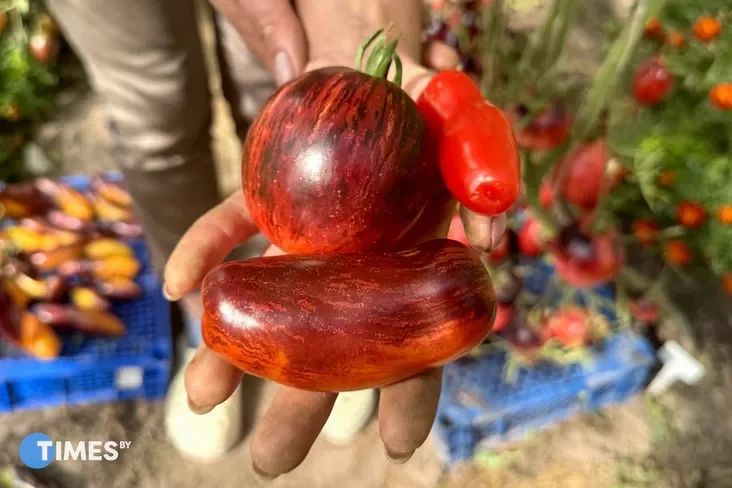
The mother of this beauty is "Flashen" (a mid-season variety with red, finger-shaped fruits and firm flesh), and the father is "Gargamel" (a large, plum-shaped fruit with purple "ink" spots).
"And here's another, what I believe is a successful 'cross'," Katsiaryna says, pointing to a banana-shaped tomato with chaotic marble patterns. "Its mother is 'Yellow Tulip,' and its father is the dwarf 'Pink Panther.' This hybrid is also indeterminate, able to grow up to 2 meters in the greenhouse. It tastes creamy-sweet, and the patterns on its skin depend on sunlight and, importantly, are never repeated."
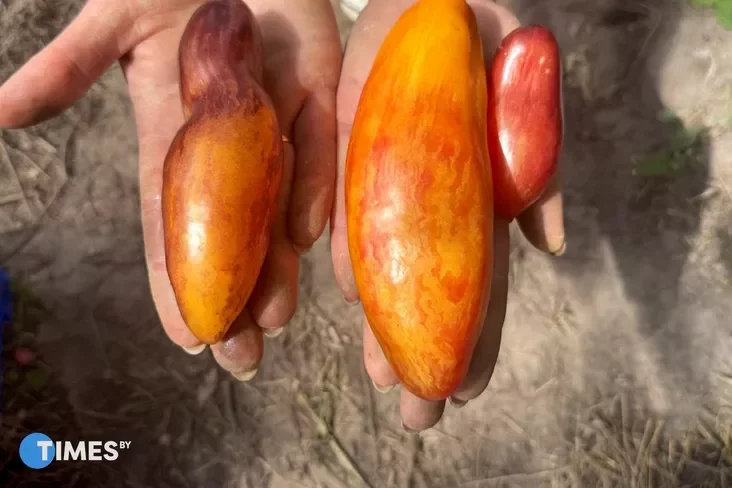
Katsiaryna's collection also includes "crosses" based on beefsteak tomatoes: from the large-fruited mother, they inherit the same meaty and sugary flesh.
"They are already tasty and interesting in texture, but I hope to develop even tastier varieties," the interlocutor shares her plans. "Note, for now, I call them all crosses or hybrids. Only when the experiment is complete can a new variety be declared, given a name, and entered into the state register."
Interest in Gardening from Childhood
Katsiaryna's childhood passed in the village of Litvinavichy, seven kilometers from Karma. Her two grandmothers had vegetable gardens and many flowers, especially bright and strongly scented marigolds. They grew not only in flowerbeds but also between rows of onions and potatoes.
"Back then, I thought my grandmothers liked these flowers solely for their appearance. Later, I learned that they perfectly repel pests. And today, there are many marigolds on my plot. Basil and mint keep them company — their strong fragrance disorients pests, deterring aphids, whiteflies, and spider mites from my tomatoes," the hostess shares a life hack.
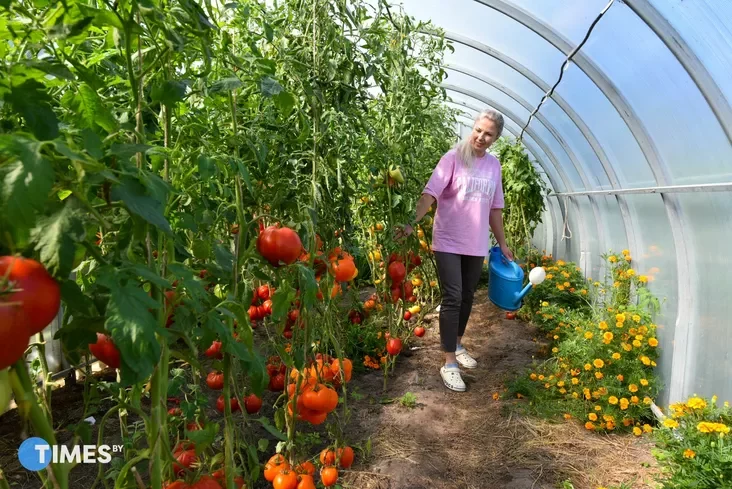
When Katsiaryna and her husband bought a plot in Karma, strawberries and flowers were the first to appear in the garden. Then came those same 60 varieties of tomatoes. She planned to grow them in open ground, but spring that year was late.
"I remember telling my husband: 'I can't wait for it to get warmer. Let's put up a greenhouse.' He grumbled, but he did it. The next year, another greenhouse appeared, then another, and another... There's no point arguing with me — once I get passionate about something, there's no stopping me," laughs the woman from Karma.
Her husband supported her endeavor, but without fanaticism: he has other interests — fishing and hunting. Her daughters are also not very interested in the tomato topic: if they visit the greenhouses at least once during the summer, that's already good.
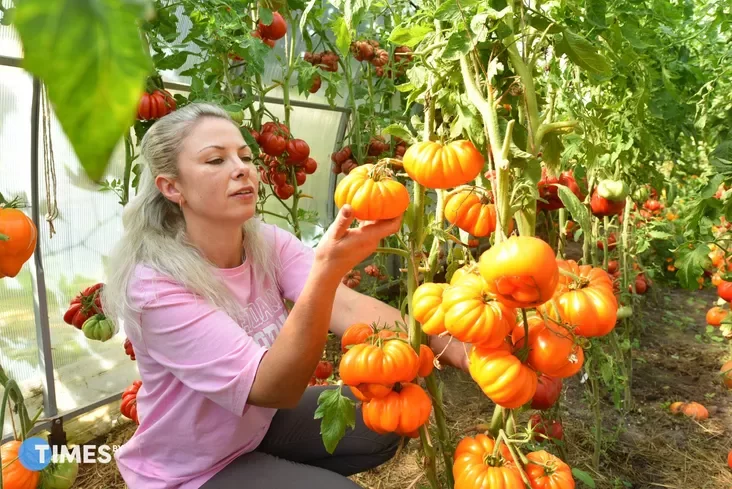
All gardening chores, in essence, fall on Katsiaryna alone. And she admits, it's more peaceful for her that way: no one will mix anything up.
"And the tomatoes won't be offended," adds the hostess. "Yes, they're like living beings, they feel everything. Once I went to the sea for a week and asked my mother to look after the garden. When I returned, I ran into the greenhouses, and there was a row of 'offended' children."
She talks to her tomatoes, and can even yell at them, especially when they start to get unruly.
"That's when plants actively grow foliage and poorly set fruit. This usually happens if you overdo it with chicken manure. In one of my greenhouses this season, the tomatoes were also unruly. First, I scolded them, then I asked them to behave. Surprisingly, they listened," the gardener laughs.
Social Networks and Communication with Subscribers
When Katsiaryna worked at school, she used to get up at 6 AM. Now she gets up at 7 AM, helps her youngest daughter get ready for school, and only after that goes to the garden.
Twenty years ago, she registered on "Odnoklassniki" (a social network), initially sharing mostly photos of flowers. Today, she has almost 6,000 friends on OK. In 2021, Katsiaryna started an Instagram account, where she now has 35,000 subscribers, and since last August, she has been actively managing TikTok.
"A year ago, I had 200 followers on TikTok, then one random video with lilies 'went viral,' and the audience grew to a thousand. I realized I needed to manage this page too. Now I have 37,000 followers on TikTok; the main topic, of course, is tomatoes," the gardener smiles.
On social media, she shares descriptions of varieties, showcases them cut open, and posts announcements for seed sales. She often appears in the frame herself so that commentators don't call what they see artificial intelligence. Sometimes she uploads three videos a day, sometimes she's silent for several days, but she tries not to disappear for more than a week.
Messages pour in by the dozens: most often from Russia, Estonia, and Germany, asking for advice, seeds, and sharing their successes.
"Thanks to the tomato theme, I've gained many acquaintances around the world," the gardener admits. "There's a regular customer from Austria: he's been growing Karma tomatoes for five years and regularly shares the results — sending photos every autumn."
Subscribers usually ask Katsiaryna to "send seeds of her choice." For her, this is both a simple and complex request: it's impossible to guess who will like cherry tomatoes and who will prefer large beefsteaks.
She harvests hundreds of kilograms, but never counts the exact weight. Part goes for seeds, part to relatives and friends, part for preparations (preserves/canning).
When asked how much she earns from selling seeds, the woman from Karma answers honestly:
"This isn't a story about business, but about the opportunity to financially support my passion for breeding through seed sales. And also to earn a little for bread and butter."
Now reading


"Dima, my half-million-euro microscope is in your clinic. You stole the equipment." The founder of "Novy Zrok" spoke about his relationship with the Abelsky family

"Dima, my half-million-euro microscope is in your clinic. You stole the equipment." The founder of "Novy Zrok" spoke about his relationship with the Abelsky family


"A young wife came to the lieutenant, saw what was happening in the zone, and shot herself." The final part of Ryhor Byarozkin's memoirs about the Gulag and Soviet Minsk has been released


Comments
[Зрэдагавана]