


Tsikhanouskaya frankly spoke about her son's illness and the invisible work of women. "Ten years of my life I dedicated to him and his rehabilitation"
Sviatlana Tsikhanouskaya described how she spent ten years helping her son begin to hear and the invisible work women do every day. We present the text of her speech, recorded by "Zerkalo".
Let's imagine: an October morning, it's Halloween today. I wake my children for school much earlier than usual. Because in two hours I have a plane, and this morning I wanted to be a mom and paint my children's faces myself so they would feel great at school. At this moment, I'm thinking about upcoming political meetings — theses, narratives, what to say to whom, recalling faces.
That's it, we split up: children to school, I to the airport. And in two hours, I'm already sitting at a meeting with a head of state, I'm focused on the conversation, I have a lot to say: how to help our political prisoners, media, how to draw attention to our crisis, and so on.
And a thought flashes through my mind: how are my children doing right now? I feel such guilt and anger at myself for not being able to be there on this special day for them, for not being able to find out how their friends reacted to their costumes, how they feel about it. And no one in the negotiation room knows that my thoughts are there right now.
At this moment, I'm doing two invisible jobs: simultaneously a mom and a politician. I'd like to talk specifically about this invisible side of invisible work.
"Full-time employment"
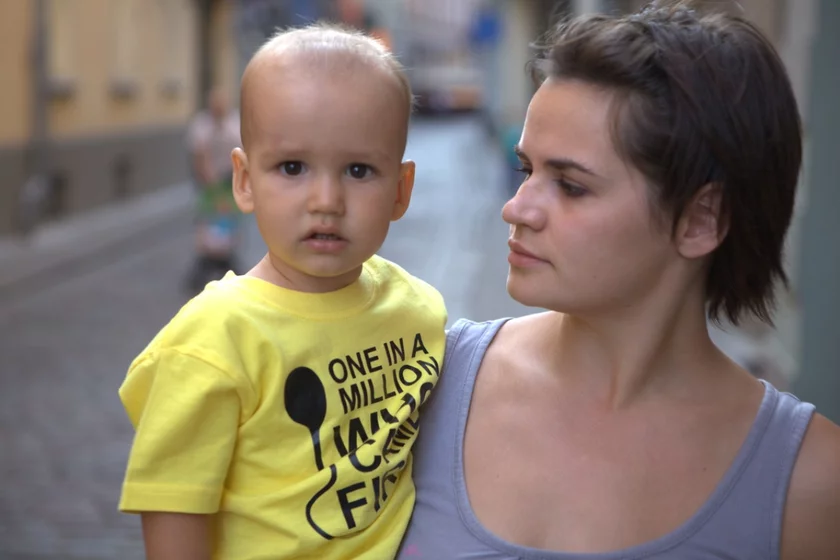
My elder son was born deaf.
We operated on him quite late, we lost a lot of time. And the next ten years of my life I dedicated to him and his rehabilitation. I remember that time of hopelessness, when you ask yourself a bunch of questions: why did this happen to us, I don't know anything, I don't know how to do anything, we probably will never rehabilitate him, he will never speak. But every day I worked with him and with a specialist, understanding that this was my job now and I gave it my all.
There were different stages. There was the pre-operative period: all the examinations we went through — in Minsk, in Gomel, wherever we went — I was with him. Then the operation itself — I was with him. And the post-operative period was no longer about medical procedures, but rehabilitation.
The medical part was when we had to see all the doctors every two years to confirm the disability. And rehabilitation was endless sessions: five days a week, two hours with a surdopedagogue and a defectologist, I was with him. But my work didn't end there: I came home and continued to work on sounds, words — eliciting sounds, sound imitation, words, sentences, and so on.
In other words, it was "full-time employment".
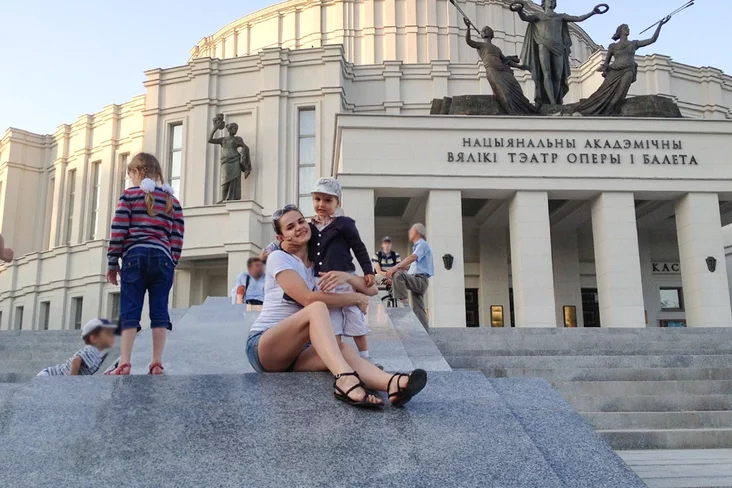
My family, specialists, and friends were by my side. Of course, I invested a great deal myself, and my son had to sacrifice his childhood to become normal. And now he talks non-stop. I am incredibly happy. When people see my son, an absolutely educated and erudite child who constantly tells stories from the internet, everyone looks and thinks: he talks, what's so special about that? Nothing at all. And only a small circle of people understands what invisible ten-year work has been done.
And I really have something to be proud of. I understand that not everyone will appreciate this invisible work with my child, not everyone sees it.
I sacrificed a lot: I couldn't realize myself and work, I was always with the child. When he got better, I thought that now I would finally start living.
But then 2020 happened. And the second stage of the same invisible work began. Perhaps externally it looks beautiful: meetings, trips, flags, photos, presidents, conferences, speeches, and so on. But for even the smallest result and success, you hold hundreds of meetings, repeat the same thing hundreds of times for something to work out.
"Devaluation that demotivates the most"
Recently in Sweden, expired documents began to be accepted. This became possible thanks to a lot of work: communication with journalists, experts, politicians, parliamentarians. And this is not only my work, but that of many Belarusians. And what do I hear? Why hasn't this been achieved in other countries? Why haven't ten more states now recognized expired passports?
International Humanitarian Fund to help political prisoners. From the emergence of the idea to its realization took three years. Three years of invisible work, when you push this idea, which became our unprecedented achievement. You explain the essence, tasks, and significance to everyone. For me, it was important because I understood: people would be released, and they needed help. I sometimes got tired of explaining: it seemed that everyone understood why it was needed. But every day I still did it. What do I often hear in response? "Why didn't all countries donate? Why so little money?"
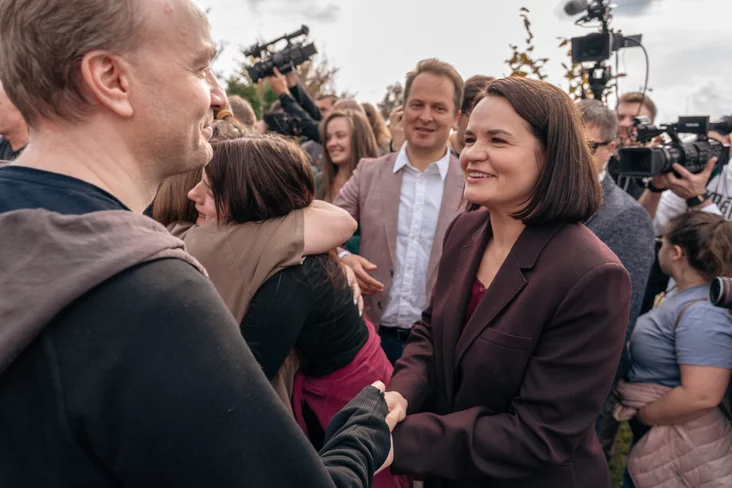
As in the first case with my son, so in political work, there is a devaluation that demotivates the most. People who do not see, do not realize, do not understand this invisible side of the work, think that it was just luck — somehow everything happened by itself and not much effort was needed.
"What are you doing at all?"
Thank God, I don't hear such reproaches often. Most often it happens on social networks, in some skirmishes. To approach and directly tell me that I'm doing nothing, perhaps people lack the courage. Or they know that I can argue why that's not the case.
But still, such things are demotivating. There is a feeling that people have already become accustomed to certain successes — I would call them successes. The same high-level meetings are great achievements that society already takes for granted.
Or, for example, conferences in Europe, access to which only state representatives have. The fact that we get there and can speak on behalf of Belarusians also seems self-evident to everyone: "Oh, this conference again, she went somewhere again — big deal!"
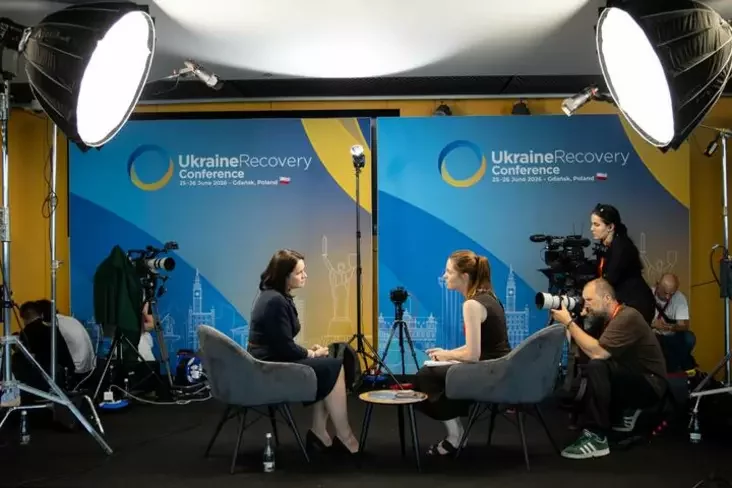
But I understand the flip side. I understand how much effort it takes to meet someone, to go somewhere, to write papers, to convey certain positions. This is all a great, great amount of work.
But to my face, people most often say words of gratitude. Sometimes, though, at some discussions, I was asked: "What are you doing at all?" And here you can endlessly give examples — depending on the context: what we are doing in Poland, in Lithuania, in the world, in America.
"Maybe I didn't actually do anything special?"
All women do this invisible work. A journalist who achieved success. Everyone looks: a cool professional, she works. Nobody knows that behind this success are dozens of articles that were never published, or she had to submit them not where she wanted to, just to gain some experience. And, perhaps, the person was already on the verge of losing faith in herself.
A businesswoman. Perhaps many don't realize how many sleepless nights, malnutrition, inability to spend time with family, pay attention to loved ones, borrowing money from someone with whom one doesn't want to interact at all. People look at such a woman: "Beautiful, wonderful, with her own business — she got lucky."
From my own experience, I judge that very often such external devaluation begins to turn into self-devaluation. You start asking yourself questions: maybe I didn't actually invest, and didn't do anything special, maybe it just happened by itself?
At first, to prevent this process of self-devaluation from starting in me, there were people nearby who explained to me that the work was done and that it was hard work. Because from my point of view, I couldn't always assess what we were doing. I simply had no experience. I didn't know: is this valuable or can anyone do this?
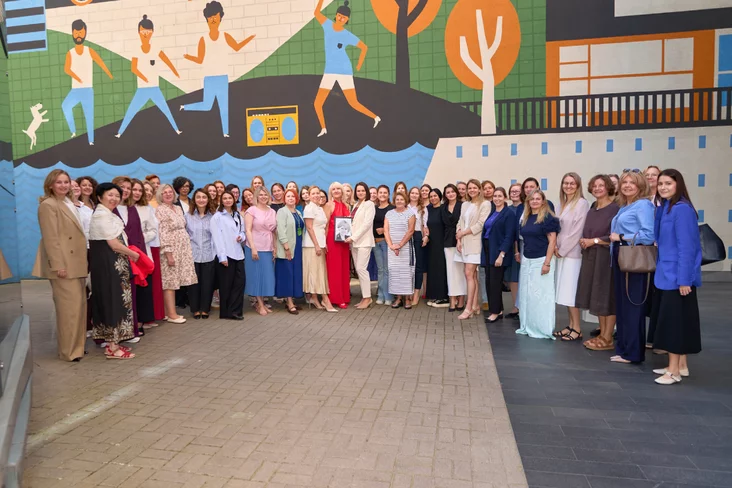
"You learn to value yourself when you are protected"
At the state level, women should be given more opportunities for professional growth. In some countries, for example, it is legislatively provided that the father must take parental leave while the mother works. So that the father feels it himself.
Policies should be implemented to support women within the country: more work on preventing domestic violence, so that men understand their responsibility for it. So that women themselves gradually learn to value themselves.
And you learn to value yourself when you are protected. When you understand that you have a way out of any situation, that you will always be helped — and not by someone donating, but by state-level assistance.
Now, a woman often simply has nowhere to go. And protection gives self-confidence. And here, relationships will be built not on domination and submission, or even with the use of violence, but on equality, on respect, on common interests.
Mentally, this is changing, but very gradually. And all of us need to remember that this invisible work has been done by us. I would like our women not to allow the devaluation of what they do and what they have already achieved.
I really want to ask each and every one of you today to find a woman nearby by the end of the day, approach her, and say: "I see your work, I see what you are doing, I see how difficult it is." Perhaps she won't believe it the first time, but you repeat it to her. Because this is work, and it is real.
Now reading


"He came, held an umbrella over her, hugged, and kissed." The mother of the murdered Tatiana Martishchenko told about her relationship with the child's father

"He came, held an umbrella over her, hugged, and kissed." The mother of the murdered Tatiana Martishchenko told about her relationship with the child's father
A crowd of schoolchildren gathered outside the Mark Formelle store — the brand released a limited collection with a wildly popular singer from Baranavichy

A crowd of schoolchildren gathered outside the Mark Formelle store — the brand released a limited collection with a wildly popular singer from Baranavichy


Lieutenant Colonel Zara, whom security forces consider Sakhashchyk's analyst, found in KGB pre-trial detention center. How he ended up in Belarus is unknown

Lieutenant Colonel Zara, whom security forces consider Sakhashchyk's analyst, found in KGB pre-trial detention center. How he ended up in Belarus is unknown


Tsikhanouskaya frankly spoke about her son's illness and the invisible work of women. "Ten years of my life I dedicated to him and his rehabilitation"

Tsikhanouskaya frankly spoke about her son's illness and the invisible work of women. "Ten years of my life I dedicated to him and his rehabilitation"


Police revealed their version of why the guy who admonished a tourist for a cigarette butt in the center of Minsk spent the night in the police station

Police revealed their version of why the guy who admonished a tourist for a cigarette butt in the center of Minsk spent the night in the police station


"Threatened to leave for another." The Ministry of Internal Affairs revealed details of the murder of a 43-year-old pregnant woman by a hockey referee


Comments
І ані слаўца пра мужа, які ахвяраваў гадамі свайго жыцця ў турме, каб яна мела магчымасць на ягонай працы збудаваць сабе прыстойнае жыццё за мяжой з добрым заробкам і працай з нічым неабмежаваным бестэрміновым кантрактам, падарожжамі, аховай, адсутнасцю адказнасці за што б то ні было. Хаця ўстае пытанне: а што б ты рабіла за мяжой, каб не ягоны створаны капітал? Кім бы ты была? За якія грошы падымала б дзяцей?
Трэба на дзяржаўным узроўні абараніць правы мужа і бацькі перш за ўсё. Каб ён не пахаў увесь час, ахвяруючы сваім жыццём дзеля сям'і, а адчуваў адпаведны ўнёсак у сямейны дабрабыт ад жанчыны. Жанчына павінна працаваць так жа, як і мужчына. Ніякіх дэкрэтаў быць не можа. Як у ЗША. І эканоміку падымем, і спынім жаночы хатні гвалт і цкаванне ў дачыненні да мужчын, і пераможам заўчаснае паміранне нашага моцнага полу, праца якога застаецца нябачнай і такой абясцэненай, як у гэтым ганебным артыкуле.