


Housing Not Much Cheaper Than Polish — But More Spacious and With Carpets. IT Specialist Praises Tajikistan
Yulia leads two projects in Tajikistan. This story is told by dzpk.io.
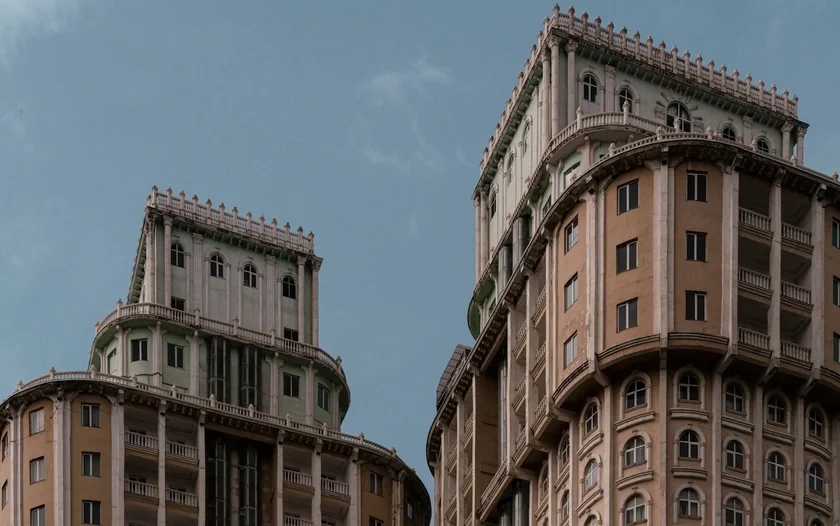
«Tajik Clients Stand Out with Refined Manners»
— I am involved in two projects in this country. One is the implementation of SAP (resource planning system) in a telecommunications company, and the other is related to IT consulting for state structures. In both projects, I act as an expert.
I would like to note a significant difference between clients from state structures and clients from commercial enterprises. After all, this is characteristic of all countries, and Tajikistan is no exception.
I have experience working in Uzbekistan and Kyrgyzstan, and I involuntarily compare these countries.
Against the general background, Tajik clients stand out with refined manners, politeness, and a complete absence of aggression in communication. Sometimes it's even hard to deal with: you feel like an uneducated boor. But, of course, working with polite people is more pleasant — that's a fact.
One of the projects involves an on-site presence for 60% of my working time. In general, for projects in Central Asia, it is characteristic for the client to want to see you in person. As soon as you leave — work stops.
«Housing Is Not Much Cheaper Than Polish»
Flights and accommodation are included in the rate. I make decisions regarding accommodation and flights myself, which is very convenient for me.
Housing in Dushanbe is not much cheaper than Polish. An apartment suitable for living costs from $700, with six months' payment in advance and a one-year contract.
Moreover, you won't find "one-room apartments": a "small apartment" in Dushanbe is 70 square meters. And mostly apartments are 100 "squares" or more — such spacious, slightly empty rooms, covered with carpets — Eastern luxury.
Since I am not in Dushanbe full-time, a permanent rental is unprofitable for me. I rent through Airbnb, arranging long-term relationships with hosts. I would live in a hotel, but it's important for me to cook and wash my own clothes.
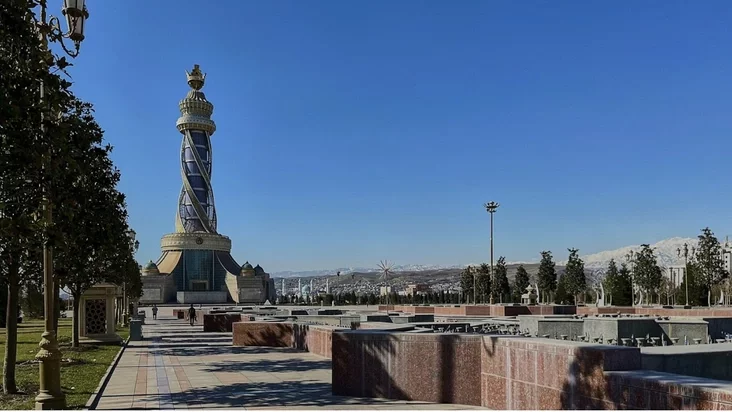
Old housing here is being demolished at a frantic pace — and new ones are being built at the same speed. It's impossible to look out a window in Dushanbe and not see construction.
But paying such money for housing in Tajikistan, even if it's new, is a bit annoying.
«You Cannot Just Tell the Taxi Driver the Address»
Public transport in Dushanbe is poor. It's always overcrowded, routes are inconvenient, with buses and minibuses. However, taxis are everywhere, and from a single company (formally, several services operate in Dushanbe, but all have a unified design).
Taxis are quite cheap — getting to work from my rented apartment costs approximately $2—2.5, and you can travel across the entire city for $5—10.
Among local peculiarities: taxi drivers don't use a navigator. Nor do they use the taxi ordering app, although it exists. To hail a car, you wave your hand from the curb — and a branded car stops, not some private "bandit" (unlicensed taxi).
There's also a charming peculiarity here — you can't just state an address. You must give a "password," a local district code.
For example — "Customs", "OVIR" (Department of Visas and Registration), "Iranian Hospital" or something similar. Each place has its own code, so before traveling to an unfamiliar place, I ask the person inviting me what to tell the taxi driver.
Streets have been renamed many times over 10 years; they are called differently on different maps. Friends joke that it resembles medieval toponyms like "house under three frogs."
«Meat for Men»
The situation with shops is not very good, but not very bad either. There are chain supermarkets "Paikar," "Yovlar," where, of course, many Russian-made products are sold. Moreover, these are not the most expensive and, consequently, not the highest quality.
I don't really like local dairy products; they are an acquired taste. Local meat products (sausages, rolls) are good, with prices starting from $10 per kilogram. And there are many farms here that breed rainbow trout — also tasty. But I "hunt" for Belarusian "dairy" and Russian dumplings; I'm used to them.
In general, the situation with shops is the same throughout Central Asia. I've been to Kyrgyzstan and Uzbekistan, and everywhere, let's say, there aren't many tasty products on supermarket shelves.
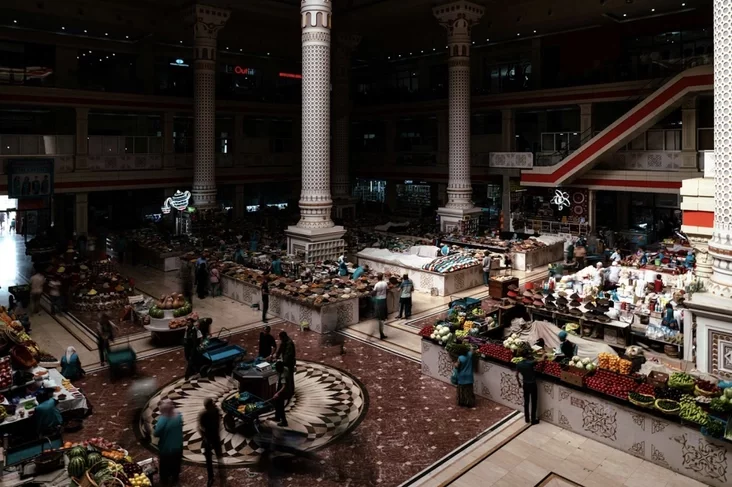
For tasty food, you have to go to the market. Those who aren't lazy go to the market every weekend. I'm lazy, though. It's difficult and hot.
«Internet is Tolerable»
The internet — yes, it periodically disconnects. But you can't say it's terrible. It's tolerable. The state invests a lot in network modernization.
As for mobile internet, the scheme is the same as in Uzbekistan: you must register your phone when entering the country — like a car.
Theoretically, visitors must pay a customs duty. But in practice, it's enough to write an online application stating that you are a foreign citizen, came for X months, imported a phone, and — "I request exemption from customs duty."
Few people know about this scheme, so everyone here walks around with two phones. They share Wi-Fi from a phone purchased in Tajikistan to their second, personal, and unregistered one.
«Many IT Specialists, Few Managers»
There is a local IT park; there is an Agency for Innovation and Digital Technologies under the President, a Council for Artificial Intelligence under the Ministry of Industry and New Technologies. The state actively invests resources in this area, although it cannot be said to be very effective. Compared to other Central Asian countries, Tajikistan is playing catch-up.
There are IT specialists, quite competent guys. Many developers work for both the local and global markets. There are many grant programs and innovative projects where local personnel are invited first. In my opinion, it's more difficult with management. There are very few experienced local managers.
For me, Tajikistan is also an opportunity to meet people from various countries and work in international teams. Since there are many projects, and they are financed by international organizations, people from various countries work here — Europe, China, Africa.
This is an interesting expat gathering, people with the most intricate biographies. For me, who spends most of my life behind a computer, rarely venturing out, it's very interesting to meet people who change countries of residence almost every year.
«It Turned Out to Be Concrete Jungles with Narrow, Heated Streets»
The temperature in Dushanbe, even in August, rises to a maximum of 40—42 degrees Celsius.
There is no rain; last year, there was a break from the end of April to the beginning of December. This year it's easier; in June, there were some rains after all.
But the main problem is dust. Previously, dust storms occurred 1—2 times during the summer, but last summer they were almost continuous. This year, there have already been 5. And during a dust storm, the air pollution level is such that going out without a respirator is not recommended.
I remember Dushanbe in 2020 as very green — back then, houses were small, and trees were big. But now all of that has been demolished, the trees cut down, and it has turned into concrete jungles with narrow, heated streets.
The best season to visit Tajikistan is from the second half of March to the first half of June and from mid-September to the end of November. It's warm and comfortable.
«Nowhere Else Are There Such Excursions»
The primary natural feature is the mountains, which occupy 93% of Tajikistan's territory. It's very pleasant there, not as hot.
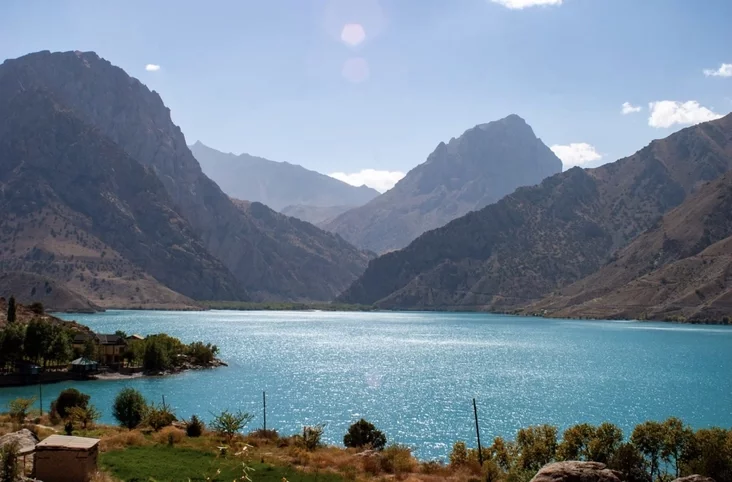
In winter, a quite decent ski resort operates: with heights from 2200 to 3200 meters, good lifts, well-equipped slopes, and equipment for rent. Although it is poorly maintained, you can still ski there.
There are many national parks. We go on excursions to some waterfall or lake almost every weekend.
For example, we went to an old mine where amethysts were extracted. Moreover, I don't think there are such excursions anywhere else where the mine is not equipped with anything at all.
They just give you a flashlight and say: «Don't sneeze inside, don't pick at the walls.» And then bats fly out at you.
And we go on excursions to ancient cities. Tajikistan is Persia, with a thousand-year history.
«Everyone Loves Belarusians. And Ukrainians. And Russians»
It's very good, especially if you say you are from Belarus. Everyone loves Belarusians. But Russians are also loved there and considered respected people. And Ukrainians are also loved.
One must understand that they recently had a war in the 90s. Many experienced it as adults, and therefore the main sentiment now is — "we are happy that we don't have war."
Now reading


A Young Belarusian Didn't Want to Serve Time in Russia for Drugs, So He Figured Out How to Quickly Get Out of the Colony — And Ended Up on Ukrainian Positions Near Pokrovsk


Comments