


Man who participated in forest festival died near Russian Vyborg. They say he was from Belarus
On the night of September 4, a long-time participant of the Solar Systo festival, 53-year-old Anatol, whom friends called Tahir, died in a forest in the Vyborgsky district of the Leningrad region. It is stated that he was from Belarus and will be buried in his homeland, reports Fontanka publication.
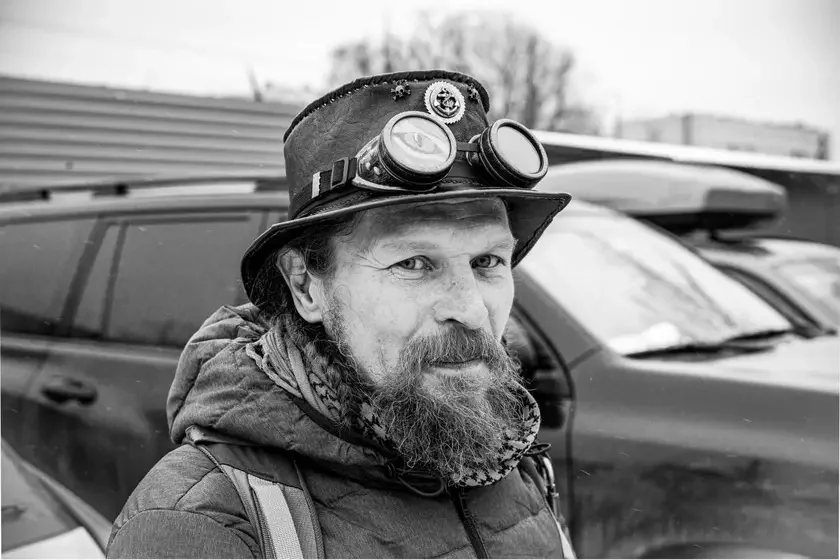
Solar Systo Togathering, or simply "Systo", is one of the largest forest festivals in Russia. It combines music stages of various genres, markets, exhibitions, and a tent camp. It is also called the "Gathering of Tribes".
The festival originated in the early 2000s in the village of Sisto-Palkino near the town of Sosnovy Bor, and in recent years has been held on the other side of the Gulf of Finland, near the town of Primorsk. The event takes place twice a year — in May and September — and gathers several thousand people. The tent camp stretches for approximately four kilometers.
According to Anatol's common-law wife Dina, they had been coming to "Systo" for many years as tourists, and also sold their own handmade clothing, mainly shalwar trousers. On the night before the festival began, she and Anatol stayed alone in the tent camp.
Dina said that late in the evening, three men approached their tents. She claims that they might have been drunk or under the influence of some substances. The men were looking for other people from their camp, and when it turned out that only Anatol and Dina were left, they began to question what they were doing in that place. Anatol came out of the tent, after which, according to Dina, the three men started beating him. When the woman came out, they began to hit her as well.
The woman reported that she had a tooth knocked out, as well as bruises, contusions, and scratches. She did not see the beginning of the fight and therefore cannot say what happened before she came out. She also did not see the moment when Anatol might have used an axe. One of the participants in the conflict showed a wound on his back, but Dina claims that it was a large scratch that did not look like an axe blow.
After the beating, Anatol lay at the scene. Dina ran for help to neighboring camps and asked them to call an ambulance. According to her, the men left several times and returned. Another festival participant, Anton, tried to intervene and calm the conflict.
The ambulance arrived, but due to the poor condition of the roads in the forest, the medics waited on the highway. Dina claims that they initially did not want to take Anatol to the medics. At some point, he could no longer speak and said, "I can't breathe." The man was loaded into a car and driven to the checkpoint where the ambulance was waiting. According to Dina, on the way they realized he had died, and left the body by the roadside near the turn to the festival, after which they informed the medics that they had found the man there. When Dina ran to the spot, ambulance workers were already examining Anatol, and the conflict participants had left back into the forest.
Anatol had worked as an industrial climber for many years. His acquaintances from this profession describe him as a good person and doubt the version that he was chasing people with an axe. According to one of the climbers, Anatol usually carried a knife with him and was not particularly fond of axes. He is survived by adult children from previous marriages.
Police arrived at night and interviewed Dina. Later, law enforcement officers inspected the camp and interviewed the person who called the ambulance. Initially, two men were detained, and another later appeared with his lawyer. According to Dina, the detainees did not admit to beating her. After the funeral, she also plans to contact the police regarding items that, according to her, went missing from the camp.
After the necessary bureaucratic procedures, the deceased's brother, Oleg, took his body to his homeland, Belarus. The funeral was scheduled for September 10. Relatives asked journalists to refrain from comments at this time but stated that they would seek justice and punishment for the culprits.
Festival organizer Sergey expressed condolences to Anatol's family and noted that the "Systo" team feels its involvement in the tragedy, although it does not believe it could have directly prevented the incident. According to him, the three men involved in the conflict had different connections to the festival. One of them had previously worked as an administrator for several years, but the organizers no longer planned to cooperate with him due to a serious illness. The second was an employee of another service that dealt with tent rentals. The third man periodically participated in various events as a volunteer.
It is reported that three men — Abramov, Mazanik, and Yeromin — have been arrested in the case of Anatol's death. The court remanded them in custody for two months. They are accused of intentionally causing grievous bodily harm which, through negligence, led to death.
In social networks, the defendants in the case left various traces. Abramov was the most active there: he associated himself with the organizers of "Systo", wrote about psychological education, published poems and videos from festivals, and also demonstrated an outrageous image with many tattoos, including a swastika and a kolovrat. Mazanik from St. Petersburg was interested in esotericism, runes, and mindfulness practices, and wrote about kindness, honesty, and "improving the world" on social networks. Yeromin maintained his pages more reservedly: he published gloomy quotes, photos from festivals and historical reconstructions, as well as materials related to "Systo", fantasy, and electronic music.


A Young Belarusian Didn't Want to Serve Time in Russia for Drugs, So He Figured Out How to Quickly Get Out of the Colony — And Ended Up on Ukrainian Positions Near Pokrovsk


Comments