


Nawrocki issued 83 times fewer Polish passports to Belarusians in a year in power than Duda
In total, only 62 people received Polish citizenship from the president during Nawrocki's first year in office — previously the number was in the thousands.
Two ways to obtain citizenship
In Poland, there are two procedures for foreigners to obtain citizenship: through the voivode (uznanie za polskiego obywatela / recognition as a Polish citizen) and through the president (nadanie obywatelstwa / granting citizenship).
The first option is standard and the most common. To obtain a Polish passport through the voivode, a foreigner, depending on the grounds, must live in Poland for one to ten years, pass a B1 level language exam, and meet a number of other requirements.
In the case of citizenship being granted by the president, no conditions, including residency time, need to be met, nor is a language exam required.
Thousands of people used this opportunity annually. Among them were several hundred citizens of Belarus. Almost all of them had Polish ancestry and a Karta Polaka (Polish Card).
Most Polish passports from the president were received by Belarusian citizens in 2021 — 503 people. But the procedure was popular even earlier, when relocation to Poland was not yet so massive.
For example, in 2019, 334 Belarusian citizens received citizenship through the president.
Ethnic Poles with a Karta Polaka sometimes managed to obtain Polish citizenship this way in the 2010s, even if they did not live in Poland at all. However, over time, obtaining a passport through this scheme became more difficult.
In 2022, 410 Belarusians received Polish citizenship from the president, in 2023 — 265, in 2024 — 166. Throughout the entirety of 2025, only 102 Belarusian citizens received citizenship from Duda.
In August 2025, Karol Nawrocki assumed the office of President of Poland. According to Gazeta.pl data, in the period from August 6, 2025 to August 13, 2026, he granted Polish citizenship to only two Belarusians.
In addition to the two Belarusians, Nawrocki granted citizenship to 60 other people, of whom 36 were citizens of Ukraine. Israelis ranked second in popularity — 8 people. Third were citizens of Vietnam — 6 people.
If we compare the citizens of Ukraine and Belarus, who usually occupied the first and second places, the reduction for Belarusians is much greater.
Comparing Nawrocki's first year in office with 2024 (the last year Duda was president for the full year), it turns out that the number of Belarusians to whom the Polish president granted citizenship decreased 83-fold — from 166 to 2 people.
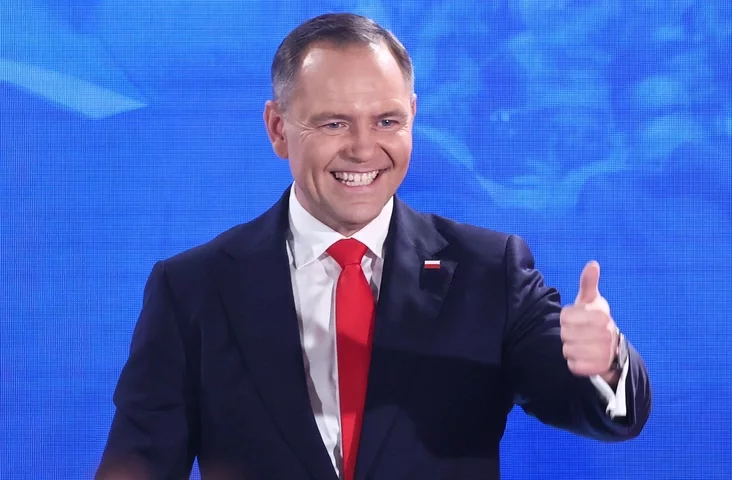
The reduction for Ukrainians is also huge, but not as much as for Belarusians. While 759 citizens of Ukraine received passports from President Duda in 2024, only 36 people did so during Nawrocki's year in office. This is 21 times fewer.
What does this mean?
Clearly, Nawrocki's approach to granting citizenship to foreigners differs fundamentally from that of his predecessors. Duda, during ten years in power, granted citizenship to 20,500 people, which is an average of a little over 2,000 people annually. Komorowski, in five years, granted citizenship to 12,700 people, or about 2,540 annually.
And while the results of Nawrocki's first year in office suggest that obtaining citizenship through the president is almost impossible, the number of Polish passport recipients through the standard procedure continues to grow.
Thus, in 2025, over 19,000 foreigners became citizens of Poland — among them about 10,000 Ukrainians and about 6,500 Belarusians.
In total, over the last four years alone, about 20,000 citizens of Belarus received Polish passports.
Now reading


Tragedy in Borisov Hospital: patient's granddaughter says he received attention after six hours, when foam was already coming from his mouth — he died


Comments