


NASA paid a startup $30 million to save the Swift telescope. Now the apparatus, which observed the death of stars for twenty years, will itself burn up in the atmosphere
The operation to save the unique space telescope, which was planned to be carried out with the help of a private tug, has been prematurely terminated. Technical malfunctions aboard the rescue vehicle made it impossible to safely capture and change the observatory's orbit. As a result, the scientific mission is ending, and the apparatus itself will soon burn up upon falling to Earth.
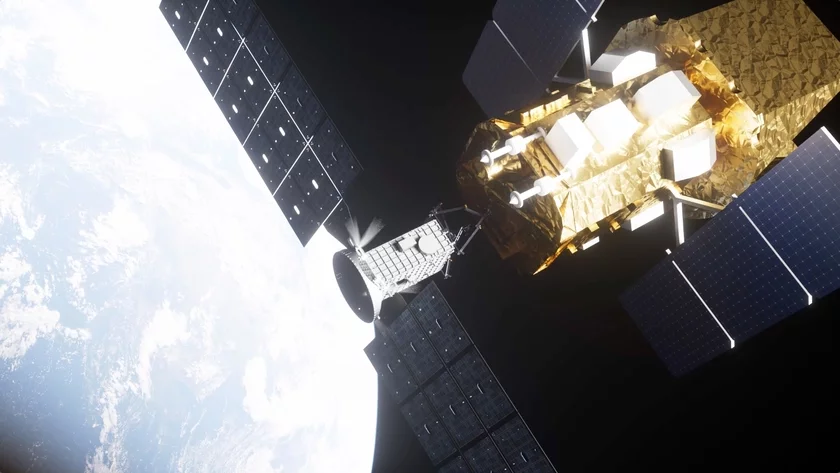
As reported by Scientific American magazine, the leadership of the US National Aeronautics and Space Administration (NASA) has officially canceled the mission to rescue the orbital observatory Swift.
Reuters adds that the LINK apparatus, specially created to capture and lift the telescope to a safer altitude, failed to perform its task due to technical malfunctions. Now the legendary space scout, which for more than twenty years has caught echoes of the most powerful cosmic catastrophes, will turn into a fiery meteor in the dense layers of the Earth's atmosphere.
Haste at a cost of thirty million
The Swift observatory went into space back in 2004 and has operated in orbit significantly longer than planned. Its main goal was to fix gamma-ray bursts — titanic explosions that accompany the death of massive stars or the birth of black holes. However, time and the Sun proved merciless. Due to increased solar activity, the Earth's atmosphere "inflated," increasing resistance and beginning to inexorably pull the telescope down.
To prevent the fall, last September the space agency signed a contract with a private Arizona-based company, Katalyst Space Technologies. As noted by SpaceNews portal, this was an unprecedented challenge. The private company was given only nine months and a modest sum for the space industry of $30 million to develop, assemble, and launch a rescue tug. The apparatus, weighing only 250 kilograms, was supposed to approach the telescope, grab it with robotic manipulators, and lift it to a higher orbit. But space does not forgive haste.
Why the rescue operation failed
The launch took place on July 3, 2026, using a Pegasus XL rocket, which launched from a carrier aircraft over the waters of the Pacific Ocean. The joy of a successful deployment was short-lived.
Soon after the flight began, part of the flywheels responsible for orientation in space failed on the LINK apparatus. The rescuer began to spin uncontrollably around its own axes.
Engineers struggled for weeks to save the mission. They used xenon electric thrusters, which were initially intended to correct Swift's own orbit, to at least slow down the tug's rotation. The rotation speed was reduced from nine to one and a half degrees per second, and new software was even successfully uploaded aboard. But no one dared to risk the half-billion-dollar telescope by trying to grab it with a half-dead and unstable apparatus. NASA's official press release put an end to it: there will be no capture.
NASA Administrator Jared Isaacman tried to save face in this situation. According to him, the team moved at an extraordinary pace, and the chance to give the telescope a new life fully justified all risks. He was echoed by Katalyst Space CEO Gahnhi Lee, who emphasized that the company undertook a high-stakes task and gained tremendous experience.
The creators of the tug are not going to deorbit it immediately — LINK will remain close to Swift to practice rendezvous maneuvers and collect data for future satellite servicing missions.
The final of the space scout
For Swift itself, this story means inevitable demise. The authoritative journal Science notes that the loss of the apparatus will leave a noticeable void in multi-wavelength astronomy.
This telescope processed dozens of urgent observation requests daily, instantly orienting itself towards new cosmic anomalies. It was this instrument that helped humanity see black holes mercilessly tearing apart stars and recorded the most distant explosions known to us in the Universe.
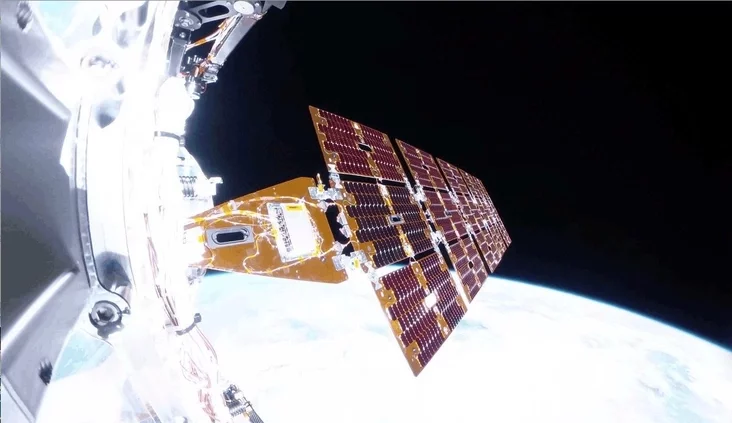
After the official cancellation of the rescue mission, the Swift telescope will remain in its orbit, which continues to rapidly decline under the influence of atmospheric drag. Scientific observations on the apparatus were stopped even before the operation began. According to the space agency's forecasts, by the end of the current year, the observatory will naturally enter the dense layers of the Earth's atmosphere and completely burn up. To compensate for the loss of this instrument, NASA plans to reallocate tasks for operational recording of cosmic events among other active missions.
«Nasha Niva» — the bastion of Belarus
SUPPORT USNow reading


"If there were no BPF, there would be no session. The communists wouldn't have gathered for it." Navumchyk sharply responded to Tsygankov, the "denier."


Comments