


Chopin's Men. A new study reveals the composer's private life
Polish composer Frédéric Chopin loved men, wrote them love letters, and dedicated music to them. This is the conclusion reached by German music journalist and pianist Moritz Weber, who studied about 800 preserved letters, as well as materials from Polish and Parisian archives.
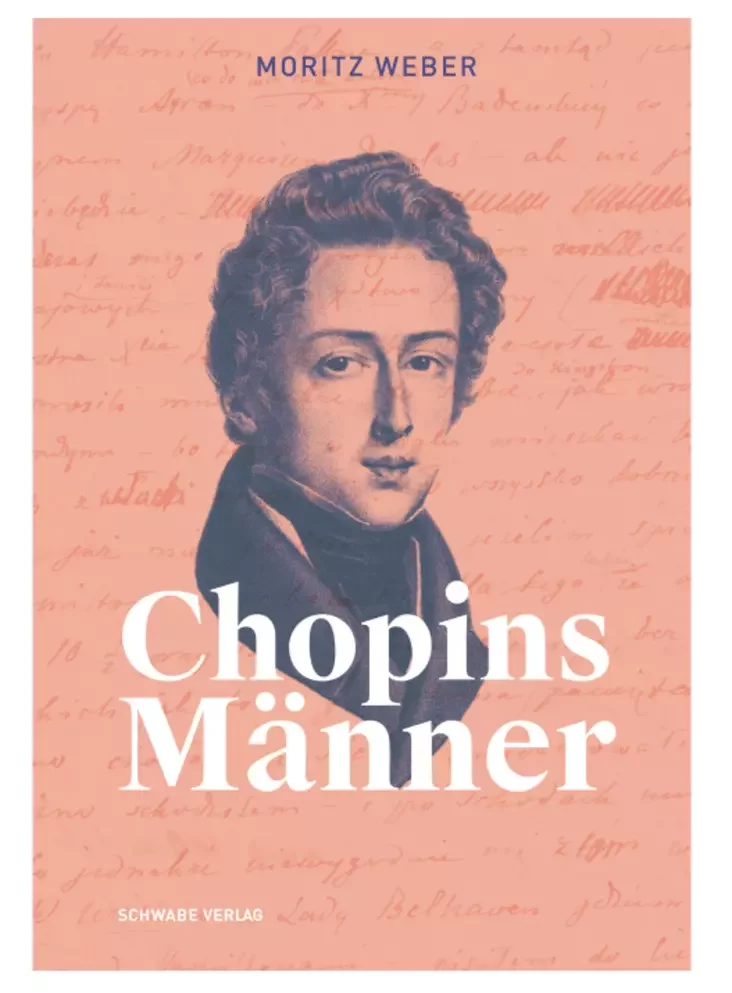
Moritz Weber's book "Chopins Männer" ("Chopin's Men") was published in July 2026 by Schwabe publishing house. Weber, who has been researching the composer's life and work for more than five years, used letters, notebooks, and other archival materials in it, including some previously unpublished or almost unnoticed by researchers.
As Die Zeit writes, Weber is not the first to draw attention to the intimate nature of Chopin's correspondence with men. These letters have been known since the 19th century.
Even the German biographer Friedrich Nicks noted in 1888, quoting some of Chopin's messages: if it weren't known who the author and recipient were, one might think these were letters from a lover to a beloved — or vice versa.
Later, researchers usually explained such language as characteristic of male friendship in the Romantic era. At the same time, Chopin's relationships with women, on the contrary, often received a romantic interpretation even with a lack of evidence.
For example, biographies solidified the story of the composer's supposedly secret engagement to 17-year-old Maria Wodzińska. Weber believes that such narratives largely originate from the 19th-century biographical tradition and were later almost never critically reviewed. In his view, researchers romanticized Chopin's relationships with women, even when sources primarily indicated friendly closeness.
Weber also questions some other well-known narratives. For example, he finds no evidence of Chopin's romance with the singer Henriette Sontag, and he interprets the relationship with George Sand not as a conventional love story between a man and a woman, but as a much more complex connection, in which Sand, in his opinion, to some extent played a nurturing, almost maternal role.
As a result, as Weber argues, a peculiar double standard emerged: Chopin's closeness with women was readily accepted as romantic, while his direct declarations of love to men were explained away as friendship for decades.
Thirteen Men
Weber's main sources are Chopin's correspondence, archival documents, dedications, and manuscripts of his works. In the book, the author examines the biographies of thirteen men from the composer's close circle.
A central place is occupied by Tytus Woyciechowski — Chopin's friend from his youth, a landowner, and a participant in the Polish national movement. For some time, the men lived together. In traditional biographies, Woyciechowski is usually called a close friend of the composer. In Weber's view, the sources indicate a romantic relationship.
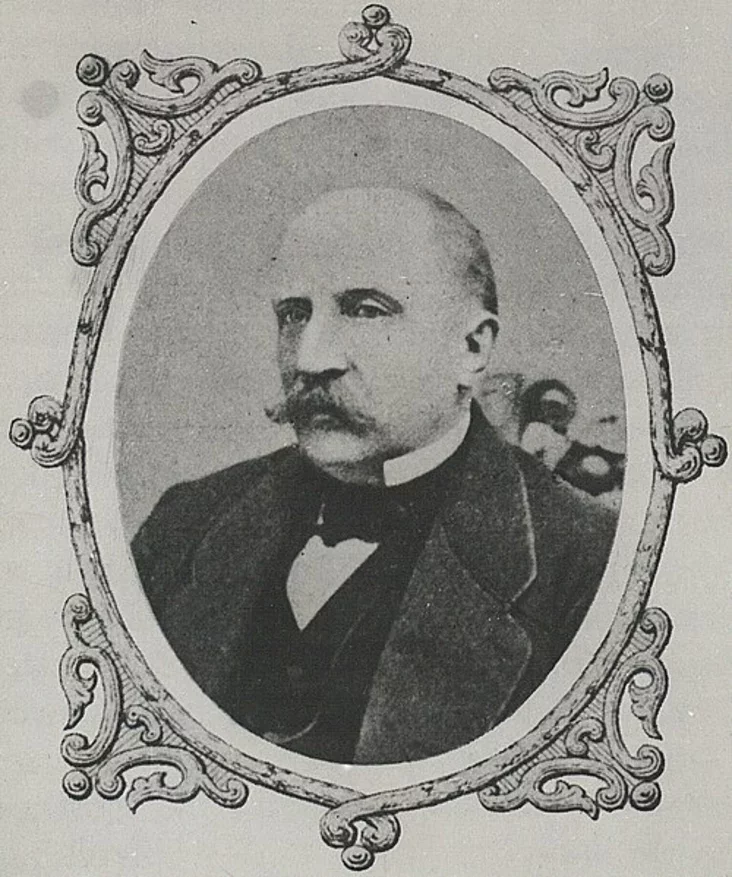
It was to Woyciechowski that Chopin wrote some of his most emotional letters. In October 1829, he confessed:
"I tell the piano what I often wanted to tell you." And continued: "If you can, write me a few lines, then you will make me happy again for a few weeks [...] because I love you madly."
In another letter, Chopin wrote:
"I penetrate into your consciousness, and… let's hug [...] Give me another kiss [...] Forgive me for being such a pig, speaking between us."
Woyciechowski was also a recipient of Chopin's music. The composer sent him scores in which, Weber believes, he left hidden signs of affection. Along with one of them, Chopin wrote:
"Pay attention to the place marked +. No one knows about it but you."
In the researcher's view, such markings indicate a personal code between Chopin and Woyciechowski, which existed not only in their correspondence but also in their music.
In letters to Woyciechowski, there are also more explicit episodes. In one of them, Chopin first emphasizes that he is writing naked, and then addresses his friend:
"Tonight you will dream that you are kissing me. I must repay you for that nasty dream you caused me last night."
In another message, Chopin writes to Woyciechowski: "The letter in which you say I should kiss you, I received." The author points out that in some letters, the composer calls Woyciechowski by the Polish word "kochanek" — "beloved," "lover."
As Weber argues, such fragments are quite numerous, making it difficult to explain them solely by the emotional language of male friendship accepted in the 19th century.
Weber also draws attention to the correspondence with Jan Matuszyński. More than two dozen of his letters have been preserved, in which he repeatedly expressed strong affection for the composer. Among such confessions are the words "Chopin is everything to me" and "Chopin is the flower and fragrance of my heart."
This new reading of the biography, as the author notes in an interview with Tagesspiegel, also changes the perception of the composer's music. The researcher says that during his work on the book, he alternated studying documents with playing the piano and rediscovered familiar works.
Thus, he views the famous Etude in A-flat major as a kind of portrait of Antoni Wodziński, for whom, Weber suggests, Chopin also had strong feelings.
Homosexuality in Chopin's Time
Chopin's letters to men reveal not only his feelings. They also show the conditions under which same-sex relationships could exist in the 19th century.
In 1830, when the November Uprising began in Warsaw, Chopin and Woyciechowski were in Vienna. Soon their paths diverged: Woyciechowski returned to Poland and joined the uprising, while Chopin eventually moved to Paris, which became his new home.
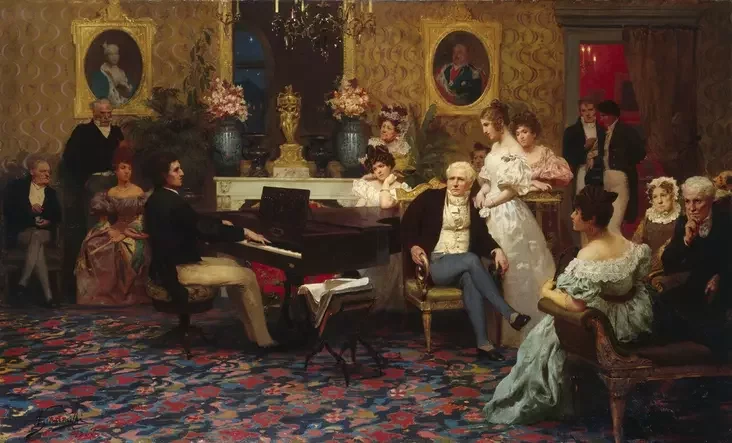
In the French capital, attitudes towards same-sex relationships were more liberal than in many other parts of Europe. After the French Revolution, consensual sexual relations between adults of the same sex were not a separate criminal offense in France. Chopin, who continued to miss Woyciechowski, at the same time admired the freedom of Parisian life.
"Paris is whatever you want," he wrote to Tytus.
The situation in other European countries was different. As Die Zeit reminds us, in England until 1828, homosexual contacts could even result in the death penalty for men. In Polish lands under Russian rule, such relationships were also criminalized, and from 1847, exile to Siberia could be applied as punishment.
Even in more liberal Paris, men were not protected from police surveillance. Weber found police documents in Parisian archives about five men from Chopin's closest circle. In the reports, the police meticulously documented their romantic and sexual lives. In the researcher's view, these materials show why men had to be cautious and often resorted to self-censorship.
Chopin himself, as can be seen from his correspondence, suffered from not being able to openly express his feelings. To Woyciechowski he wrote:
"As for my feelings, I am always in syncopations with others. That's why I suffer."
An Ongoing Debate
According to Weber, even some representatives of the "old school of Chopin studies" in private conversations no longer deny the composer's romantic relationship with Tytus Woyciechowski. However, this interpretation has not yet become generally accepted.
For example, in a 2024 publication by the authoritative Fryderyk Chopin National Institute, it is asserted that the thesis about the "homoerotic nature" of Chopin's and Woyciechowski's correspondence "has no basis" and is intended to "create a certain effect and shock the reader."
As Die Zeit writes, in the Chopin Museum in Warsaw, one can still find translations of other letters in which male pronouns referring to the recipient are replaced by female ones — as if Chopin were addressing a woman. At the same time, according to Weber, the composer "did not write a single love letter to any woman." At least, no such letter has survived.
However, the question of whether it is correct to call Chopin "gay" in the modern sense of the word remains debatable. 19th-century categories of sexual identity do not coincide with modern ones, and correspondence does not provide a complete picture of the composer's sexual life.
The author himself emphasizes: his task is not to impose a modern identity on Chopin, but to restore sources to his biography that were previously ignored or remained unknown. Science, in his opinion, must be based on facts and be open to their reinterpretation. Today, Weber believes, society can finally speak openly about this part of the great composer's life — just as it has already happened with Pyotr Tchaikovsky's biography.
Such a reading does not cancel the familiar Chopin and does not diminish the significance of his music. In the author's view, it allows us to see a living person behind the canonical figure of the great composer — and to hear some of his works in a new light.
-
Old Poplars Cut Down Near Borisov Stone in Polotsk. Now an Empty Space Before St. Sophia Cathedral
-
This Belarusian woman parodies Belarusian propagandists and Russian liberals so successfully that her videos are taken at face value. VIDEO
-
The book 'Hemingway Knows Nothing' will be published in Belarusian
Now reading


"If there were no BPF, there would be no session. The communists wouldn't have gathered for it." Navumchyk sharply responded to Tsygankov, the "denier."


Comments