


Old Poplars Cut Down Near Borisov Stone in Polotsk. Now an Empty Space Before St. Sophia Cathedral
The Upper Castle lost its old trees that beautifully framed the ancient monuments. The reason for removing the trees was the aftermath of recent bad weather.
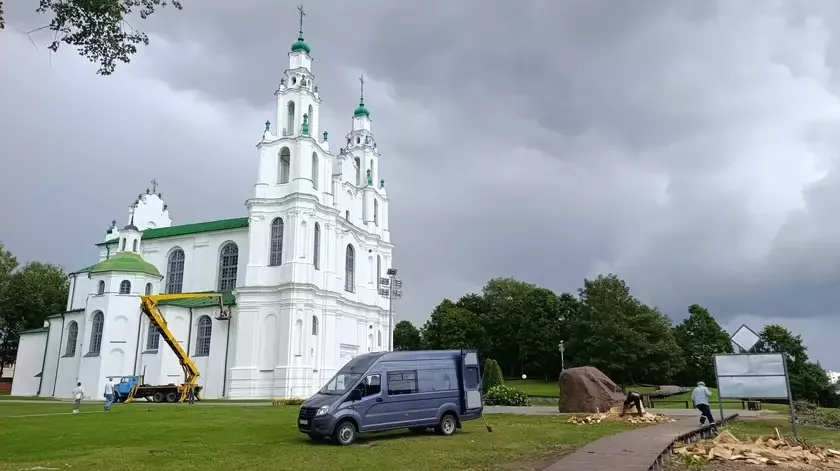
As the local history group "Polotsk: Past and Present" reports, last Saturday there was a strong wind in the city that broke a large branch on one of the poplars located near Borisov Stone on the Upper Castle. As a result, local services decided to cut down not only the damaged tree but also the neighboring poplar.
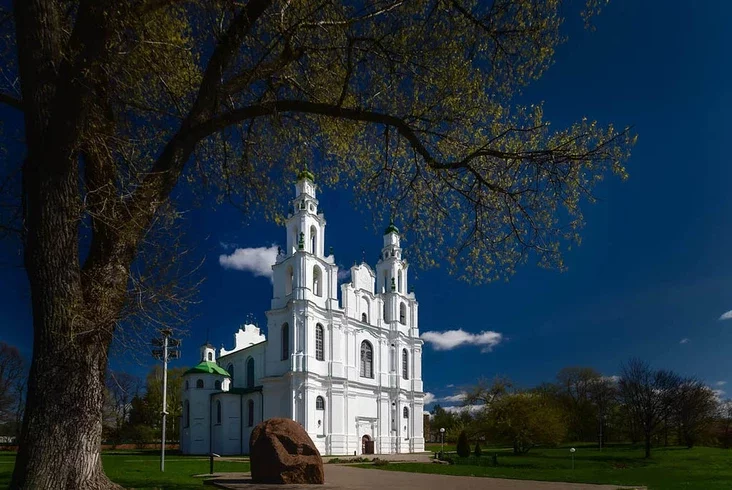
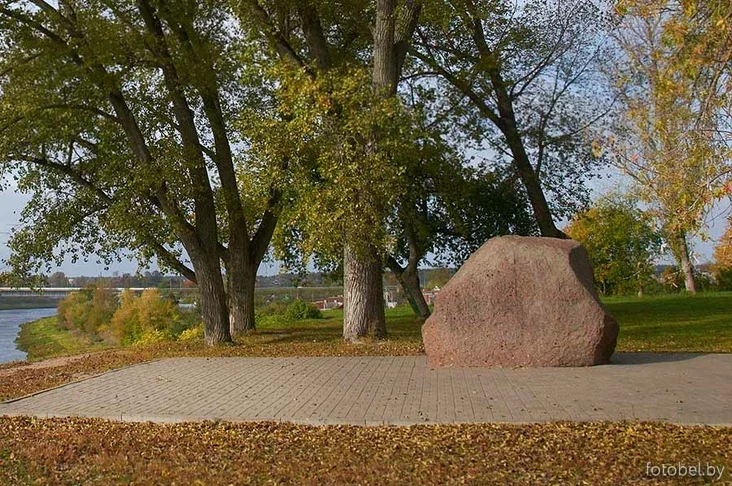
According to eyewitnesses, the second poplar, which was closer to the historic boulder, did not give in to cutting immediately: during the felling of the trunk, the ropes did not hold and broke. Borisov Stone itself was tightly wrapped in black film during the tree felling, which apparently was supposed to protect it from possible damage, but it's not entirely clear how it could have done so.
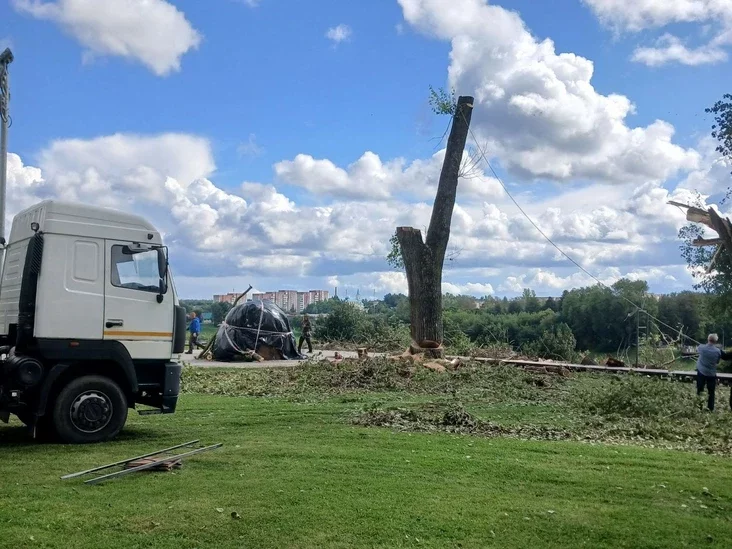
The disappearance of mature trees significantly altered the space near Borisov Stone and St. Sophia Cathedral. Local residents note that without the trees, this part of the castle has visually turned into an empty space.
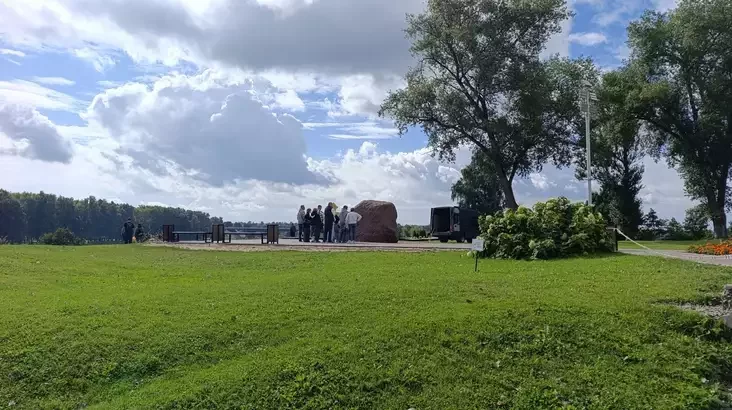
The photos also show a cherry picker with a cradle raised to the level of the cornice of the western facade of St. Sophia Cathedral. This may be the start of sampling and physico-chemical studies of the facades before the expected large-scale restoration.
As we reported earlier, 2.4 million rubles have been allocated for these works, and the sampling of materials was scheduled precisely for June–September 2026. The main intrigue of the project lies in the possible return of the temple to its true color scheme of the mid-18th century: architect-restorer Raman Zabiela argues that the current white color is the result of utilitarian repairs during the Russian Empire, while the original Baroque facade had ocher shades with terracotta accents.
Also, the new project could provide for a broader disclosure and protection (for example, with glass screens) of the unique 11th-century masonry, which is currently only shown through small local probes that are gradually deteriorating under the influence of the climate.


"He came, held an umbrella over her, hugged, and kissed." The mother of the murdered Tatiana Martishchenko told about her relationship with the child's father

"He came, held an umbrella over her, hugged, and kissed." The mother of the murdered Tatiana Martishchenko told about her relationship with the child's father
A crowd of schoolchildren gathered outside the Mark Formelle store — the brand released a limited collection with a wildly popular singer from Baranavichy

A crowd of schoolchildren gathered outside the Mark Formelle store — the brand released a limited collection with a wildly popular singer from Baranavichy


Lieutenant Colonel Zara, whom security forces consider Sakhashchik's analyst, has been found in the KGB pre-trial detention center. How he ended up in Belarus is unknown

Lieutenant Colonel Zara, whom security forces consider Sakhashchik's analyst, has been found in the KGB pre-trial detention center. How he ended up in Belarus is unknown


Tsikhanouskaya frankly spoke about her son's illness and the invisible work of women. "Ten years of my life I dedicated to him and his rehabilitation"


Comments
Калі вы апошні раз ужывую бачылі гэты Барысаў камень? Я яшчэ 4 гады таму на свае вочы і ведаю пра што кажу. Тое, што ён тысячы гадоў ляжаў на дне ракі ды яшчэ хутчэй за ўсё пакрыты пяском ці глеем наадварот спрыяла яго захоўванню. Таму што не было доступу паветра і разбуральнага ўплыву перападу тэмператур. А як перастанеце смяяцца, то пачытайце што такое эрозія і які разбуральны ўплыў гэта з’ява робіць для гістарычных помнікаў. Археолагі частку сваіх адкрыццяў, напрыклад, могуць не раскопыаць або закопваць назад каб пазбегнуць іх разбурэння ў выпадку немагчымасці пачаць адразу кансервацыйныя работы. Так было з драўлянымі рыштаваннямі гарадзішча на Менцы, якія былі знойдзены і часткова апісаны яшчэ дзесяткі гадоў таму.