


Kommunarka revealed when the tasty glaze will return to its candies
Belarusians have recently often criticized Kommunarka for the taste of the glaze on its candies. Some even asked the company to bring back the previous version, which they consider tastier, writes Office Life.
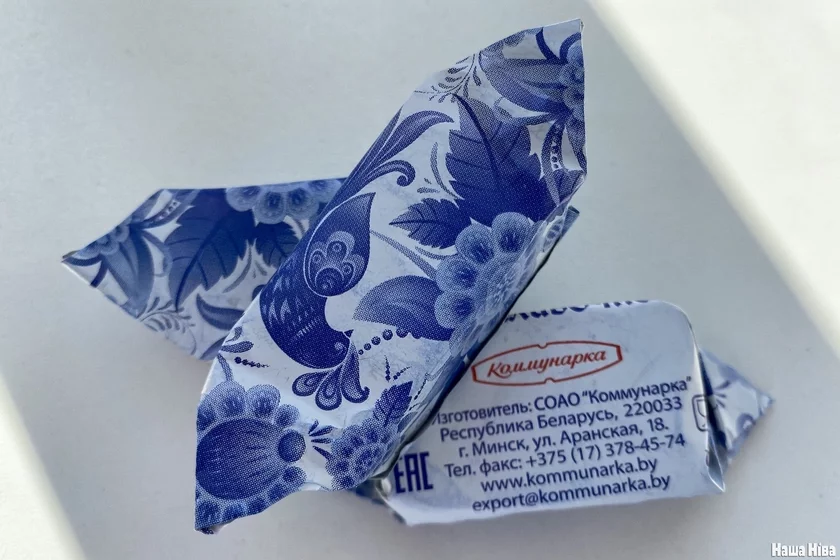
As reported by the factory, the glaze composition has already been changed. Production is now gradually transitioning from a glaze based on cocoa butter substitute to a glaze with cocoa butter equivalent.
According to Yulia Hostseeva, Deputy General Director for Production at Kommunarka, popular candies such as "Chernomorochka," "Cheromushka," and "Ramonak" are already being produced with the new type of glaze. And premium candies — "Lyubimaya Alyonka," "Mishka na palyane," "Vavyorachka," "Kommunarka," "Stalichnyia" — are traditionally still covered in chocolate.
Alena Marhunova, Chairwoman of the State Committee for Standardization, noted that in Belarus, chocolate and chocolate glaze can practically be considered equivalent. According to her, Belarusian confectionery glaze corresponds in quality to Russian chocolate glaze.
At the same time, when producing its own chocolate, Kommunarka does not use cocoa butter equivalents, although Belarusian standards allow adding them in quantities not exceeding 5%.
Over 95% of the factory's products contain cocoa products. The company primarily purchases cocoa beans from Africa, with some supplies coming from Latin American countries. The cost of raw materials directly affects the prime cost and price of finished products.
On world exchanges, the price of cocoa beans last year reached approximately 11.5 thousand euros per ton. Currently, the exchange price is around 4-4.5 thousand euros. However, this does not mean that Kommunarka purchases raw materials at precisely this price: purchases are made through tenders in accordance with Belarusian legislation.
About 45% of the factory's assortment today consists of import-substituting products.
Kommunarka also continues to expand exports. This year, its products were supplied to 14 countries. More than 90% of exports go to Russia. The top five largest foreign markets also include China, Israel, Uzbekistan, and Kazakhstan.
Small volumes of the company's products also reach EU countries — Latvia and Estonia. In addition, the factory plans to increase supplies to the Middle East. Meanwhile, in Latvia, the possibility of banning the import of sweet products from Belarus and Russia is currently being discussed.
Now reading


The Return of Kaschei, the Abolition of Rusalkas, Navie from Polotsk, Kopsha and Vegelmof. What the First Belarusian Guide for Fantasy Translators Offers


Comments