


British scientists have discovered what a 500,000-year-old ivory tool was used for
Archaeologists have uncovered the true purpose of a rare artifact found in southern England in the early 1990s. It's a bone tool approximately 500,000 years old, now considered the oldest known "hammer" of its kind in Europe. The results of the research by an international group of scientists from University College London and the Natural History Museum, London, were published in the scientific journal Science Advances.
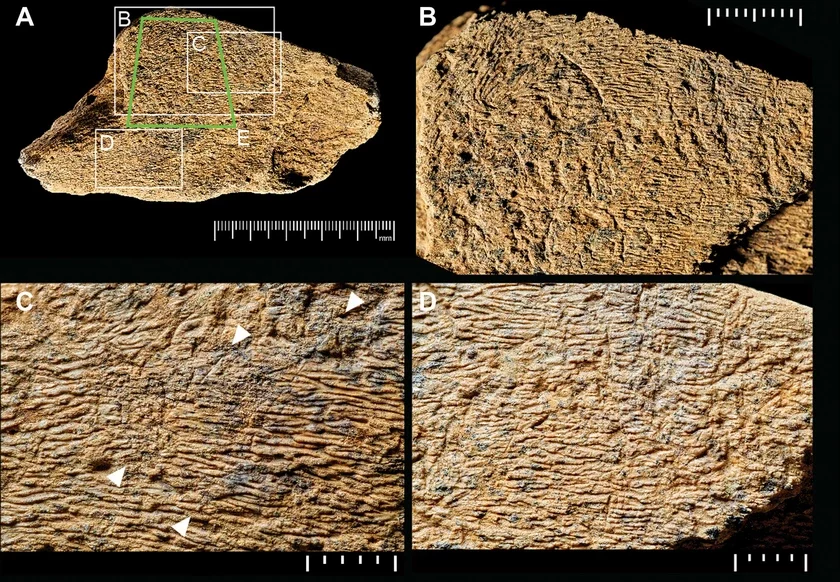
The artifact was found at the famous archaeological site of Boxgrove. It is triangular in shape, about 11 centimeters long, 6 centimeters wide, and approximately 3 centimeters thick.
For a long time, its true purpose remained unknown. Only modern research methods, including 3D scanning and electron microscopy, allowed microscopic impact marks, nicks, and flint particles to be seen on its surface.
Scientists concluded that the tool was made from a dense part of a mammoth or ancient elephant tusk. It was used by early Neanderthals or members of the Homo heidelbergensis species as a retoucher – a special percussive tool used to carefully process the edges of flint axes and knives, restoring their sharpness after use.
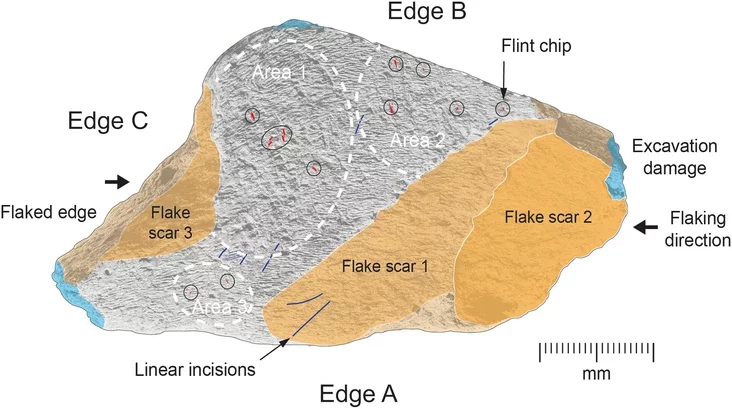
The head of the research, Simon Parfitt, noted that the find indicates a high level of ingenuity and understanding of material properties among people of that time. According to him, elephants and mammoths were quite rare in prehistoric southern England, so the preservation and special processing of such valuable material indicate well-developed abstract thinking.
Using bone instead of stone allowed for much more precise processing of tools and reduced the risk of damaging them. Similar tools have previously only been found in Africa, where their age reaches one and a half million years. For Europe, this is the first such ancient evidence that half a million years ago, the ancestors of modern humans possessed complex technologies for making and repairing stone tools.
Now reading


"Didn't like the products on the shelf — and they write an SMS there." The Ministry of Internal Affairs called Threads a security threat and announced arrests

"Didn't like the products on the shelf — and they write an SMS there." The Ministry of Internal Affairs called Threads a security threat and announced arrests


"More than 10 people have left for Europe — and that's just from my department." A resuscitator from a district center frankly described the daily life of Belarusian medicine


Comments