


"Fool's Gold" and Family Firms. How Much Did Writers Earn in the BSSR?
If Shamyakin or Bykau had lived in the West in the 1970s, they would have been millionaires. Why? Because they would have worked with commercial publishers and film studios. But what was it like in the BSSR? "Budzma" tells how the financial life of writers looked and how much it differed from the lives of "ordinary Soviet people."
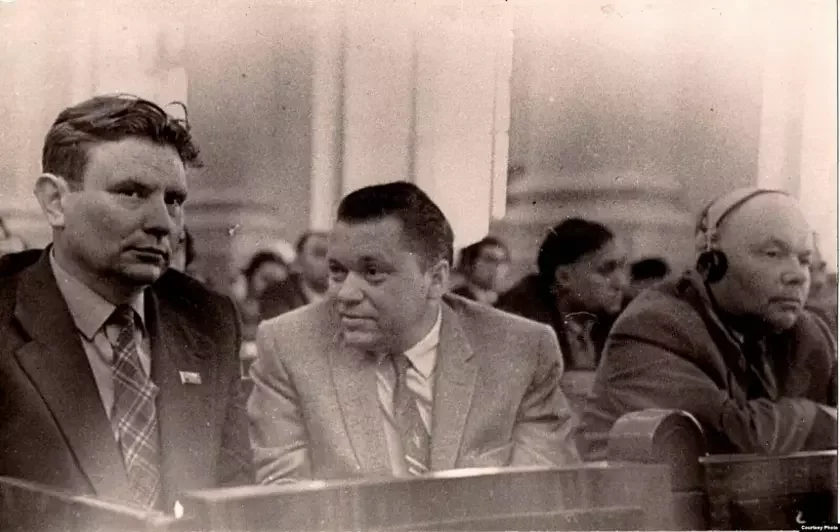
Legends circulated in the USSR about the fortunes of top Soviet writers. About Sholokhov, for example, two stories are immediately recalled. The first concerns a private helicopter. The second - a piano. Sholokhov couldn't play the instrument, but he used it as a "safe" for cash. The money was supposedly counted by his assistant, who regularly "cheated" the classic…
Writers of the BSSR, undoubtedly, belonged to the intellectual elite (some also to the financial). But their lives were much more modest than those of their Russian counterparts. What did they have, and what did they spend their fees on?
From Chevrolet to a Motorboat
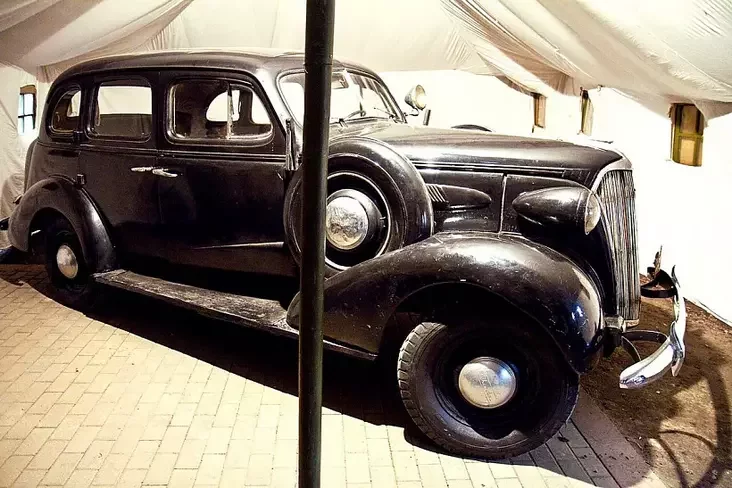
A universal indicator of the well-being of a Soviet person was a car. The pioneer here was Yanka Kupala - owner of a Chevrolet Master Deluxe GA, 1937. The rare car was a gift from the 1st Secretary of the Central Committee of the CPB Panteleimon Ponomarenko (not from his own pocket, of course). However, the classic used the gift for a very short time: from 1939 to 1942. Before this, Kupala had a Soviet GAZ-M-1, from which he switched to that limousine.
In the post-war years, the number of cars among writers increased. Makar Paslyadovich acquired a "trophy" German Opel Kadett in the 1950s. Aleksey Zarytsky bought a "Moskvich", Taras Khadkevich, Pyatro Hlebka, and Ivan Shamyakin - a "Volga", Usevalad Krauchanka - a "Pobeda". It's interesting that after the war, writers for the first time drove themselves, not using the services of chauffeurs (like Kupala).
An indicator of luxury is a garage. When Bykau acquired his second car (switching from a "Zhiguli" to a "Volga") with fees from his novellas "The Obelisk" and "To Live Till Dawn," he immediately became concerned about security. He himself invented a high-security lock, and in addition - an anti-theft device. Let's add that Bykau also had... a motorboat!

Cars were usually distributed through the Writers' Union, which processed applications: in the USSR, it wasn't enough to have money; one had to wait for their turn! Thus, with the help of the Union, Ivan Melezh received a "Volga" (GAZ-21, 1960 model year) - to travel to Polesia and transport manuscripts to Moscow publishers. By the way, both husband and wife in the Melezh family had driver's licenses.
The House of Writers. The Devil is in the Details.
The distribution of apartments in the USSR followed a corporate principle. There were houses for "scientists", "doctors", "military personnel"... The House of Writers at Marx Street, 36 perfectly illustrates the situation of the creative intelligentsia. Here, in the very center of the capital, Vasil Vitka, Yanka Maur, Maksim Luzhanin, Pyatro Hlebka, Yan Skryhan, Uladzimir Karatkevich, and others had apartments.
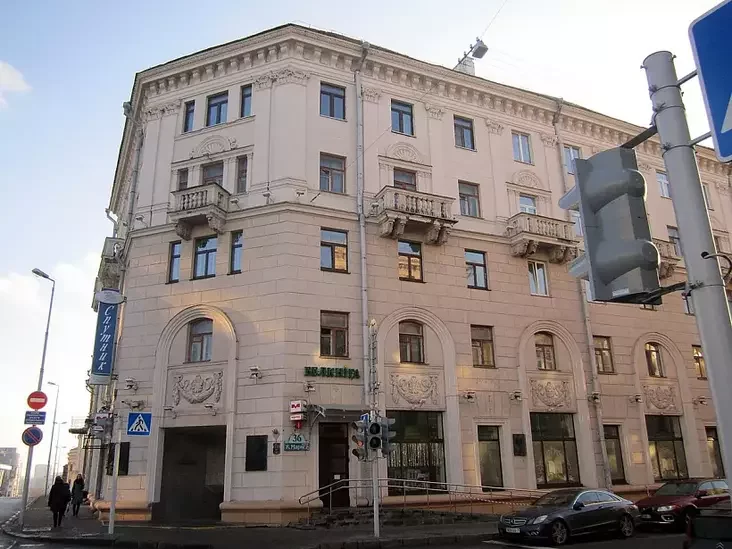
But the devil is in the details. The construction was overseen by Fani Aller, who headed the Literary Fund. The lady was a "party woman," so she paid no attention to the domestic comfort of her project: the kitchens in the apartments turned out to be tiny. There was no elevator at all. Two-room apartments were 56 square meters, three-room apartments - 89... Not bad, but - nothing luxurious.
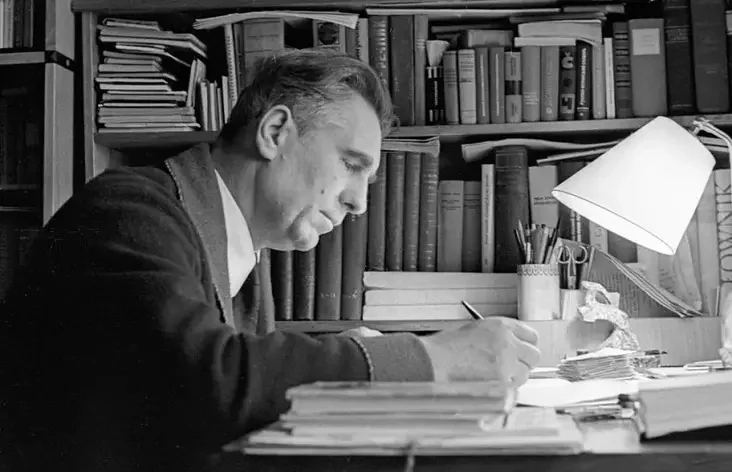
However, there was room for studies and large writers' libraries. Books were a "permitted" form of luxury for writers. Therefore, they were bought, resold, given as gifts, hunted for in second-hand bookstores, even abroad. And these very books became the first "victims" after the writers' deaths: descendants sold off libraries left and right…
Yanka Maur's family was the first to buy a television, so children of other writers would run to their place to watch shows. And it was like that with everything: moving furniture was done by themselves (collectively, without movers). For holidays or wakes, furniture was borrowed from neighbors (apartment numbers were written on stools under the lid). Car repair, like home renovation work - all done by themselves. Is this luxury?... You decide.
Umbrellas, Lighters, and… Banned Playboy
An important point that distinguished writers from ordinary citizens was "foreign trips." Maksim Tank was the most "exported" Belarusian writer in the 1950s-1980s. He traveled not only to Poland, Yugoslavia, East Germany, Hungary, and Yugoslavia, but also to - the USA, Finland, Great Britain, Canada, Chile... Absolutely incredible geography for a Soviet person!
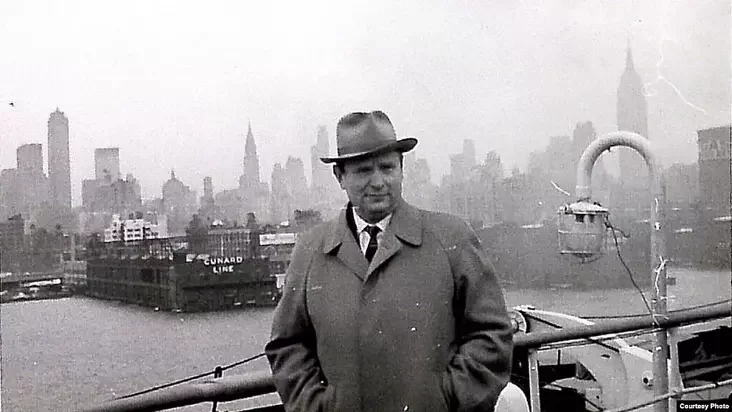
Andrey Makayonak, Ivan Shamyakin, Arkadzy Kulyashou, Yauhenia Yanischyts, Ales Adamovich, Pyatrus Brouka, Boris Sachenka also visited the States. Of course, the trips did not happen at the writers' private expense or on their own initiative, but as part of official delegations - as a rule, through the UN. In New York, even small daily allowances were issued in foreign currency.
Shamyakin's book "Two Months in New York" gives an idea of those journeys. Top intellectuals of the BSSR bypassed expensive stores, looking for sales ("sails") or stores on the outskirts. They saved on restaurant lunches to put cent to cent, and in the end - to bring at least something home.
What did they bring? Western records, jeans, tape recorders, players, children's toys, even umbrellas and lighters. Maksim Tank, it is written, brought whole suitcases of ties - for gifts. After trips, writers' apartments temporarily turned into "exhibitions of American goods."
And upon return, they had to write a "report": where they had been, whom they had met, what they had been asked about, whether "colleagues in the craft" were looking for forbidden authors or... Playboy magazines? By the way, Soviet customs checked everyone equally: "forbidden goods" had to be hidden, regardless of one's writer's status.
Husband - writes. Wife - does everything else...
What did a writer's accounting consist of? A writer's "commodity" was an "author's sheet" - 24 pages of typewritten text. The cost of a sheet depended on the writer's status: a living classic could receive the maximum rate for a sheet, that is, from 300 to 800 rubles! This was "fool's gold," considering that the average salary in the 1970s-1980s was 120-150 rubles per month.
The sum could increase depending on the circulation. If you were translated into Russian and published in Moscow - the fee multiplied several times over. If published in Polish, German, Czech... - accordingly. And there were also film scripts or, for example, commissioned publications: tourist brochures for foreigners. One could live!
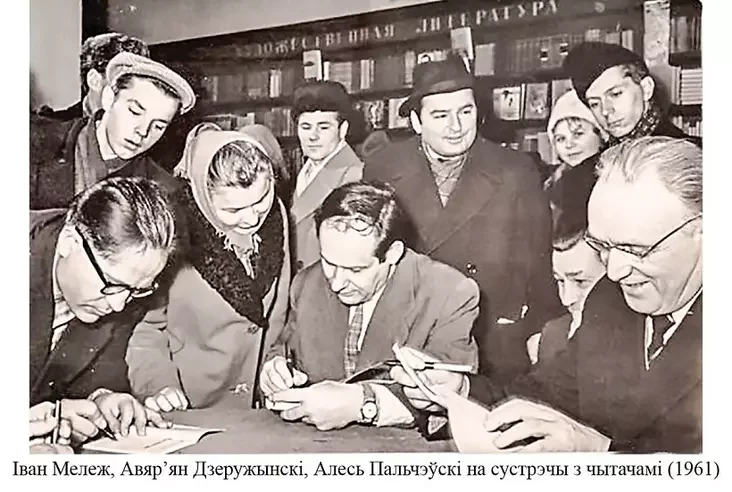
Ivan Shamyakin at the age of 29 (!) already received the Stalin Prize: this was not only status, but also - 25,000 pre-reform rubles. This was several annual salaries of a specialist or several cars. The main thing was to enter the "pool" of top authors, and later - not to slow down the pace of work and the volume of what was written. The result: a luxurious apartment, a dacha, a car with a personal driver.
Yakub Kolas received even larger sums (50,000 - 100,000 rubles) for "The Fisherman's Hut" and the hefty trilogy "At the Crossroads." Therefore, the writer could financially help relatives and countrymen. There was plenty to draw from! Let's add that the writer's old works could be republished again and again, and - in different languages. The list of successful writers can be continued: Bykau, Brouka, Adamovich...
Interestingly, the wives of writers still worked regular jobs, rather than living off everything ready-made. Moreover: they "managed the household." A good example is Uladzislava Frantsaŭna, Kupala's wife, who signed documents for him. In Shamyakin's case, the "guardian angel" was... his mother-in-law. She cooked, bought groceries, washed, cleaned, brewed herbal remedies. And most importantly: she did everything - silently.
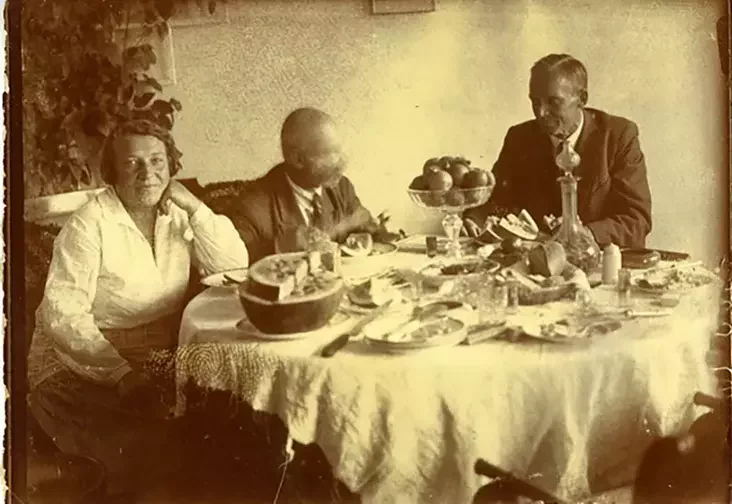
Wives often saved writers from extravagance, drunkenness, or at least tried to save them. Ensuring household conditions, from "diet" to full care of children and a "regime of silence," was a conscious strategy. That is, writers' families worked like "firms." Husband - writes, wife - does everything else.
The Collapse of the 'Ecosystem'
After the collapse of the Soviet system, writers faced serious challenges. The market prevailed, not status and awards. Apartments, garages, dachas, and libraries were often sold below market value. Archives - ended up in the trash... The writers themselves felt resentment towards the state: the "ecosystem" created specifically for them, disintegrated.
But that - is a completely different story.


The electronic "Belarusian Encyclopedia," created as a space for "reliable knowledge about Belarus," was quietly liquidated along with its editorial team. A heap of articles was handed over to Gigin


Comments
Их даже в СССР никто по доброй воле не читал, это были убогие поделки по лекалам "соцреализма", их всучали в "нагрузку" к "3 мушкетерам"