


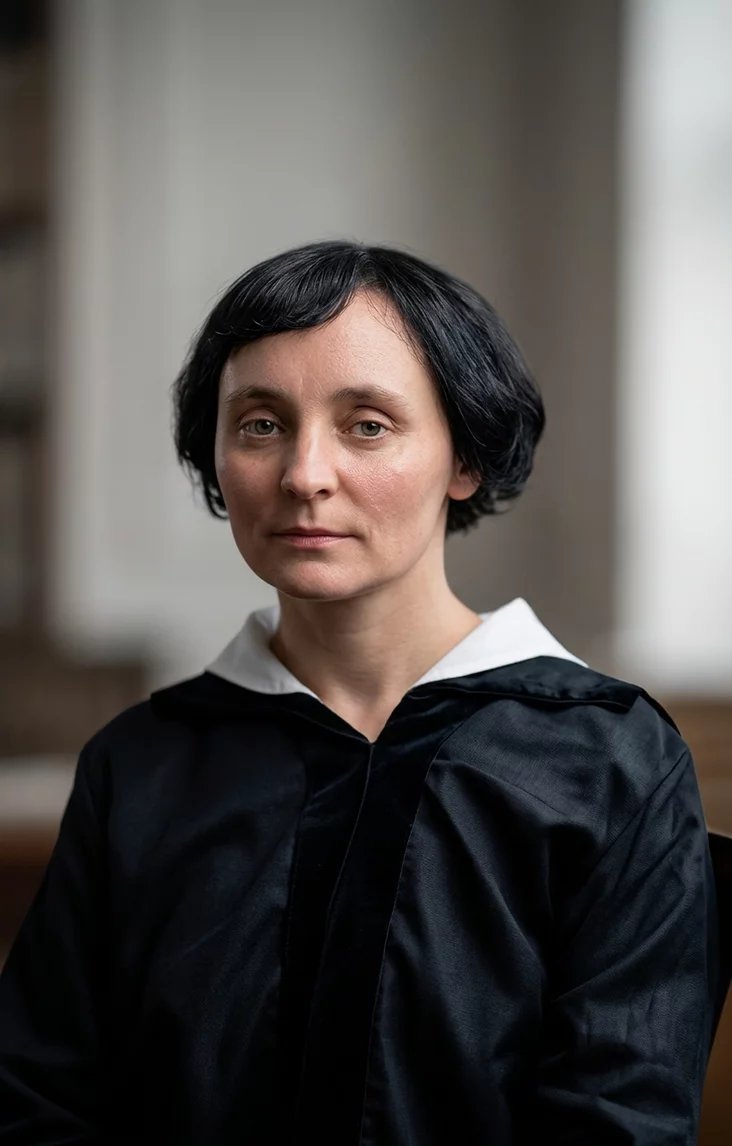
How actress Hanna Dusheuskaya, sister of the creator of the white-red-white flag, whose face was hidden under a niqab, looked
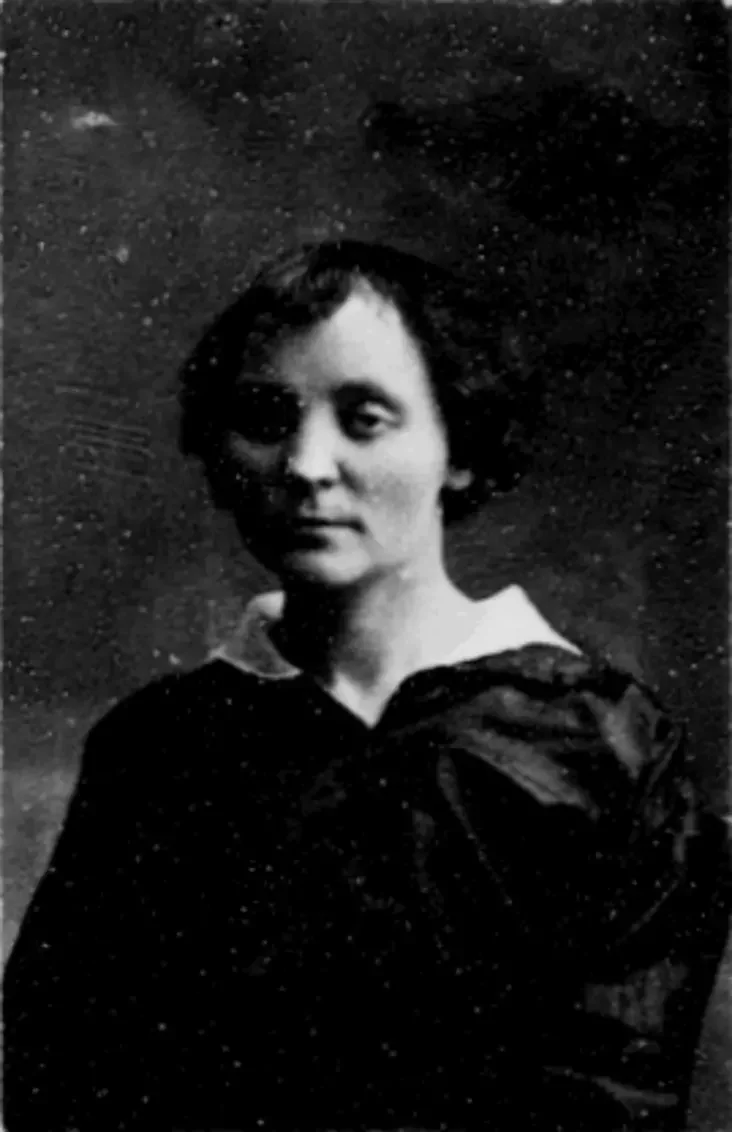
For a long time, it remained a mystery what Hanna Dusheuskaya — translator, actress, and sister of architect Klaudzi Duzh-Dusheusky — looked like in real life. Her true face and unknown facts of her biography have only just been discovered.
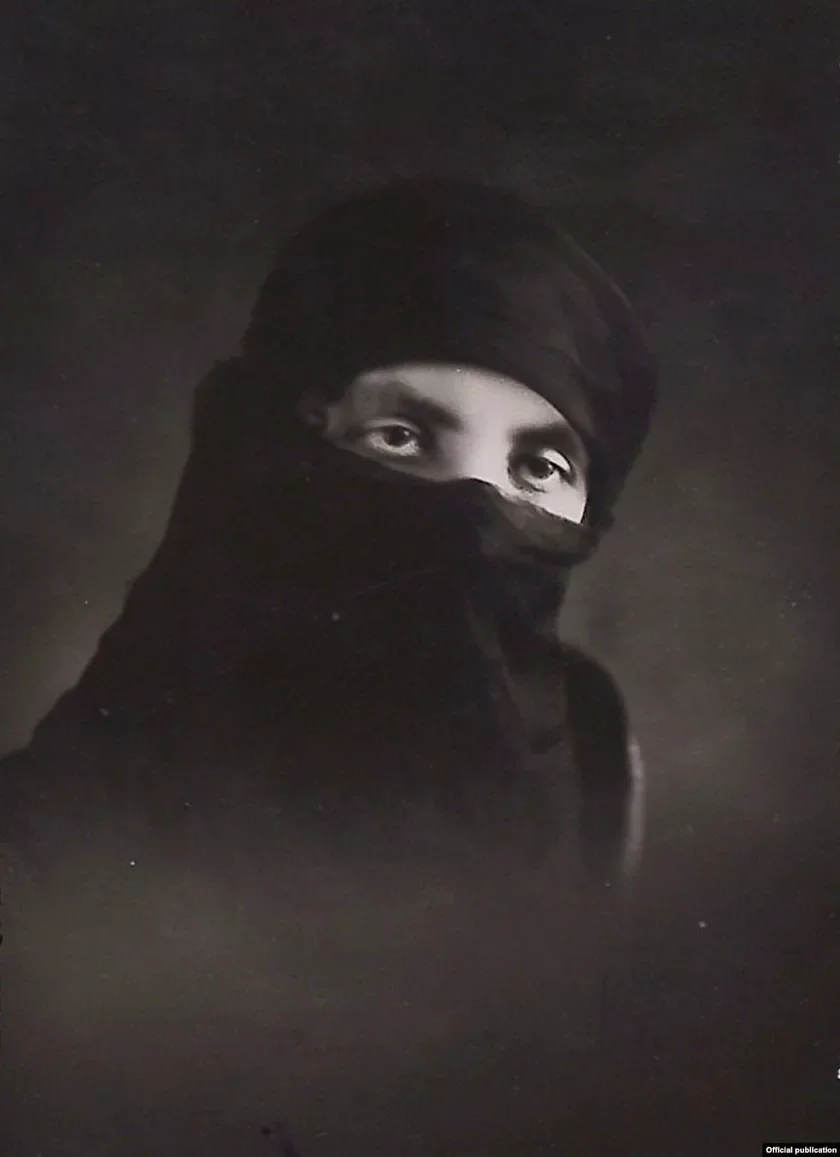
Who was Hanna Dusheuskaya?
Hanna Dusheuskaya's education began at the Vilnius Women's Gymnasium, and in 1917, she was already studying at the Faculty of History and Philology of St. Petersburg University. This linguistic experience helped her become one of the compilers of the monumental "Seven-Language Dictionary" (German-Polish-Russian-Belarusian-Lithuanian-Latvian-Jewish), which was published in Leipzig in 1918.
Hanna taught at the Vilnius Belarusian Gymnasium and worked in charitable societies. Her artistic abilities were revealed on the stage of the Vilnius Belarusian Drama Troupe, where she brilliantly performed in plays by Frantsishak Alyakhnovich and Uladzislau Halubok.
As a professional musician and singer (a graduate of the Berlin Conservatory), she translated many foreign-language operas and romances into Belarusian, including works by Pyotr Tchaikovsky and Thomas Moore. Her own poems have also survived, as well as a translation of the poem "In Belarus" by Polish writer Viktor Gamulitsky (published in the newspaper "Homan" in 1918).
Portrait in a niqab
Until now, only one photographic portrait attributed to Hanna Dusheuskaya, preserved in the funds of the Belarusian State Archive-Museum of Literature and Art (BSAMLA), was known. However, on it, the woman's face is hidden under a black niqab. Only her eyes remain visible, which does not give a complete idea of her appearance.
Given that Hanna performed in the Vilnius Belarusian Drama Troupe, experts rightly believe that such an exotic Eastern-style costume is nothing more than a stage image.
I found her previously unknown photograph by chance — while writing an article about how Belarus was covered in the German press during the occupation.

In July 1943, a large article by Kastus Yezavitau dedicated to the history of Belarusian theater was published in the influential German magazine "Ostland". Among the illustrations was a female portrait in Belarusian national costume, captioned in German "The most beloved Belarusian actress of the Petersburg troupe circa 1910 G. Dusch-Duschewskaja" (G. Dusch-Duschewskaja).
Based on this caption, it was logical to assume that it referred to Hanna Duzh-Dusheuskaya, sister of Klaudzi Duzh-Dusheusky, who, as we have already written, had acting experience. However, a deeper study of the photograph using modern technical means showed that the photo is not of his sister, but of Klaudzi's wife — Alena. It is not entirely clear whether Yezavitau confused the two women from the Dusheusky family, or if the initial "G." meant a variant of Alena's name — Helena.
Clarifying the ownership of the photograph required studying the biographies of these figures and thus led to Hanna's true portrait.
Estonian Visa
Searching for additional biographical information and real photographs of the architect's sister, we turned to genealogical websites. On the MyHeritage portal, a profile for Anna Duschewskaja (Duševskaja) was found with a photograph, as well as a birth date — 1893, which matched the birth date of our heroine. Full access to the documents was closed without a premium subscription, which is disproportionately expensive, but, fortunately, the profile duplicated entries published on the free website Geni World Family Tree.
Any genealogical trees created by amateurs require strict verification. But in this case, the authors of the Geni profile (apparently relatives of the Estonian branch of the family) attached digital copies of documents from the National Archives of Estonia (fund ERA.957.16.1152).
These were materials from the Estonian police regarding the issuance of entry permits for November 1921. It was on the German-language questionnaire (Fragebogen) that a passport photograph of young Hanna Dusheuskaya was preserved.
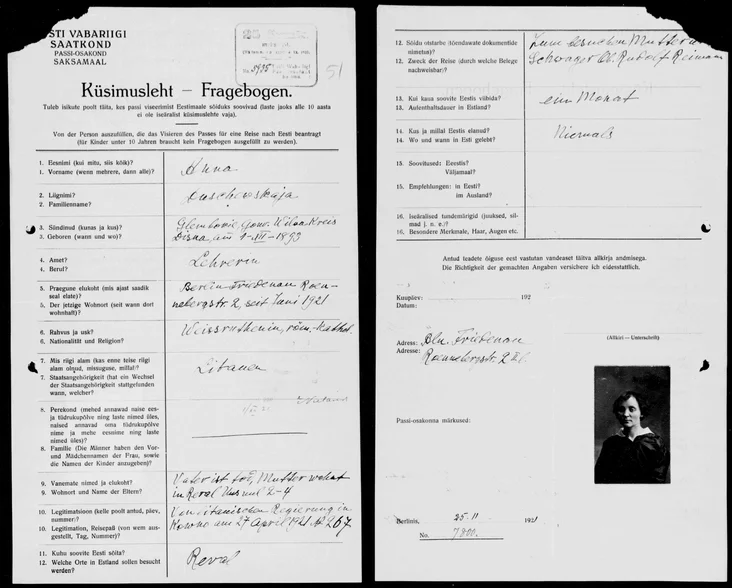
In the handwritten document, Hanna left exhaustive and very precise information about herself:
- Date and place of birth: December 1, 1893, Hlybokaye, Vilna Governorate, Dzisna district.
- Profession: Teacher (Lehrerin).
- Place of residence: In the questionnaire, she indicated an address in Berlin where she had lived since June 1921: Friedenau district, Ronnebergstrasse 2 (Berlin-Friedenau, Ronnebergstr. 2). It is known that at other times she also lived at Filandastr. 36 — an address her brother left in his letters. It was there that BNR activist Paluta Badunova periodically stayed with her.
- Nationality and religion: Belarusian (Weissruthenin), Roman Catholic.
- Citizenship: Lithuanian (passport issued by the government in Kaunas on April 27, 1921).
- Purpose of trip to Estonia: To visit her mother and brother-in-law (sister's husband) Rudolf Reimann.
Estonian Relatives
Documents from the Estonian archive also reveal the biography of another Dusheusky sister — Yadviha (1889—1966), who married the Estonian Rudolf Johannes Reimann (1884—1946).
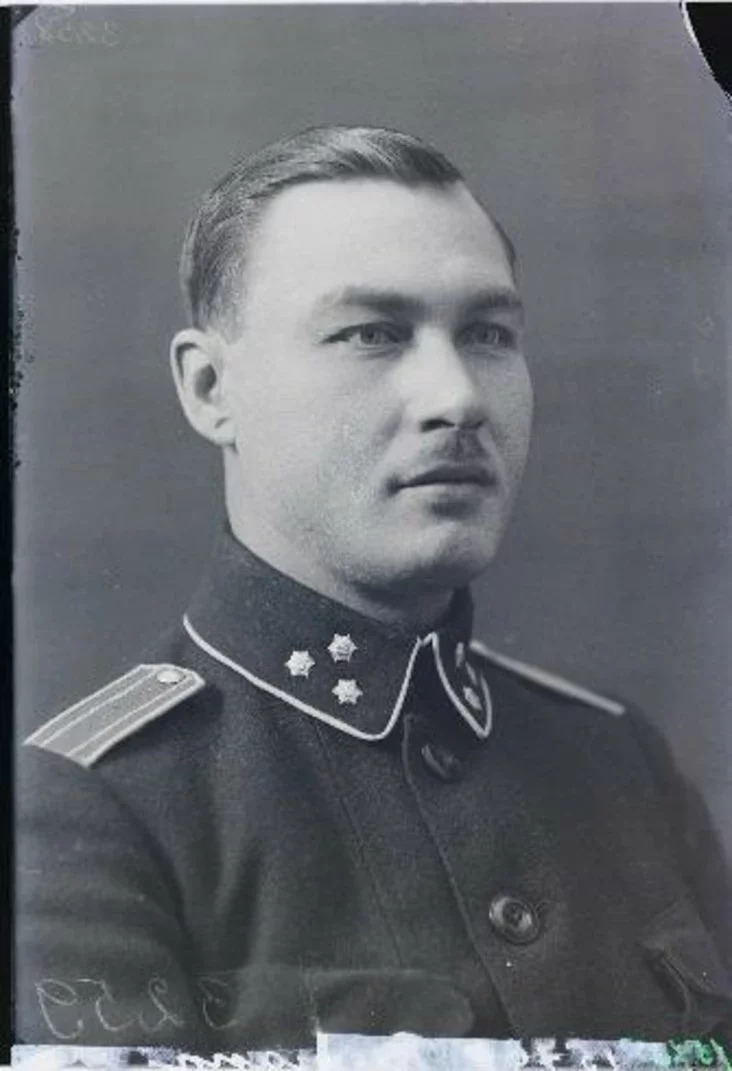
Reimann was a well-known Estonian military officer who in 1918 became one of the founders of the national Estonian army and the de facto creator of the young republic's quartermaster service. He participated in the War of Independence (1918—1920), taught at the Military School, and was a member of the Military Council. In 1934, Rudolf Reimann received the rank of Major General. He managed to escape Soviet repressions and died of natural causes in Tallinn in 1946.
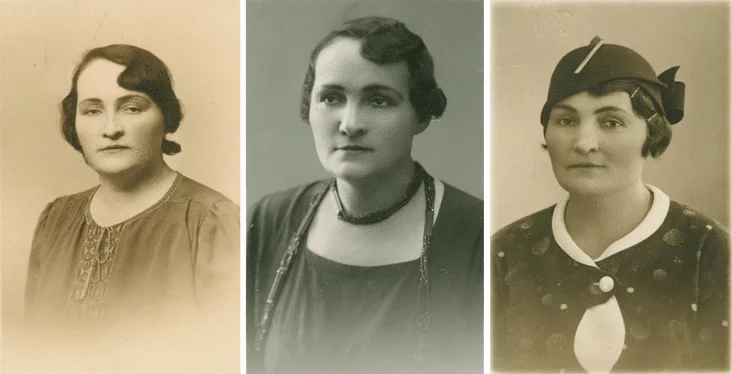
Yadviha Reimann from the Dusheusky family. Photo: ra.ee
Yadviha and Rudolf had a daughter, Alaisia-Maria, who, after marriage, bore the surnames Vyrk and Tyiyk. In the interwar period, their mother Eva (who died in 1930) also lived with Yadviha, judging by Hanna's questionnaire. As Hanna's biography indicates, from 1925-1927, she also lived in Tallinn with Yadviha's family, and only then moved to Kaunas, where she worked as a music teacher.
Interestingly, the Estonian archive preserved a letter from Colonel Reimann to the Estonian police dated November 15, 1921, requesting a visa for Hanna. In his petition, the Estonian officer described his relative as "a teacher, of Polish nationality and a citizen of Poland" (rahvuse poolest poolakas ja Poola riigi kodanik). At the same time, Hanna herself, in her personal questionnaire, identified herself as Belarusian with a Lithuanian passport.
Opera Arias in Vilnius
For a long time in historiography, it was believed that after a period of living in Berlin, Tallinn, and Kaunas, Hanna Dusheuskaya's traces were finally lost in the late 1920s.
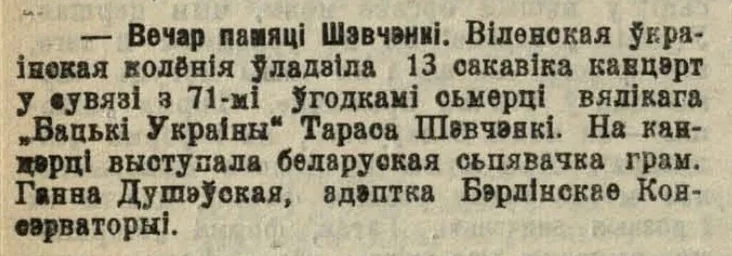
However, as literary critic Tsikhan Charnyakevich previously discovered, her creative activity continued into the next decade. A note about a memorial evening for Taras Shevchenko, organized by the Vilnius Ukrainian community, was published in the newspaper "Belarusian Bell" (No. 10, March 18, 1932). The text stated:
"At the concert, Belarusian singer Hanna Dusheuskaya, an alumna of the Berlin Conservatory, performed."
Researchers and enthusiasts have found other evidence. For example, "Shlyakh Moladzi" (Youth's Path) magazine (No. 4, 1931) reported on the celebration of the 13th anniversary of the BNR in Vilnius, where Hanna demonstrated her vocal talents:
"Citizen Hanna Dusheuskaya beautifully sang three Belarusian folk songs and an aria from the opera 'Les Huguenots'."
This is undeniable proof that in the early 1930s, Hanna visited or lived in Vilnius, remained involved in the national cultural context, and successfully used her German education on stage.
Lived until the 1970s
As historian Dzmitry Drozd noted, Hanna's further fate is known from the interrogation protocol of Klaudzi Duzh-Dusheusky dated March 8, 1952. To a question about relatives, the architect replied:
"Currently, I have two living sisters: Dusheuskaitė Hanna, daughter of Stepas, 62-63 years old, unmarried, residing in Kaunas, supported by me. Before this, she lived in Vilnius, worked as a teacher…"
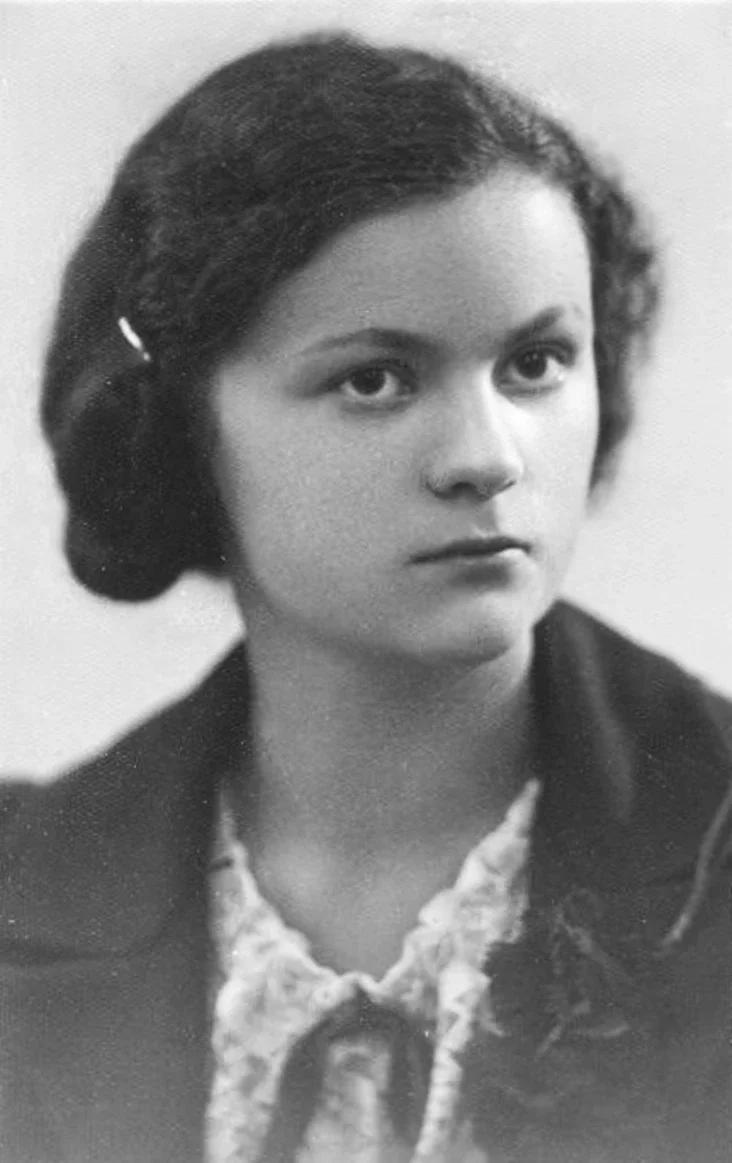
This means that Hanna survived both the Soviet occupation and World War II. Moreover, according to information found by researcher Alena Karouchanka, Hanna (under the Lithuanian name Ona Duševskaitė) lived a long life and died on April 8, 1971, at the age of 78. Her sister Yadviha Reimann also moved to Lithuania and died in 1966 (not in Tallinn, as previously thought).
The sisters are buried next to their famous brother Klaudzi Duzh-Dusheusky in the Petrašiūnai Cemetery in Kaunas. Yadviha's daughter — Alaisia-Maria, with her husband Aksel Vyrk — also rests there.
«Nasha Niva» — the bastion of Belarus
SUPPORT USNow reading


"I am not a saint, but I didn't have a reliable shoulder next to me": Ksyusha's mother with SMA may be deprived of parental rights, but she argues that she is capable of improving


Comments
Цалкам згодны: Клаўдзій Душ-Душэўскі толькі стандартызаваў наш ⚪🔴⚪ геральдычны сцяг, якому шмат стагоддзяў. Пры гэтым адразу бачна цудоўную працу адукаванага архітэктара, які разумеў прынцыпы дызайну. Сучасная геральдыка "valeta" выглядае як македонскі салат — яе прафаны рабілі і замаўлялі