


Scandal erupts in Britain over tragic death of 18-year-old: Police didn't believe him
18-year-old student Henry Nowak was dying on a street in Southampton, repeatedly telling police officers that he had been stabbed and couldn't breathe. However, law enforcement officers believed the assailant, who had just inflicted fatal wounds, rather than the victim, and handcuffed the victim. The victim was a white man, and the killer was a Sikh.
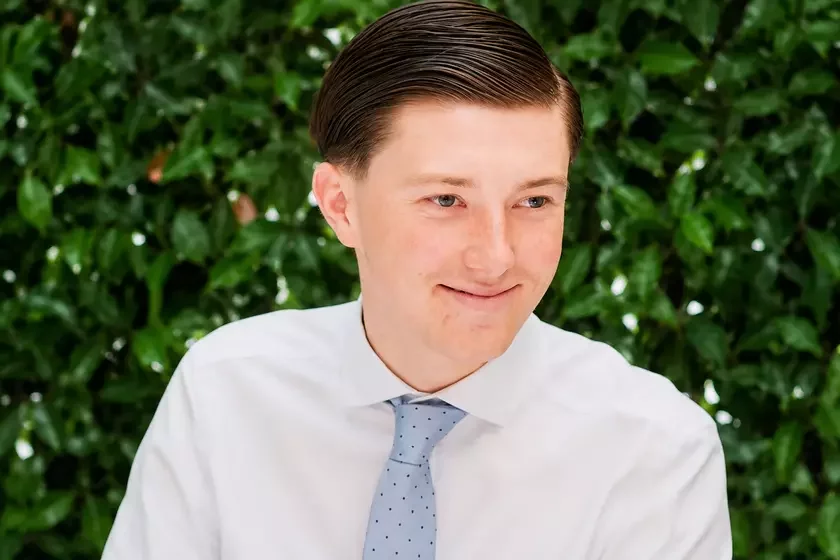
Henry Nowak. Photo distributed by Hampshire Police / BBC
On the evening of December 3, 2025, 18-year-old Henry Nowak, a first-year student at the University of Southampton specializing in "Accounting and Finance," was returning to his student dormitory after meeting friends in the city. Nowak was born in Westminster, grew up in Essex, but had Polish roots and dual citizenship – both British and Polish.
Around 11:30 PM on a street near the dormitory, a conflict broke out between him and 23-year-old Vikram Singh Digva. Nowak's last minutes were partially captured on a Snapchat video he recorded himself on his phone. The video shows Digva walking away from Nowak, who mocks him, calling him a "bad boy." Digva responds, "I am a bad boy."
The court concluded that Digva tried to take Nowak's phone to stop the recording. This led to a physical altercation.
There were no direct witnesses to the attack itself.
During the conflict, Digva drew a 21-centimeter dagger and stabbed Nowak five times. One of these wounds was to the chest and proved fatal. Wounds were also inflicted on his legs and face.
After the attack, Nowak tried to escape. According to court documents, he climbed onto a dumpster and then over a fence. A blood trail indicated that he had sustained the fatal wound prior to this, with internal bleeding. Neighbors heard the young man screaming that he had been stabbed and was dying.
After Digva stabbed the victim, he did not provide assistance but instead filmed Nowak fleeing and then lying on the ground. The assailant then called his parents, who arrived at the scene before the police. His mother, Kiran Kaur, took the dagger used to inflict the fatal wound and hid it at home. She was later found guilty of aiding the offender.
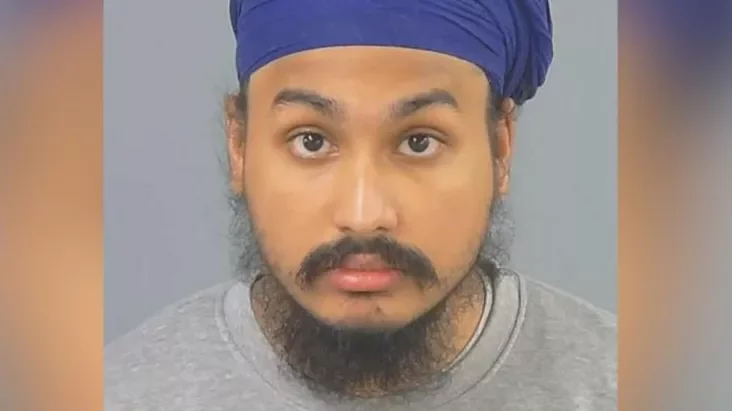
Vikram Digva. Photo distributed by Hampshire Police / BBC
Police Actions Sparked Public Outrage
Particular public outrage was caused by the actions of the police upon their arrival at the scene. When officers arrived at the call, they began speaking with Digva, who claimed that Nowak initiated the altercation, was drunk, used racist insults, and even ripped off his turban. Meanwhile, fatally wounded Henry Nowak lay on the ground.
On recordings from body cameras, Nowak can be heard repeatedly telling officers that he had been stabbed and couldn't breathe. In response, one of the officers asks where exactly he was stabbed, and then says, "I don't think you've been stabbed, mate." After this, officers brought his arms behind his back and handcuffed him. During this, the young man said three more times that he couldn't breathe.
Police officers briefly examine the young man, read him his rights, and inform him that he is arrested for assault. Soon after, Nowak lost consciousness. Only when officers realized he was unresponsive did they remove the handcuffs and call for an ambulance. At 00:37, Henry Nowak was officially pronounced dead.
A few days after the tragedy, the police prepared a press statement describing Nowak as the aggressor. Following outrage from his relatives, the wording was changed before publication.
Trial in the Henry Nowak Murder Case
The trial began in May 2026 at Southampton Crown Court. Prosecutors presented the jury with video recordings, medical reports, and other evidence. Among these was a secretly recorded conversation between Digva and his brother after his arrest. During this conversation, his brother advised Digva to insist on a self-defense narrative. The accused himself expressed concern that there might be surveillance cameras on the street.
In court, Digva insisted that he used the knife after racist insults and threats from Nowak. However, the judge concluded that these claims were not supported by any evidence.
Separate attention during the trial was given to the weapon used by the assailant. Under British law, practicing Sikhs are permitted to carry a kirpan — a small ceremonial dagger that is one of the five symbols of their faith. Digva was a member of the Nihang order — a group of Sikhs whose members traditionally carry such weapons.
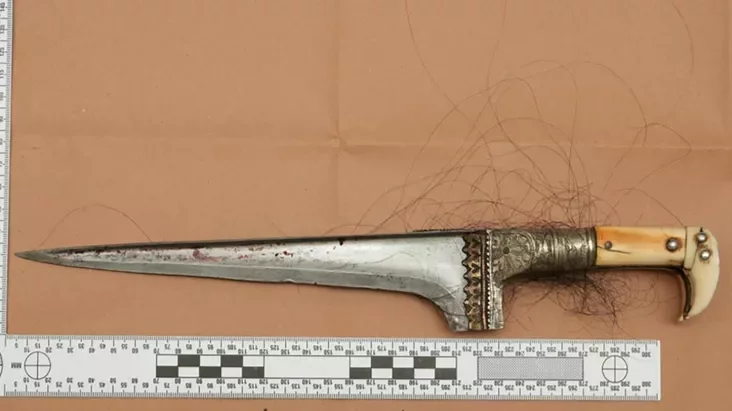
The knife belonging to Vikram Digva and used during the stabbing. Photo: Crown Prosecution Service of England and Wales / BBC
However, the court determined that during the attack, Digva did not use a kirpan, which is usually worn under clothing, but a much larger dagger, worn in a sheath over his clothes. It was this weapon that inflicted the fatal wounds on Henry Nowak. Furthermore, during a search of Digva's home, police discovered over two dozen bladed weapons, which further supported claims of his fascination with weaponry.
On May 28, 2026, the jury found Digva guilty of murder. His mother, Kiran Kaur, was found guilty of aiding an offender by concealing the weapon. On June 1, the court sentenced Digva to life imprisonment with a minimum term of 21 years. His mother's sentence is to be announced on June 17.
After the verdict was announced, the victim's father, Mark Nowak, stated that he holds only the killer responsible for his son's death. At the same time, he sharply criticized the police's conduct, calling the treatment of Henry "inhumane and humiliating."
Meanwhile, the family urged against using the young man's death to incite inter-ethnic hatred. The father emphasized that the case was not about racism, but about murder.
Nevertheless, the tragedy quickly became a subject of political debate. A number of politicians from the Reform UK party and the Conservative Party stated that the case demonstrates the existence of a "two-tiered justice" system in Britain, where people receive different treatment depending on their ethnicity. The Labour government rejected these accusations. Representatives of the US administration, including Vice President J.D. Vance, also commented.
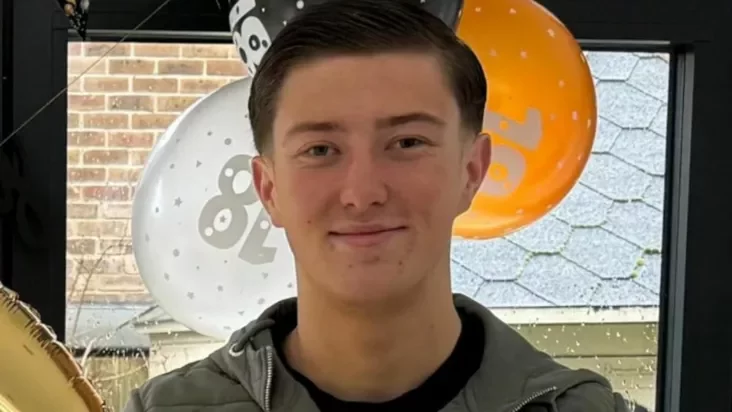
Henry Nowak. Photo distributed by Hampshire Police / BBC
Following the murder in Southampton, protests took place, during which several police officers were injured. Some participants were later held accountable. Simultaneously, several official reviews of law enforcement actions began. The Independent Office for Police Conduct is examining whether errors were made during Nowak's arrest.
A separate investigation is also to determine whether the police's actions or inactions influenced the course of events after the attack. Hampshire Constabulary reported that three officers involved in Henry's arrest remain on duty, while one has resigned.
Although forensic experts concluded that the wound Henry Nowak sustained was fatal and his life could hardly have been saved even with immediate medical attention, the story of his death became a symbol of another question — whether law enforcement agencies are capable of timely recognizing a victim and avoiding mistakes in the first minutes after a tragedy.


Comments
Гэта што за такая стылічтыка "Свае пяць капеек уставілі"?
Не падабаецца ЗША? Так і пішыце: рэд. супраць ЗША.