


Leaders of Scotland, Wales, and Northern Ireland unite to leave the United Kingdom
Careless remarks by the British Prime Minister have provoked an unprecedented consolidation of independence supporters in the regions. The political crisis threatens to break up the state, as local governments begin to coordinate joint steps towards separation.
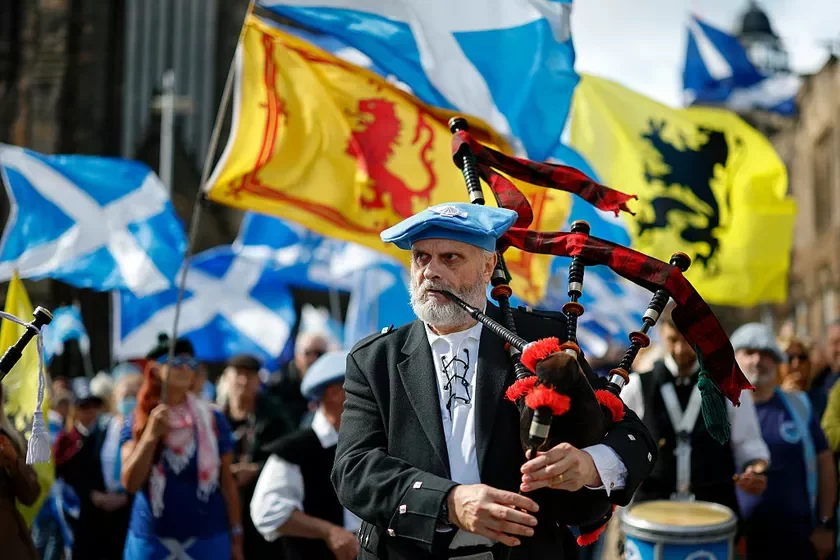
The Telegraph reports on the preparation of a joint memorandum by the heads of the three autonomous parts of the United Kingdom. First Ministers John Swinney of Scotland, Rhun ap Iorwerth of Wales, and Michelle O'Neill of Northern Ireland will meet in Cardiff to sign a declaration demanding the right to hold independence referendums. The President of Sinn Féin and leader of the Irish opposition, Mary Lou McDonald, will also join the talks.
Recent statements by Prime Minister Andy Burnham in Parliament spurred the activation of separatist movements. He allowed for the possibility of a new Scottish referendum if there was a clear consensus, effectively equating the conditions for Scotland to the provisions of the Good Friday Agreement for Northern Ireland. Representatives of the Scottish National Party noted that the head of government lacked basic knowledge of his own state's position regarding the preservation of the union. The situation was complicated by the intervention of US President Donald Trump, who publicly supported the idea of a united Ireland during his Saturday visit to Dublin.
For the first time in history, all three autonomous governments are led by representatives of parties advocating for secession from the United Kingdom. The Scottish National Party maintained its dominant position, the Welsh Plaid Cymru formed a government after the May elections, and Sinn Féin continues to govern in Northern Ireland. The parties plan to coordinate cooperation in the fields of economy, energy, and international relations. The strategy envisages Scotland and Wales rejoining the European Union as independent states, and Northern Ireland joining the Republic of Ireland.
In addition to political goals, regional leaders are putting forward stringent financial conditions, arguing for the inefficiency of the British economic model. The Welsh government demands the transfer of revenues from Crown lands, including profits from offshore wind farms, as well as the decentralization of railway and police funding.
In response to the escalating crisis, Andy Burnham sent a letter to John Swinney unequivocally refusing to hold a referendum before the next parliamentary elections. The Prime Minister referred to the Labour Party's 2024 election manifesto, which rules out support for independence, and stated that there was no real majority for such decisions in Scotland and Northern Ireland.
The signing of the memorandum in Cardiff formalizes an institutional split between the central government and the regions. Further disregard by London of the agreed demands of the three First Ministers will lead to a constitutional crisis and block the implementation of the United Kingdom's domestic policy.


Comments