


"In every country, the first day was spent on charging issues." A Belarusian man shared how he traveled to Turkey in a Tesla
Long-distance travel by electric car no longer surprises anyone. Especially if it's a long-range model capable of covering 300-400 km without problems. However, besides range and the availability of charging stations, questions related to starting sessions and payment remain, and this is where an unpleasant surprise might await you in a foreign country. Even if you, it would seem, prepared in advance and even thought through backup options. The hero of this story, however, embarked on his first serious long-distance trip in an electric car, writes Onliner.
Decided to do without gas stations
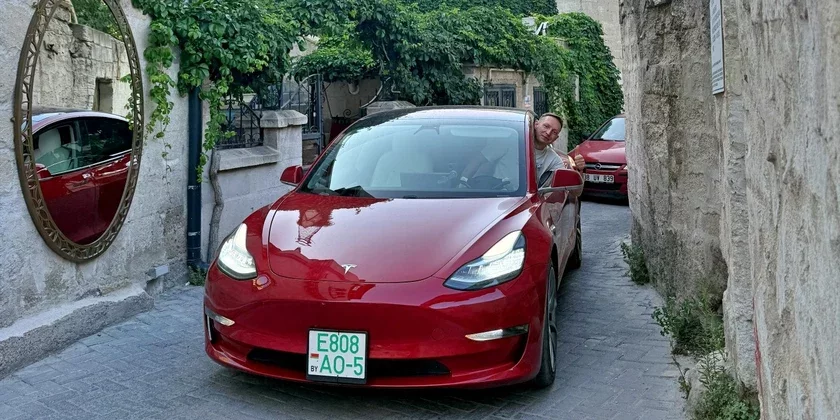
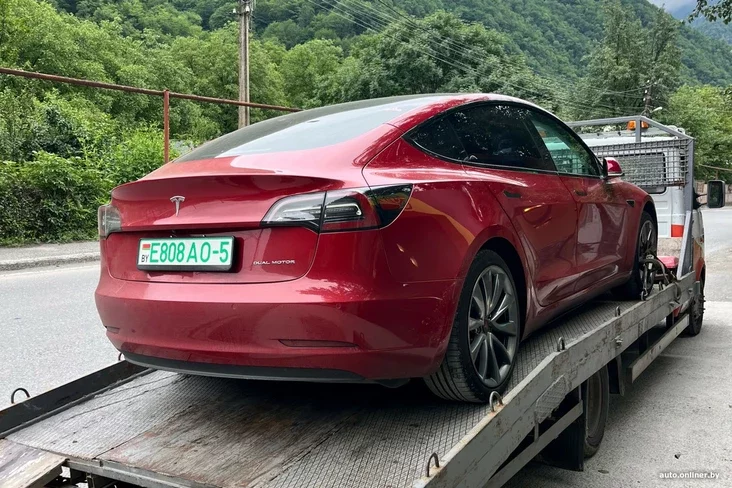
First, a little about the tech. Evgeny says his 2018 Tesla 3 Dual Motor Long Range is standard, without tuning or modifications. True, it didn't have a retrofit from the factory, which meant only slow charging.
After the owner bought the necessary board for 450 rubles, the Tesla can now charge at fast stations. Since it's an "American," the port is NACS standard, so an adapter is used to connect a CCS2 connector. And for the trip, a Type2 — NACS cable and a portable charger from a household outlet were additionally taken, which allowed increasing the choice of power sources.
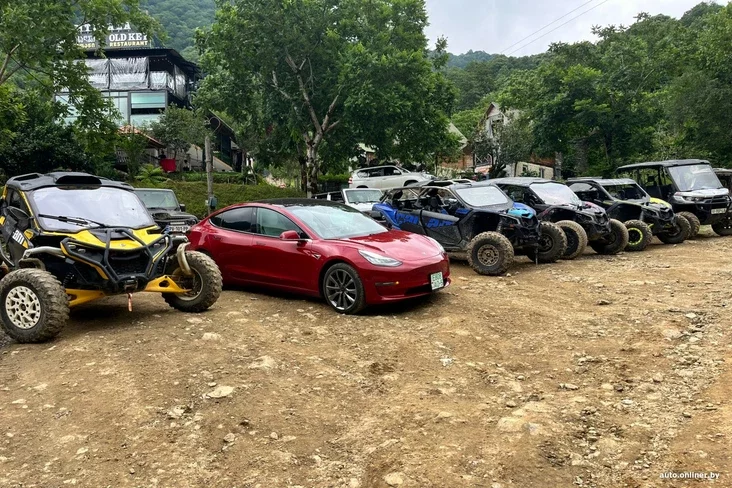
"I've had this car since January," Evgeny says. "Before this trip, the farthest journey was to Osipovichi, and it was real stress. I arrived in that city, and there were only a few charging stations — and they were all occupied. I couldn't wait, had to drive further, and then look for where to get power to get home. In short, all my Tesla trips were within Minsk and its surroundings."
How did Evgeny, with such a background, decide to travel to distant countries?
"Initially, the idea was that my friends and I would get into our beloved 'Nivas' and drive them. That's how we periodically travel to different countries.
We set the dates. In the end, the guys went, but I couldn't due to work. I decided I would follow them a week later, but in reality, I only managed to leave after a week and a half. And by that time, I already knew that there could be problems with refueling in Russia: the guys faced situations where some gas stations had no fuel, at others it was noticeably more expensive than usual, or there were queues."
Moreover, Evgeny admits that there was no particular point in going on the "Niva" anymore: by that time, his companions had already driven off-road, and looking for adventures alone in unfamiliar wild places was not the best idea. As a result, despite the possibility of going in another car with an internal combustion engine, it was decided to embark on the journey in a Tesla.
"I thought I had nothing to lose. If anything, I'd turn back and switch to a gasoline car. Especially since I had prepared in advance: I researched everything, installed apps, linked my card (Belkart was accepted by almost all services without issues). In short, nothing foretold problems."

Russia: "call a friend" is inevitable
"I left Minsk, charged in Mogilev," Evgeny continues. "I thought of powering up in Krichev too, but everything there was occupied. I decided to drive to Zhukovka, which is already in the Bryansk region.
I arrive, and there's no connection. I have a Russian SIM card, but now, when you return to the country after a break, a cooling-off mode activates: you need to enter a captcha. It's primitive, but it's impossible to complete the task, it constantly gives an error.
Plan B was to return home and switch to a gasoline car. But there was also Plan C — call a friend.
Friends living in Moscow had also installed all these apps the day before, linked their Russian cards, and launched a session at my call. When the cooling-off mode ended and I had mobile internet, I was able to charge myself."
You can read online that Russian charging stations have Wi-Fi that you can connect to use the app. But Evgeny, citing his personal experience, says that throughout the entire trip he only saw two stations that could be connected to, and that was via Bluetooth. Moreover, there was a slightly different procedure to start a charging session there.
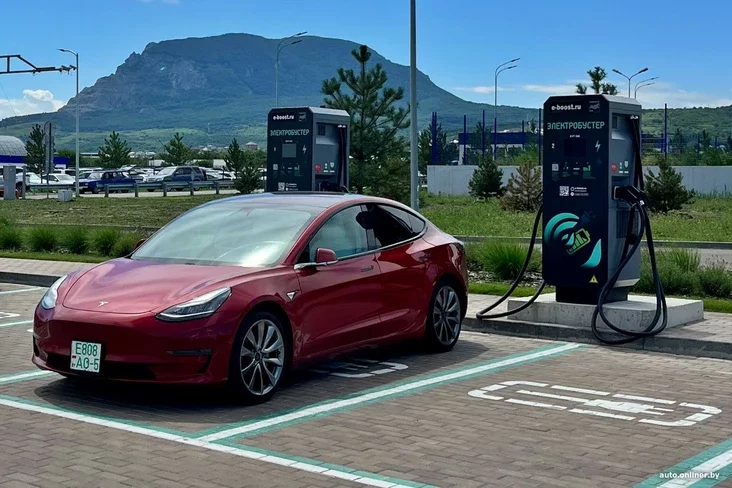
"In theory, my Tesla can travel 400 km, but realistically I counted on a range of 300 km — I didn't want to risk it. Besides, I was traveling with a child. If they wanted a snack — we stopped. Naturally, in places where there was charging. The battery charges quickly up to 80%."
The interlocutor notes that he didn't see queues at charging stations in Russia; usually, they are completely empty there. The only car he met near a pole was a Tesla with Belarusian license plates.
And so, with periodic stops, including in Pyatigorsk and Vladikavkaz, they reached Georgia.
Georgia: better in the mountains!
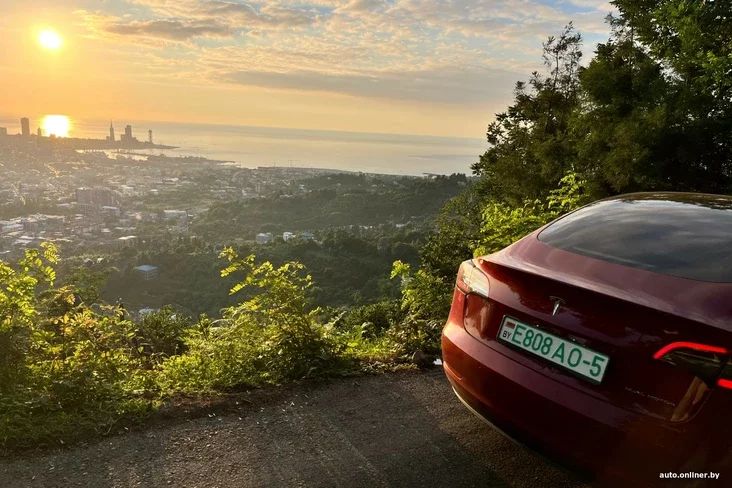
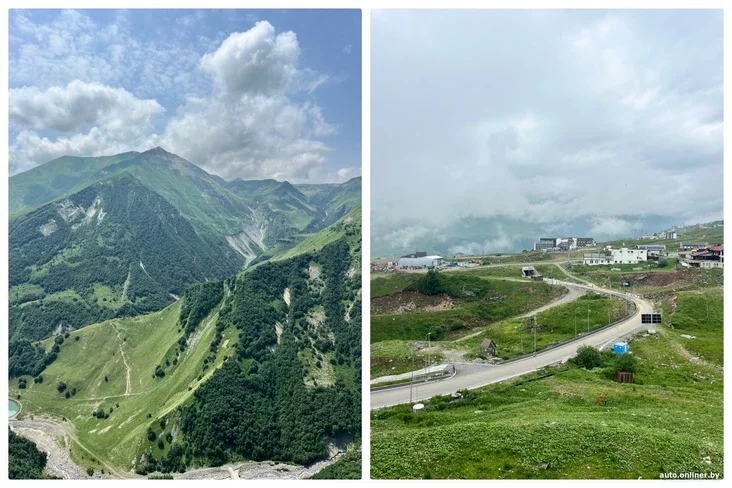
"Going to Georgia for the sea, in my opinion, is not a great idea, because the sea, firstly, is not the cleanest, and secondly, there are few sandy beaches. You should go there for the mountains, parks. Then you see that Georgia is beautiful, green, with mountains and rivers, where your eyes rejoice everywhere," Evgeny notes.
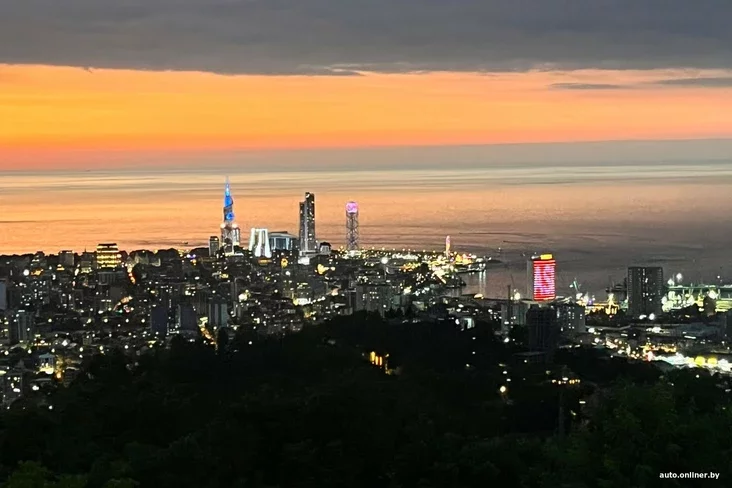
"But in the case of electric vehicles, mountains mean consumption. You drive uphill — the car 'eats' almost 40 kWh, you drive downhill — the battery starts to recharge. Not significantly, but still.
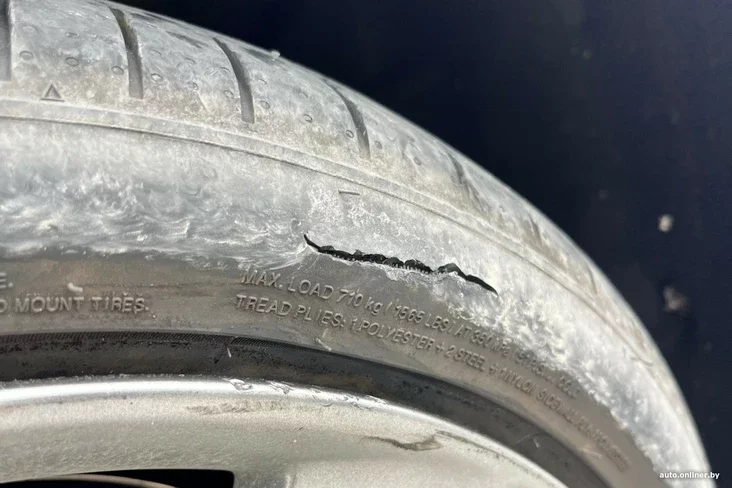
I had just descended from the mountains — bang! It's like I tried to avoid all the potholes, and here — I immediately punctured two wheels on one side. I called a tow truck, and we went to Natakhtari. It turns out that locals haul used tires from Europe in bulk there. I struck up a conversation with one person. He said he had just brought 1,500 tires from Germany the day before. I got a good pair installed, and we continued on our way."
Evgeny clarifies that he arranged Georgian insurance online. He also downloaded local operator apps in advance. However, the first attempt to charge ended in a fiasco.
"I arrive — there are tons of columns, but none of them work. And the app is in Georgian, I can't understand what the problem is. I started asking local 'electric car' owners who came to charge why I couldn't connect. They told me that the local operator had a system failure throughout Georgia. And indeed, all the chargers in the app were glowing red. I realized that with this situation, I wouldn't make it to Batumi, so I found a hotel on Booking and plugged into a 220 V outlet there. Yes, I didn't pump much into the battery overnight, but the next day the chargers were already working."

Evgeny says there are several charging station operators in Georgia. The cost is 0.65-0.68 lari ($0.25-$0.26) per 1 kWh. The ratio of CCS2 and GB/T connectors, according to the narrator, is approximately equal.
"It's very convenient that you can pay via Apple Pay, no need to link your card to apps. Although Belarusian Visa and Mastercard cards do work. And there are no queues. Only once did I have to wait, and that was only because one of the charging stations was blocked by a gasoline car."
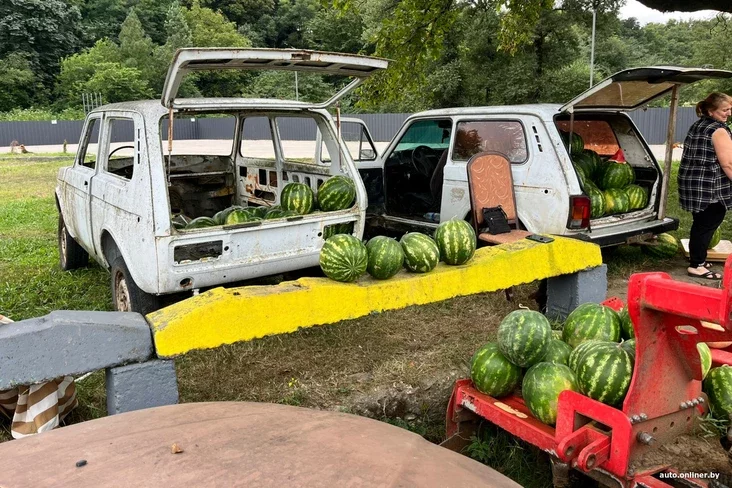
Speaking about the local car fleet, the interlocutor notes that there are a lot of hybrids in the country, particularly Toyota Prius, and among electric vehicles, Tesla Model 3 and Model Y stand out.
"We drove through the mountains without much extreme. Met up with the guys who had left earlier. Their time there was ending, and I thought there was no point in staying in Georgia, let's try to move on — to Turkey. If it doesn't work out, we'll just go back, especially since everything here is already familiar."


Turkey: knocking on heaven's door
"Oh, that was a real quest!" Evgeny says. "It was the same story as with the Georgian operators. To log into the app, you need a local phone number. You can't enter and see how it works until then. So, until I crossed the border, I didn't know what awaited me.
Well, I entered the country, connected mobile internet, started logging into the apps — and found out that I couldn't link any of my cards. So how do I charge?
AI gave me an answer that at Shell gas stations near highways, you could supposedly pay directly with a card. In fact, wherever I asked, everyone just shrugged, no one had even heard of such an option.
The situation was a dead end. We reached some point on the coast, and I didn't know what to do. I didn't have enough charge to return to Georgia."
In the end, Evgeny simply waited for someone to come charge, explained the situation, and asked the driver to start a session from their phone. The plan worked, and the local resident didn't even take money when the Belarusian offered to pay him in cash.
"It turned out that in every new country, I spent the first day solving charging issues."
By the end of the day, I had practically decided: we'd spend the night and go back to Georgia. And it seemed I had a backup plan. A friend works for a Georgian company, he has a Georgian card. I asked him to give access to this card, but it also couldn't be linked.
I read that some people create virtual wallets of Turkish banks and charge that way. I started researching the topic. Until recently, it really worked, but since spring of this year, almost all these services (charging Theory or "charging networks") stopped working with virtual cards.
So, I arrived at the hotel already in despair. I sat there, going through all the cards in the apps, and somehow the Georgian card suddenly linked. And that was it, after that, all charging issues disappeared, and I entered a true paradise for an "electric car" owner.
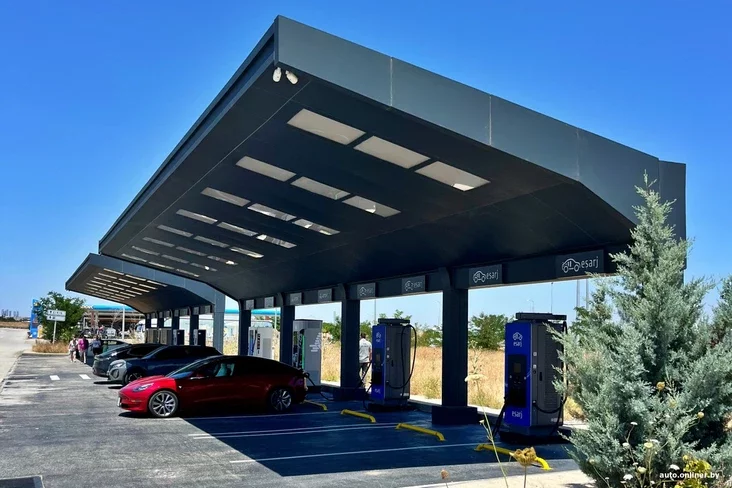
There are a lot of charging stations in Turkey. The distances between them barely exceed 20 km, meaning they are everywhere. Even crossing a mountain pass, you find a charger in a small settlement. On highways, the complexes are even cooler than in Germany. You arrive, and there's an Outlet, Subway, Burger King, gasoline stations, electric chargers…
There are Tesla Superchargers there too. The cost of charging is about 12-13 Turkish lira ($0.25-$0.3) at fast poles. There are several main apps, and there are partnership agreements between operators, so you can charge in one network through another. The main standard is CCS2.
Turkey has many electric vehicles from a local manufacturer. Visually, they resemble BYD models. All have CCS2 charging ports, so the infrastructure is catching up to this standard.
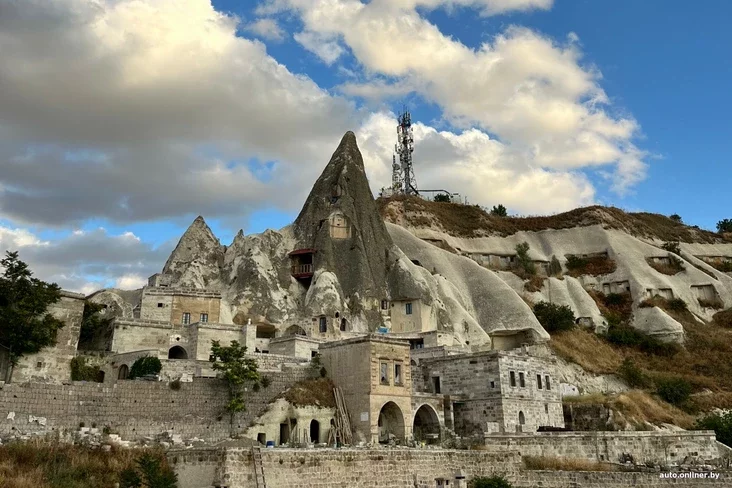
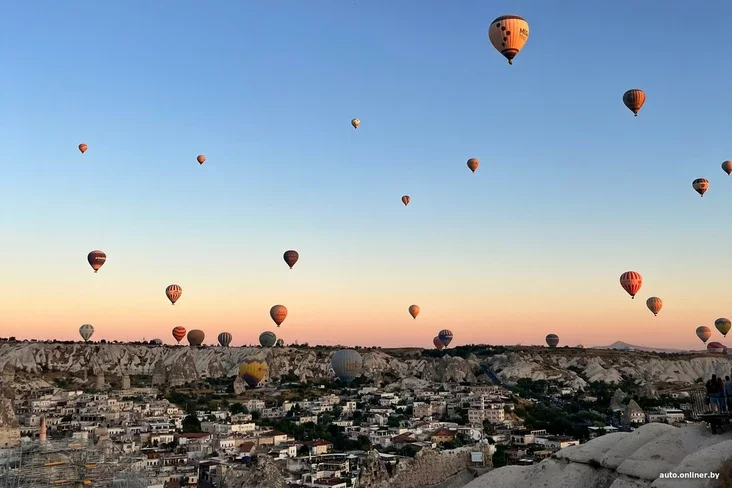
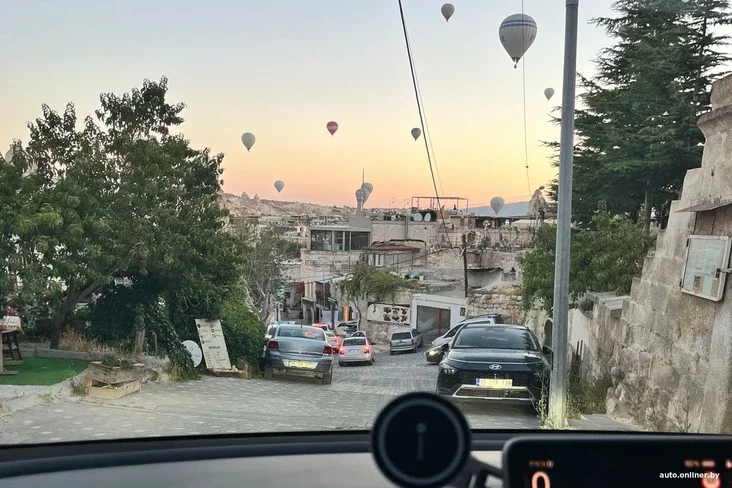
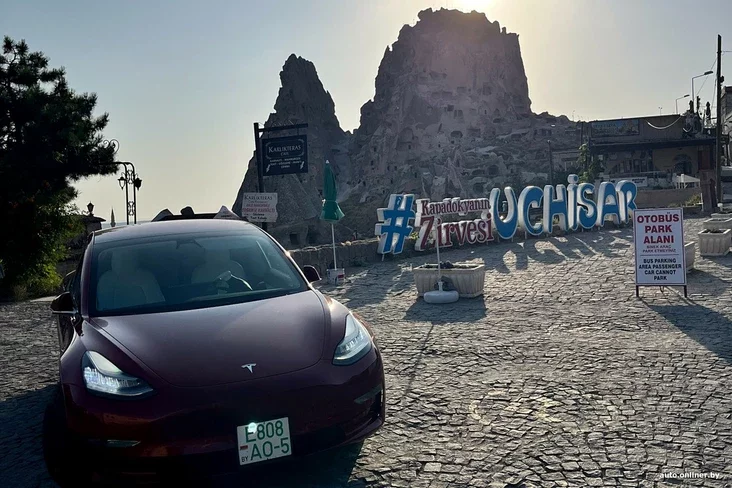
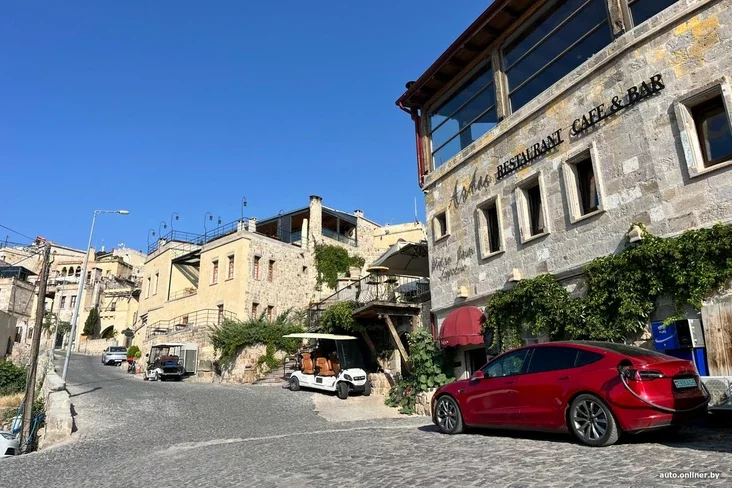
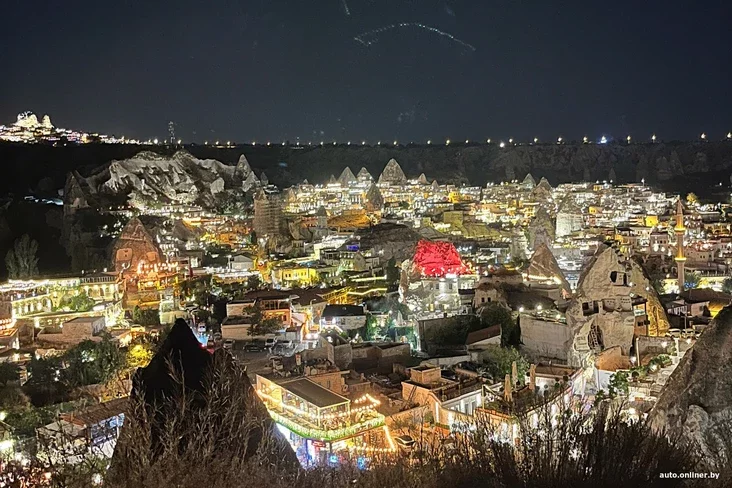
First, we went to Cappadocia. In terms of natural phenomena, this place is absolutely unique. It's even more beautiful in real life than in photos and videos. Plus these hot air balloons that are constantly being launched. We literally explored everything there and then went to Istanbul.
This was our final destination. After Cappadocia, of course, you realize that yes, it's grand, with its own peculiarities, but it's still man-made, which is a bit different. However, that didn't stop us from having a good time there. In the end, we stayed in Istanbul for four days, after which we set off on the return journey.
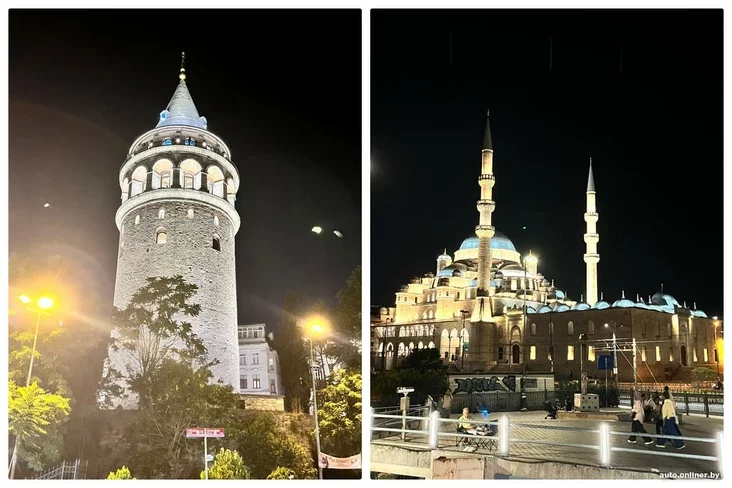
Regarding charging, it was much easier, as all the apps were already working and there was an understanding of where and how to act."
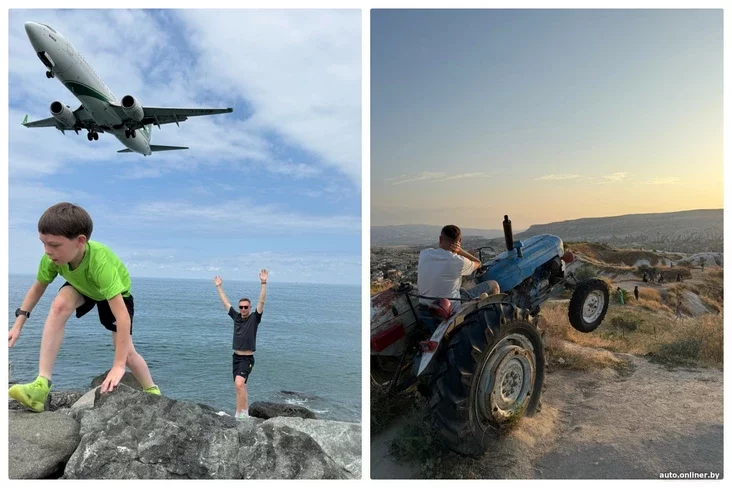
The entire trip lasted approximately four weeks, and the total route length exceeded 9,000 kilometers. Evgeny ultimately considers the somewhat unexpected and at times openly nerve-wracking experience of a long-distance electric car trip to be positive.
"Don't be afraid, just take it and go," he advises.
And he doesn't hide that he's already thinking about new journeys.
Now reading


In New York, the Twin Towers were recreated in natural size using 2977 drones — corresponding to the number of victims of the September 11 terrorist attack


Comments