


A film about Belarus shown at the Venice Festival for the first time in 40 years
Andrei Kutsila worked on it for 5 years.
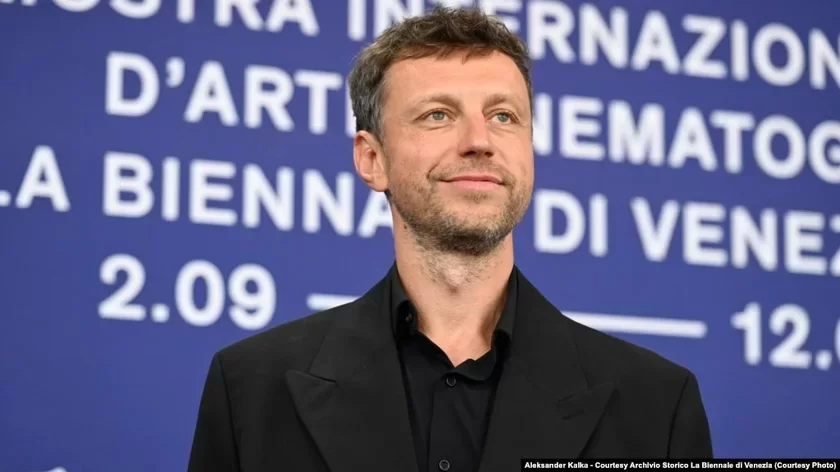
"Letters from a Silent Country" by Belarusian documentary filmmaker Andrei Kutsila tells the stories of people whose lives have been changed by repression, prison, and exile. The film was recently shown in the out-of-competition section of the Venice Film Festival, writes Radio Free Europe/Radio Liberty.
Previously, only two films related to Belarus made it into the official program of the prestigious festival – "Ivan Makarovich" (1968) by Igor Dobrolyubov and "Come and See" (1985) by Elem Klimov.
Andrei Kutsila's film tells about modern Belarus through the personal stories of people who have faced repression, imprisonment, and life in a country where an ordinary human voice can lead to persecution. The director worked on the film for five years.
For each character, the director sought his own visual language. And the stories of five people were intended to form a kind of mosaic of the country.

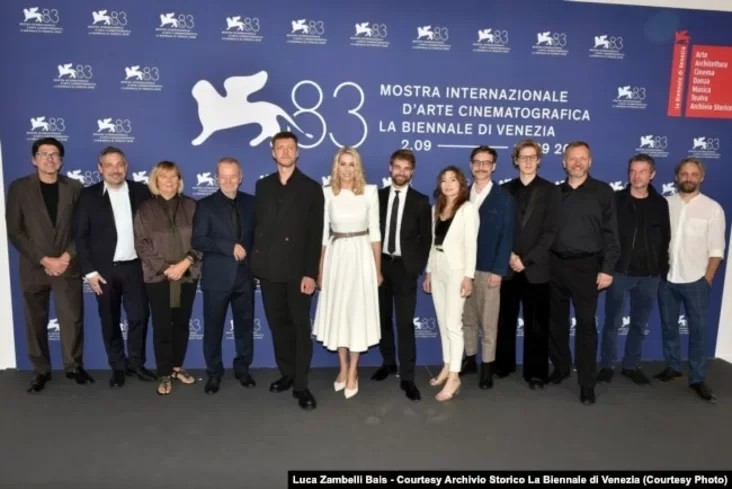
Andrei Kutsila came to the Venice festival with a large international team – Belarusians, Poles, Lithuanians, and Germans. At the official event, the director and his team handed the festival director a stack of letters from political prisoners. These are fifteen additional letters which, according to Kutsila, allow for a broader understanding of Belarusian reality.
"If a person knows nothing about Belarus, then after reading these 15 letters, they will surely form an impression. They provide an emotional-intimate, socio-political context of what is happening in Belarus today," the director says in an interview with the "PiK Svaboda" program.
"A letter is not just what is written on paper"
Initially, Kutsila conceived the film specifically as a film based on correspondence. But during the time he worked on it, the situation changed: the correspondence of political prisoners began to be restricted, and then virtually banned. Nevertheless, the director decided not to abandon the original form.
He began to use not only real letters but also texts created based on conversations with people who went through repression, are in Belarus, or have already left.
"We managed to collect a large number of letters, and then I decided that we would keep the form of letters, but would also use people's notes. We had many conversations in interview form and then worked on how this would fit into the general concept and form of letters. A letter is not just what is written on paper," Kutsila explains.
For him, a letter became rather an image of a person's connection with those behind bars, those who remained in Belarus, and those who were forced to leave.
"We decided to preserve this form of letters to give the film such an intimate character. It cannot be said that this is directly political cinema. This is primarily a film about people's destinies, about emotions, about how people endure in Belarus today," says the director.
Five people instead of thousands
Over the past six years, tens of thousands of people have experienced various forms of repression in Belarus. Kutsila chose only five stories for the film. This is not an attempt to statistically represent "typical" Belarusians. The director says that first and foremost, he wanted to give a voice to people with different experiences and different perspectives.
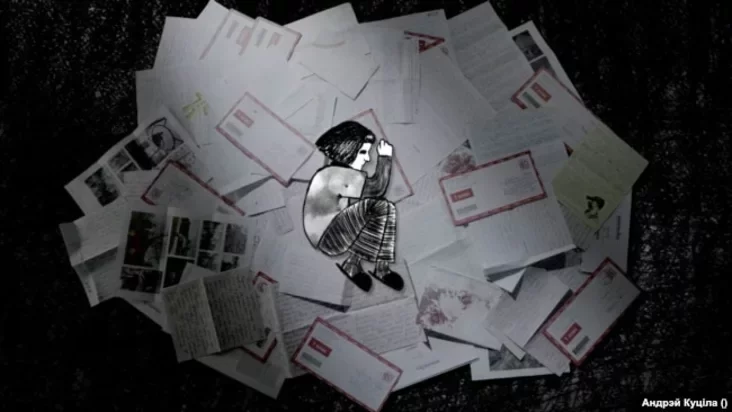
Among them is a person who remains in Belarus and tries to avoid detention. The story of Vitold Ashurak, who died in prison. A young girl, a student and artist, who is in a women's colony. Her story is built on drawings, diaries, and letters.
"First and foremost, I wanted to give voices to people from Belarus, about Belarus, from different perspectives. Someone is still in Belarus today trying to avoid detention, living in these conditions. Someone is no longer with us, like Vitold, who died — we know, was tortured in prison. There is the story of a girl, a student, who is in a women's colony and depicts the perspective of a young artist, a creative person," Kutsila recounts.
Animation took a year to create
The film features animation, subjective camera, stories told almost exclusively through photographs and images on a monitor screen. Animation in some episodes is combined with live documentary footage.
According to Kutsila, about 20 minutes of animation in the film were created in approximately a year.
"We don't use artificial intelligence — and that's a matter of principle. It can't yet make all the details, everything you want. And it's all done by hand. That's why it takes an incredible amount of time," says the director.
The basis for part of the animation was drawings by one of the heroines who was in the colony. After her release, these drawings became material for illustrators, storyboard artists, and animators.
"She made a whole series of drawings, based on which illustrators then worked, developing the visual concept of the animation. Storyboard artists join in, schematically transferring what's in your head to a computer, to illustrations. Then the direct work of animators begins, who set the movement and so on," Kutsila describes the process.
Film for a million-strong audience
Kutsila does not hide that the film was conceived from the very beginning not only for Belarusians. On the contrary, one of the main audiences is people who know very little or nothing about Belarus. After the Venetian premiere, he gives an example of an Italian viewer who heard about Belarus for the first time thanks to the film.
"Yesterday at the premiere, an Italian woman heard about Belarus for the very first time. A different world opened up for her. She never knew that such a country existed and what was happening inside it. So I won't say that this film was made exclusively for Belarusians. Rather, it's for those who know very little or nothing at all about our country," says Kutsila.
After the festival premiere, the film will have a further life. Among the partners are Polish television, as well as ZDF in collaboration with ARTE. The film will be shown in Poland, Germany, and France. Another important partner is Deutsche Welle, through which the film should receive several language versions and wide international distribution. With such partners, the film can be seen by a million-strong audience, the author hopes.
-
Ales Pashkevich's updated novel about Duboŭka has been released
-
«We need to shout that we exist, we were, and we continue to exist.» Theater critic Nastassia Pankratava — about her book and Belarusian theater before and after 2020
-
The electronic "Belarusian Encyclopedia," created as a space for "reliable knowledge about Belarus," was quietly liquidated along with its editorial team. A heap of articles was handed over to Gigin


Comments