


A new species of myxomycetes, or slime molds, has been discovered in Belarus. It was found in the "Narachanski" National Park on rotten spruce wood near the village of Alsheva. This was reported by the Telegram channel of the Institute of Experimental Botany of the National Academy of Sciences of Belarus.
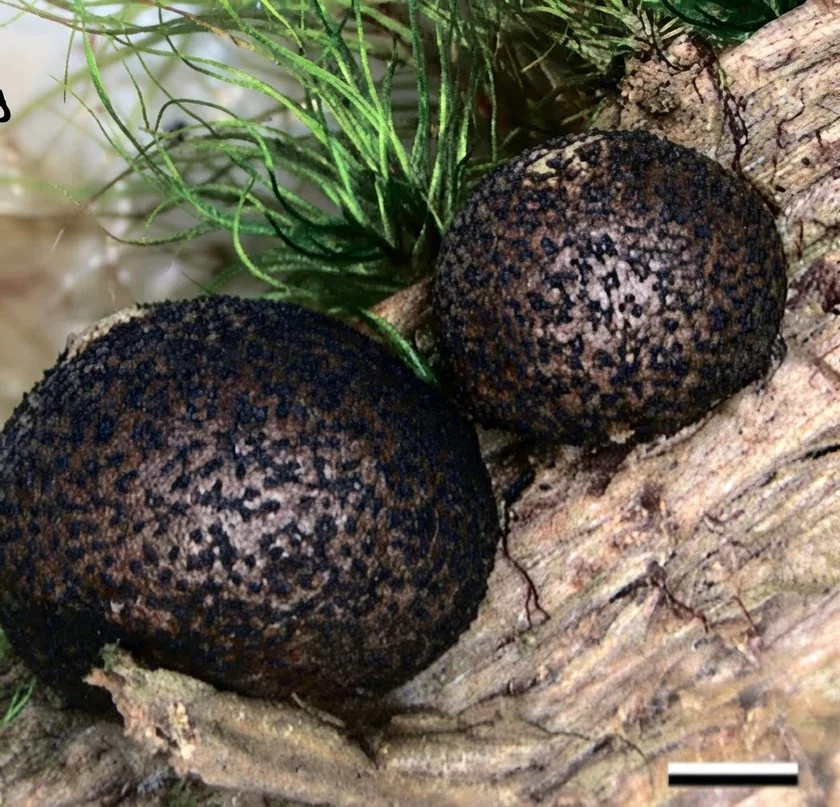
The new species received the scientific name Lycogala umbrinum. The discovery was made by employees of the mycology laboratory. To confirm that it was indeed a species previously unknown to science, a study by an international group of scientists was required.
The group included Belarusian researcher Alena Maroz, as well as scientists from Germany and Norway.
The scientists were not limited to studying the organism's external appearance. They conducted detailed morphological studies using light and scanning electron microscopy, as well as genetic analysis. In addition, the researchers studied phylogenetic relationships - the place the new species occupies among related organisms.
After all studies were conducted, Lycogala umbrinum was registered in the international MycoBank database under number 857829.
Myxomycetes, also known as slime molds, have long interested scientists with their unusual abilities. For example, researchers previously studied Physarum polycephalum — an organism that has no brain or nervous system, but is capable of finding the shortest path in a labyrinth, not returning to previously explored areas, and creating efficient networks similar to a railway system.
Scientists continue to debate whether such behavior can be considered a unique primitive form of memory or intelligence.
Now reading


Belarusian warehouseman with a swastika on his shoulder was treated for alcoholism in Siberia and went to fight for Russia, but was left without payments or work


Comments