


The EU pledges to abandon Russian gas purchases, but for now, purchases have only increased
From January to September 2026, EU countries increased purchases of Russian liquefied natural gas by 9.5% compared to the same period last year, despite promises to abandon Russian energy resources. This was reported by The Times, citing a report from the German environmental organization Urgewald.
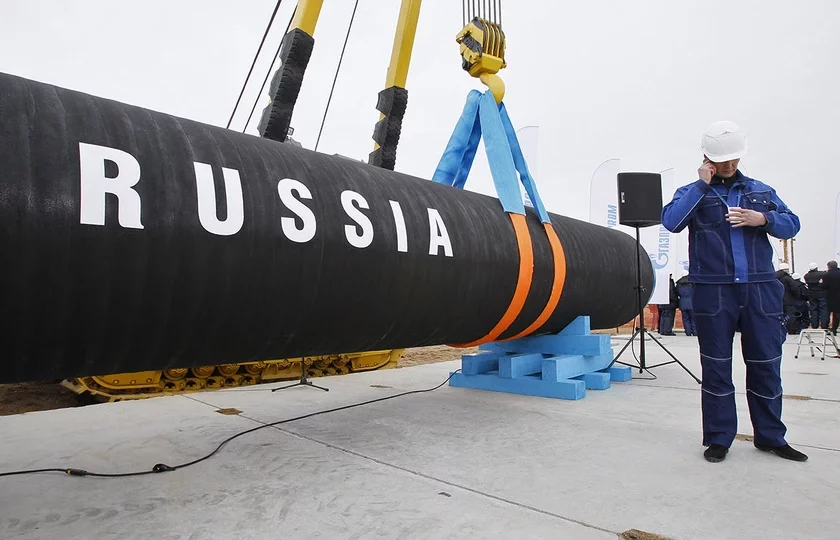
In the first nine months of the year, 12.18 million tons of Russian liquefied natural gas, worth a total of 7.88 billion euros, arrived in EU ports. About three-quarters of all imports went to French ports.
According to the EU Agency for the Cooperation of Energy Regulators, in May, Russia still supplied 12% of the EU's liquefied gas imports. Russian LNG goes to Spain, France, Belgium, and the Netherlands, while pipeline gas goes to Hungary, Slovakia, and Greece.
Since the start of the full-scale war in Ukraine, the share of Russian gas in total EU imports has significantly decreased — it previously stood at 45%. However, some European countries continue to purchase it, despite plans to deprive the Kremlin of revenues that could be used to finance the war.
Previously, US President Donald Trump accused EU countries of double standards: according to him, they criticize him for concluding agreements with Russia, but continue to purchase Russian energy resources themselves. Trump estimated their purchases at $250 billion. Russian Deputy Prime Minister Alexander Novak stated that since 2022, these amounted to 302 billion euros, while the European Commission estimated this sum at 197 billion euros.
In spring, a ban on short-term contracts for the supply of Russian gas came into effect in the EU. A ban on long-term contracts for the supply of Russian LNG is planned to be introduced by the end of 2026, and for pipeline gas by September 2027. Additionally, European countries have committed to stopping imports of Russian crude oil by 2027, which accounts for 1% to 3% of total imports.
Urgewald activist Sebastian Reuters noted that every additional month of almost continuous liquefied gas trade brings new revenues to Russia, while Ukraine continues to suffer daily missile and drone strikes.
Analysts doubt that the EU will be able to stop imports of Russian energy resources on time. Among the obstacles, they cite low gas reserves and high prices. The European Commission, however, insists that the set deadlines will be met.
Meanwhile, according to a previous Reuters report, in October 2026, Russia's federal budget revenues from oil and gas taxes could increase by 10% year-on-year — to one trillion Russian rubles, or $11.97 billion. They are expected to more than double September's figures.
The main reason for the growth is the quarterly payment of additional tax on oil extraction profit. Excluding this tax, October's revenues are projected to be approximately 164 billion rubles, or $1.96 billion, higher than September's. This is a 36% increase.


Adviser to the President of Poland commented on the appeal of Kolesnikova and Zolotova: Lukashenka releases several dozen prisoners, and detains new ones the next day





Comments
А пакупнікамі з'яўляюцца...краіны Еўропы.
Вось яны і мочаць Трампа ва ўсіх смі.