


On the banks of the Danube near Bavarian Kirchroth in the Straubing-Bogen district, a 66-year-old woman noticed a snake over two meters long basking in the sun during a walk. She immediately realized it was not a local species, writes Euronews.
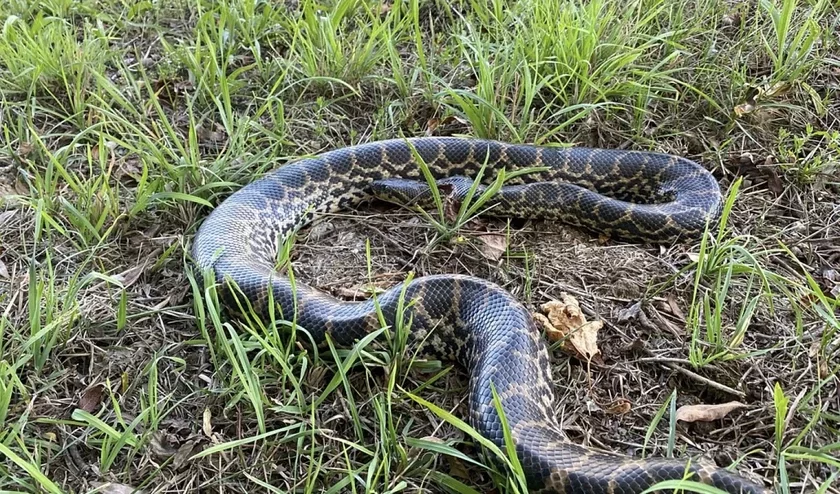
"It is longer than our usual snakes," the woman told the police.
Common and Aesculapian snakes are well-known in this region. These non-venomous reptiles usually grow to a maximum of one and a half meters.
Police and a reptile specialist arrived at the scene and quickly identified the snake's species. It turned out to be an anaconda — a large snake from the boa subfamily, native to South America.
It is assumed that the anaconda had been kept as a pet for some time. The snake allowed itself to be caught without the slightest resistance.
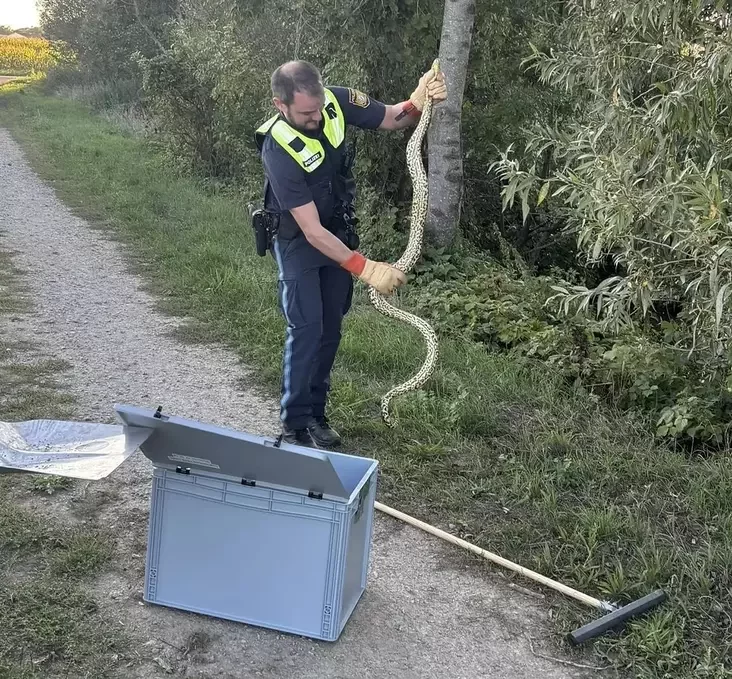
In Bavaria, keeping an anaconda is only permitted under strict adherence to special requirements, as large boas are classified as dangerous wild animals.
Anacondas can grow up to nine meters in length and weigh around 200 kilograms. Smaller individuals primarily feed on birds. For males, this remains the main prey throughout their lives. As females grow, they switch to larger prey — for example, capybaras and young deer, as well as caimans.
Anacondas kill their prey by coiling around it and constricting its body, after which they swallow the victim whole.


Comments
Булгакаў прадбачыў гэта, і напісаў свае "Рокавы яйкі"...