


Belarusians purchased a rare 17th-century engraving of Brest
This is the only detailed depiction of the old city, which was destroyed in the 19th century.
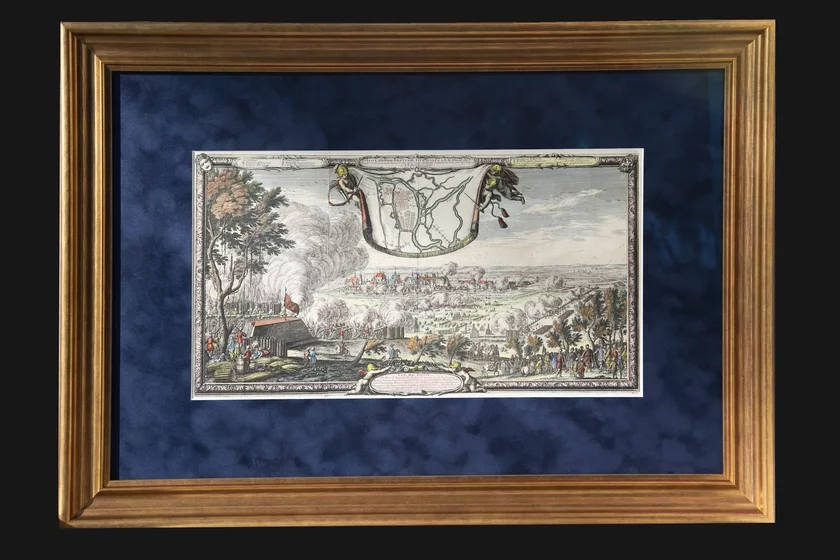
The MALDZIS initiative purchased the engraving "City and Castle of Brest Litewski" (original title "Urbs et Castellum Brestzie Litewski"), published in 1696 in Nuremberg. This is the only detailed depiction of old Brest, which was completely destroyed in the 19th century by the authorities of the Russian Empire for the construction of the Brest Fortress.
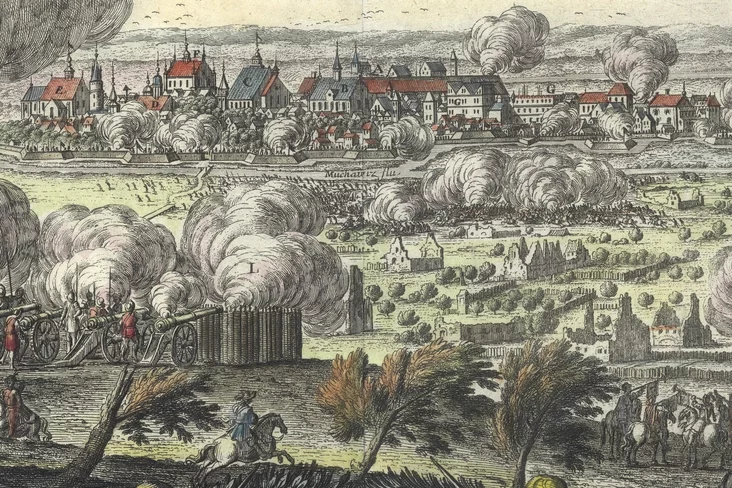
The work is executed in copperplate technique. The engraving itself is colored, hand-painted, measuring 35 by 49.5 cm. In the foreground is a panorama of the Swedish-Hungarian-Cossack army near the city walls; in the center is a panorama and plan of Brest with fortifications, a castle, churches, and a synagogue.
The artwork was acquired at an auction in Poland with funds from Darya Slizh and will be transferred to the Museum of the History of Brest as a public gift in the future.
In September, the engraving can be seen as part of the "Art-cafe MALDZIS" in Warsaw.
This engraving appeared in the book by Swedish Baron Samuel von Pufendorf, "De rebus a Carolo Gustavo Sueciae rege gestis," dedicated to the Second Northern War of 1655–1660 (known as the Deluge). The publication contains 115 copperplates, primarily based on drawings by the Swedish military engineer, architect, and artist Erik Jönson Dahlberg (1625-1703). Brest is the only settlement within the modern borders of Belarus included in this series.
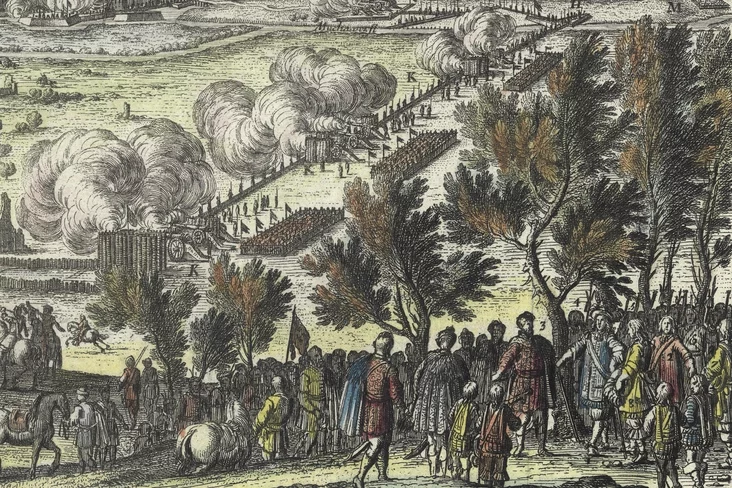
The engraving depicts the siege of Brest in May 1657. The city was besieged by Swedish troops of Charles X Gustav along with Hungarians and Zaporozhian Cossacks led by Prince Rákóczi. After a three-day cannon bombardment, the garrison surrendered the city. Two weeks later, the Swedish army left the city, handing it over to the Hungarians.
In the center of the engraving is a panorama of Brest from the north side: the castle, churches, synagogue, fortifications, and the Lozki suburb. Below is a skirmish between Lithuanian dragoons and enemy cavalry. In the lower right corner are nine high-ranking figures of the enemy forces, including the Swedish King Charles X Gustav himself and Prince of Transylvania George II Rákóczi. And above the lower cartouche, the author himself, Erik Dahlberg, is shown as a horseman. The artist immortalized himself as a participant in those events.
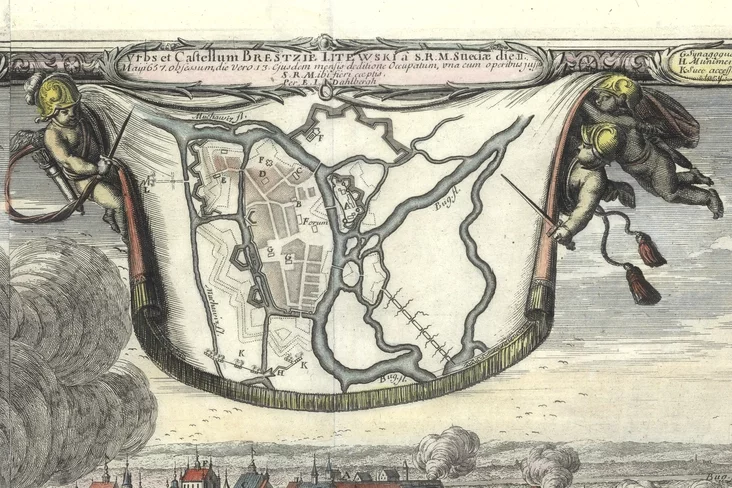
According to the opinion of Brest local historian and historian Anatol Nikitchyk, Dahlberg created the engraving in 1691–1696 based on earlier sketches and memoirs. It is considered one of the best examples of European Baroque urban landscape in Belarusian lands.

In the Mironets family, the mother and three sisters have already been convicted for political reasons. Now the husband of one of the sisters has been arrested


Comments
І яшчэ культ з гэтага зрабілі.