


An American woman strangled her three children. Now the whole world is watching her trial, and some women have come to her defense
36-year-old American woman Lindsay Clancy killed her three children. Her trial caused a great stir not only in the USA. The defense claims that the woman was in a state of postpartum psychosis and heard a voice instructing her to kill her children and herself. The prosecution disagrees with this.
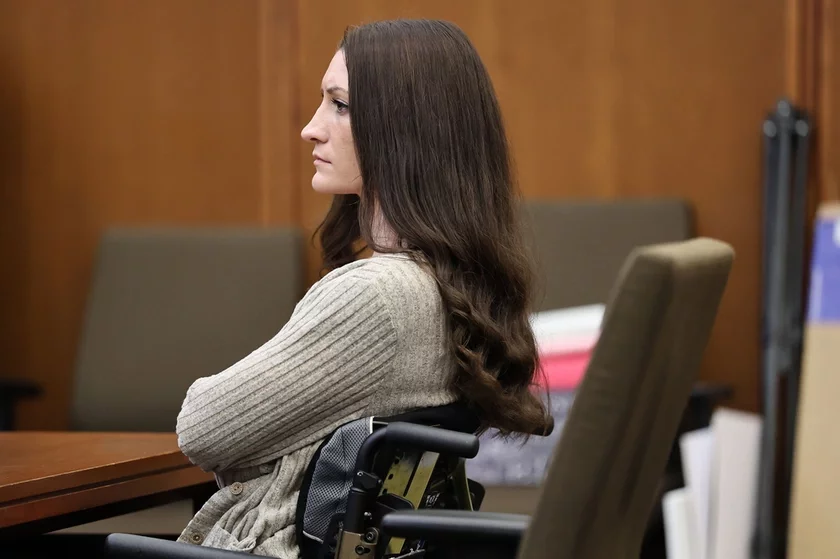
Lindsay Clancy worked as a nurse in a maternity ward. Together with her husband Patrick, the woman lived in Duxbury, Massachusetts, about 50 kilometers from Boston. The couple had three children: five-year-old Cora, three-year-old Dawson, and eight-month-old Callan.
Warning! This material contains descriptions of graphic scenes.
Tragic Evening
On the evening of January 24, 2023, Lindsay Clancy ordered takeout food and asked her husband to pick it up, and to buy medicine for their daughter on the way. Patrick left home around 5:30 PM and returned around 6:10 PM.
While Patrick was out getting medicine and food, Lindsay stayed home alone with the children. She took them to the basement and strangled them with exercise bands. Afterwards, she attempted to commit suicide.
Upon returning, Patrick saw blood and an open window in the bedroom, and found his injured wife on the ground near the house. He called 911, then went to look for the children and found all three unconscious in the basement.
Five-year-old Cora and three-year-old Dawson died that same evening at the hospital. Eight-month-old Callan was taken to Boston Children's Hospital, where he died three days later. Lindsay survived, but was paralyzed below the waist due to a spinal injury.
Clancy was accused of murdering her three children. Her lawyers do not dispute that the mother killed the children. The main dispute in court is whether Clancy could, at that moment, understand her actions and be held criminally responsible for them. Clancy's trial began on July 27, 2026, in Plymouth, Massachusetts.
Postpartum Psychosis?
After the birth of her third child, Clancy began complaining of depression, anxiety, and insomnia. She sought medical help and took psychiatric medications. According to court documents, from September 2022 until the children's murders, at least six medical specialists prescribed her 30 prescriptions for 13 different medications.
Clancy's relatives also spoke about the deterioration of her condition in the months leading up to the murders. Lindsay's mother, Paula Musgrove, testified that her daughter became increasingly anxious and fearful, and also expressed suicidal thoughts. According to Lindsay's sister, Alison, the woman shared suicidal thoughts with her and expressed concern about her mental state.
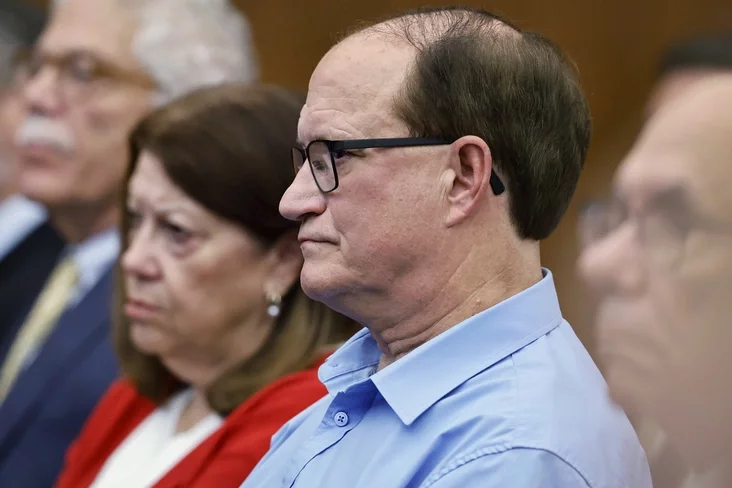
Lindsay's mother-in-law, Susan Clancy, stated that she had repeatedly sought help and was afraid to take the medication prescribed to her. Shortly before the murders, according to Susan, Lindsay told her that she needed help and was worried about her condition.
In early January 2023, Clancy was admitted to McLean Hospital for five days. Psychiatrist Alia Goodhart testified that Lindsay was depressed and suffered from significant sleep problems, but showed no signs of psychosis. Goodhart described Clancy as a woman who made plans for the future, was devoted to her children, and had significant family support. Clancy herself denied any intention to kill herself or harm others.
Psychiatrist Jennifer Tufts, who had been observing Clancy for several months, noted a deterioration in her condition in early January and decided to change her medication.
The last consultation took place on January 23, the day before the murders. According to Tufts, Clancy looked depressed and said she had to force herself to get out of bed. However, she denied suicidal or homicidal thoughts, and the psychiatrist did not observe any signs of psychosis.
What Was on Clancy's Phone
During the trial, notes and search history on Clancy's phone were also examined. In her personal notes, she wrote about depression, difficulties caring for her youngest child, reflected on medication, and expressed a desire to feel normal again.
Online, Clancy searched for information about psychosis, schizophrenia, hallucinations, and psychiatric medications. There were also queries related to suicide.
At the same time, on the day of the murders, she engaged in ordinary activities. Clancy was outside with the children and sent her husband a photo of two of them with a snowman.
These and other circumstances became part of the debate about Clancy's mental state at the time of the murders.
Defense's Position
One of the key witnesses for the defense was forensic psychiatrist Phillip Resnick, The Guardian reports. He had previously served as an expert, notably in the case of Andrea Yates, who killed her five children in 2001.
Resnick concluded that Clancy was in a state of psychosis on the day of the murders. She told him that she heard a male voice instructing her to kill her children and then herself. Clancy also described feeling as if she was not in control of her own body.
Resnick called this a "delusion of influence." According to him, Clancy felt "like a puppet, whose strings were being pulled by someone else."
Psychologist Paul Zeisel, who also testified for the defense, concluded that at the time of the murders, Clancy did not comprehend the wrongfulness of her actions.
Prosecution Experts
Prosecution experts came to a different conclusion.
Forensic psychologist Kirk Heilbrun met with Clancy several times during the preparation of his expert testimony and questioned her about the events of January 24. He did not consider the version about a voice allegedly telling her to kill the children to be the most probable explanation for what happened.
Clancy told Heilbrun that as she strangled each child, she said: "Go to God, baby. Go to God."
According to Heilbrun, Clancy killed the children because she herself intended to commit suicide and did not want to leave them behind without her. He linked the words about God to her belief that after death, she and the children would be together in paradise.
Heilbrun diagnosed Clancy with Bipolar II disorder. However, in his opinion, it did not deprive her of the ability to understand the wrongfulness of her actions.
However, the diagnoses of the prosecution experts differed. Psychiatrist Avram Mack diagnosed Clancy with severe depression but found insufficient grounds to speak of bipolar disorder or psychosis. In the main, Mack and Heilbrun agreed: both believe that Clancy was able to understand that her actions were wrongful.
The last expert called by the prosecution was forensic psychiatrist Gregory Saathoff. He acknowledged that Clancy had mental health issues but concluded that at the time of the murders, she understood the difference between right and wrong and could control her behavior.
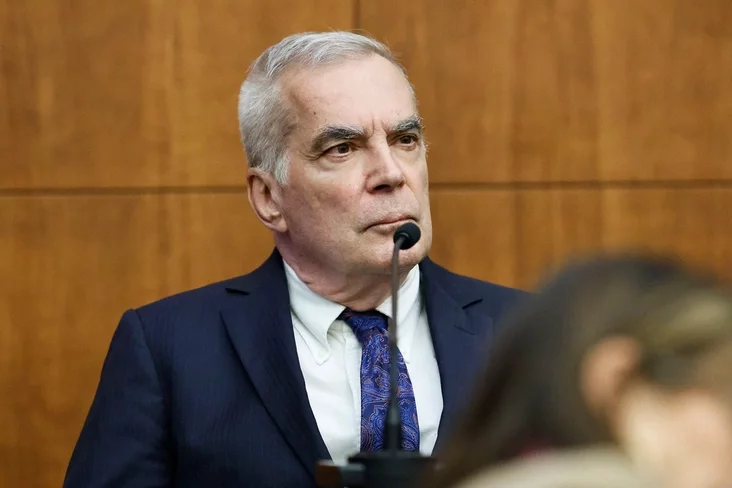
Saathoff also pointed out that during her treatment at McLean Psychiatric Hospital in early January 2023, Clancy's sleep improved. Later that same month, she wrote to her mother that she was sleeping better, the expert noted.
He also cast doubt on Clancy's account of a male voice. Saathoff noted that she recounted to different experts varying timelines of when she started hearing it. The psychiatrist also considered it atypical that Clancy had not previously complained about voices, and that on the day of the murders, the voice suddenly appeared, was constant, and disappeared after the children's deaths.
Husband's Position
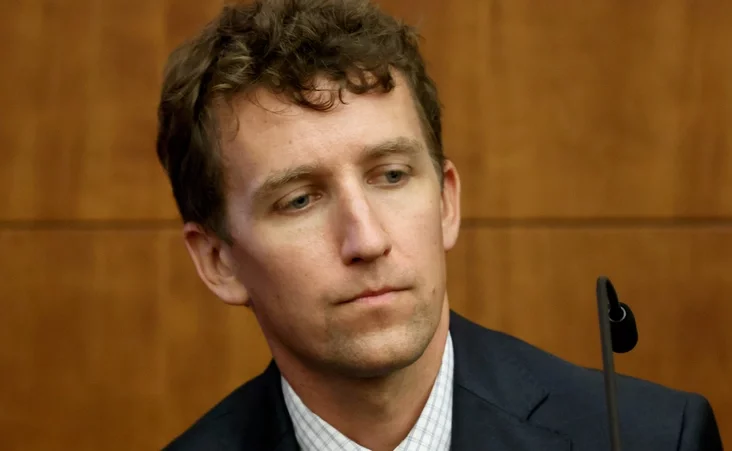
Shortly after the children's deaths, Patrick Clancy publicly supported his wife. In a statement, he asked for Lindsay to be forgiven, as he himself had forgiven her. The Clancy case subsequently sparked a broad discussion in the US about postpartum mental disorders.
Many women came to Lindsay's defense, having themselves faced postpartum depression and inadequate medical care during it. Others do not understand how the murder of children can be justified.
Simultaneously, conspiracy theories began to spread on social media, alleging that Patrick supposedly killed the children and blamed his wife. There is no evidence of his involvement in the murders, and no such charges have been brought against him.
In January 2026, Lindsay and Patrick separately filed civil lawsuits against several medical professionals who treated her before the murders. They accuse them of negligence and improper medical care.
By this time, Lindsay and Patrick's marriage had dissolved: Patrick filed for divorce, and in April 2026, he married another woman.
What Now
On August 26, witness testimonies concluded in court. Over 21 days of the trial, 12 jurors heard from 85 people. On August 27, the prosecution and defense will deliver their closing arguments, after which the jury will begin deliberating the verdict.
Clancy is accused of three counts of first-degree murder. However, the jury may find her guilty of less severe charges — second-degree murder or involuntary manslaughter.
They may also find Clancy not guilty by reason of lack of criminal responsibility — if they decide that due to her mental state, she could not comprehend the wrongfulness of her actions.
First-degree murder in Massachusetts carries a sentence of life imprisonment without the possibility of parole. If Clancy is found not guilty by reason of lack of criminal responsibility, she may be committed to a state psychiatric hospital.
Now reading


Natalia Kalegova spoke about helping Belarusian refugees, her family, her attitude towards Tsikhanouskaya. And explained who "beavers" and "hares" are

Natalia Kalegova spoke about helping Belarusian refugees, her family, her attitude towards Tsikhanouskaya. And explained who "beavers" and "hares" are


Back to pen and paper and smartphone ban: universities are forced to change the format of classes and tests, otherwise AI prevents both teaching and assessment


Comments